Seth Thomas Pocket Watch Models 10 - 13
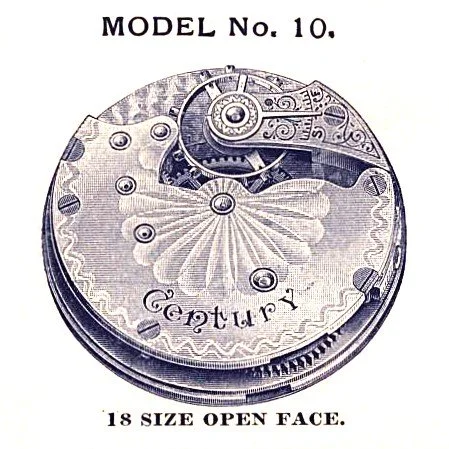
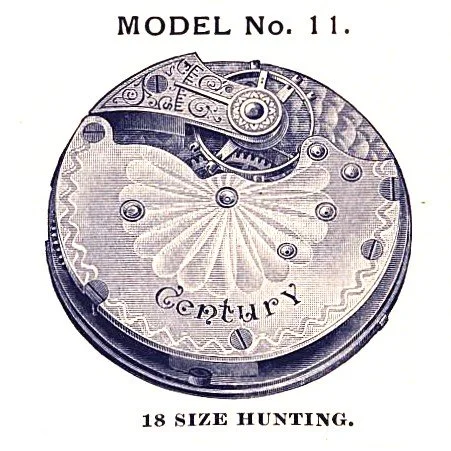
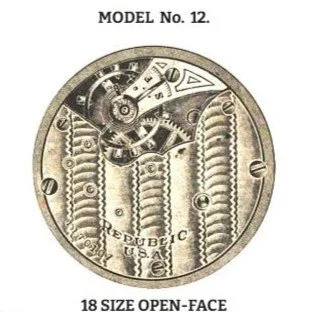

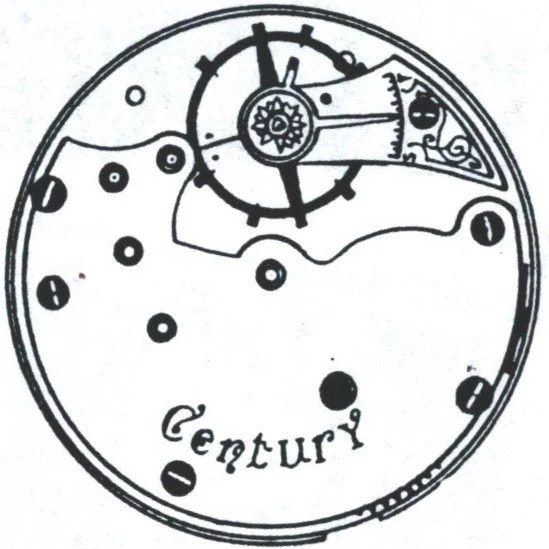
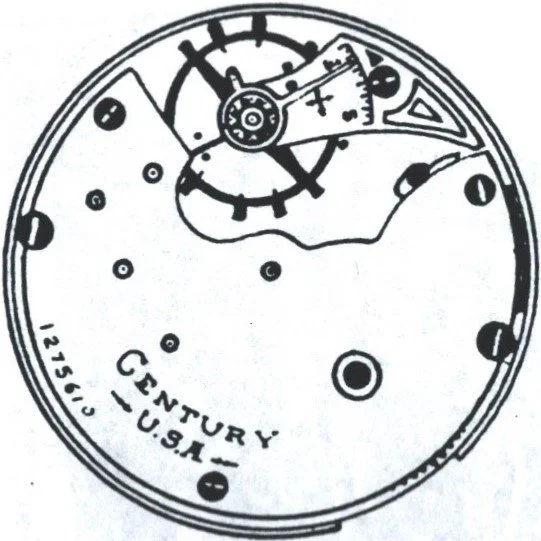
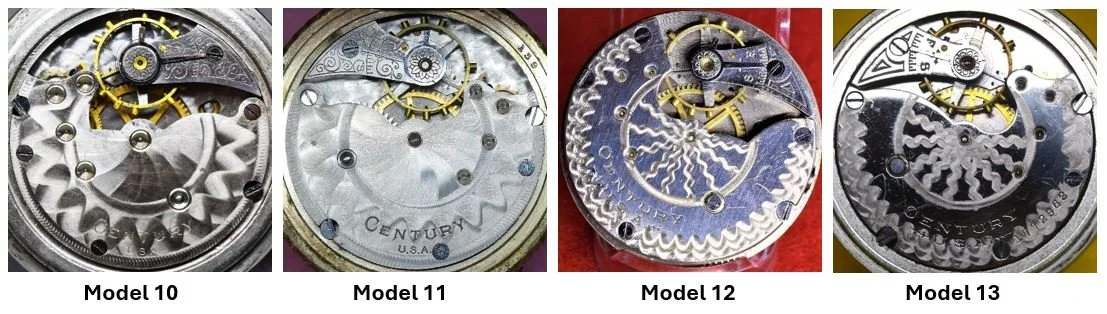
Seth Thomas Century Series is represented in the Ehrhardt American Numbered Drawings as Model 10 EA 813 (top left), Model 11 EA 814 (top right), Model 12 EA 813C (bottom left), and Model 13 EA 814A (bottom right); and can be identified through the use of the drawings below:
Century Grade Private Label Pocket Watches
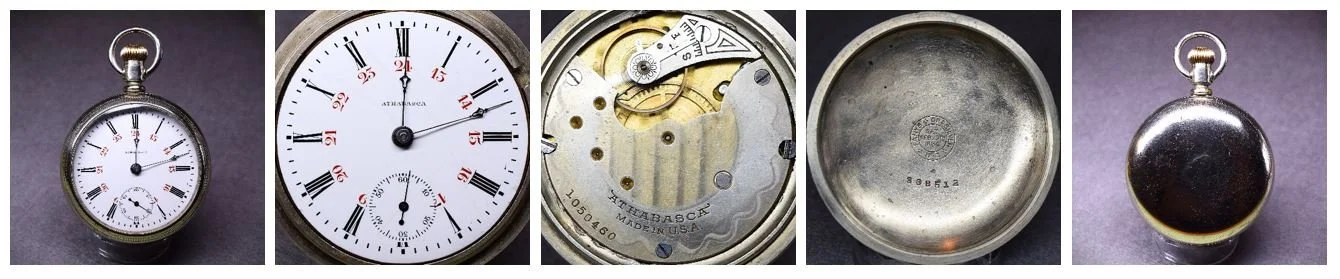
The Old and New Century grade models, including 6-size Century Model 18, stand apart from the Eagle Series and all individual models in that they contain no watches that bear the Seth Thomas signature. Every Century grade pocket watch is a private label pocket watch manufactured by the Seth Thomas Watch Company for a wholesale or retail company to sell as part of its own product line. Private labels within the Century grade include Adonis, Athabasca, Century U.S.A., Colonial U.S.A., Corona Watch Co., Countess Janet, Criterion, Edgemere, Engine Special, Knickerbocker Watch Co., Lake Shore, Liberty U.S.A. Pan-American, Peerless Watch Co, Republic U.S.A., R.R. Special, Rex, Sentinel U.S.A., Stratford U.S.A., Toronado Watch Co, Trainmens Special, Tribune, Waldorf U.S.A., and Wyoming Watch Co.
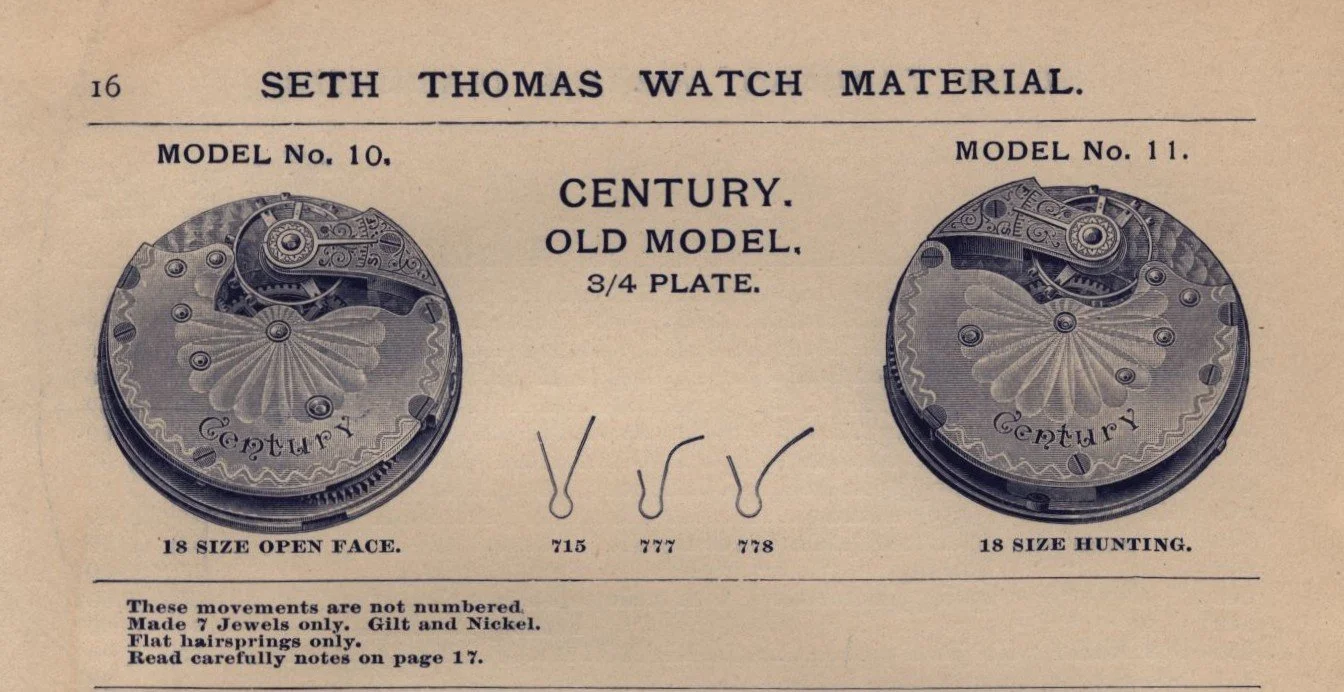
The 1904 Seth Thomas Watch Material Catalog clearly states, about the Old Century Model and the New Century Model, that “These movements are not numbered”.
Since we know that some of the New Century Model 12 and Model 13 movements that we collect ARE numbered; we are able to know that the numbered Model 12 and Model 13 movements were manufactured after the 1904 Seth Thomas Watch Material Catalog was written.
Evidence of Century grade FAT (Factory Assigned Tracking) Numbers having been attached to non-numbered Century grade movements is shown at the end of the 18-size Century Model Specifications section. The FAT Numbers stamped on the Century grade movements in the Seth Thomas Fan collection are being collected and displayed there as well. More information can be found on the Dedicated Century Grade FAT Numbers page, which is still in the process of being built.
Mainspring Information is available to review for each model that was described in the 1904 Seth Thomas Watch Material Catalog, including the Century Models 10-13.
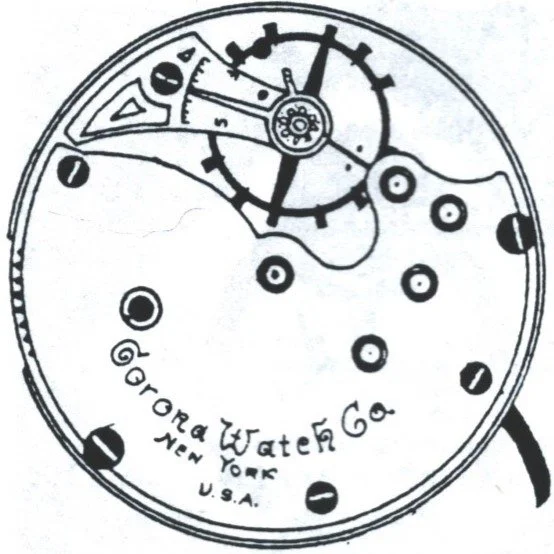
Century - Old Model
Model 10 and Model 11 are grouped together as they were presented in the 1904 Seth Thomas Watch Material Catalog No. 650 as the Century Old Model. None of the Model 10 nor Model 11 movements are numbered on the top plate. They were all manufactured as lever set movements, with either a gilt or nickel finish, 7 jewels, a plain/simple regulator, and a flat hairspring. They were the original Seth Thomas factory named grade Century movements.
Click these link to open the Model 10, Model 11, Model 12, or Model 13 Photo Albums in a new tab.
View or download PDF version of this chart
Model 10 open-face movements were manufactured with a gilt finish or nickel finish and 7 jewels, a plain/simple regulator, and flat hairspring at Seth Thomas factory named grade Century [*1.g].
Model 11 hunting orientation movements were manufactured with a gilt finish or nickel finish and 7 jewels, a plain/simple regulator, and flat hairspring at Seth Thomas factory named grade Century [*1.g].
| Model | Production | Size | Orientation | Finish | Plate | Winding | Setting |
|---|---|---|---|---|---|---|---|
| 11 | 1898-1902 | 18-size | Hunting | Gilt Nickel | 3/4 | Stem | Lever |
| Model | Production Block | Production Block | Production Block | |||
|---|---|---|---|---|---|---|
| 11 | No Serial #’s | No Serial #’s | ||||
| Model | Production | Size | Orientation | Finish | Plate | Winding | Setting |
|---|---|---|---|---|---|---|---|
| 10 | 1898-1902 | 18-size | Open-Face | Gilt Nickel | 3/4 | Stem | Lever |
| Model | Production Block | Production Block | Production Block | |||
|---|---|---|---|---|---|---|
| 10 | No Serial #’s | No Serial #’s | ||||
Century - Old Model - Private Labels
The Century Grade Old Model Pan-American and Century U.S.A. Debut
In the Fall 1899 Sears, Roebuck & Company Catalog No. 109
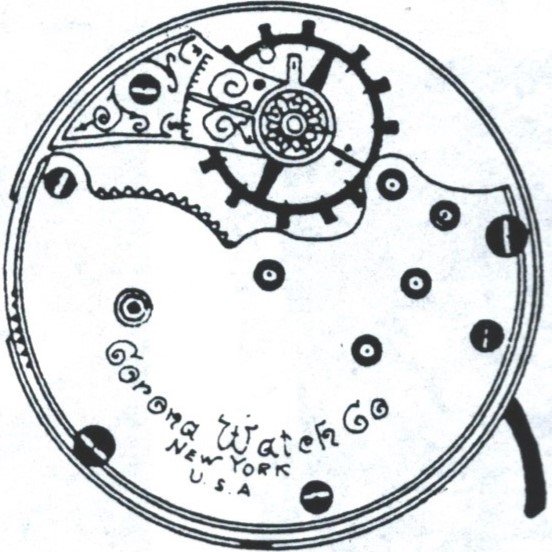
The most prolific and well-known private label in the Century grade, Century U.S.A., got its start in the Old Century Series as a private label for Sears, Roebuck & Company for sale in their mail order catalog along with the Pan-American private label; but they were far from alone in the ranks of Old Century private label pocket watches. Model 10 and Model 11 also included Colonial U.S.A., Corona Watch Co, and Peerless Watch Co private labels.
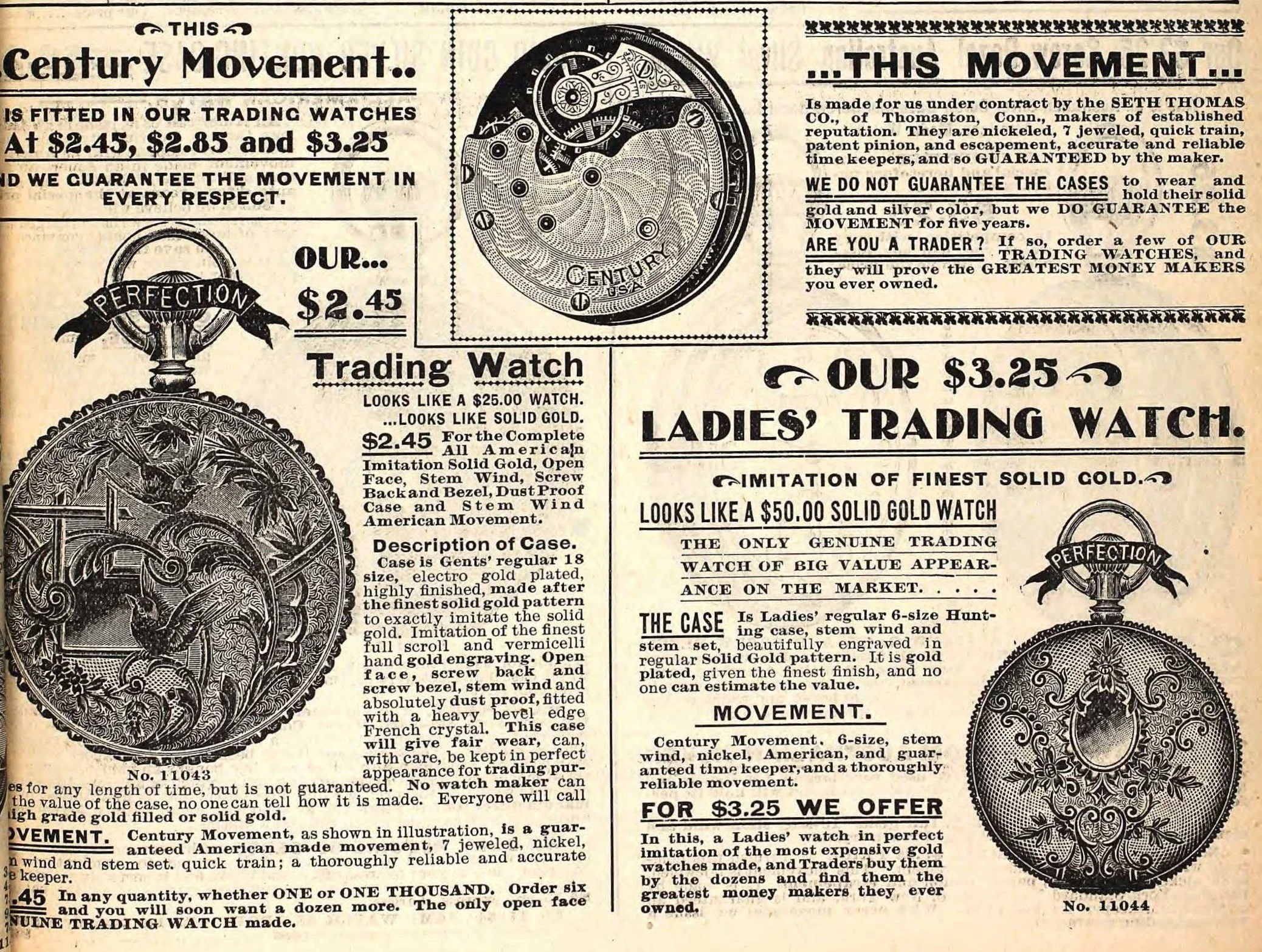
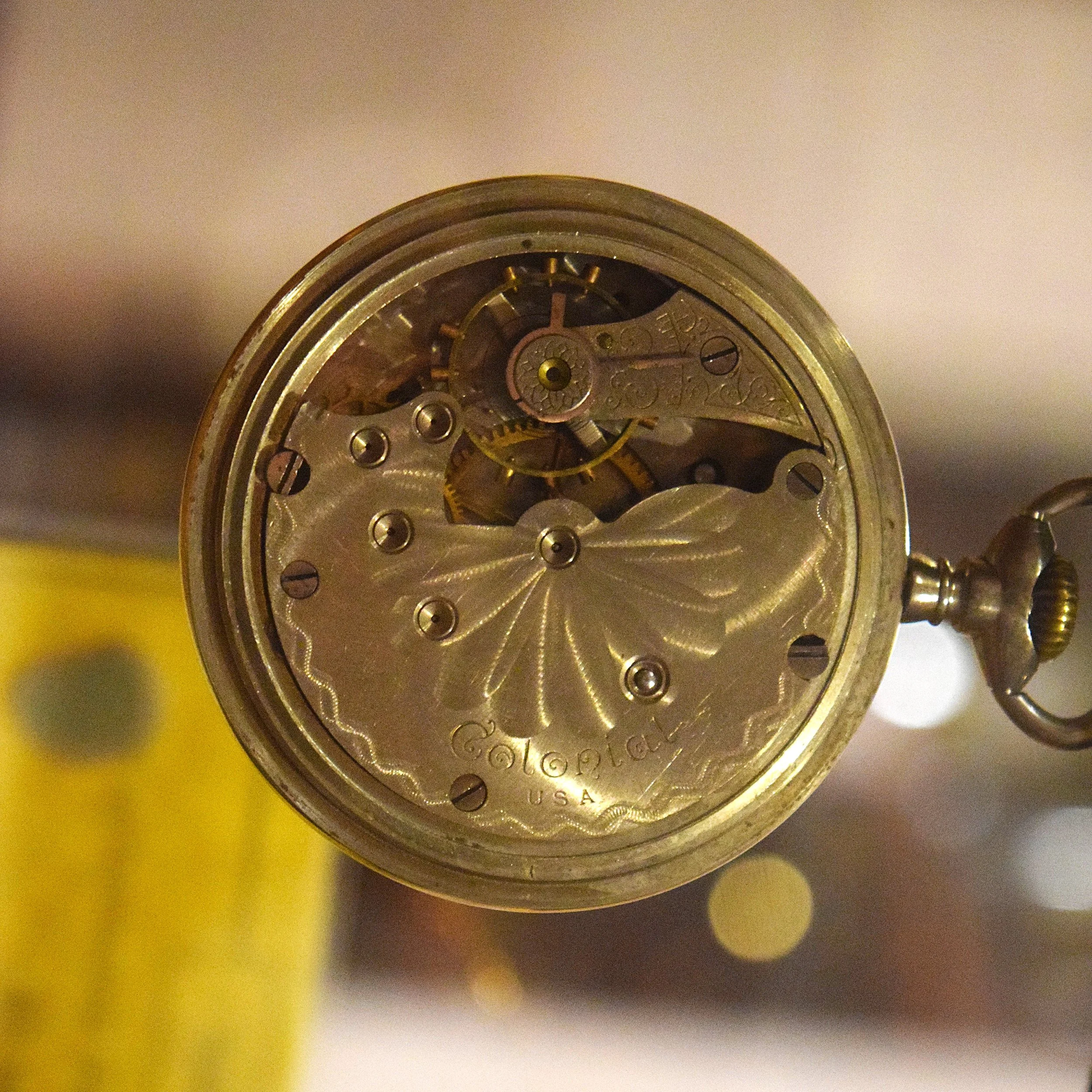
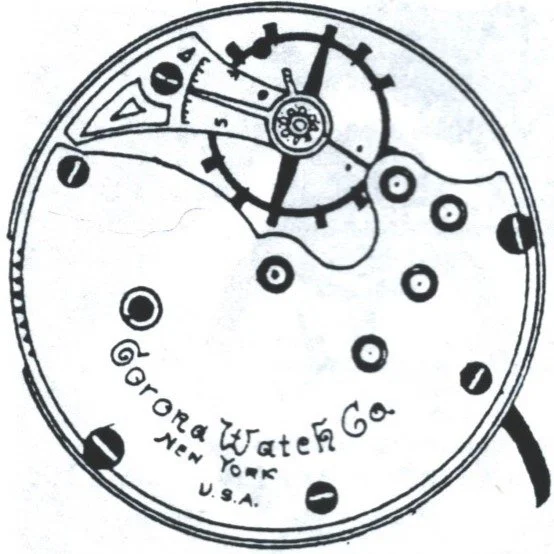
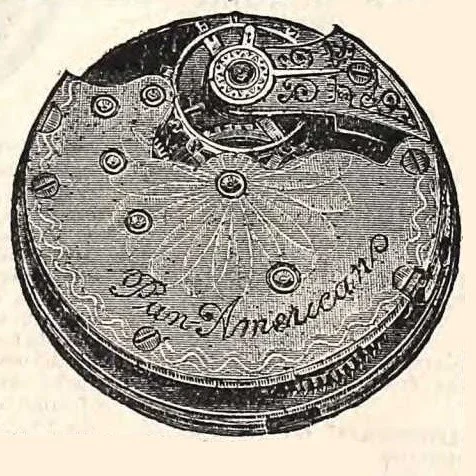
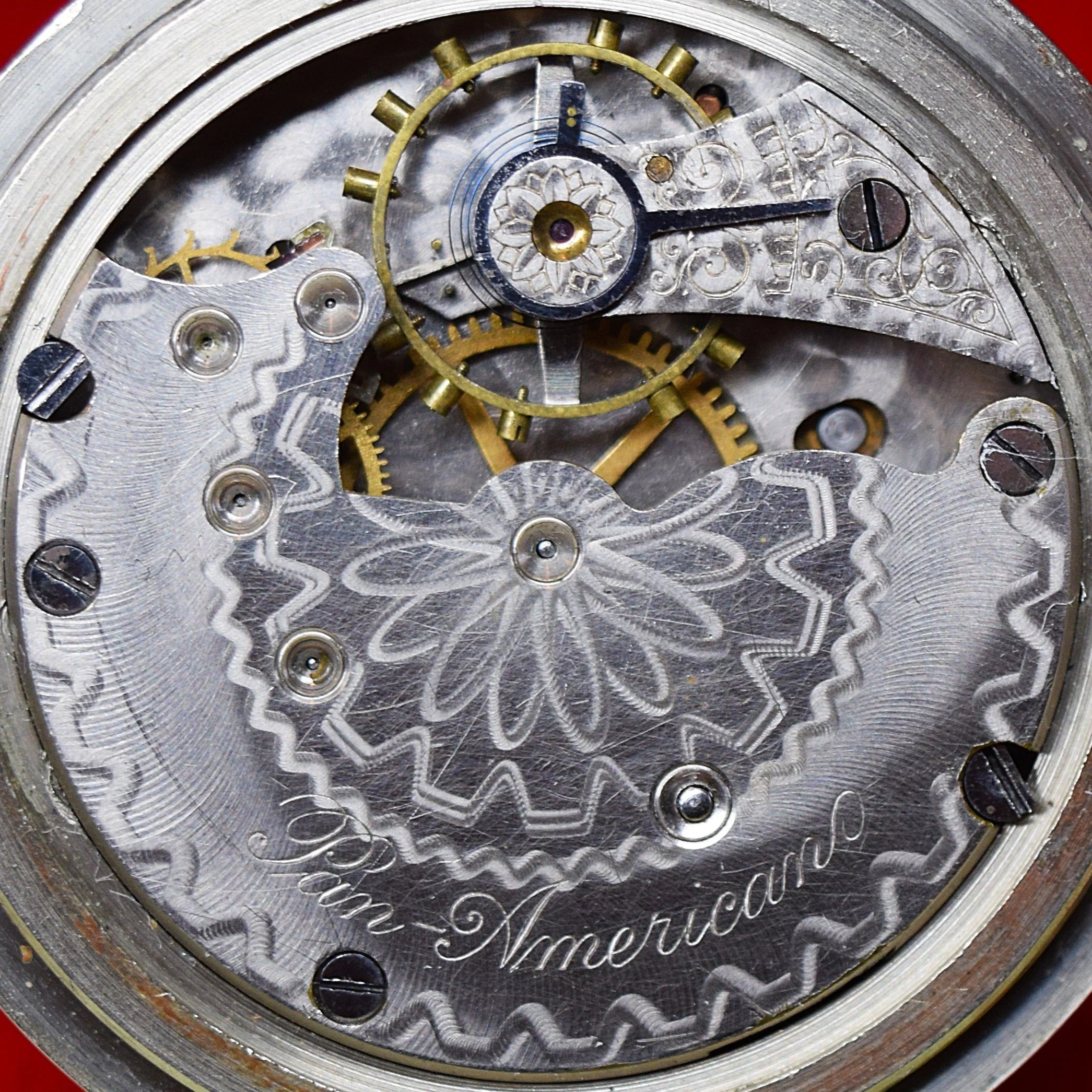
Through the “Century Old Model Series” notes on page 17 of the 1904 Seth Thomas Watch Material Catalog, the Seth Thomas Watch Company informs us that “We also made a large number of special movements of this series, named Corona Watch Co., Pan-American and Colonial.
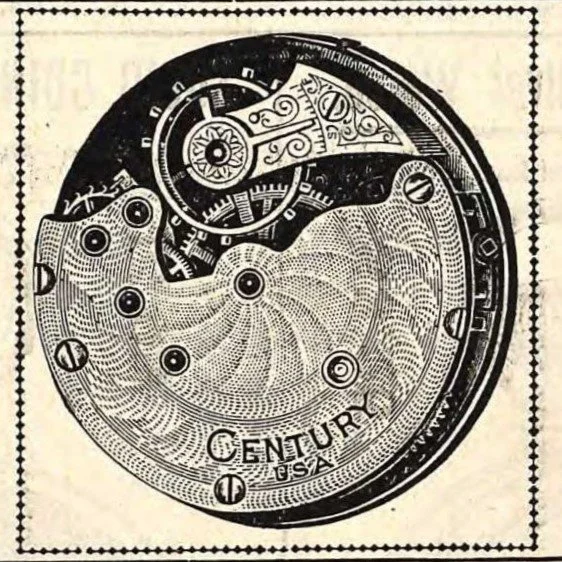
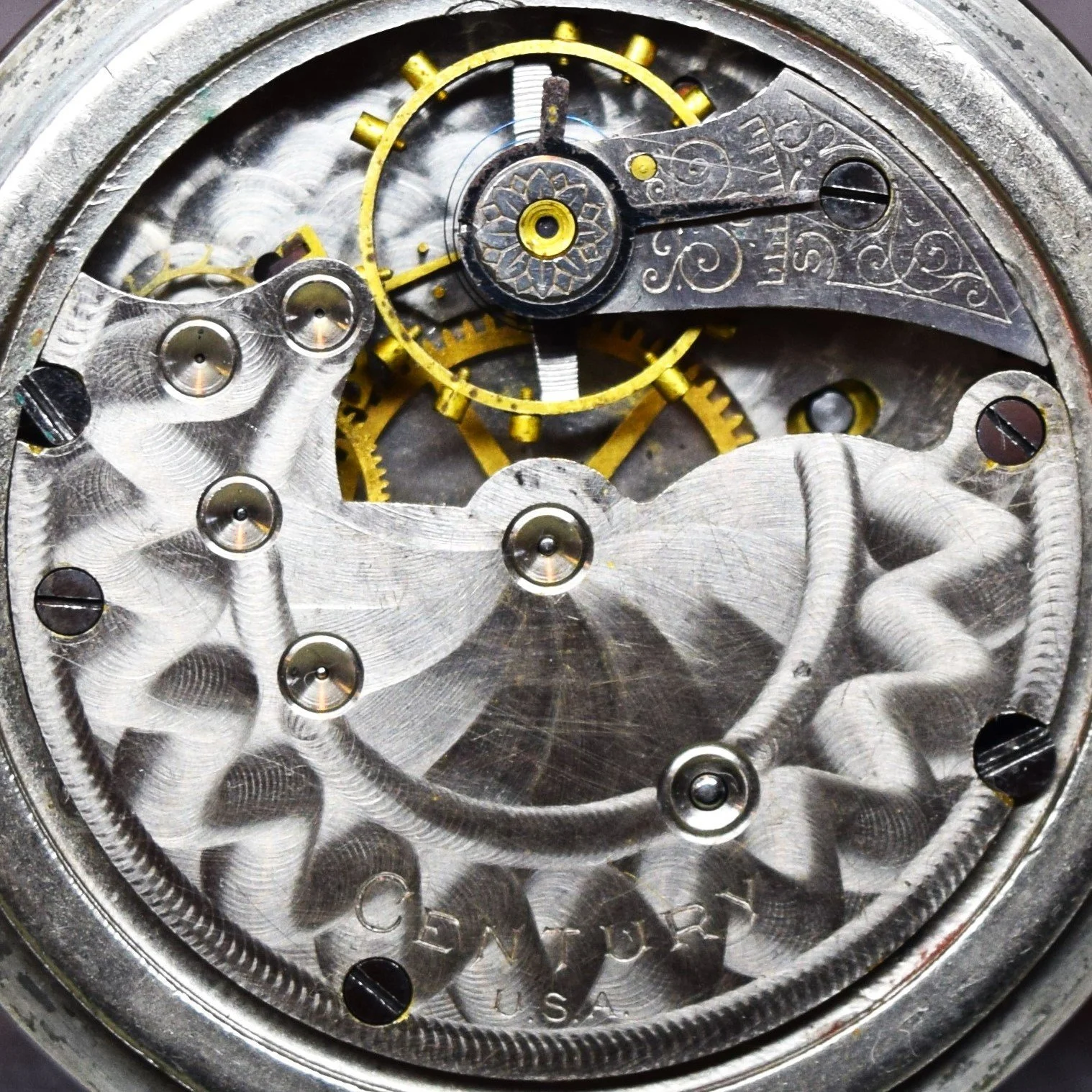
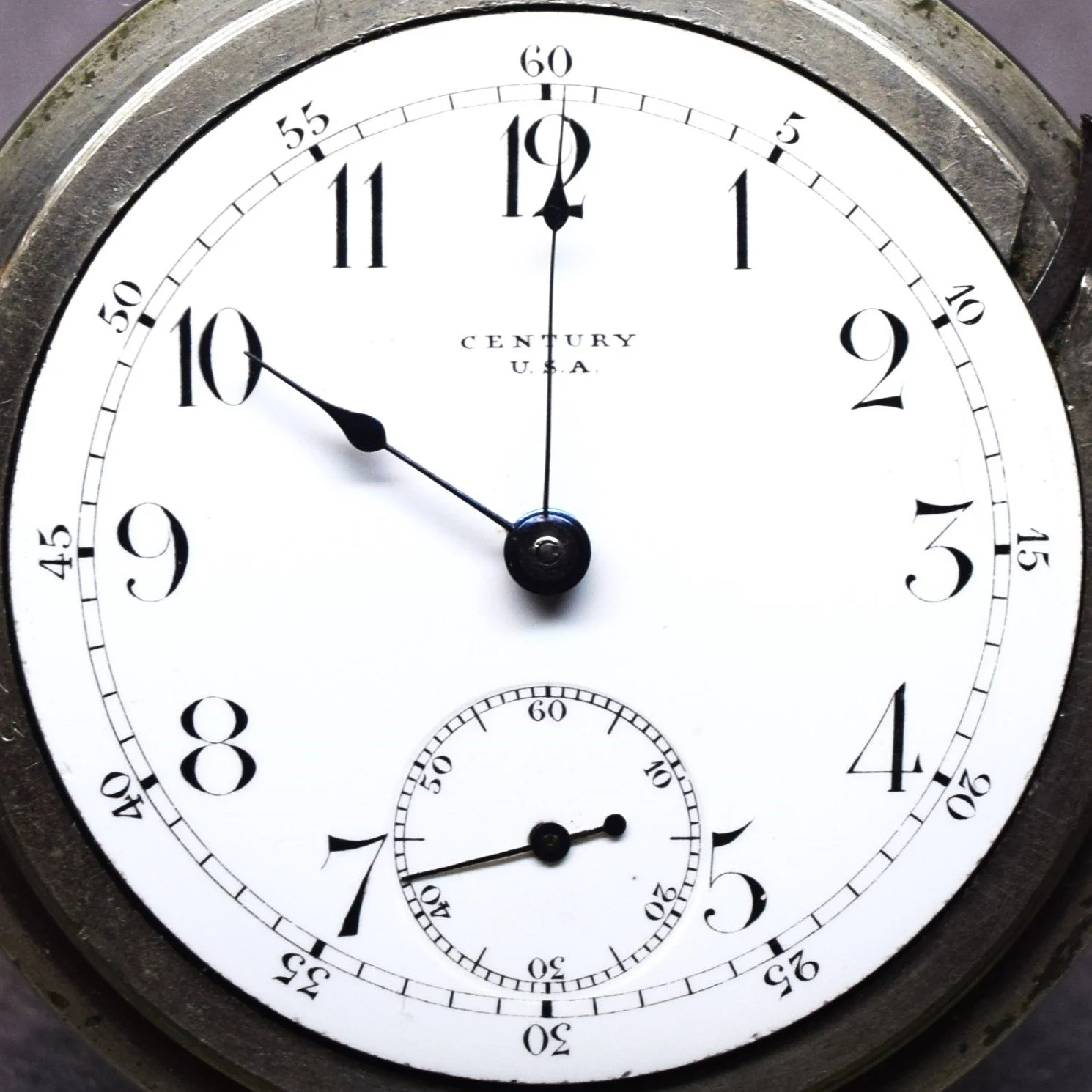
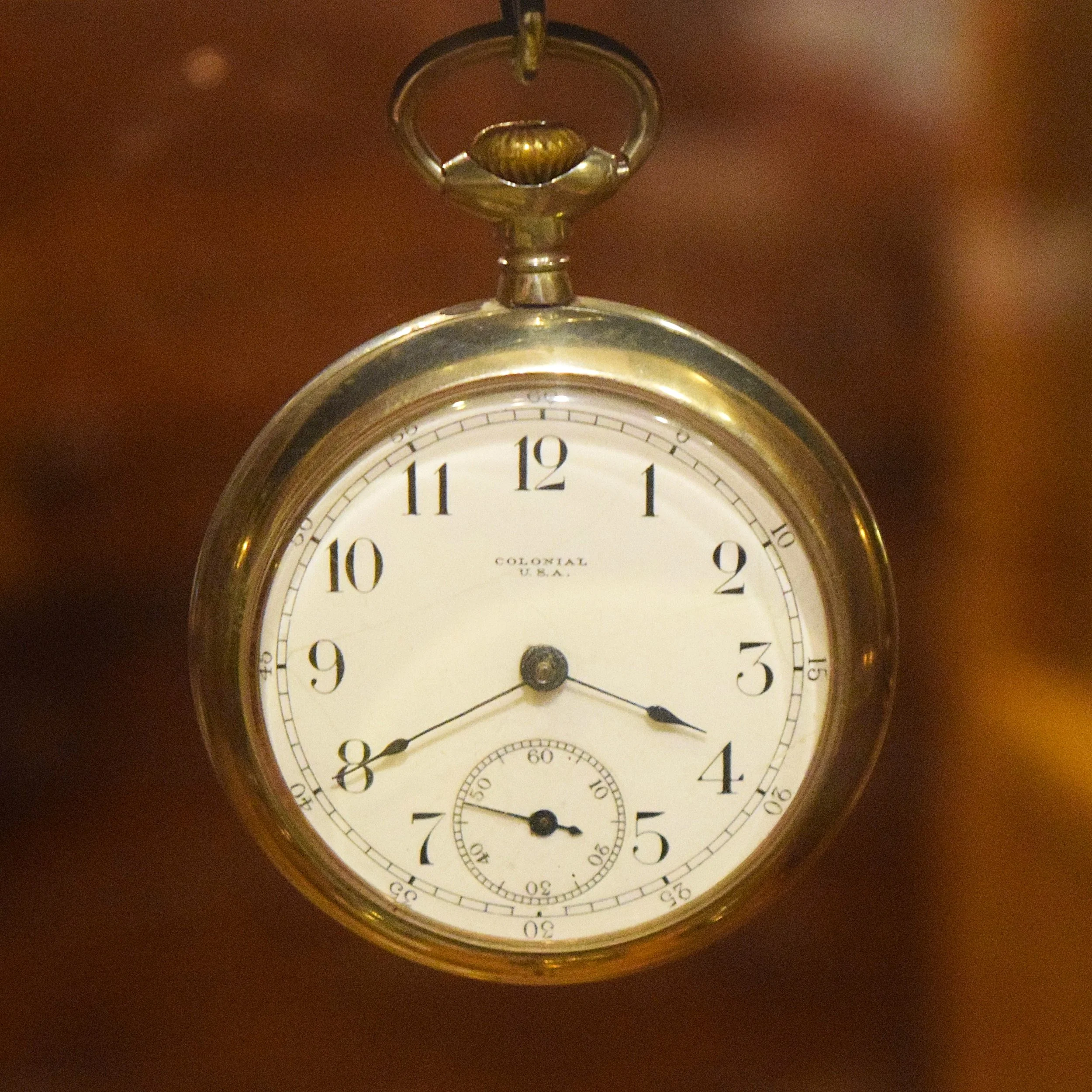
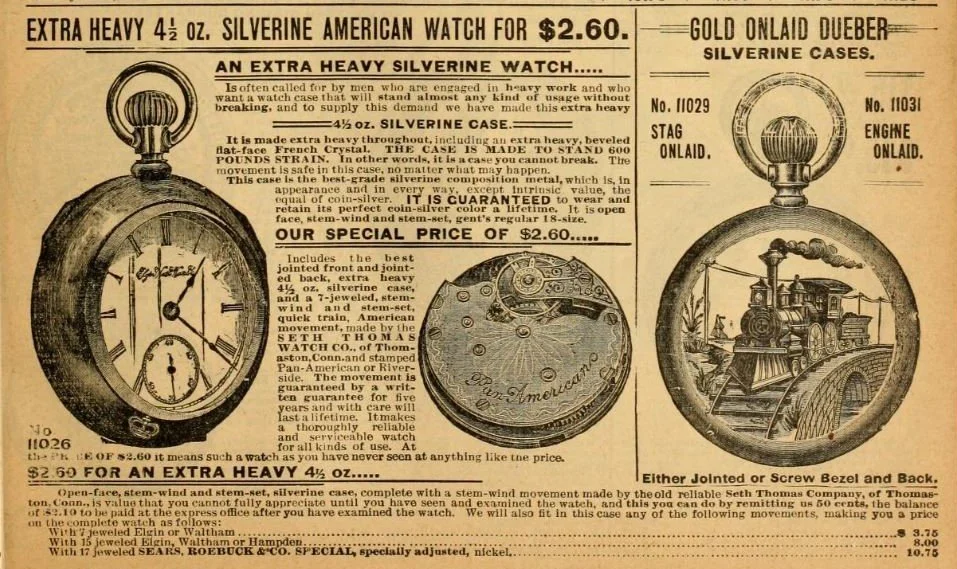
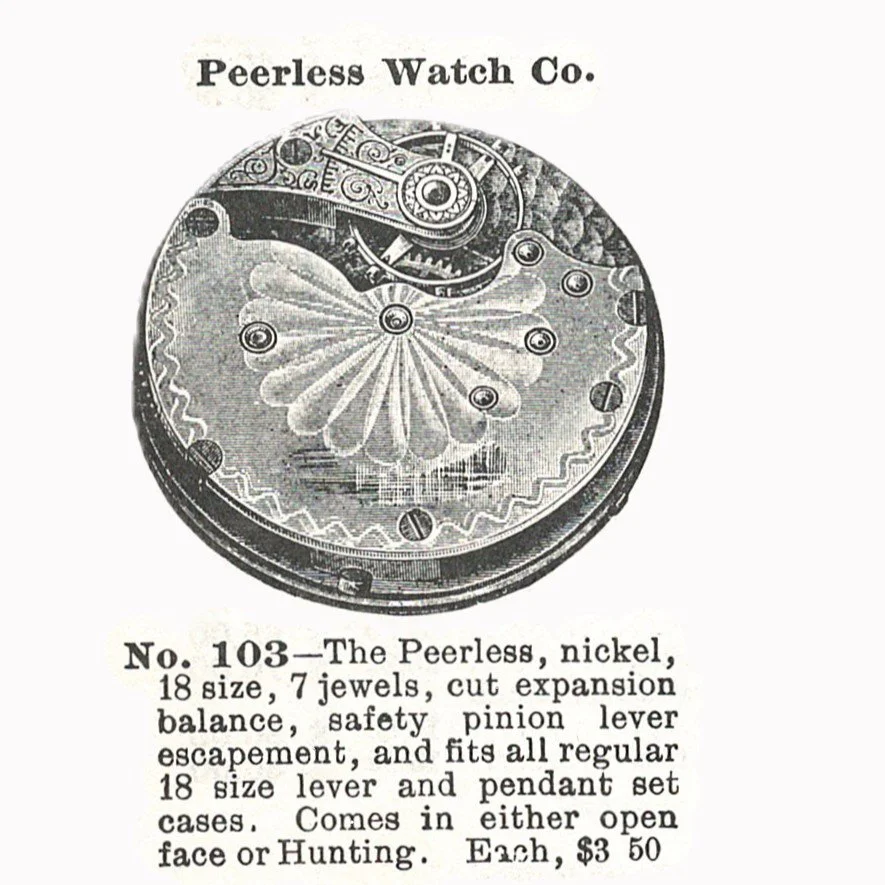
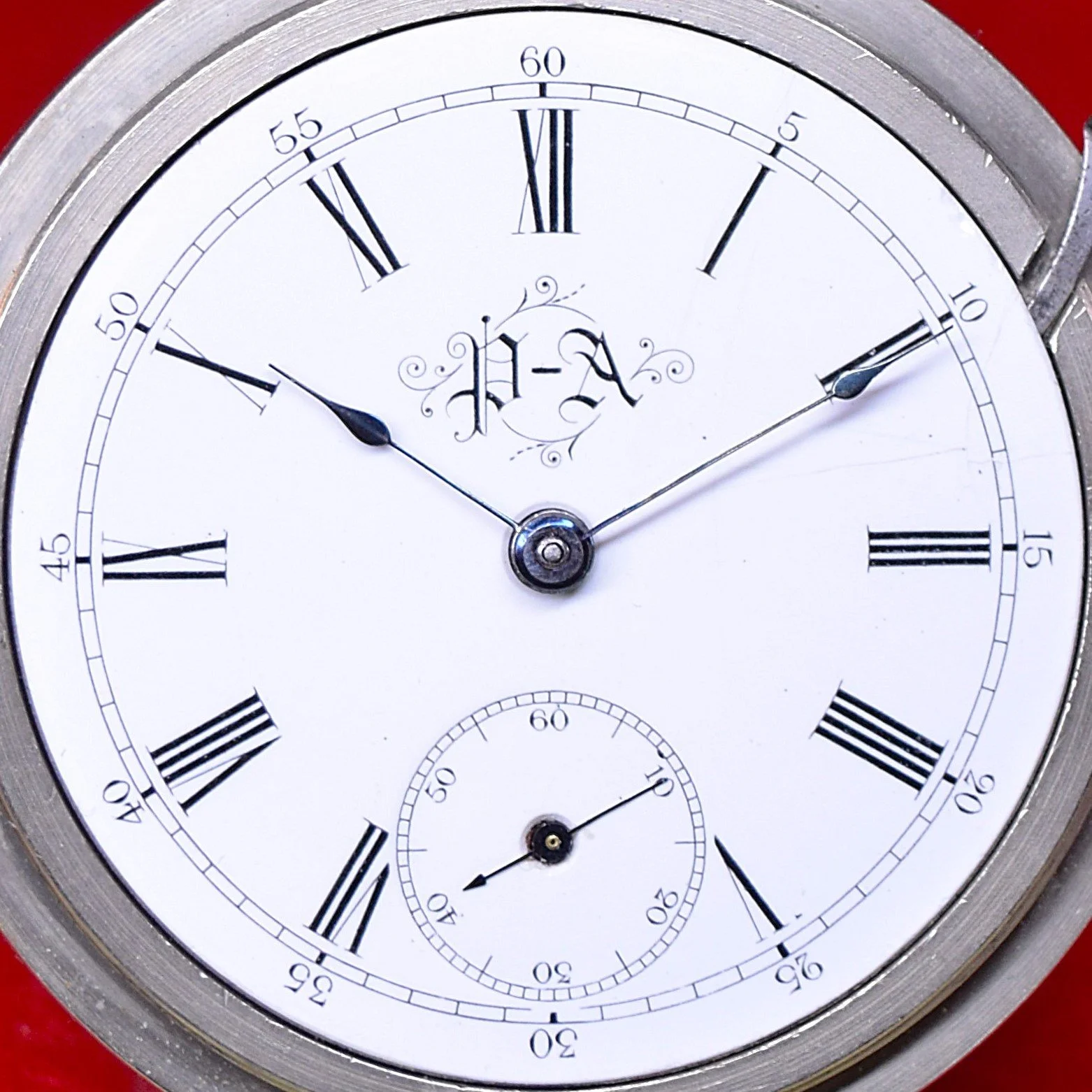
Below are depictions of the Model 10 Century U.S.A and the Model 10 Pan-American from the 1898 Sears, Roebuck & Company Catalog, photographs that I took in April of 2024 of a Model 10 Colonial U.S.A. while visiting the American Clock & Watch Museum in Bristol Connecticut, a photograph of my Model 10 Corona Watch Company movement, and an advertisement for the Model 11 Peerless Watch Co movement found in the 1900 Brooks Optical Company Catalog.


Century - New Model
Model 12 and Model 13 are grouped together because Models 12 and 13, the New Century Models, were the replacement for and based closely upon the design of Models 10 and 11, the Old Century Models. Models 12 and 13 movements initially (1903-1904) had no serial numbers on the top plate just as none of the previous Model 10 or Model 11 movements had any serial numbers on the top plate [ *1.g ]. Despite there being partial serial numbers on the pillar plate of their mechanisms, there is currently no reliable way to state exactly which early “un-numbered” Model 12 and 13 movements were manufactured before any others.
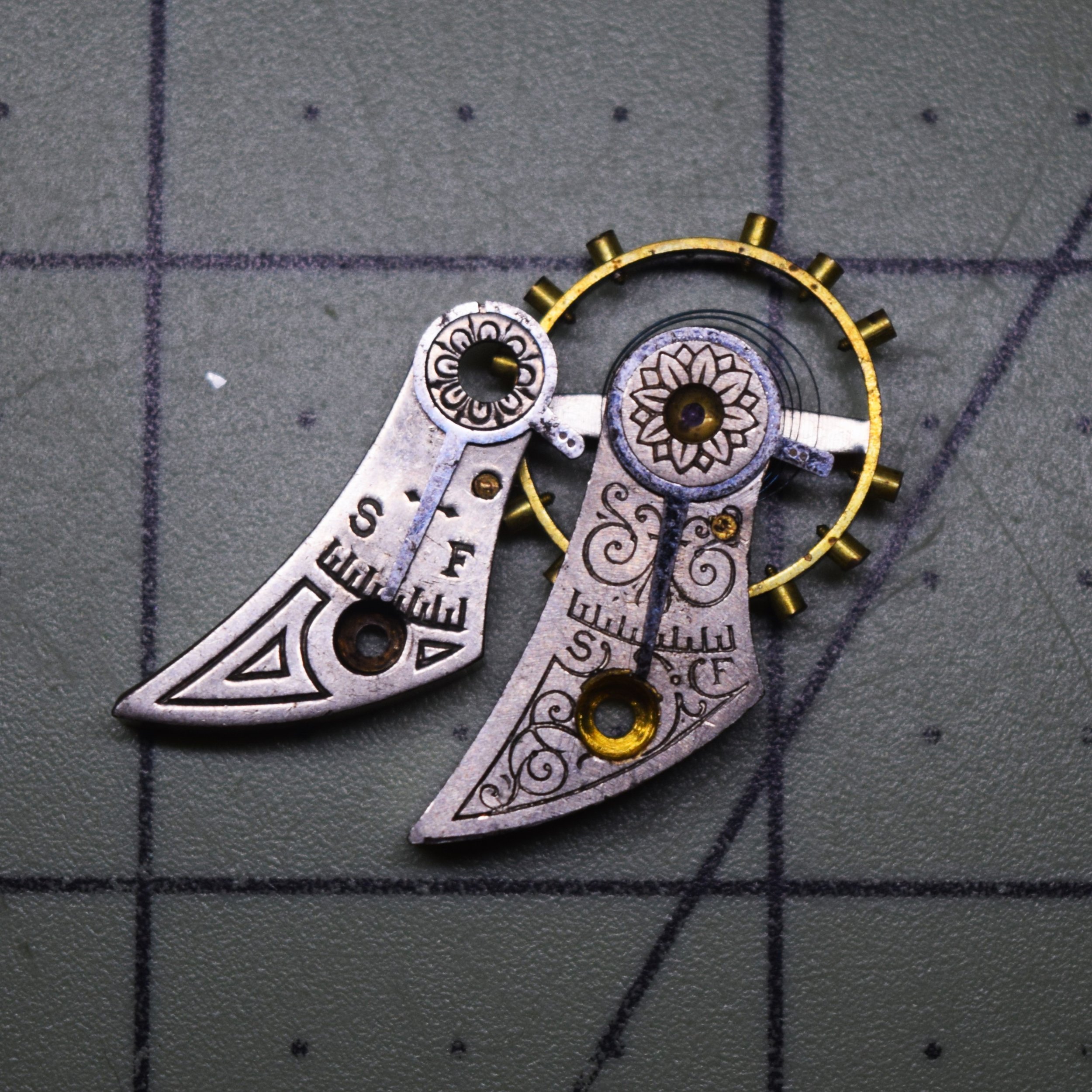
The New Century Model 12 and Model 13 movements are thinner and have smaller balance bridges than the Old Century Model 10 and Model 11 movements [ *1.g ].
Upon measuring and comparing the outside diameter of the regulator ring on the balance bridges of the Model 12 Colonial and an available Model 10 Pan-American; the Model 12 Colonial’s regulator ring measured 5.64mm, and the Model 10 Pan-American’s regulator ring measured 6.86mm. The engraving inside the larger Model 10 regulator ring is a lotus blossom. The space inside the smaller Model 12 regulator ring is only large enough for the engraving of a daisy blossom. The photographs below document those measurements and show a side-by-side comparison of a Model 12 balance bridge with the more standard engraving pattern next to a visibly larger Model 10 balance bridge with its standard engraving pattern.
| Model | Production | Size | Orientation | Finish | Plate | Winding | Setting |
|---|---|---|---|---|---|---|---|
| 12 | 1903-1907 | 18-size | Open-Face | Gilt Nickel Two-Tone | 3/4 | Stem | Lever Pendant |
After 1904 Started at Serial Number 1000001 and Concluded with Serial Number 4070000.
| Model | Production Block | Production Block | Production Block | |||
|---|---|---|---|---|---|---|
| 12 | No Serial #’s | No Serial #’s | 1000001 | 1301000 | 4068001 | 4069000 |
View or download PDF version of this chart
Model 12 open-face movements were manufactured as lever set or pendant set, with a gilt, nickel, or two-tone finish and 7 jewels, and flat hairspring at Seth Thomas factory named grade Century [*1.g].
Model 13 hunting orientation movements were manufactured as lever set, with a gilt, nickel, or two-tone finish and 7 jewels, and flat hairspring at Seth Thomas factory named grade Century [*1.g].
| Model | Production | Size | Orientation | Finish | Plate | Winding | Setting |
|---|---|---|---|---|---|---|---|
| 13 | 1903-1907 | 18-size | Hunting | Gilt Nickel Two-Tone | 3/4 | Stem | Lever |
After 1904 Started at Serial Number 1700001 and Concluded with Serial Number 1780000.
| Model | Production Block | Production Block | Production Block | |||
|---|---|---|---|---|---|---|
| 13 | No Serial #’s | No Serial #’s | 1700001 | 1780000 | ||


Century - New Model - Private Labels
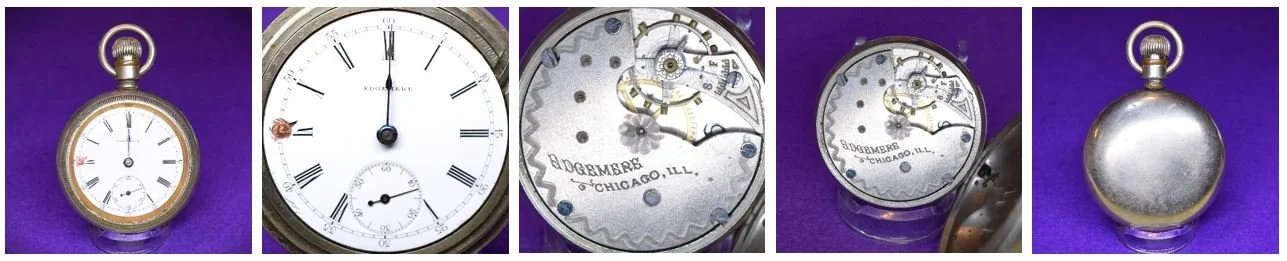
The Century Grade New Model Edgemere Makes its Debut
In the Spring 1904 Sears, Roebuck & Company Catalog No. 113


Page 18 of Spring 1904 Sears, Roebuck & Company Catalog No. 113
Seth Thomas Model 12 Edgemere & Trainmens Special
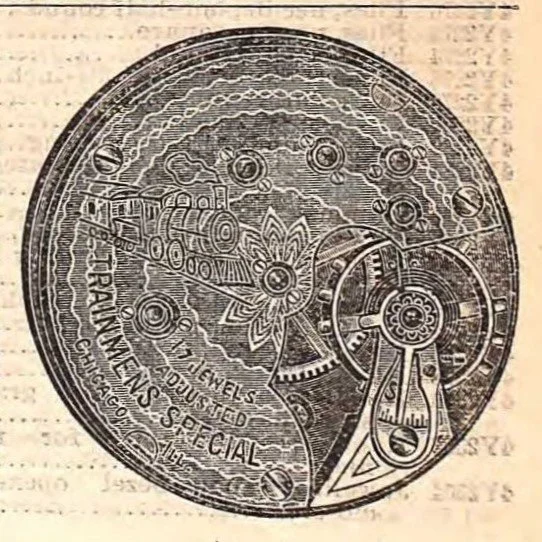
Page 18 of Spring 1904 Sears, Roebuck & Company Catalog No. 109
Seth Thomas Model 12 Edgemere

Page 18 of Spring 1904 Sears, Roebuck & Company Catalog No. 109
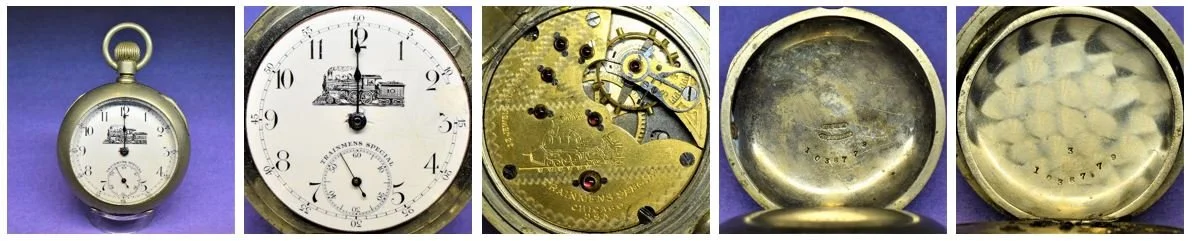
Seth Thomas Model 12 Trainmens Special

Century U.S.A. movements were phased out of the Sears, Roebuck & Co. Catalog product line starting in the Fall of 1901 with the introduction of the Edgemere line; and Century was gone in the 1902 Fall catalog. Century movements were then seen for sale in the catalogs of A.C. Becken, Brooks Optical, Butler Brothers of New York, N. Shure Company, John M. Smyth Company, Holsman & Alter, Lapp & Flershem, Moore & Evans, W.H. Lasselle, and Otto Young & Company. This new 1913 Centennial version of Century U.S.A. hasn’t popped up in any of the period catalogs that I’ve explored; but I really haven’t had an opportunity to explore very many.

Adonis U.S.A.
Athabasca
EA 813C – Colonial U.S.A. – 18-size – Model 12 – STF Serial# COLONIAL12A – 7 Jewels - Factory Named Grade Century
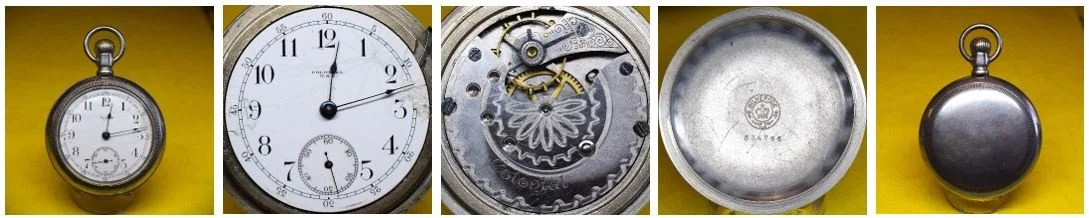
Colonial U.S.A.



Corona Watch Co. New York U.S.A.
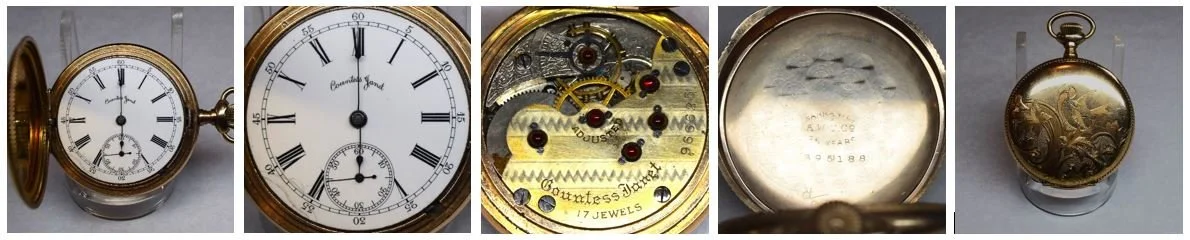
Countess Janet

Criterion

EA 814A – Edgemere – 18-size – Model 13 – Serial# EDGEMERE13A – 7 Jewels - Factory Named Grade Century

Edgemere
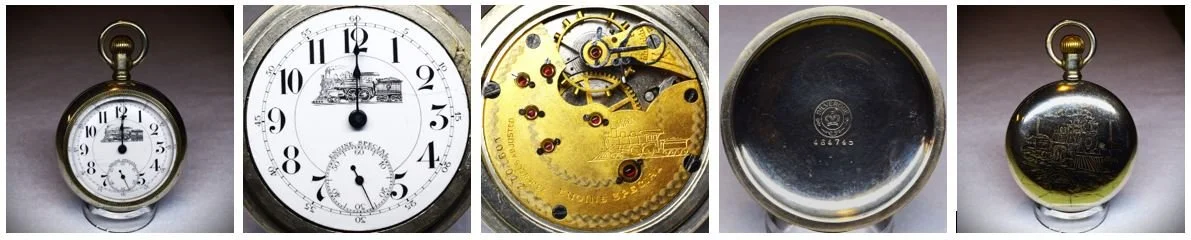
Engine Special
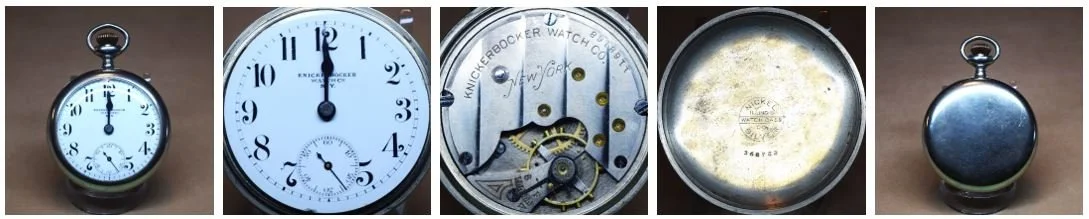

Knickerbocker Watch Co. is a private label in Seth Thomas 18-size open-face Model 12 and Seth Thomas 18-size hunting Model 13, Seth Thomas 6-size hunting Model 18 and Seth Thomas 6-size open-face Model 24.
Knickerbocker Watch Co. New York
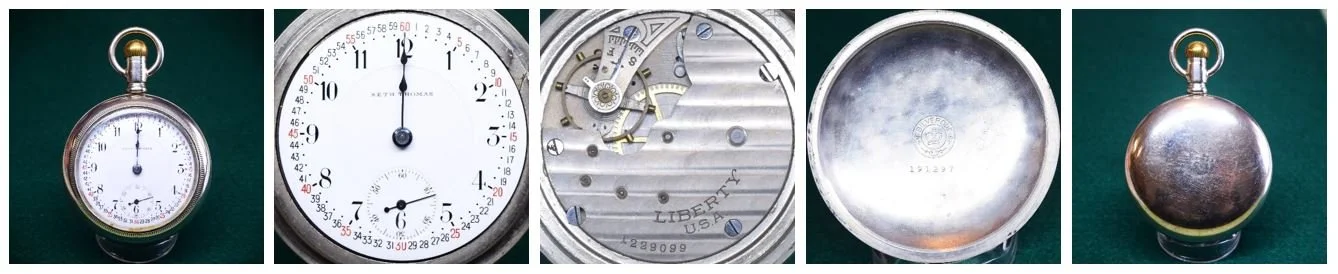
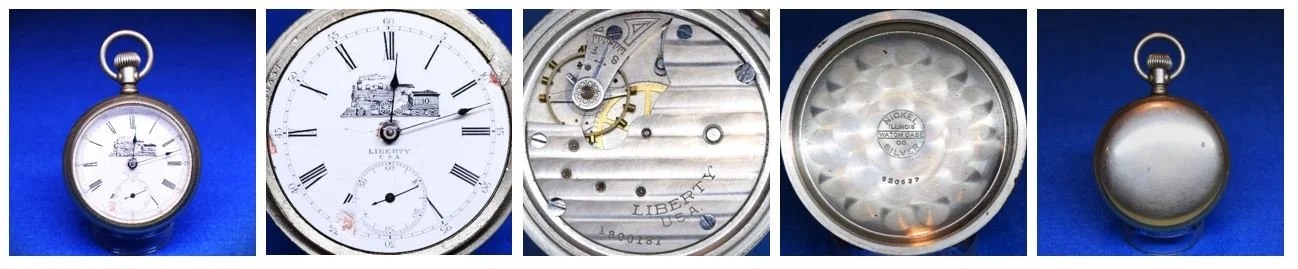
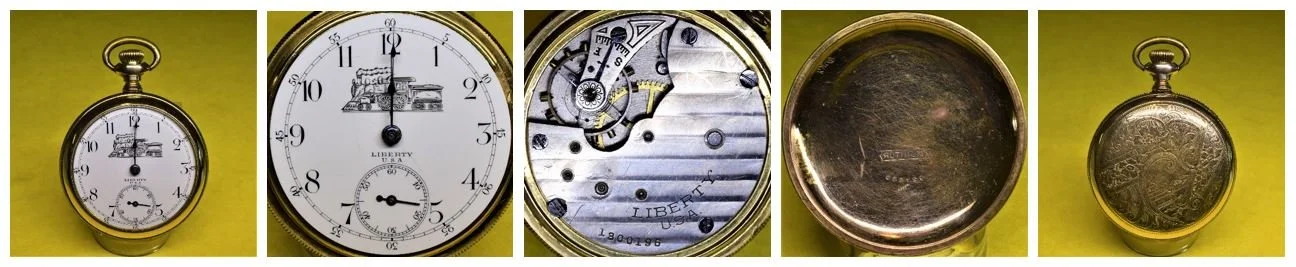

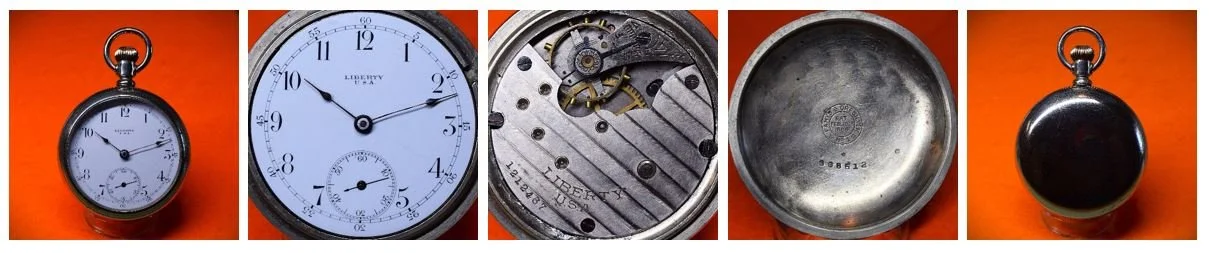
Liberty U.S.A. is a private label in Seth Thomas 18-size Model 12 and Model 13.
Liberty U.S.A.
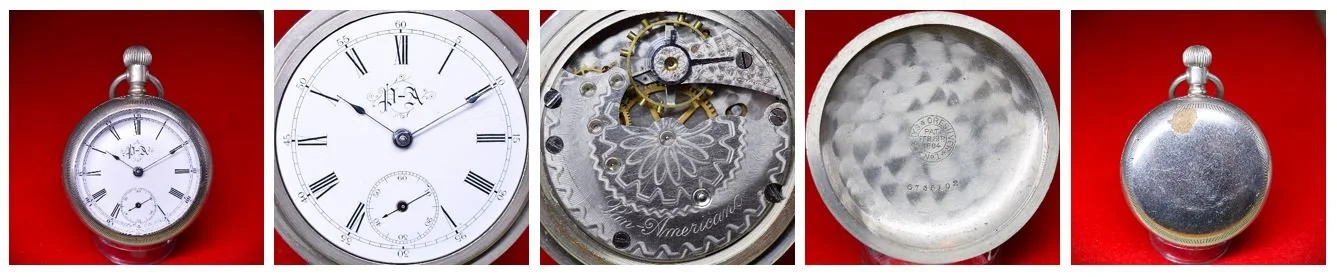
EA 814 – Pan-American – 18-size – Model 11 – Serial Number PANAMERICAN11B – 7 Jewels - Factory Named Grade Century

EA 814 – Pan-American – 18-size – Model 11 – Serial Number PANAMERICAN11C – 7 Jewels - Factory Named Grade Century
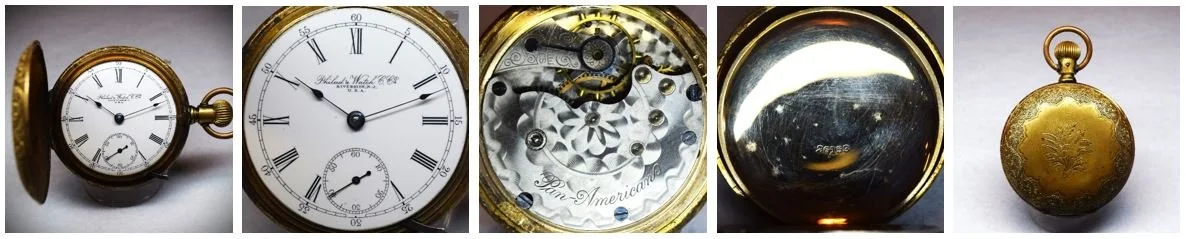
EA 813 – Pan-American – 18-size – Model 10 – Serial Number PANAMERICAN10A – 7 Jewels - Factory Named Grade Century

EA 814 – Pan-American – 18-size – Model 11 – Serial Number PANAMERICAN11A – 7 Jewels - Factory Named Grade Century

Pan-American is a private label in Seth Thomas 18-size Model 10 and Model 11 manufactured for Sears, Roebuck & Company for sale in their retail catalog.
Pan-American
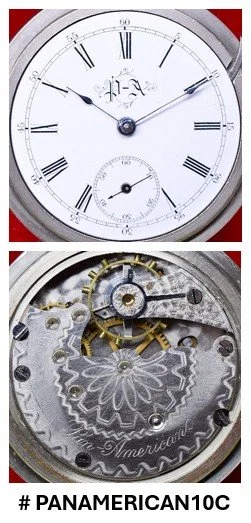
EA 813 – Pan-American – 18-size – Model 10 – Serial Number PANAMERICAN10C – 7 Jewels - Factory Named Grade Century

Peerless Watch Co. is a private label in Seth Thomas 18-size Model 10 and Model 11, and 6-size Model 16. Peerless Watch Co. movements were seen in the Brooks Optical Company catalog.
Peerless Watch Co.
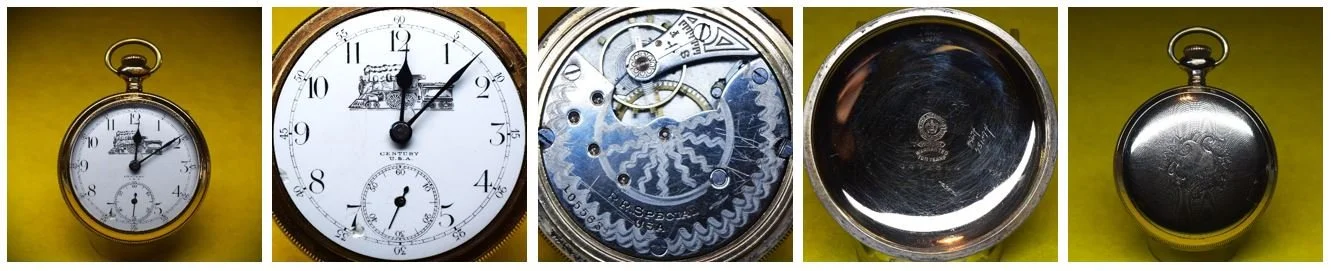
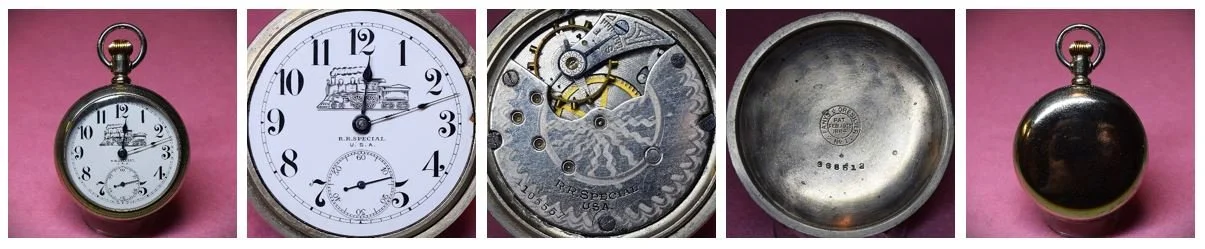

R.R. Special is a private label in Seth Thomas 18-size Model 12 and Model 13.
R.R. Special
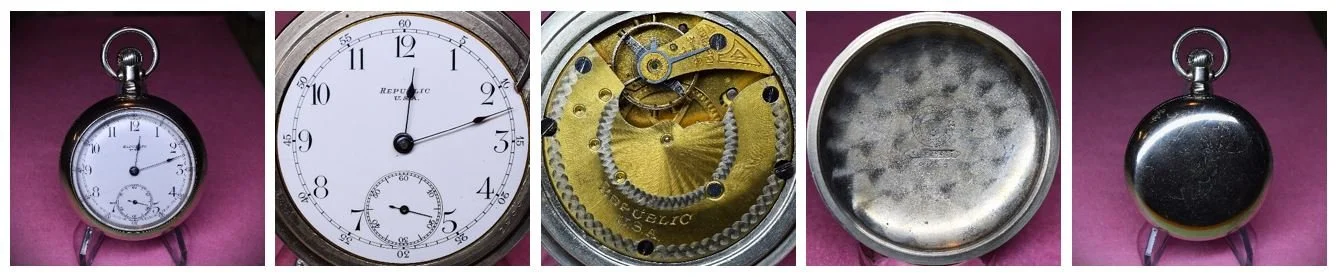
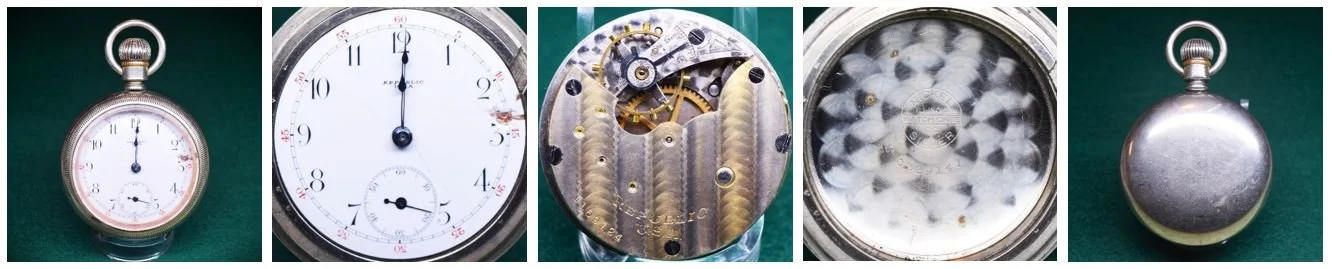
EA 813C – Republic U.S.A. – 18-size – Model 12 – Serial Number REPUBLIC12A – 7 Jewels - Factory Named Grade Century
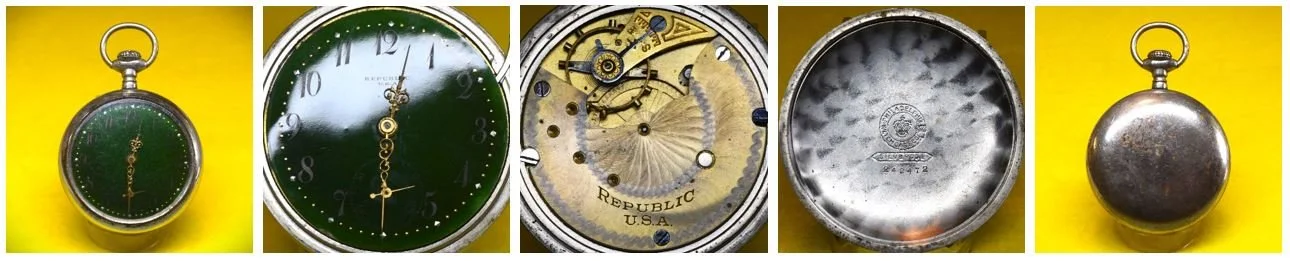
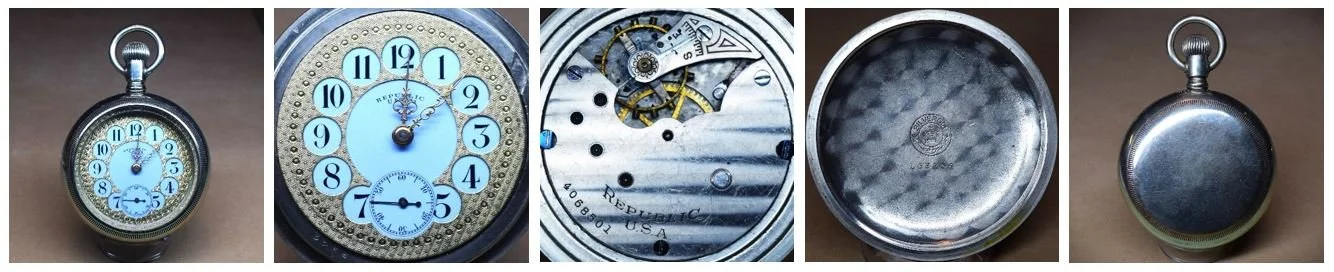
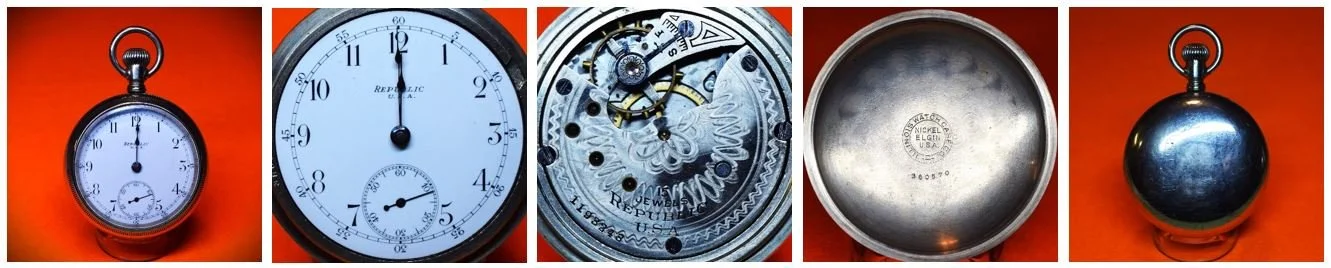
Republic U.S.A. - 18-size Movements - Model 12 & Model 13
EA 813C – Republic U.S.A. – 18-size – Model 12 – Serial Number REPUBLIC12B – 7 Jewels - Factory Named Grade Century
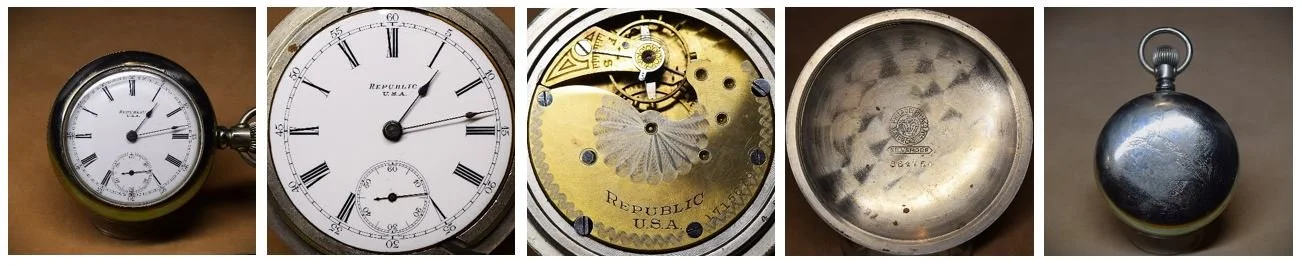
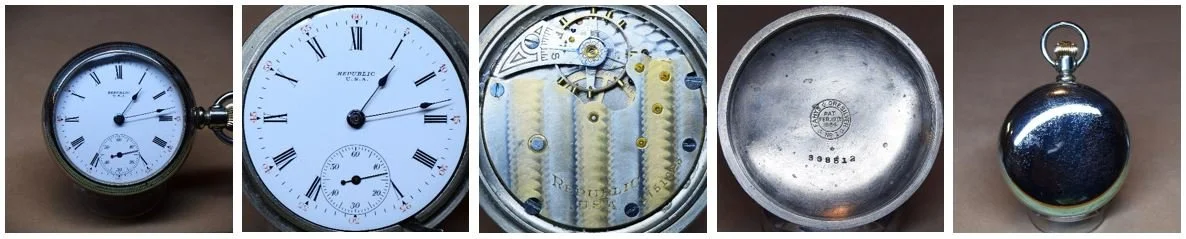
Who Were Republic U.S.A. Movements Manufactured For?
Republic U.S.A. is a private label in Seth Thomas 18-size Model 12 and Model 13, and 6-size Model 18, Model 19, and Model 24. The Pocket Watch Data reports that Seth Thomas was one of the manufactures making Republic U.S.A. movements for the Illinois Watch Case Company. Republic U.S.A. pocket watches were sold in the catalogs of N. Shure Company, Butler Brothers, J.M. Smyth, Hofman Jewelry Company, and others.
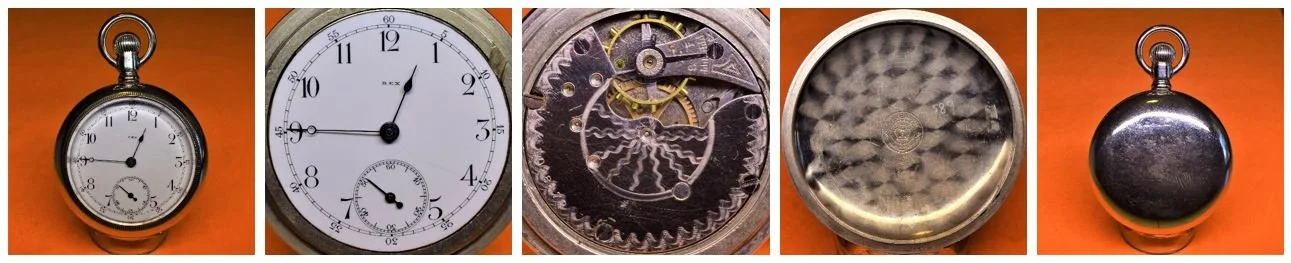
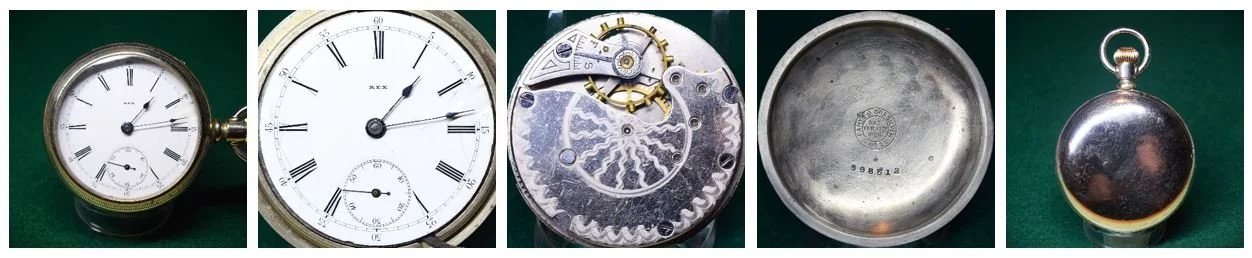
Another specimen of the Rex private label, serial #1035015 can be seen on the Pocket Watch Database; but it’s manufacturer was misclassified by the owner as “Other”, which would be expected with a completely unmarked movement.
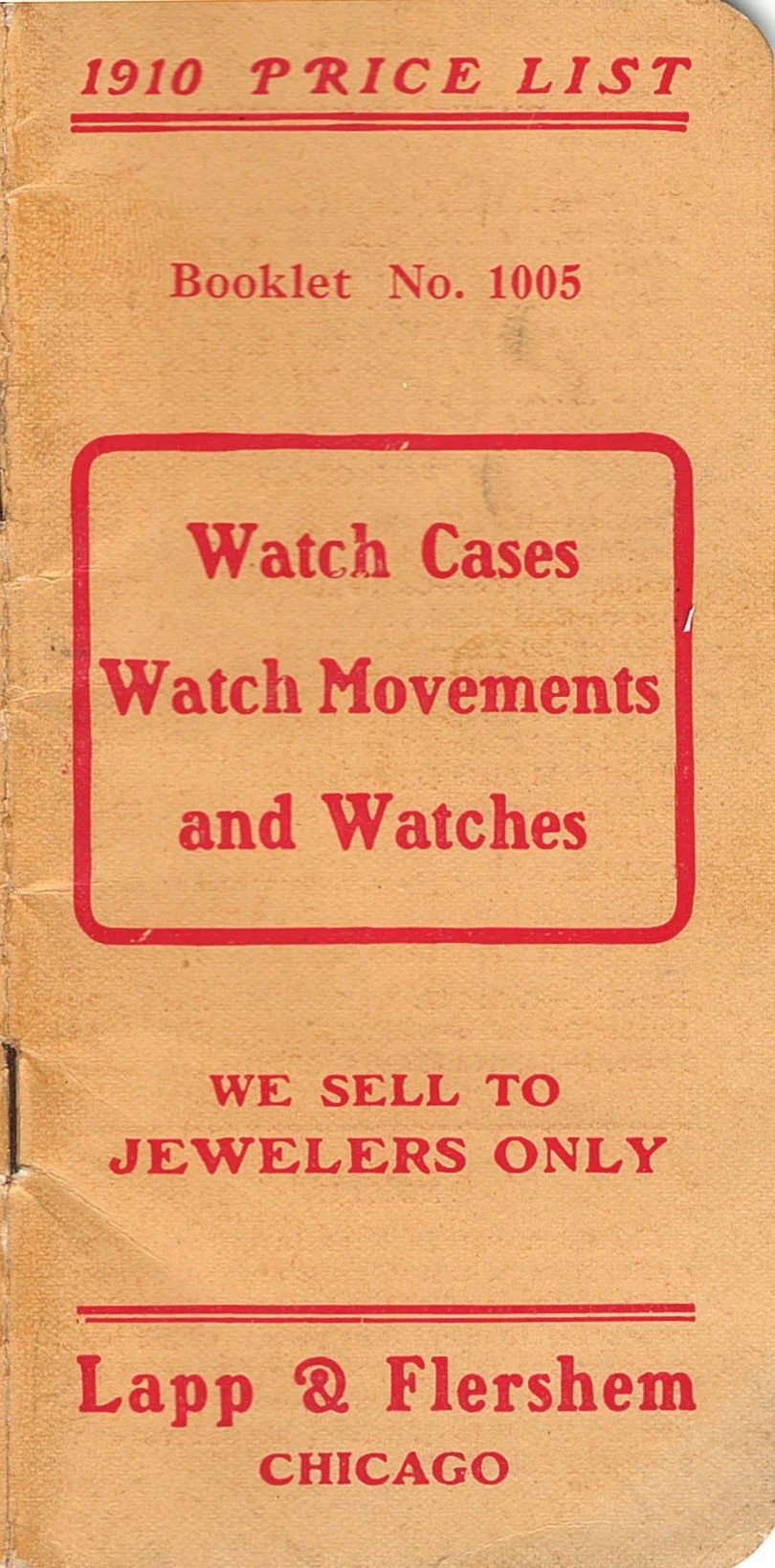
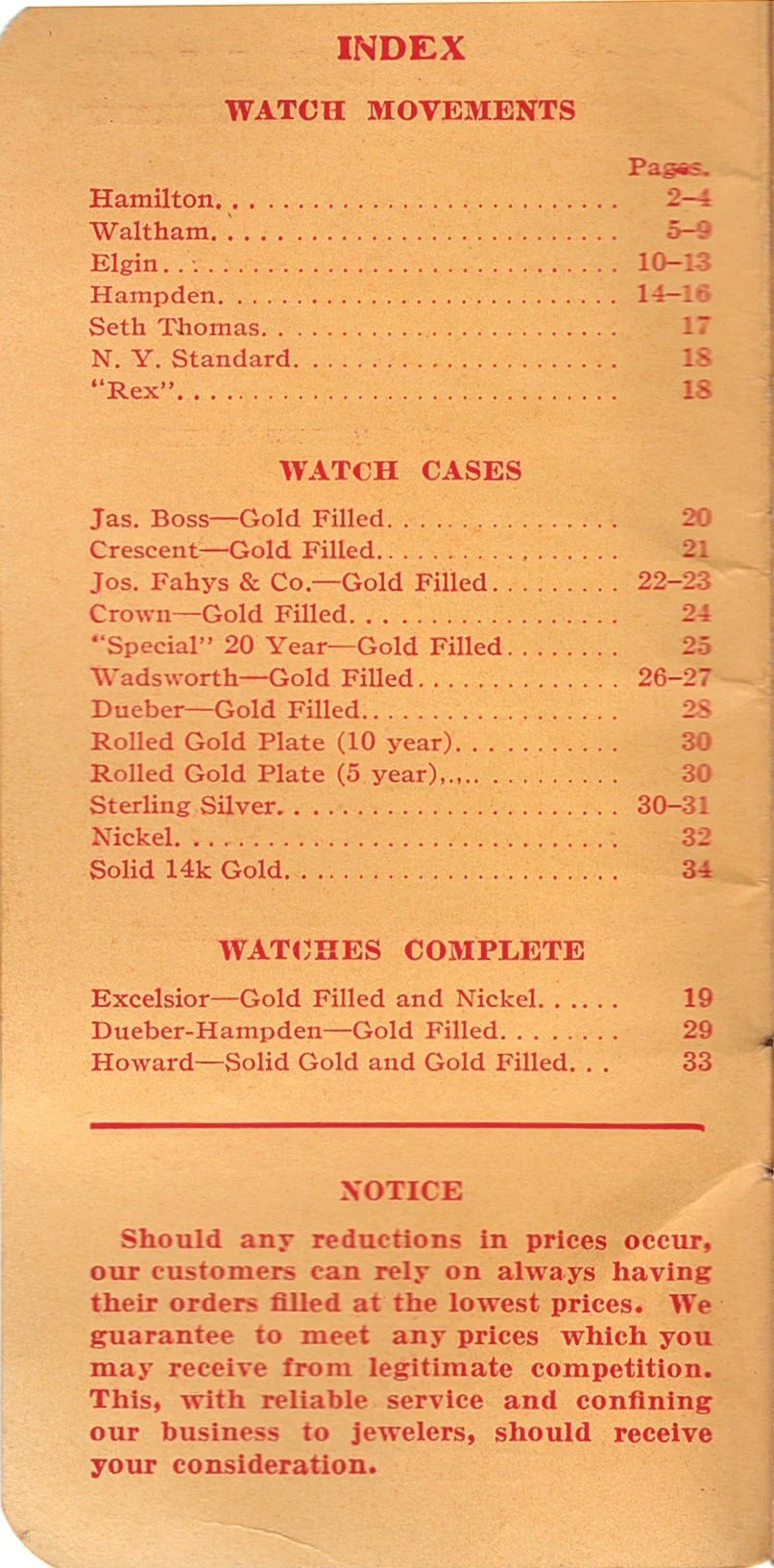
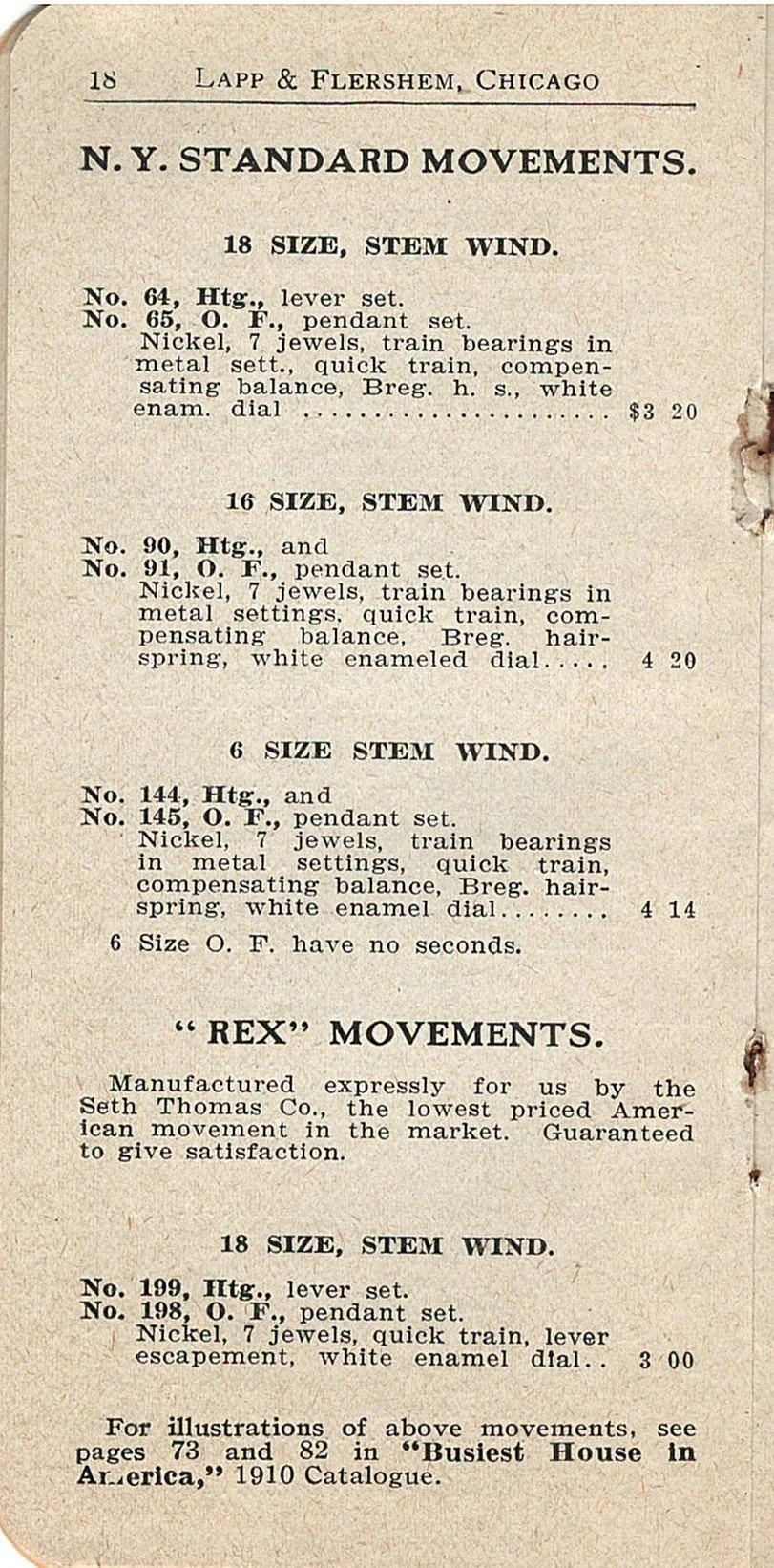
Rex is a private label in Seth Thomas 18-size open-face Model 12 and hunting Model 13. Rex was manufactured by Seth Thomas for Lapp & Flershem, a large wholesale jewelry house based in Chicago. Rex was significant for having no markings except for the serial number on the movement; and only “REX” on the dial. Information is listed below in the 1910 Price List and Advertisements can be viewed in the 1910 Lapp & Flershem “Busiest House in America” Catalogue.
Rex
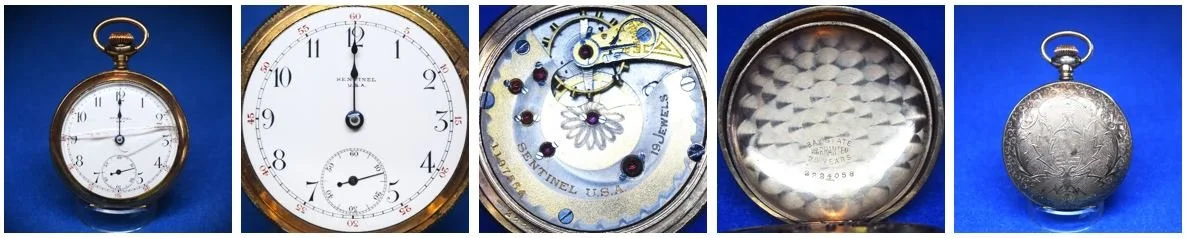

Sentinel U.S.A. is a private label in Seth Thomas 18-size Model 12 and Model 13. and 6-size Model 18.
Sentinel U.S.A.
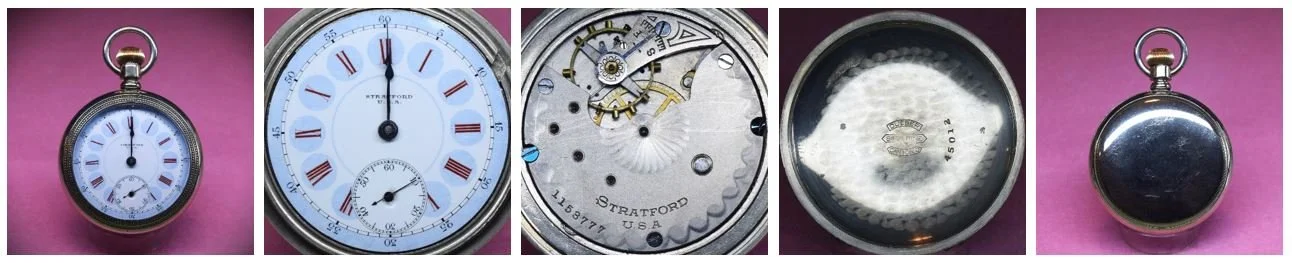
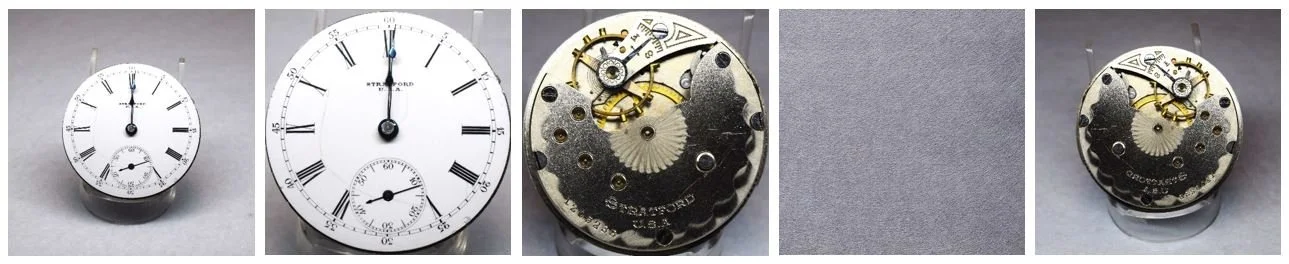

Stratford U.S.A. is a private label in Seth Thomas Model 12 and Model 13. It was manufactured for sale in the J.M. Smyth Company catalog.
Stratford U.S.A.

Tornado Watch Co. is a private label in Seth Thomas 18-size Model 12 and Model 13.
Toronado Watch Co.

EA 813C – Trainmens Special – 18-size – Model 12 – Serial Number TRAINMENS12A – 7 Jewels (Marked as 23) - Named Grade Century
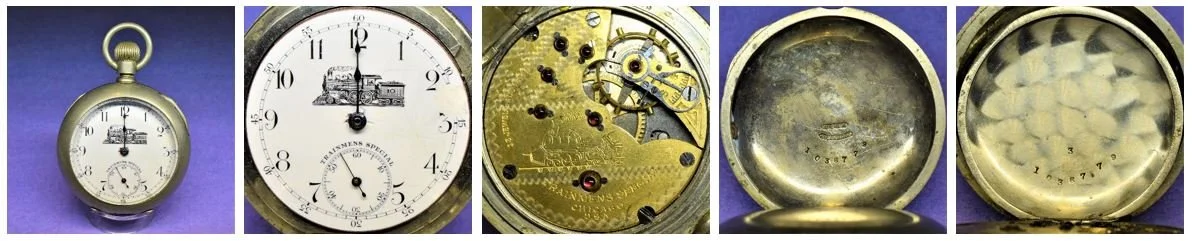
EA 813C – Trainmens Special – 18-size – Model 12 – Serial Number TRAINMENS12B – 7 Jewels (Marked as 17) - Named Grade Century
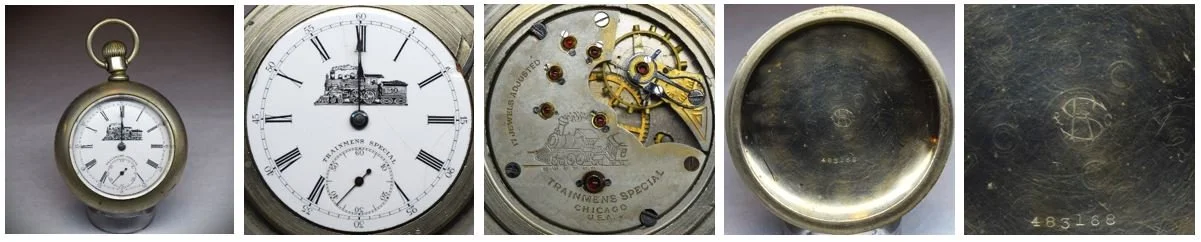
EA 814A – Trainmens Special – 18-size – Model 13 – Serial Number TRAINMENS13A – 7 Jewels (Marked as17) - Named Grade Century

Trainmens Special is a private label in Seth Thomas 18-size open-face Model 12 and Seth Thomas 18-size hunting Model 13 manufactured for Sears, Roebuck & Company for sale in their catalog. You can see the Trainmens Special advertisement in the lower right-hand corner of the Sears Catalog page shown below.
Trainmens Special

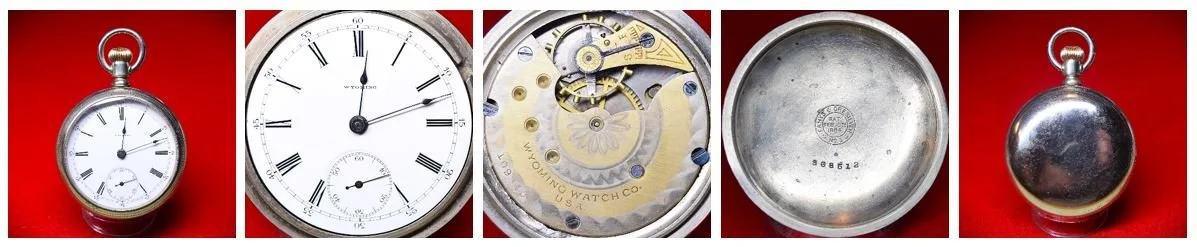
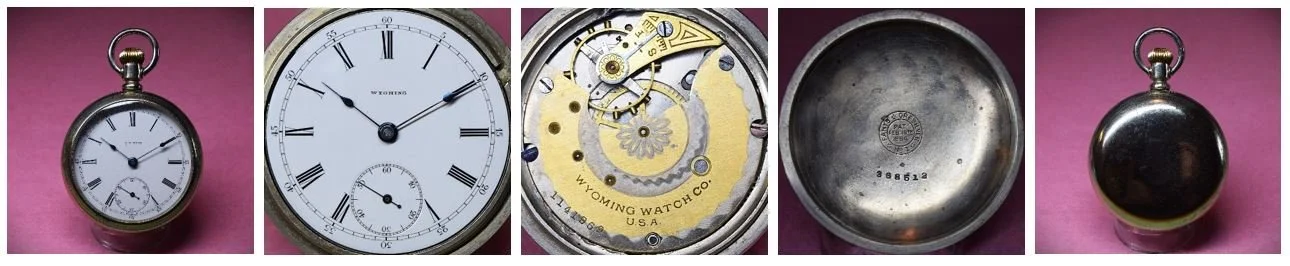
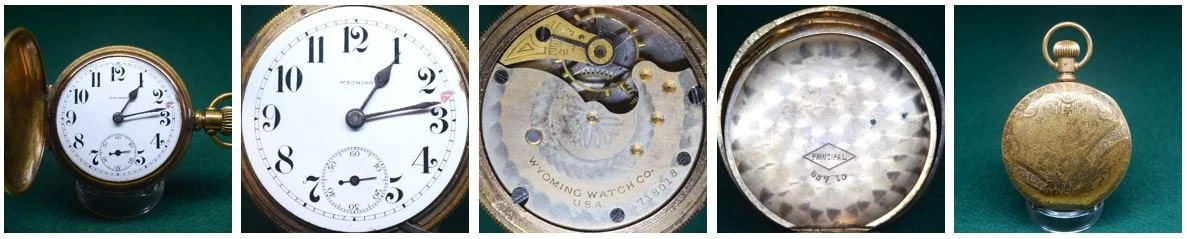
Wyoming Watch Co. is a private label in Seth Thomas 18-size Model 12 and Model 13.
Wyoming Watch Co.
FAT Numbers
Factory Assigned Tracking Numbers
for Century Grade Movement Components
What this page helps you do -
If you have a Seth Thomas Century-grade pocket watch movement with no serial number on the top plate, this page explains how to:
Locate the hidden Factory Assigned Tracking Numbers (FAT Numbers)
Identify movement components and their FAT Number truncation patterns
Distinguish original parts from replacements
Use Factory Assigned Tracking Numbers (FAT Numbers) to support identification and comparison of movements
Recognize patterns in components that provide insight into manufacturing and assembly practices
Identify Your Century Movement Model
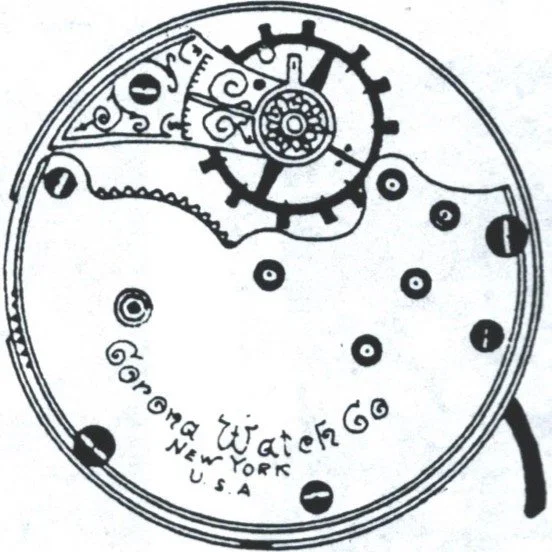
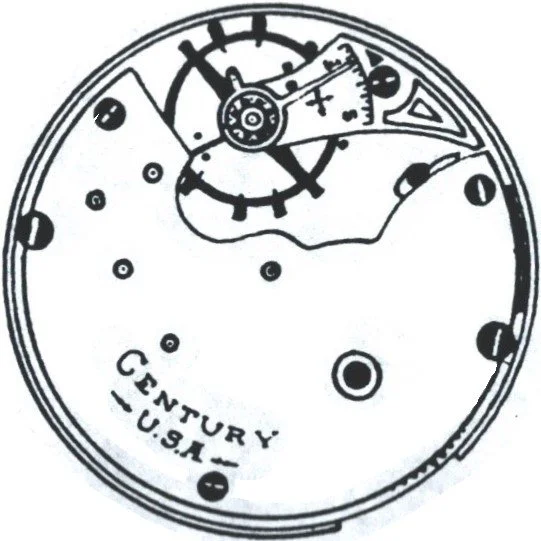
Match the exact configuration of your movement to one of the diagrams below. Models 11 and 13 are very similar; but take your time to notice the subtle differences in the depth of the curves. Do not pay attention to the movement signature at this time, only the configuration.
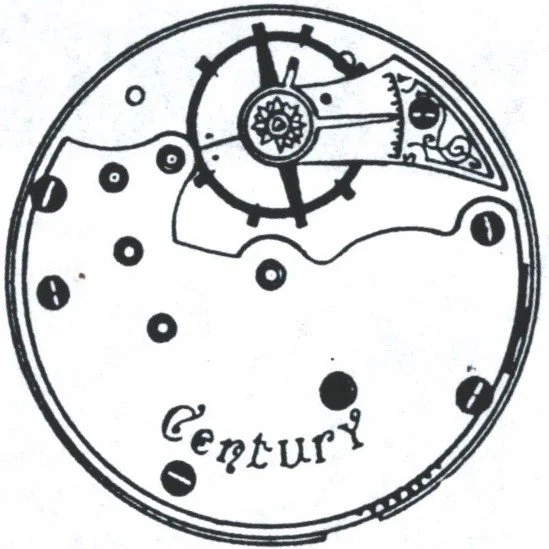
Century Old Model 10
Century Old Model 11
Century New Model 12
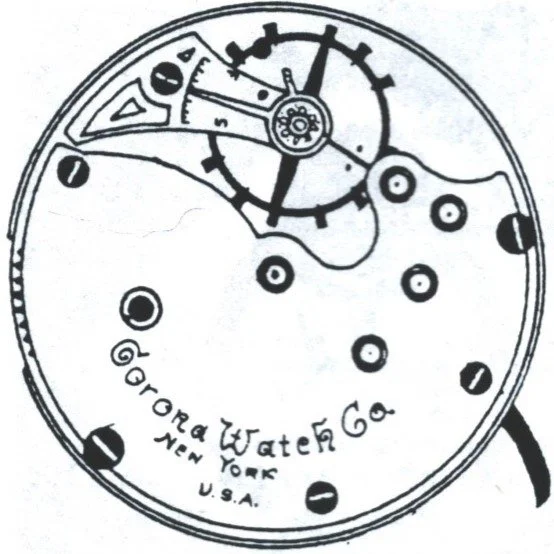
Century New Model 13
Once you have identified your model, continue reading the introductory section below. It provides the essential context and orientation for Century-grade movements needed to understand the information about Factory Assigned Tracking Numbers (FAT Numbers) presented on these pages.
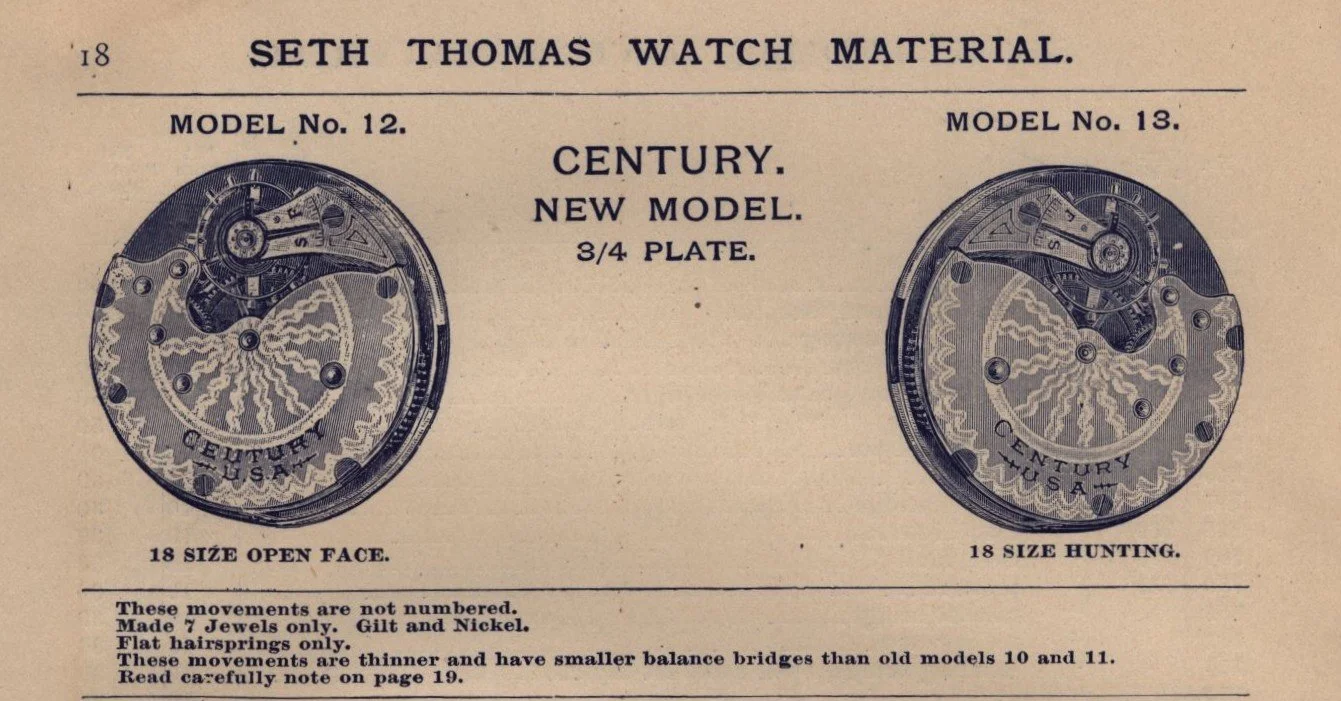
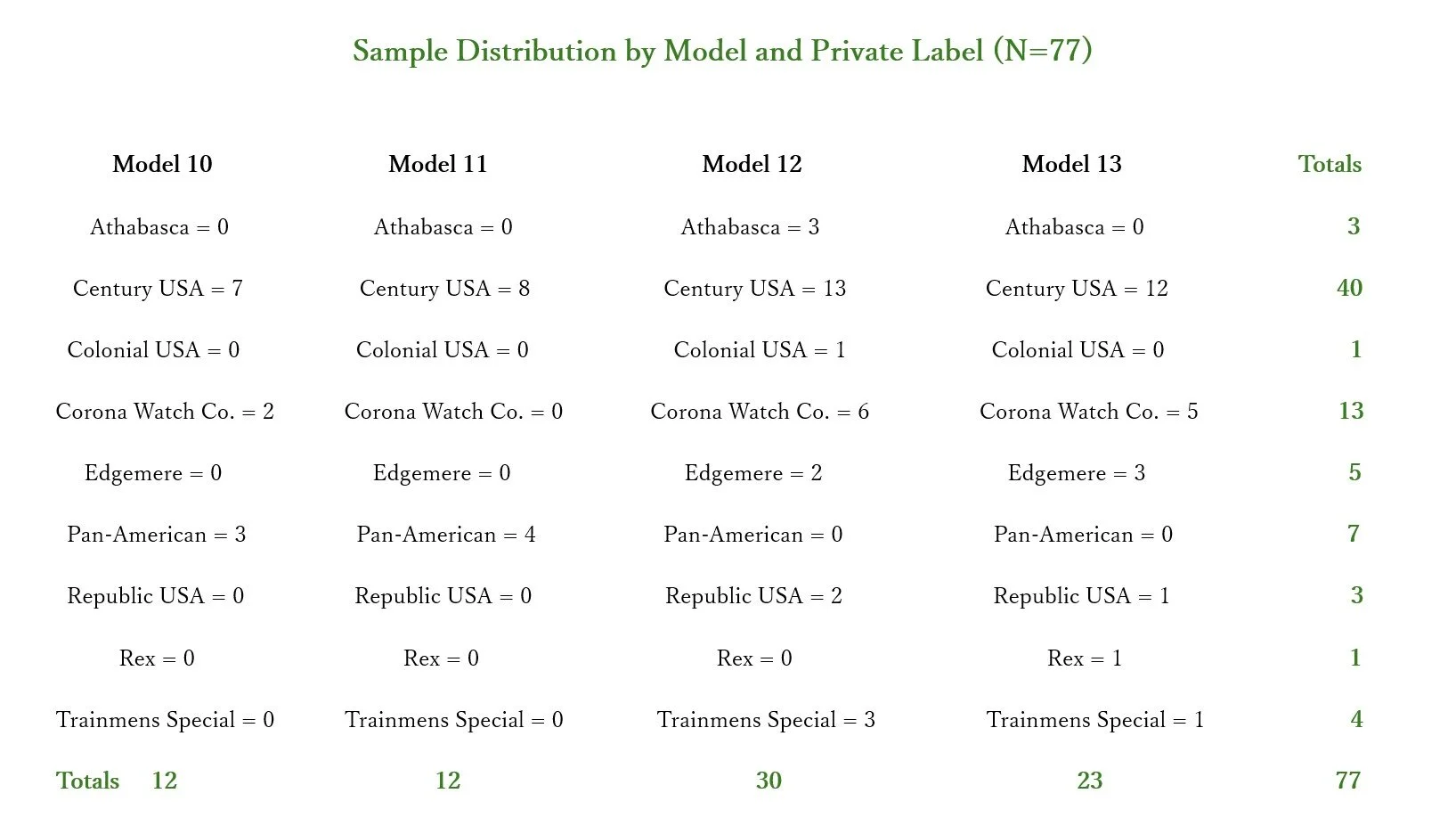
An examination of seventy-seven Seth Thomas Model 10 – Model 13 pocket watch movements having no serial numbers on the top plates has been undertaken and is documented here. All known Seth Thomas Model 10-13 movements are private label movements, which contributes an article of individual identity beyond model number to each movement.
View individual private label entries: Athabasca, Century USA, Corona Watch Co, Edgemere, Pan-American, Republic USA, Rex, Trainmens Special.
Sample Distribution by Model and Private Label (N = 77)
This text version is provided for indexing, accessibility, and detailed reference.
Model 10 Model 11 Model 12 Model 13 Totals
Athabasca = 0 Athabasca = 0 Athabasca = 3 Athabasca = 0 3
Century USA = 7 Century USA = 8 Century USA = 13 Century USA = 12 40
Colonial USA = 0 Colonial USA = 0 Colonial USA = 1 Colonial USA = 0 1
Corona Watch Co. = 2 Corona Watch Co. = 0 Corona Watch Co. = 6 Corona Watch Co. = 5 13
Edgemere = 0 Edgemere = 0 Edgemere = 2 Edgemere = 3 5
Pan-American = 3 Pan-American = 4 Pan-American = 0 Pan-American = 0 7
Republic USA = 0 Republic USA = 0 Republic USA = 2 Republic USA = 1 3
Rex = 0 Rex = 0 Rex = 0 Rex = 1 1
Trainmens Special = 0 Trainmens Special = 0 Trainmens Special = 3 Trainmens Special = 1 4
Totals 12 12 30 23 77
These non-numbered 18-size Century-grade pocket watch movements each carry a Factory Assigned Tracking Number (FAT Number) stamped on two to four of the following locations, the pillar plate, back of the top plate, underside of the balance bridge, and block style winding bridge.
Data shows that the FAT Number stamped on the pillar plate has not been omitted on any of the specimens examined. The FAT Number on the reverse side of the top plate, when present, has been exactly the same as the FAT Number shown on the pillar plate, the only exception observed to date being cases in which one of the plates appears to have been transplanted from another movement. Transplanted parts seem to be identified quite easily on the non-numbered Century grade movements using the FAT Numbers.
The FAT Numbers appearing on other parts of the movement, underside of the balance bridge and on the winding bridge, are frequently truncated showing the last three, two, or one digits of the FAT Number. The truncation of FAT Numbers across movement components mirrors established serial-number marking practices and does not, in itself, indicate a different functional purpose.
Since the pillar plate appears to be the most consistent and reliable source of the full Fat Number, the number appearing there is being observed as the FAT Number for any given movement.
Because each movement can be characterized by its factory production model, retail private label name, and factory assigned tracking number (FAT Number), these non-numbered movements possess sufficient structural identifiers to permit systematic documentation and the development of derived identifiers. The FAT Number Derived Identifier is comprised of the physical movement’s two-digit model number, the private label name, and the FAT Number found on the pillar plate of the movement.
It has been decided that tracking the number of dial feet screws tapped into the outer perimeter of the pillar plate is relevant for tracking the possible temporal aspect of data as we know that early Seth Thomas movements had only two dial feet screws where movements produced later were equipped with three dial feet screws to provide greater stability for the dial.
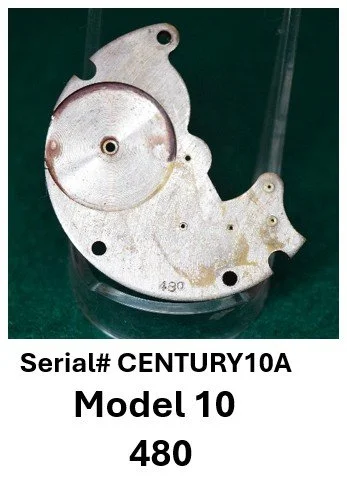
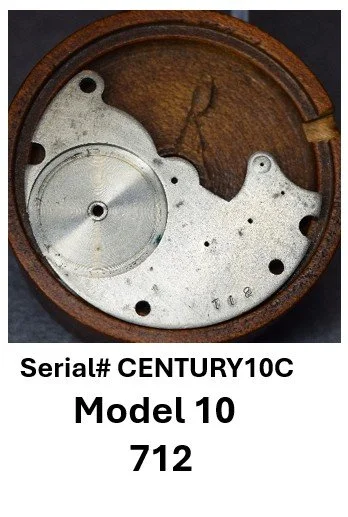
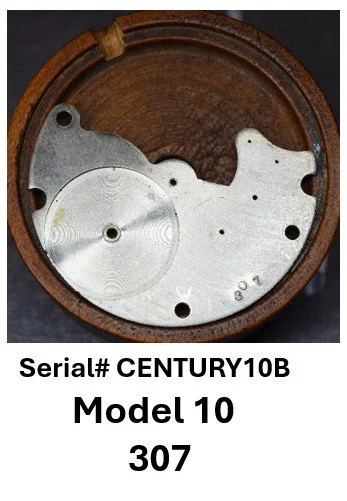
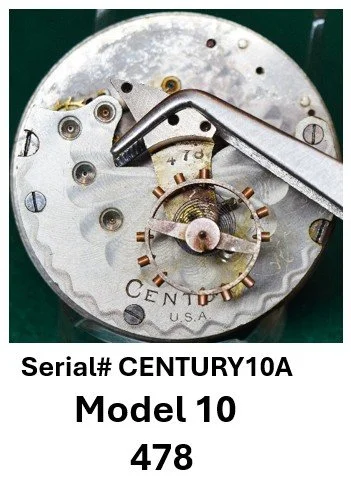
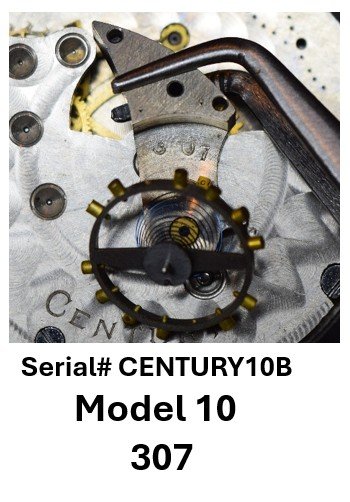
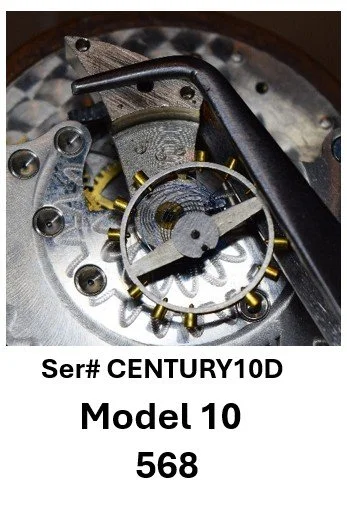
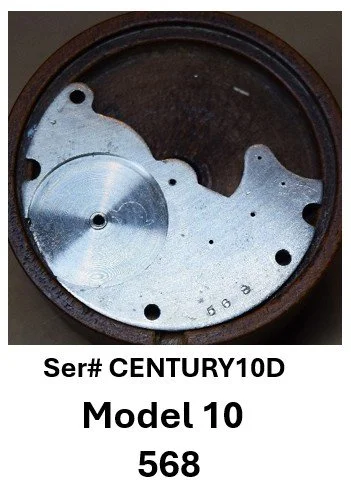
The “Ser#’s” displayed in this section’s images were assigned upon acquisition for internal collection tracking purposes and do not represent factory-applied serial numbers. They were also used when uploading the movements’ data to the Pocket Watch Database.
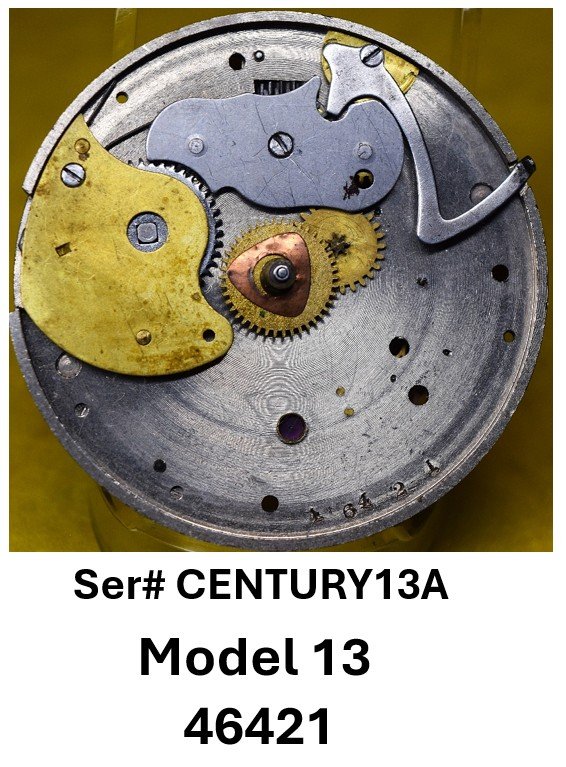
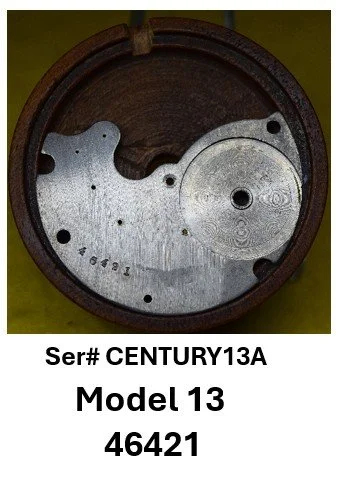
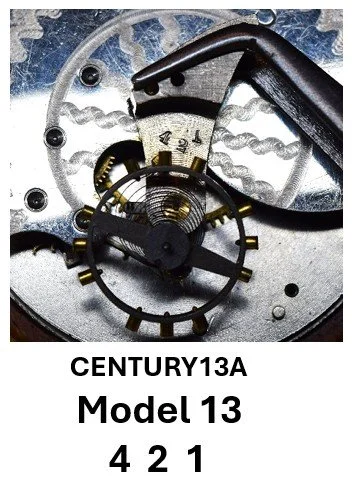
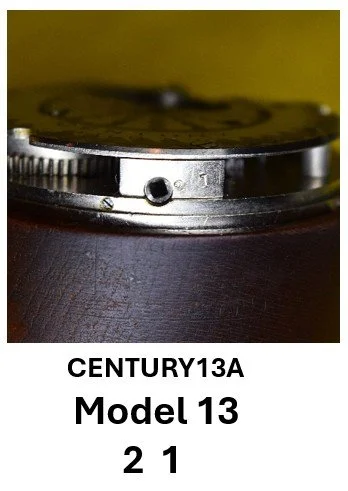

For the purpose of examining individual movement specimens, this reference illustrates the dial foot screw (DFS) location patterns used throughout the documentation images and provides a standardized reference for recording DFS count during specimen documentation. A dial foot screw (DFS) is located on outer perimeter of the pillar plate distal to the penetration for each dial foot.
No surviving factory documentation describing these markings has yet been identified; all conclusions presented here are based on physical examination and comparative analysis.
In the Seth Thomas Fan collection, FAT numbers observed on Model 10 movements range from 115 to 922. FAT numbers observed on Model 11 movements range from 116 to 34,301. FAT numbers observed on Model 12 movements range from 340 to 67,010. FAT numbers observed on Model 13 movements range from 182 to 324,601. Current evidence suggests FAT numbers may be unique within a model, but the factory’s full assignment logic is not yet known. These stamped numbers are illustrated and cataloged in the sections below.
The Complete Dataset - Private Label Progression, The Complete Dataset - Standard Sort and The Complete Dataset - Manufacturing Practices Sort can each be viewed in a separate tab.
Practical Use of FAT# Derived Identifiers
Independent of any factory-intent interpretation, FAT# Derived Identifiers provide a reliable means of distinguishing otherwise indistinguishable non-numbered Century movements that are visually similar in engraving, dial, and private-label configuration, making positive re-identification difficult once movements are removed from cases or long-term storage. FAT# Derived Identifiers are not serial numbers; but in practice, they function as serial-number equivalents to facilitate collection management and documentation for collectors working with these non-serialized movements. Naming is what turns objects into data points. The FAT# Derived Identifier is comprised of a two-digit model number, the private label name, and the FAT Number found on the pillar plate of the physical movement.
FAT Numbers possibly hold potential to assist horologists in the development of a deeper understanding of the production process and chronology that took place at the Seth Thomas factory while non-numbered Century grade movements were being produced.
The first test of the usefulness of FAT Numbers will be the development of a FAT# Derived Identifier for each non-numbered Century grade movement in the Seth Thomas Fan Collection. This part of the project holds the potential to create viable identifiers tied to physical non-numbered movements. If successful; this means that FAT Numbers will be proven able to play a role in assigning persistent identifiers to otherwise undistinguishable horological artifacts in a large collection.
Early Observations and Initial Inferences
A possible structural transition in top-plate marking and dial-foot configuration is observable within the dataset and is discussed in detail in the Evidence Summary section at the end of the Model 13 FAT Numbers page.
The presence of lower FAT numbers on movements exhibiting later configuration traits (three dial foot screws and/or absence of a FAT number on the back of the top plate) suggests that FAT numbers should not presently be interpreted as strictly chronological indicators.
A possible structural transition is suggested in Model 12 and Model 13 movements: examples exhibiting earlier configuration traits (FAT number on the back of the top plate and/or two dial feet screws) when contrasted with examples exhibiting later configuration traits (three dial foot screws and no rear top-plate FAT stamping). The later configuration aligns with the mechanical and marking practices seen in early numbered production, where the serial number appears on the front of the top plate.
Current evidence raises the possibility that elimination of rear-top-plate FAT stamping coincided with the factory’s reorganization of marking practices during the transition to numbered movements, though the precise sequencing of these changes (whether simultaneous or staged) remains under investigation.
Present data do not support interpreting FAT numbers as a simple ordinal production sequence across all Century-grade models. Whether FAT numbers correlate to production sequencing within specific models or configuration phases remains an open question pending additional documentation.
The omission of outward-facing identifiers in documented factory shipping materials suggests that Century-grade movements were distributed within a standardized, size-and-grade-based framework that did not require individual serial numbering. The presence of FAT# markings on such movements may indicate one possible internal method of differentiation operating independently of external identification.
Seth Thomas Watch Factory Tins & Cardboard Movement Holders


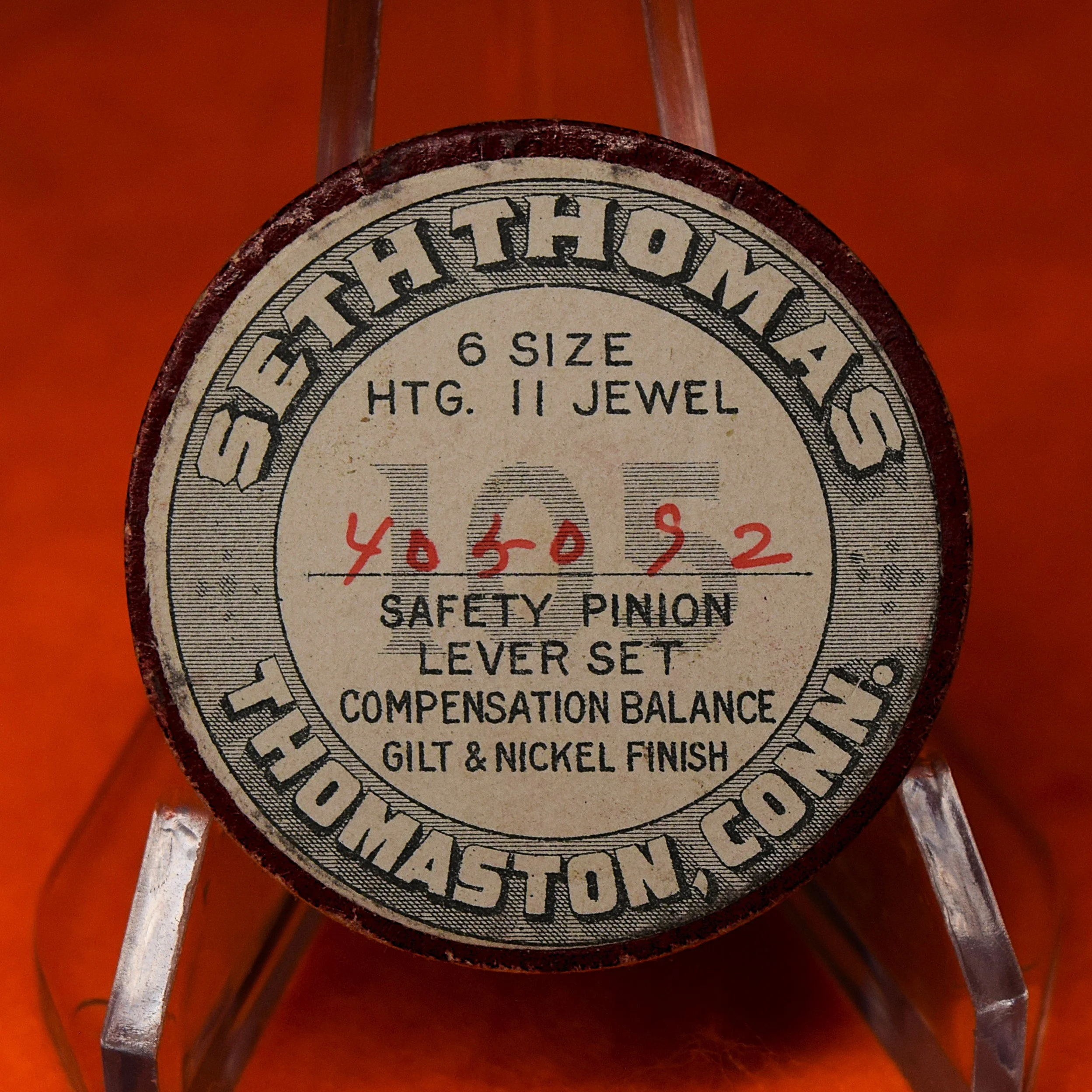
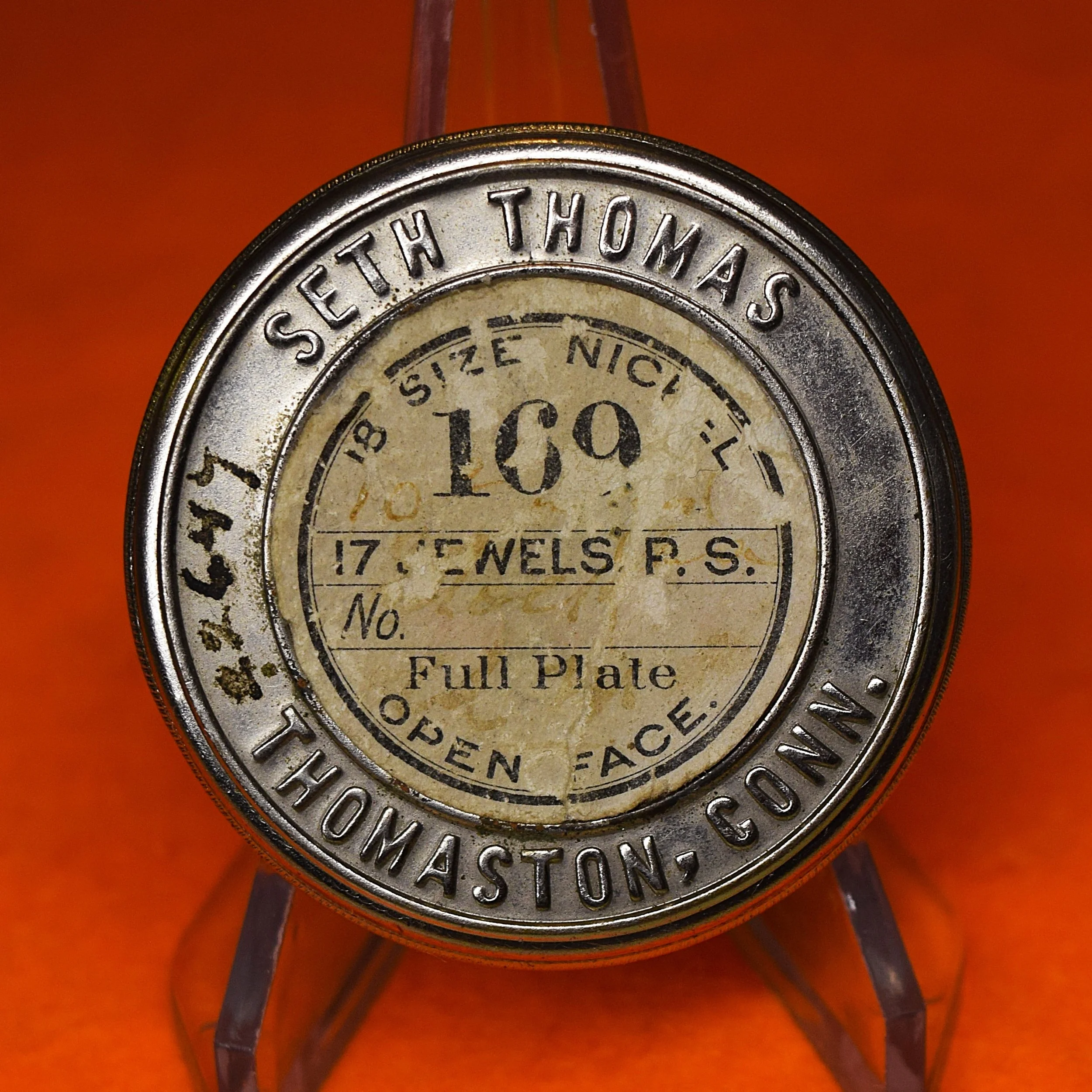
Factory Packaging and Distribution Context
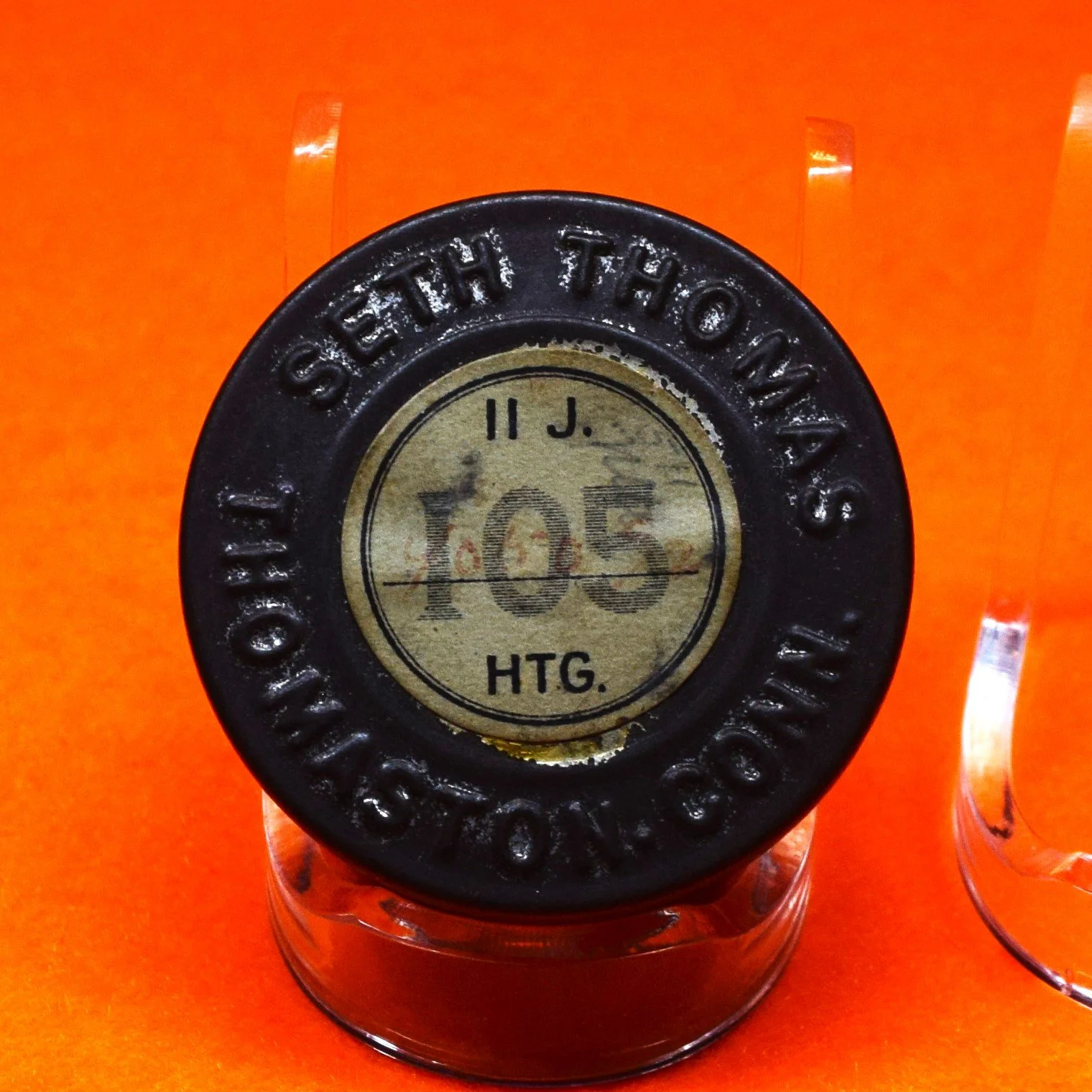
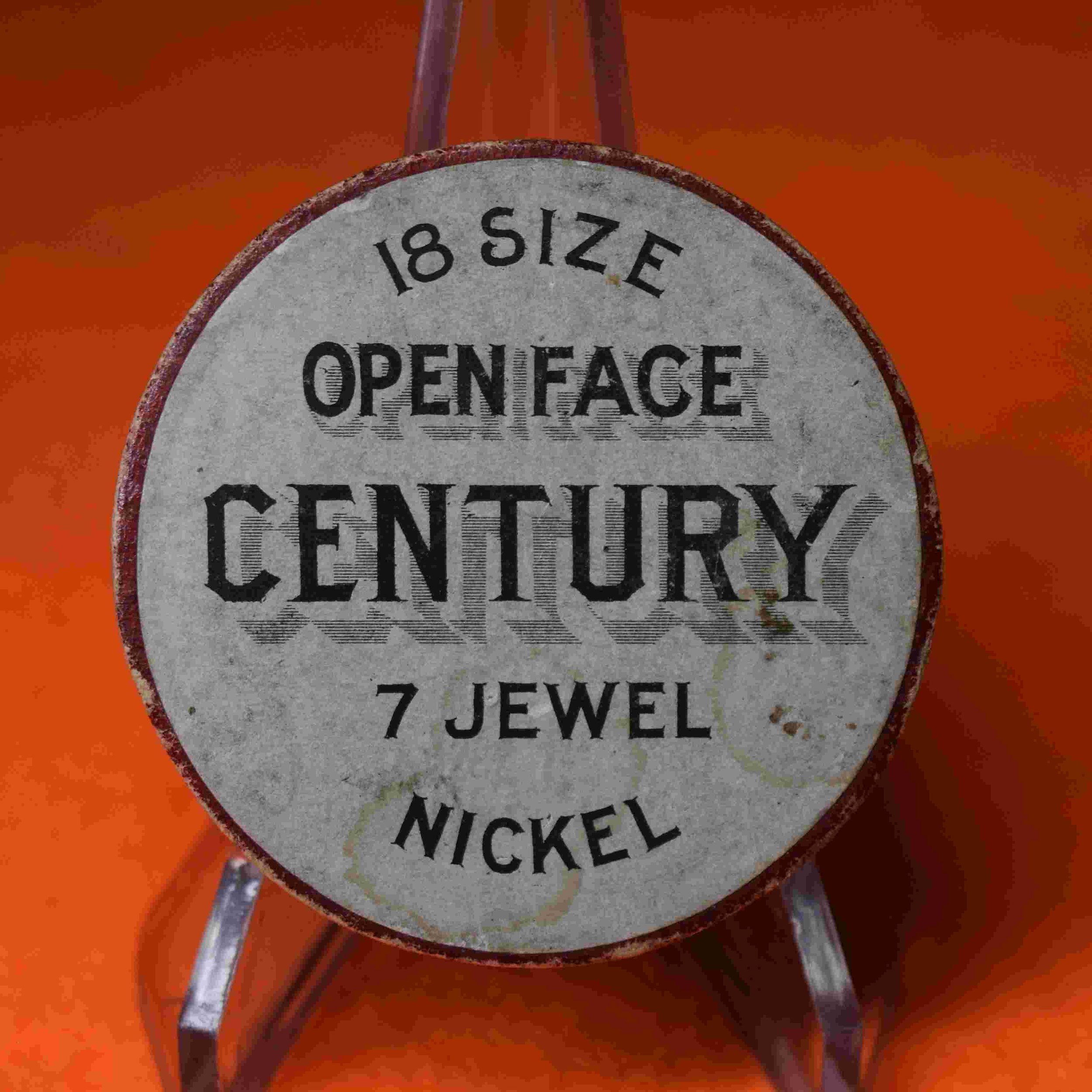
Finished Seth Thomas movements were placed into soft cardboard movement holders immediately after production to protect their finish, and these holders were then nested within hard metal tins to prevent crushing during storage and transport. The information applied to these holders typically included size, jewel count, grade, and—in many documented cases—a serial number or production identifier written or stamped in a designated field.
The open-face Century example illustrated above differs in a notable way. While it clearly identifies size (“18 Size”), configuration (“Open Face”), grade (“Century”), and jewel count (“7 Jewel”), it provides no designated space for a serial number or other unique identifier. This omission is consistent with observed examples of non-numbered Century-grade movements.
Additional factory material supports the conclusion that this omission was intentional rather than accidental. Contemporary Seth Thomas mainspring packaging and parts charts show a highly standardized system of size-based classification and distribution. Where tracking or identification was required, space was explicitly provided for it. Where it was not required, it was omitted.
While packaging materials do not directly document factory tracking systems, they provide consistent contextual support, particularly when considered alongside non-numbered movements lacking serial identifiers.
The absence of both a factory signature on the cardboard holder and a serial number on associated Century-grade movements appears to reflect an intentional distribution practice rather than an omission or oversight. By the time of Model 10–13 production, Seth Thomas had already established mature private label and identification systems. The consistent omission of outward-facing identifiers in this context suggests that Century-grade movements were distributed within a standardized, size-and-grade-based framework that did not require individual serial numbering. The presence of FAT# markings on such movements may indicate an internal method of differentiation operating independently of external identification.
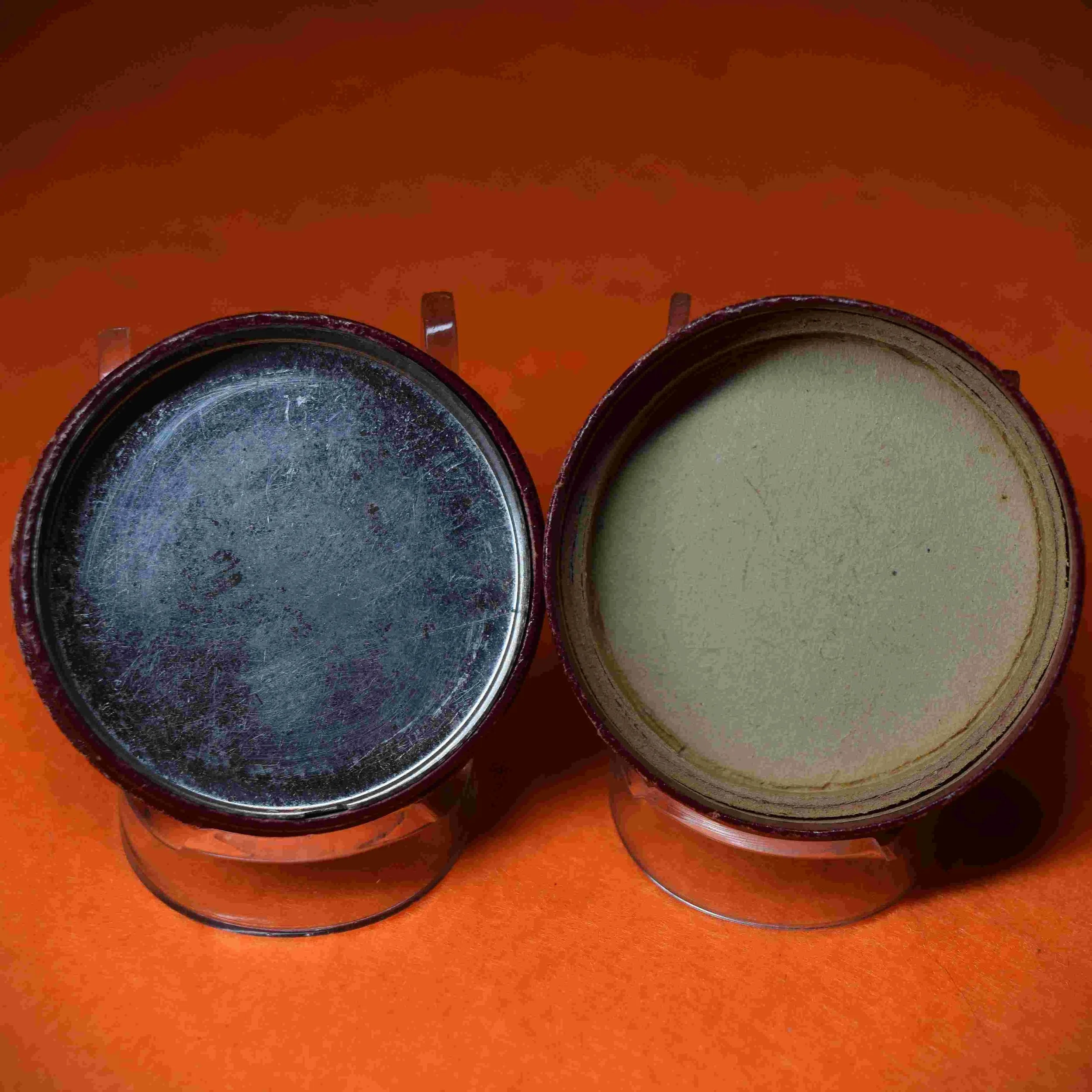
This more robust holder appears to represent a variation in packaging format rather than a departure from the standardized size- and grade-based distribution system observed across other examples.
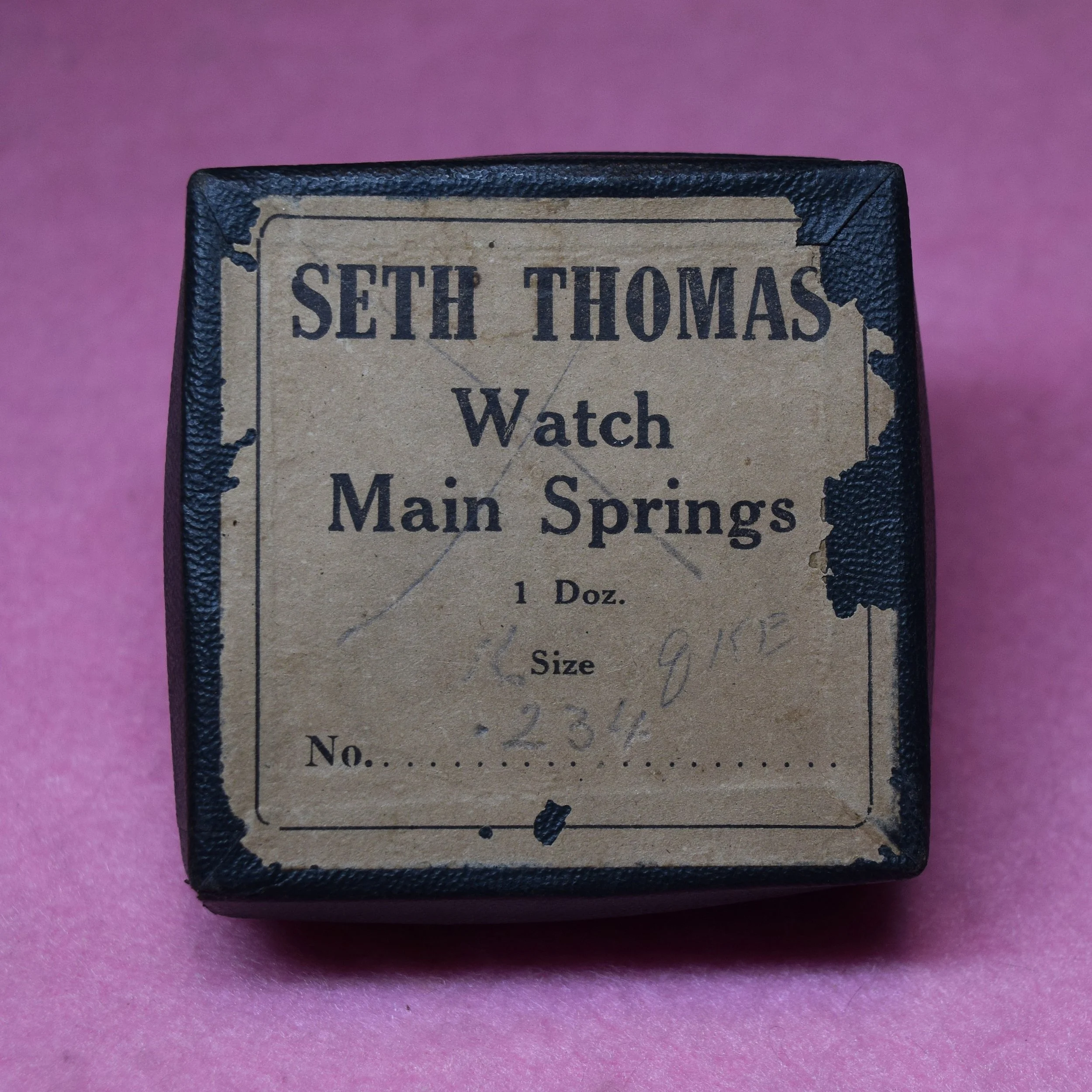
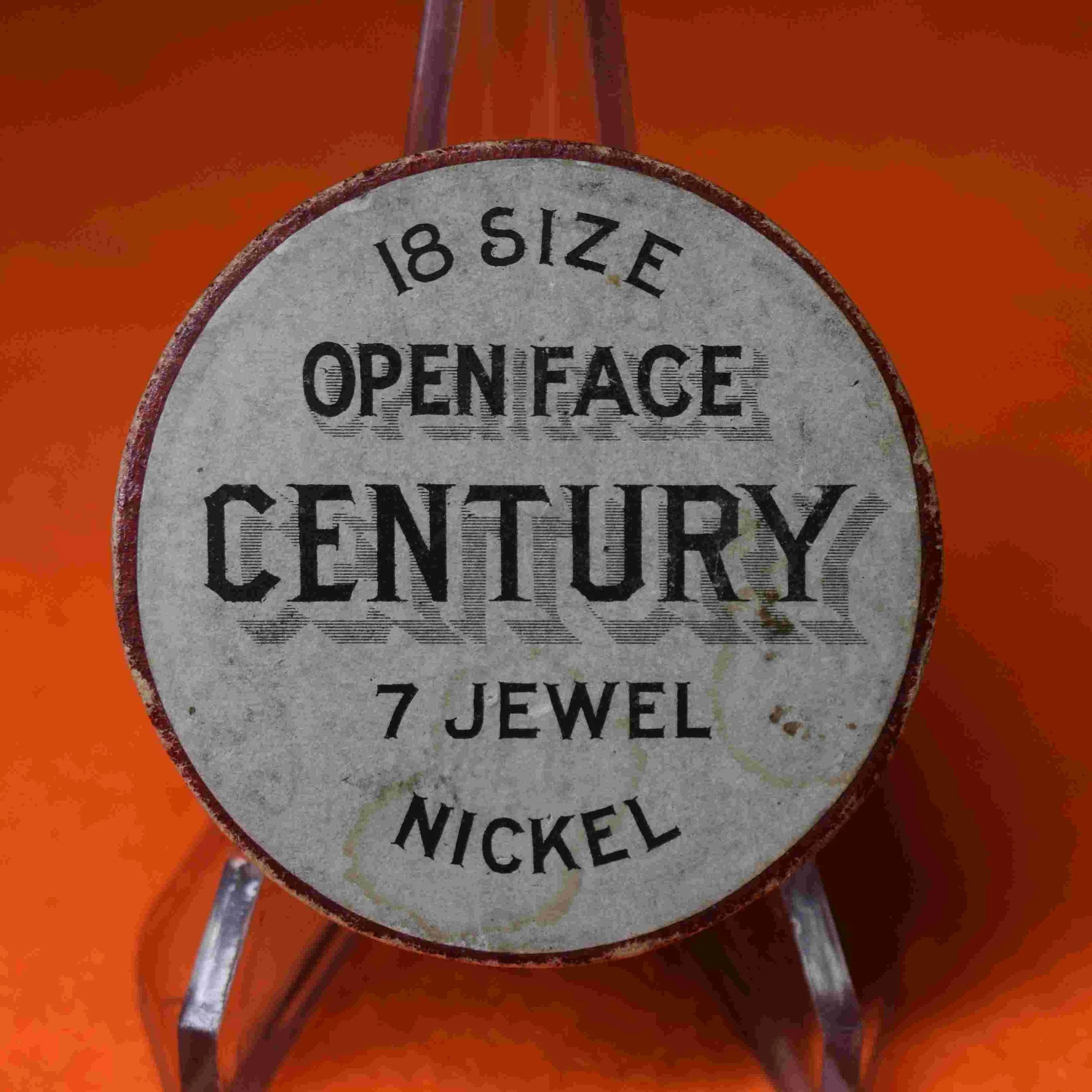
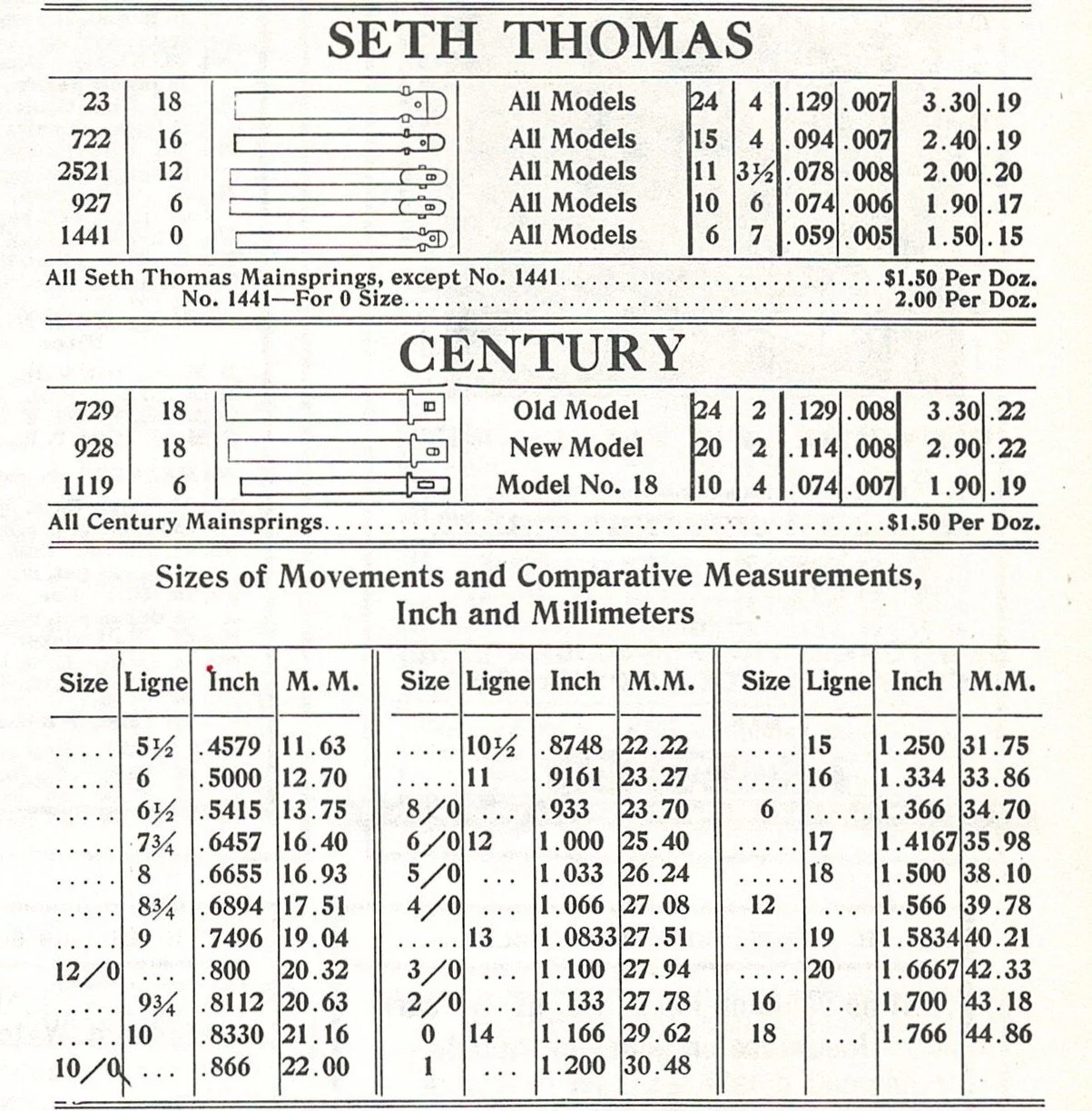
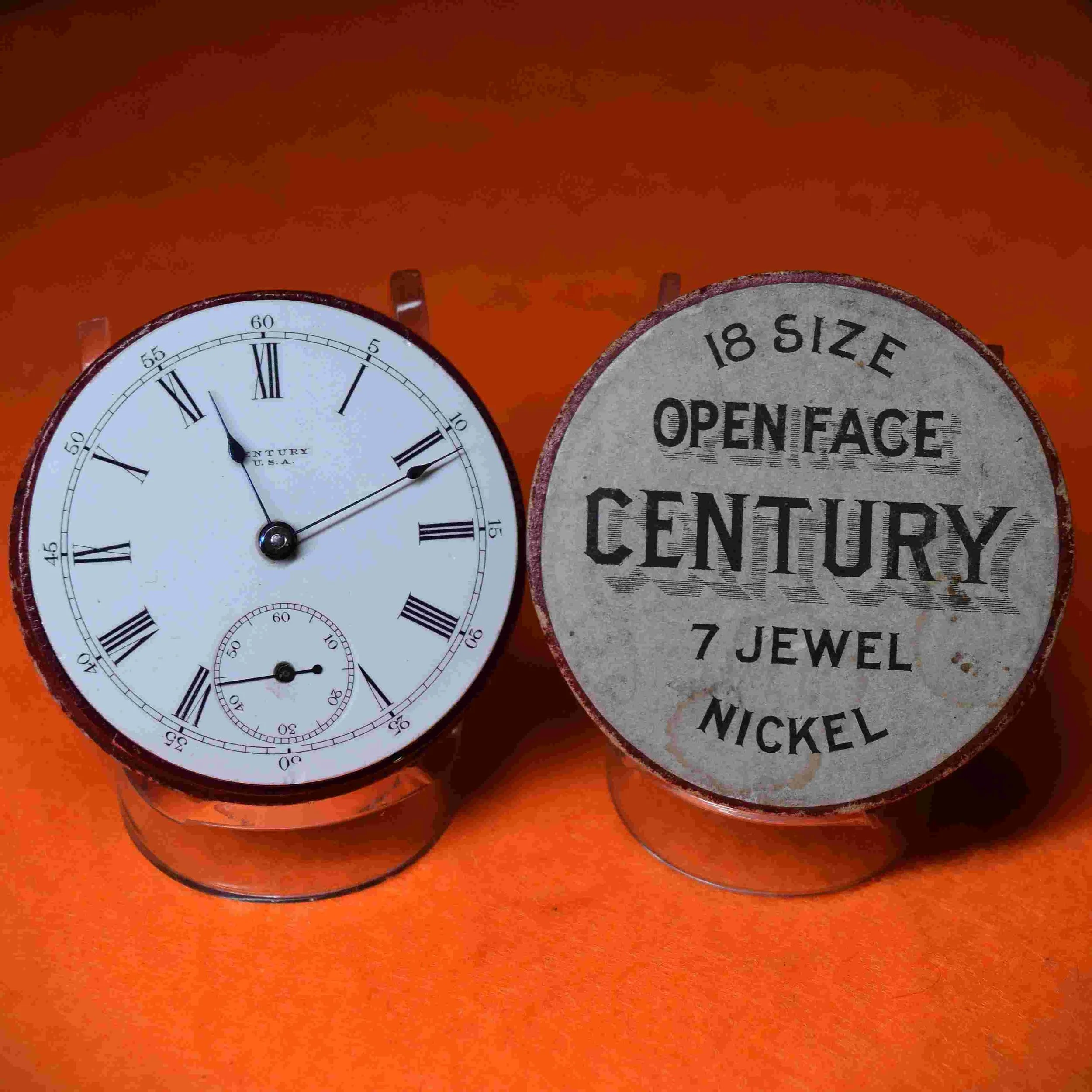
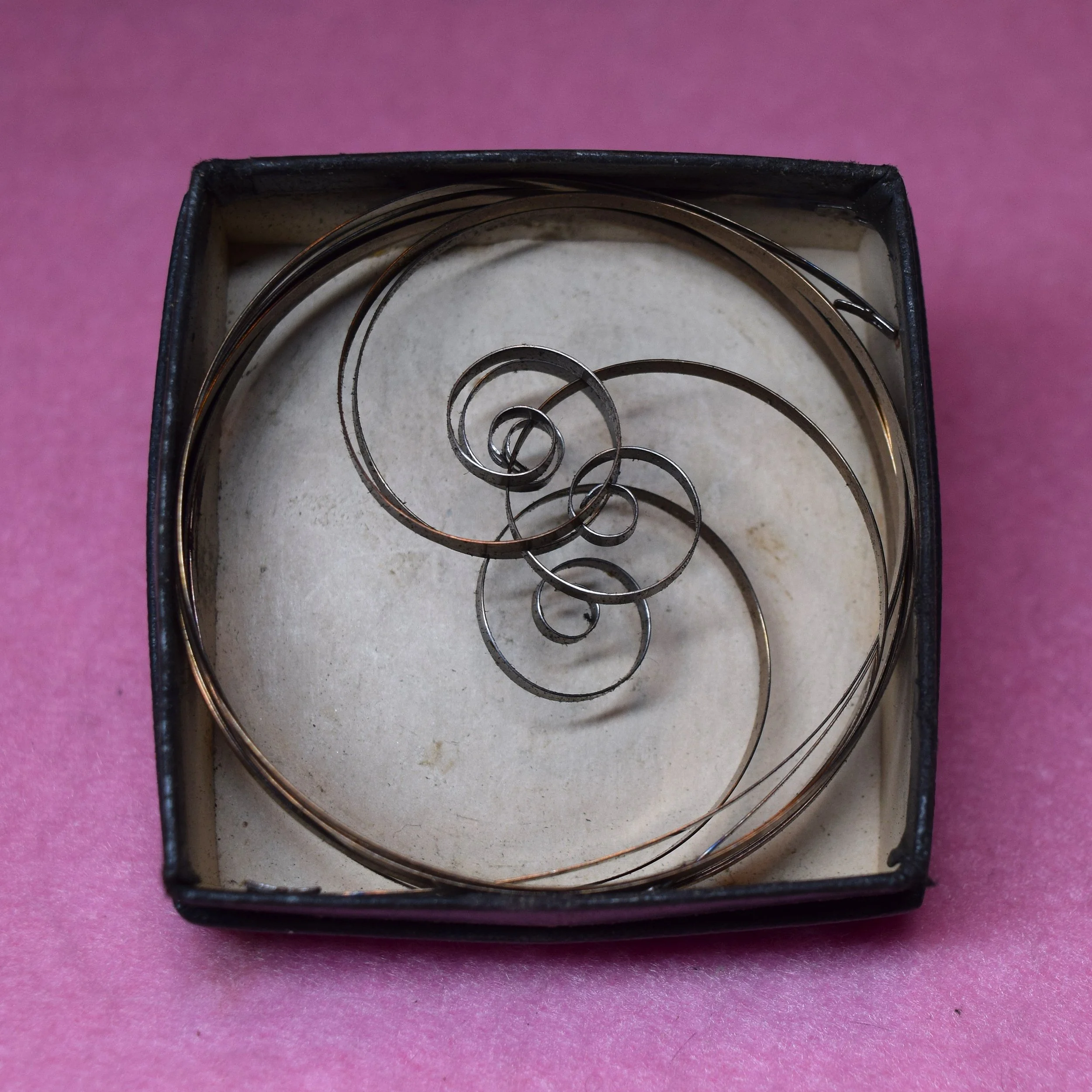
The factory mainspring packaging shown above demonstrates standardized size-based distribution with designated fields for required information. The original “Seth Thomas Watch Main Springs” label has been crossed out, indicating that the box was repurposed to hold mainsprings of a different mainspring manufacturer and/or specifications than it originally contained.
Additional data from other collections may clarify whether FAT numbers reflect batch assignment, model-scoped numbering, tooling sequences, or other internal factory processes.
Image Contribution Form
If you have previously documented a non-numbered Century-grade Model 10–13 movement and would like to contribute photographs for research purposes, this Image Contribution Form may be used.
NOTE: This page is under active development. It will continue to be updated as photographic documentation becomes available and as additional movements are added to the collection and documented. The research and classifications on this page follow the methods described in the Research Methodology.
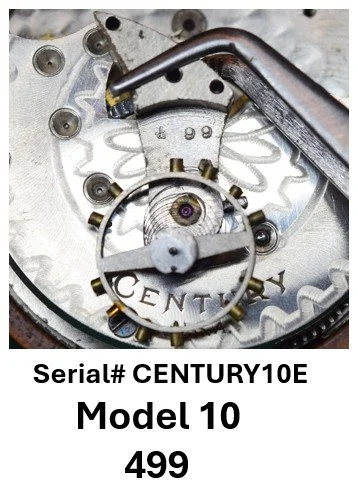
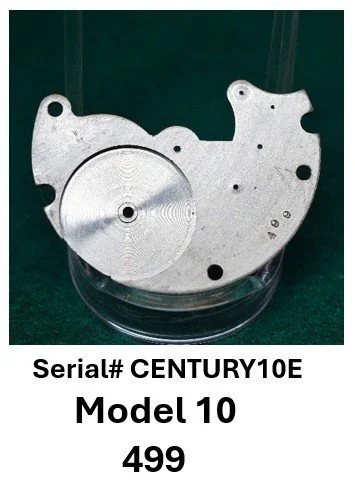
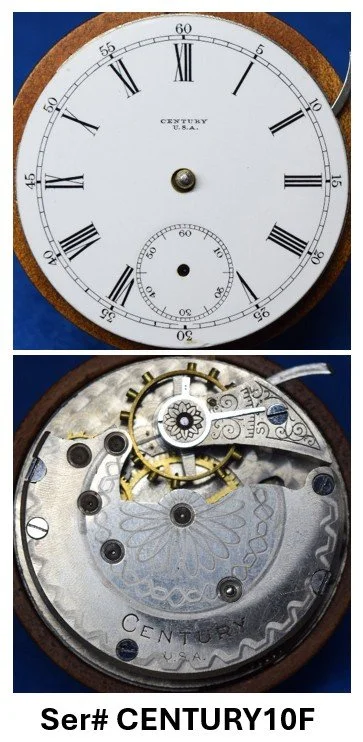
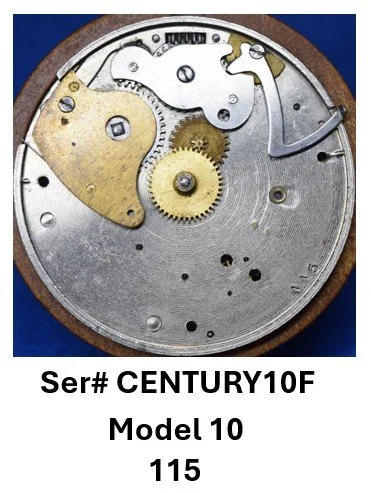
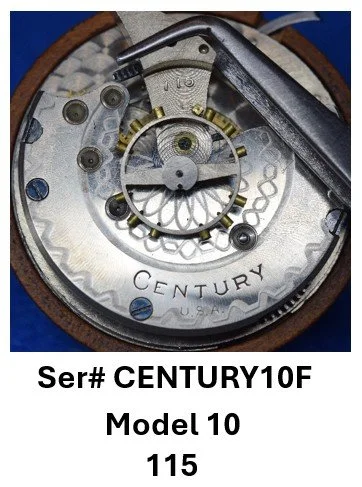
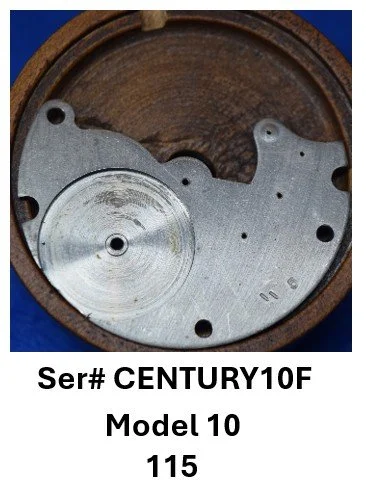
In the illustrations below, the original Seth Thomas Fan Collection serial identifier is retained. Where present, a green alphanumeric label indicates a FAT Number–Derived Identifier used for internal cataloging and analysis. It is comprised of a two-digit model number, the private label name, and the FAT Number found on the pillar plate of the physical movement.
The following terms used within the illustrations below to qualify each FAT Number datapoint are defined, based on physical examination and comparative analysis, as follows: Original = No evidence of transplant observed. Transplant = Evidence strongly supports component transplant.
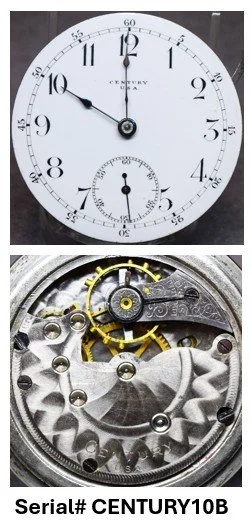
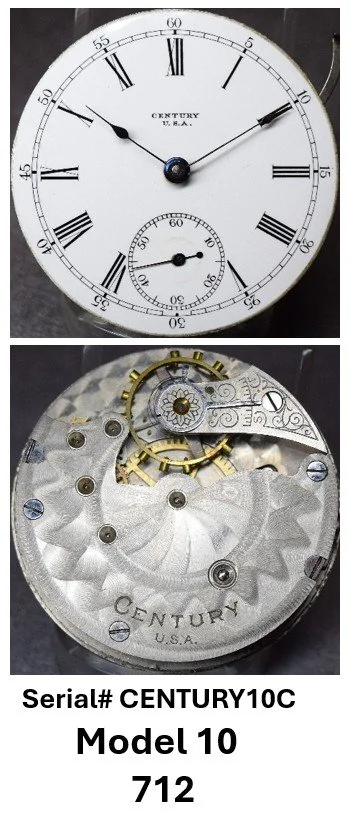
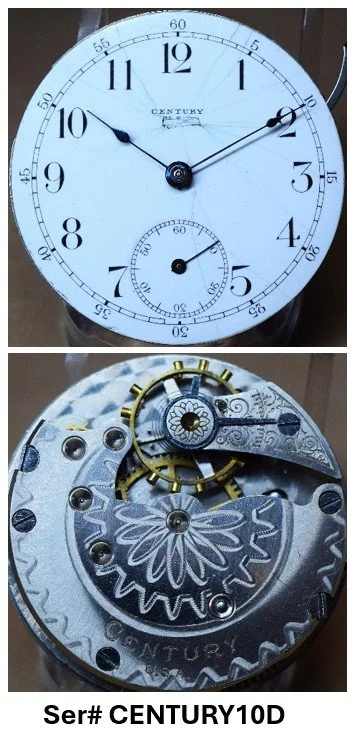
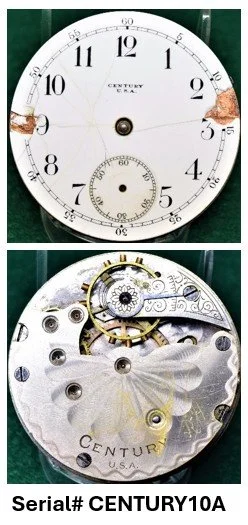
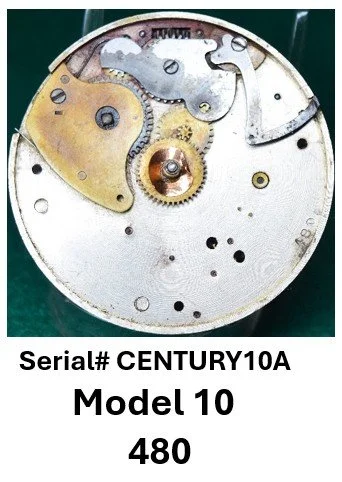
Pillar Plate: 480 Back of Top Plate: 480 Balance Bridge: 478 Winding Bridge: Blank 2 DFS
Original Original Transplant Original
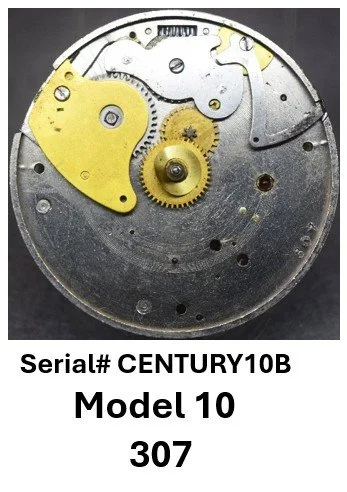
Pillar Plate: 307 Back of Top Plate: 307 Balance Bridge: 307 Winding Bridge: Blank 2 DFS
Original Original Original Original
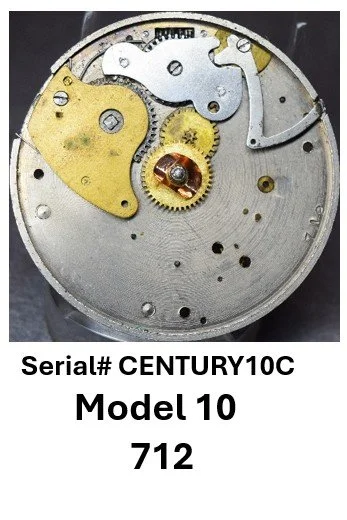
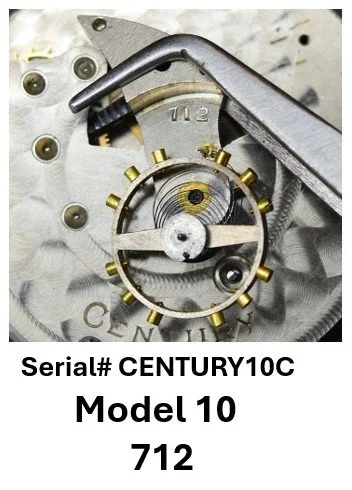
Pillar Plate: 712 Back of Top Plate: 712 Balance Bridge: 712 Winding Bridge: Blank 2 DFS
Original Original Original Original
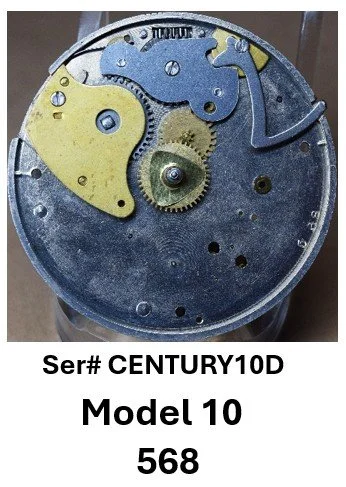
Pillar Plate: 568 Back of Top Plate: 568 Balance Bridge: 568 Winding Bridge: Blank 2 DFS
Original Original Original Original
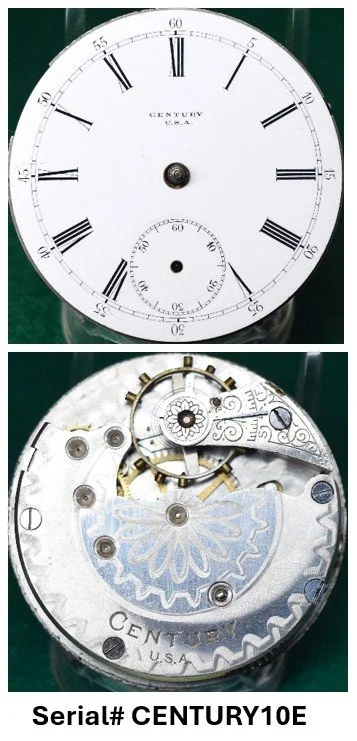
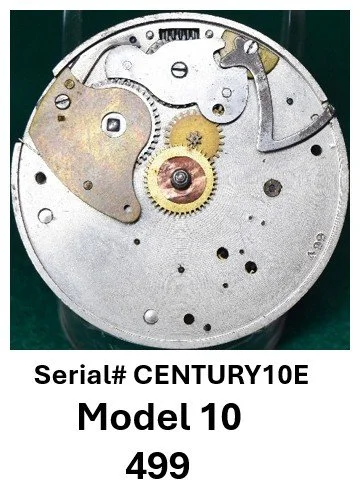
Pillar Plate: 499 Back of Top Plate: 499 Balance Bridge: 499 Winding Bridge: Blank 2 DFS
Original Original Original Original

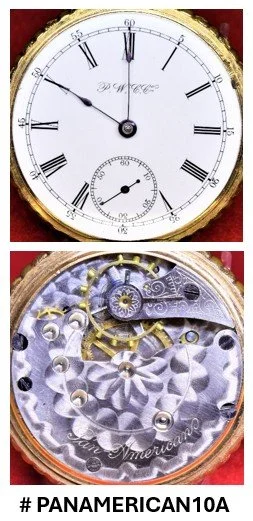
PAN-AMERICAN
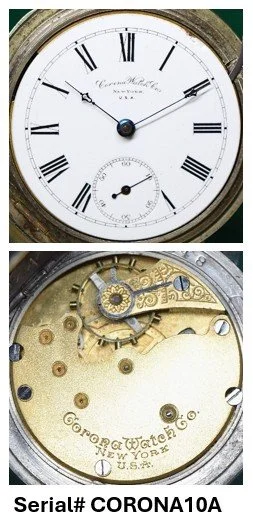
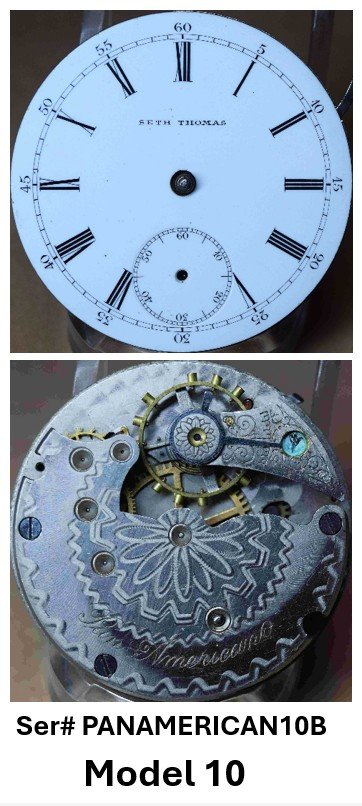
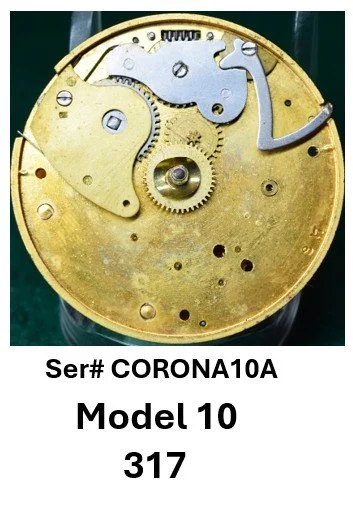
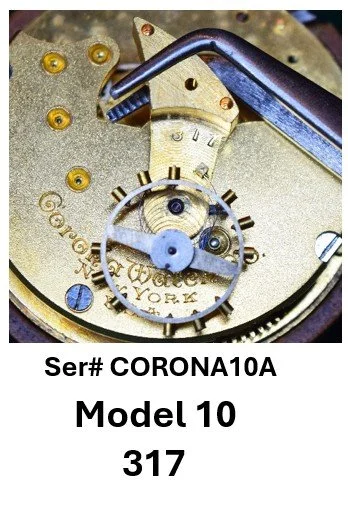
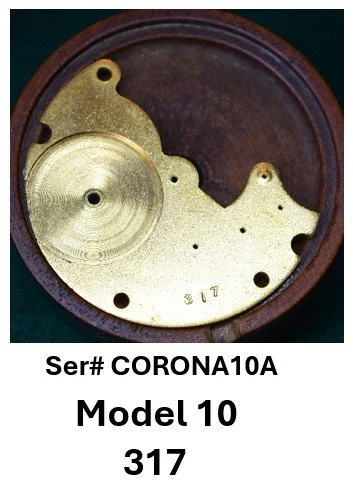
Pillar Plate: 317 Back of Top Plate: 317 Balance Bridge: 317 Winding Bridge: Blank 2 DFS
Original Original Original Original

Pillar Plate: 240 Back of Top Plate: 240 Balance Bridge: 240 Winding Bridge: Blank 2 DFS
Original Original Original Original
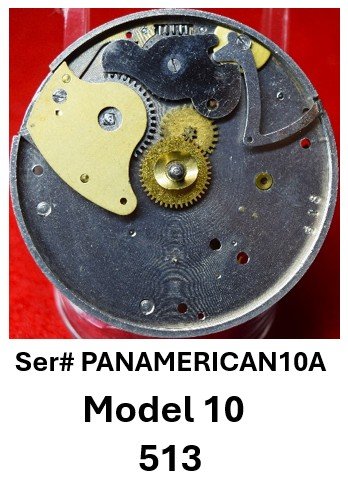
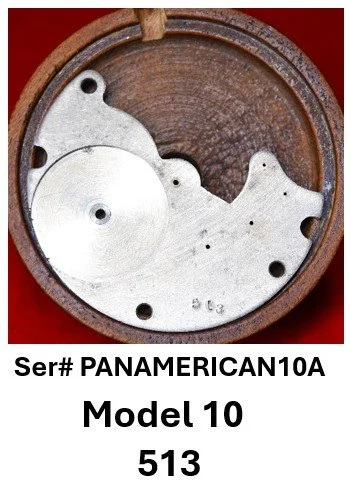
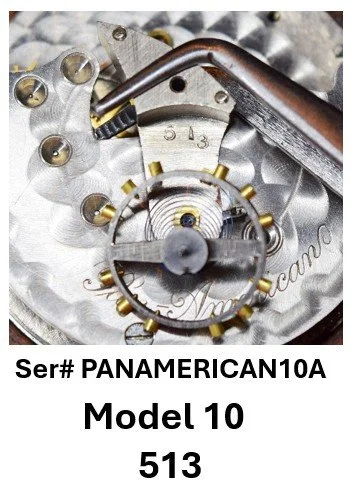
Pillar Plate: 513 Back of Top Plate: 513 Balance Bridge: 513 Winding Bridge: Blank 2 DFS
Original Original Original Original
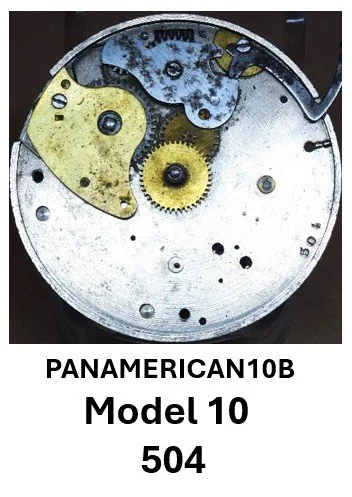

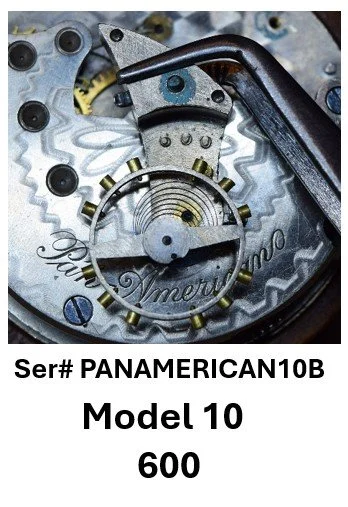
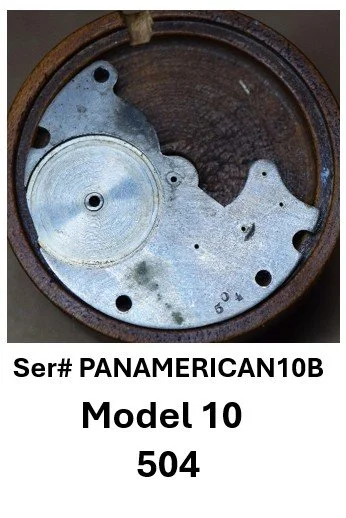
Pillar Plate: 504 Back of Top Plate: 504 Balance Bridge: 600 Winding Bridge: Blank 2 DFS
Original Original Transplant Original
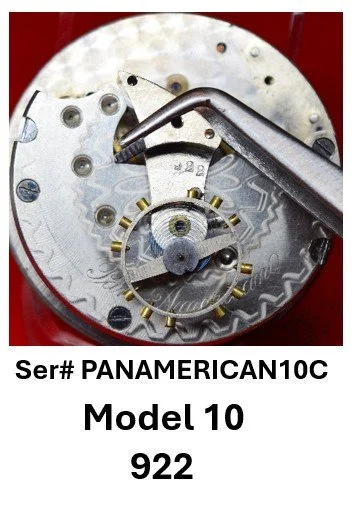
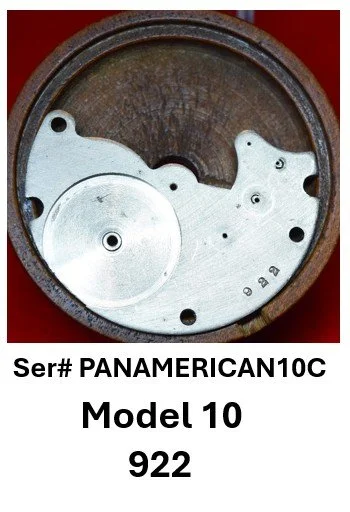
Pillar Plate: 922 Back of Top Plate: 922 Balance Bridge: 922 Winding Bridge: Blank 2 DFS
Original Original Original Original


PAN-AMERICAN
PAN-AMERICAN
Evidence Summary
FAT Number Uniqueness Within the Dataset
Within the current dataset, duplication of pillar plate FAT numbers is observed across models (e.g., 11CENTURY182 and 13CORONA182). No duplication has yet been observed within a single model grouping.
These observations indicate that FAT numbers are not universally unique across all non-numbered Century-grade movements, while leaving open the possibility that they may be unique within individual models pending further data.
Configuration-Based Distinctions Observed Within the Dataset
Observed specimens group into distinct configuration patterns:
Model 10 and Model 11 (Century Old Model):
Two dial foot screws
FAT numbers stamped on pillar plate, balance bridge, and back of top plate
No serial number
Model 12 and Model 13 (Century New Model):
Three dial foot screws
No rear top-plate FAT stamping
Configuration consistent with early numbered production
Private labels such as Pan-American appear only within Model 10 and Model 11 in the current dataset and are therefore representative of Century Old Model production.
Transitional Configurations
Certain private labels (Century U.S.A., Colonial U.S.A., and Corona Watch Co.) appear in both Old Model (10–11) and New Model (12–13) groupings and exhibit transitional characteristics, including:
Presence and subsequent absence of rear top-plate FAT stamping
Coexistence of two- and three-dial-foot configurations
Within the current sample of early private-label specimens originally produced with two dial foot screws, the absence of rear top-plate stamping is already common, while the adoption of three dial foot screws remains comparatively rare.
This distribution suggests that the elimination of rear top-plate FAT stamping preceded the widespread adoption of the three dial foot screw configuration, though the precise sequencing of these changes remains unresolved.
Numerical Relationships Across Models
Numerically close pillar plate FAT numbers are observed across model pairs sharing the same movement orientation (e.g., open-face Models 10 and 12; hunting-case Models 11 and 13), rather than strictly within Old Model or New Model groupings.
This pattern suggests that internal numbering practices may have continued across the transition between Old and New Century models within orientation-based production streams.
These observations are based solely on the current dataset and should not be interpreted as definitive production sequencing.
Packaging and Distribution Context
Documented factory packaging and distribution materials show a consistent omission of outward-facing identifiers in examples of Century-grade movements.
These materials indicate that such movements were handled within a standardized, size- and grade-based distribution system that did not require individual serial numbering at the packaging stage.
Within this context, FAT markings may represent an internal method of differentiation operating independently of external identification systems.
Exploration / Examination of Numbered Century New Model Movements
Inspection of 41 numbered Model 12 movements (serial range 1001754–1300196, plus one higher example at 4068501) and 12 numbered Model 13 movements (serial range 1705002–1776870) shows:
All exhibit three dial foot screws
None retain rear top-plate FAT stamping
Inspection of non-numbered Model 12 and Model 13 movements shows a corresponding structural shift from:
Two dial foot screws with rear top-plate FAT stamping
toThree dial foot screws without rear top-plate FAT stamping
This establishes a clear structural transition within Model 12 and Model 13 production. The weaker transitional signal in Model 12 may reflect the substantially larger apparent surviving population of non-numbered Model 12 movements, within which late transitional configurations represent only a small proportion. By contrast, Model 13 may preserve a higher relative concentration of such late non-numbered examples.
Interpretation Limits
Present data do not support interpreting FAT numbers as a simple ordinal production sequence across all Century-grade models.
Whether FAT numbers correlate to production sequencing within specific models, configuration phases, or internal factory processes remains an open question pending additional documentation.
The Complete Dataset - Private Label Progression, The Complete Dataset - Standard Sort and The Complete Dataset - Manufacturing Practices Sort can each be viewed in a separate tab.
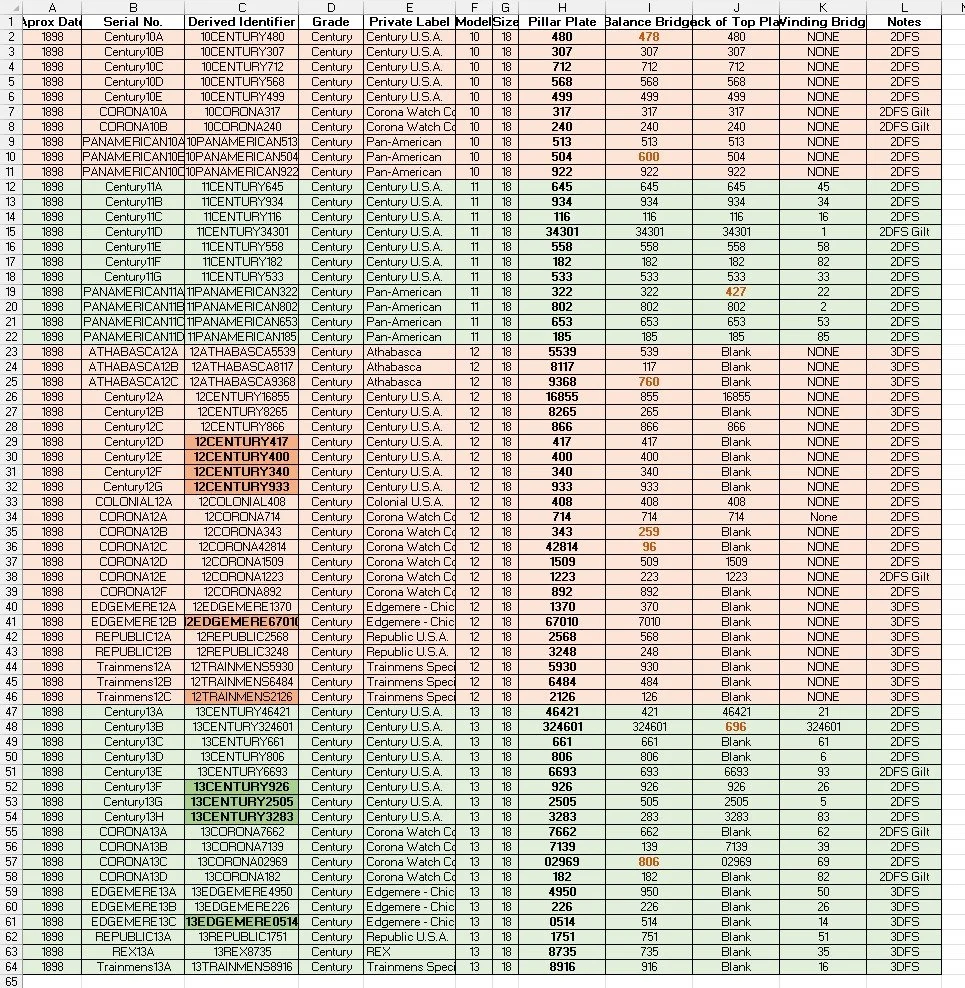


Complete HTML Version of Factory Assigned Tracking Numbers (FAT#’s) Dataset
The following table contains the complete specimen dataset used in this study. It is provided as searchable HTML to improve accessibility, allow text-based searching, and assist researchers in examining relationships among models, private labels, and Factory Assigned Tracking (FAT) numbers.
Complete FAT Number Dataset (N=77)
HTML text version provided for indexing, accessibility, and detailed reference. Scroll horizontally on smaller screens.
| Aprox Date | Serial No. | Derived Identifier | Size | Grade | Model | Private Label | Pillar Plate | Balance Bridge | Back of Top Plate | Winding Bridge | Dial Feet Screws | Gilt |
|---|---|---|---|---|---|---|---|---|---|---|---|---|
| 1898 | Century10F | 10CENTURY115 | 18 | Century | 10 | Century U.S.A. | 115 | 115 | 115 | NONE | 2DFS | |
| 1898 | Century10B | 10CENTURY307 | 18 | Century | 10 | Century U.S.A. | 307 | 307 | 307 | NONE | 2DFS | |
| 1898 | Century10A | 10CENTURY480 | 18 | Century | 10 | Century U.S.A. | 480 | 478 | 480 | NONE | 2DFS | |
| 1898 | Century10E | 10CENTURY499 | 18 | Century | 10 | Century U.S.A. | 499 | 499 | 499 | NONE | 2DFS | |
| 1898 | Century10D | 10CENTURY568 | 18 | Century | 10 | Century U.S.A. | 568 | 568 | 568 | NONE | 2DFS | |
| 1898 | Century10C | 10CENTURY712 | 18 | Century | 10 | Century U.S.A. | 712 | 712 | 712 | NONE | 2DFS | |
| 1898 | Century10G | 10CENTURY891 | 18 | Century | 10 | Century U.S.A. | 891 | 891 | 891 | NONE | 2DFS | |
| 1898 | CORONA10B | 10CORONA240 | 18 | Century | 10 | Corona Watch Co. | 240 | 240 | 240 | NONE | 2DFS | Gilt |
| 1898 | CORONA10A | 10CORONA317 | 18 | Century | 10 | Corona Watch Co. | 317 | 317 | 317 | NONE | 2DFS | Gilt |
| 1898 | PANAMERICAN10B | 10PANAMERICAN504 | 18 | Century | 10 | Pan-American | 504 | 600 | 504 | NONE | 2DFS | |
| 1898 | PANAMERICAN10A | 10PANAMERICAN513 | 18 | Century | 10 | Pan-American | 513 | 513 | 513 | NONE | 2DFS | |
| 1898 | PANAMERICAN10C | 10PANAMERICAN922 | 18 | Century | 10 | Pan-American | 922 | 922 | 922 | NONE | 2DFS | |
| 1898 | Century11C | 11CENTURY116 | 18 | Century | 11 | Century U.S.A. | 116 | 116 | 116 | 16 | 2DFS | |
| 1898 | Century11F | 11CENTURY182 | 18 | Century | 11 | Century U.S.A. | 182 | 182 | 182 | 82 | 2DFS | |
| 1898 | Century11D | 11CENTURY34301 | 18 | Century | 11 | Century U.S.A. | 34301 | 34301 | 34301 | 1 | 2DFS | Gilt |
| 1898 | Century11H | 11CENTURY411 | 18 | Century | 11 | Century U.S.A. | 411 | 411 | 411 | 11 | 2DFS | |
| 1898 | Century11G | 11CENTURY533 | 18 | Century | 11 | Century U.S.A. | 533 | 533 | 533 | 33 | 2DFS | |
| 1898 | Century11E | 11CENTURY558 | 18 | Century | 11 | Century U.S.A. | 558 | 558 | 558 | 58 | 2DFS | |
| 1898 | Century11A | 11CENTURY645 | 18 | Century | 11 | Century U.S.A. | 645 | 645 | 645 | 45 | 2DFS | |
| 1898 | Century11B | 11CENTURY934 | 18 | Century | 11 | Century U.S.A. | 934 | 934 | 934 | 34 | 2DFS | |
| 1898 | PANAMERICAN11D | 11PANAMERICAN185 | 18 | Century | 11 | Pan-American | 185 | 185 | 185 | 85 | 2DFS | |
| 1898 | PANAMERICAN11A | 11PANAMERICAN322 | 18 | Century | 11 | Pan-American | 322 | 322 | 427 | 22 | 2DFS | |
| 1898 | PANAMERICAN11C | 11PANAMERICAN653 | 18 | Century | 11 | Pan-American | 653 | 653 | 653 | 53 | 2DFS | |
| 1898 | PANAMERICAN11B | 11PANAMERICAN802 | 18 | Century | 11 | Pan-American | 802 | 802 | 802 | 2 | 2DFS | |
| 1898 | ATHABASCA12A | 12ATHABASCA5539 | 18 | Century | 12 | Athabasca | 5539 | 539 | Blank | NONE | 3DFS | |
| 1898 | ATHABASCA12B | 12ATHABASCA8117 | 18 | Century | 12 | Athabasca | 8117 | 117 | Blank | NONE | 3DFS | |
| 1898 | ATHABASCA12C | 12ATHABASCA9368 | 18 | Century | 12 | Athabasca | 9368 | 760 | Blank | NONE | 3DFS | |
| 1898 | Century12A | 12CENTURY16855 | 18 | Century | 12 | Century U.S.A. | 16855 | 855 | 16855 | NONE | 2DFS | |
| 1898 | Century12J | 12CENTURY3932 | 18 | Century | 12 | Century U.S.A. | 3932 | 932 | 3932 | NONE | 2DFS | |
| 1898 | Century12K | 12CENTURY6696 | 18 | Century | 12 | Century U.S.A. | 6696 | 696 | 6696 | NONE | 2DFS | |
| 1898 | Century12I | 12CENTURY7186 | 18 | Century | 12 | Century U.S.A. | 7186 | 186 | 7186 | NONE | 2DFS | |
| 1898 | Century12C | 12CENTURY866 | 18 | Century | 12 | Century U.S.A. | 866 | 866 | 866 | NONE | 2DFS | |
| 1898 | Century12H | 12CENTURY8779 | 18 | Century | 12 | Century U.S.A. | 8779 | 779 | 8779 | NONE | 2DFS | |
| 1898 | CENTURY12M | 12CENTURY9705 | 18 | Century | 12 | Century U.S.A. | 9705 | 705 | 9705 | NONE | 2DFS | |
| 1898 | Century12F | 12CENTURY340 | 18 | Century | 12 | Century U.S.A. | 340 | 340 | Blank | NONE | 2DFS | |
| 1898 | Century12E | 12CENTURY400 | 18 | Century | 12 | Century U.S.A. | 400 | 400 | Blank | NONE | 2DFS | |
| 1898 | Century12D | 12CENTURY417 | 18 | Century | 12 | Century U.S.A. | 417 | 417 | Blank | NONE | 2DFS | |
| 1898 | Century12G | 12CENTURY933 | 18 | Century | 12 | Century U.S.A. | 933 | 933 | Blank | NONE | 2DFS | |
| 1898 | Century12L | 12CENTURY3298 | 18 | Century | 12 | Century U.S.A. | 3298 | 298 | Blank | NONE | 3DFS | |
| 1898 | Century12B | 12CENTURY8265 | 18 | Century | 12 | Century U.S.A. | 8265 | 265 | Blank | NONE | 3DFS | |
| 1898 | COLONIAL12A | 12COLONIAL408 | 18 | Century | 12 | Colonial U.S.A. | 408 | 408 | 408 | NONE | 2DFS | |
| 1898 | CORONA12E | 12CORONA1223 | 18 | Century | 12 | Corona Watch Co. | 1223 | 223 | 1223 | NONE | 2DFS | Gilt |
| 1898 | CORONA12D | 12CORONA1509 | 18 | Century | 12 | Corona Watch Co. | 1509 | 509 | 1509 | NONE | 2DFS | |
| 1898 | CORONA12A | 12CORONA714 | 18 | Century | 12 | Corona Watch Co. | 714 | 714 | 714 | None | 2DFS | |
| 1898 | CORONA12B | 12CORONA343 | 18 | Century | 12 | Corona Watch Co. | 343 | 259 | Blank | NONE | 2DFS | |
| 1898 | CORONA12F | 12CORONA892 | 18 | Century | 12 | Corona Watch Co. | 892 | 892 | Blank | NONE | 2DFS | |
| 1898 | CORONA12C | 12CORONA42814 | 18 | Century | 12 | Corona Watch Co. | 42814 | 96 | Blank | NONE | 2DFS | |
| 1898 | EDGEMERE12A | 12EDGEMERE1370 | 18 | Century | 12 | Edgemere - Chicago, Ill. | 1370 | 370 | Blank | NONE | 3DFS | |
| 1898 | EDGEMERE12B | 12EDGEMERE67010 | 18 | Century | 12 | Edgemere - Chicago, Ill. | 67010 | 7010 | Blank | NONE | 3DFS | |
| 1898 | REPUBLIC12A | 12REPUBLIC2568 | 18 | Century | 12 | Republic U.S.A. | 2568 | 568 | Blank | NONE | 3DFS | |
| 1898 | REPUBLIC12B | 12REPUBLIC3248 | 18 | Century | 12 | Republic U.S.A. | 3248 | 248 | Blank | NONE | 3DFS | |
| 1898 | Trainmens12C | 12TRAINMENS2126 | 18 | Century | 12 | Trainmens Special | 2126 | 126 | Blank | NONE | 3DFS | |
| 1898 | Trainmens12A | 12TRAINMENS5930 | 18 | Century | 12 | Trainmens Special | 5930 | 930 | Blank | NONE | 3DFS | |
| 1898 | Trainmens12B | 12TRAINMENS6484 | 18 | Century | 12 | Trainmens Special | 6484 | 484 | Blank | NONE | 3DFS | |
| 1898 | Century13B | 13CENTURY324601 | 18 | Century | 13 | Century U.S.A. | 324601 | 324601 | 696 | 324601 | 2DFS | |
| 1898 | Century13E | 13CENTURY6693 | 18 | Century | 13 | Century U.S.A. | 6693 | 693 | 6693 | 93 | 2DFS | Gilt |
| 1898 | Century13A | 13CENTURY46421 | 18 | Century | 13 | Century U.S.A. | 46421 | 421 | 46421 | 21 | 2DFS | |
| 1898 | Century13G | 13CENTURY2505 | 18 | Century | 13 | Century U.S.A. | 2505 | 505 | 2505 | 5 | 2DFS | |
| 1898 | Century13H | 13CENTURY3283 | 18 | Century | 13 | Century U.S.A. | 3283 | 283 | 3283 | 83 | 2DFS | |
| 1898 | Century13I | 13CENTURY4673 | 18 | Century | 13 | Century U.S.A. | 4673 | 673 | 4673 | 83 | 2DFS | |
| 1898 | Century13L | 13CENTURY66143 | 18 | Century | 13 | Century U.S.A. | 66143 | 143 | 66143 | 43 | 2DFS | |
| 1898 | Century13K | 13CENTURY7077 | 18 | Century | 13 | Century U.S.A. | 7077 | 077 | 7077 | 77 | 2DFS | |
| 1898 | Century13F | 13CENTURY926 | 18 | Century | 13 | Century U.S.A. | 926 | 926 | 926 | 26 | 2DFS | |
| 1898 | Century13J | 13CENTURY415 | 18 | Century | 13 | Century U.S.A. | 415 | 415 | Blank | 15 | 2DFS | |
| 1898 | Century13C | 13CENTURY661 | 18 | Century | 13 | Century U.S.A. | 661 | 661 | Blank | 61 | 2DFS | |
| 1898 | Century13D | 13CENTURY806 | 18 | Century | 13 | Century U.S.A. | 806 | 806 | Blank | 6 | 2DFS | |
| 1898 | CORONA13B | 13CORONA7139 | 18 | Century | 13 | Corona Watch Co. | 7139 | 139 | 7139 | 39 | 2DFS | |
| 1898 | CORONA13C | 13CORONA02969 | 18 | Century | 13 | Corona Watch Co. | 02969 | 806 | 02969 | 69 | 2DFS | |
| 1898 | CORONA13D | 13CORONA182 | 18 | Century | 13 | Corona Watch Co. | 182 | 182 | Blank | 82 | 2DFS | Gilt |
| 1898 | CORONA13E | 13CORONA474 | 18 | Century | 13 | Corona Watch Co. | 474 | 474 | Blank | 74 | 2DFS | |
| 1898 | CORONA13A | 13CORONA7662 | 18 | Century | 13 | Corona Watch Co. | 7662 | 662 | Blank | 62 | 2DFS | Gilt |
| 1898 | EDGEMERE13B | 13EDGEMERE226 | 18 | Century | 13 | Edgemere - Chicago, Ill. | 226 | 226 | Blank | 26 | 3DFS | |
| 1898 | EDGEMERE13C | 13EDGEMERE0514 | 18 | Century | 13 | Edgemere - Chicago, Ill. | 0514 | 514 | Blank | 14 | 3DFS | |
| 1898 | EDGEMERE13A | 13EDGEMERE4950 | 18 | Century | 13 | Edgemere - Chicago, Ill. | 4950 | 950 | Blank | 50 | 3DFS | |
| 1898 | REPUBLIC13A | 13REPUBLIC1751 | 18 | Century | 13 | Republic U.S.A. | 1751 | 751 | Blank | 51 | 3DFS | |
| 1898 | REX13A | 13REX8735 | 18 | Century | 13 | REX | 8735 | 735 | Blank | 35 | 3DFS | |
| 1898 | Trainmens13A | 13TRAINMENS8916 | 18 | Century | 13 | Trainmens Special | 8916 | 916 | Blank | 16 | 3DFS |