Seth Thomas Pocket Watch Model 5
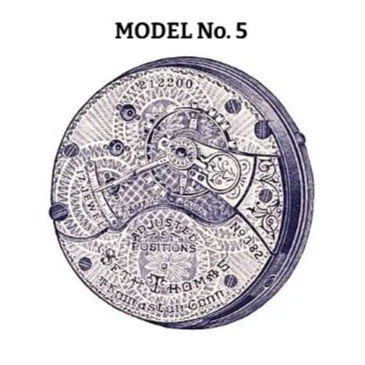
Seth Thomas Model 5 is represented in the Ehrhardt American Numbered Drawings as EA 810 and can be identified through the use of the drawing below:
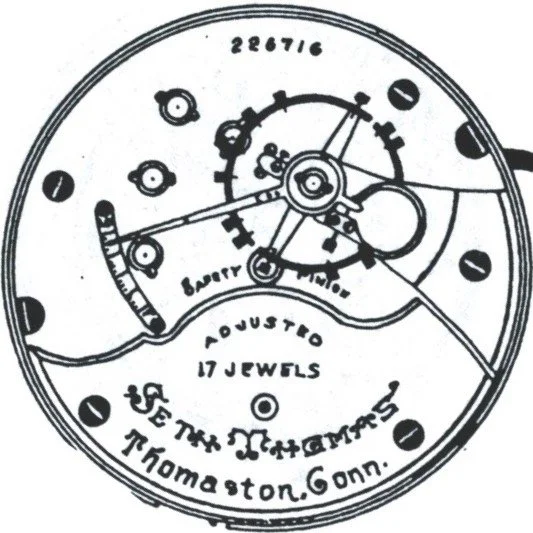
Model 5 Specifications
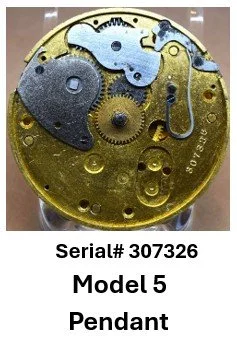
Model 5 was the eighth Seth Thomas pocket watch design to enter production, and the only full plate movement. Model 5 movements were originally planned to debut in the first production block as “Stem Set”, using the 1890 Charles T. Higginbotham patent for a version of stem set movements illustrated in the link by the Pocket Watch Database. Some of the movements originally manufactured as stem set movements had to be re-worked and changed into lever set movements. See examples of these early movements bearing evidence of the transition from stem set to lever set below. Model 5 movements were manufactured in the open-face orientation with a gilt, nickel, or two-tone finish. Mainspring Information is available to review for each model that was described in the 1904 Seth Thomas Watch Material Catalog, including Model 5.
Click this link to open the Model 5 Photo Album in a new tab.
| Model | Production | Size | Orientation | Finish | Plate | Winding | Setting |
|---|---|---|---|---|---|---|---|
| 5 | 1890-1897 | 18-size | Open-Face | Gilt Nickel Two-Tone | Full | Stem | Stem Lever Pendant |
| Model | Production Block | Production Block | Production Block | |||
|---|---|---|---|---|---|---|
| 5 | 200001 | 400000 | ||||
View or download PDF version of this chart
Model 5 movements were manufactured with gilt finish, simple regulator, Breguet hairspring, pendant set, and 7 jewels at grade 47, 11 jewels at grade 58 with the simple regulator and lever set, 15 jewels at grade 59 with a simple regulator non-adjusted, 149 with micrometric regulator, and with 17 jewels, Breguet hairspring, micrometric regulator, and adjusted, at grade 82. Model 5 movements were manufactured with nickel finish, simple regulator, Breguet hairspring, choice of pendant set or lever set, and 7 jewels at grade 57, 15 jewels with a micrometric regulator and non-adjusted at grade 159, and 15 jewels with a micrometric regulator and adjusted at grade 204. Model 5 movements were manufactured with nickel finish and 17 jewels with a micrometric regulator, lever set, Breguet hairspring, and adjusted at Seth Thomas named grade Maiden Lane. Model 5 movements were manufactured with nickel finish and 17 jewels with a micrometric regulator, lever set, Breguet hairspring, and non-adjusted at Seth Thomas grade 169, and lever set, adjusted at grade 182. Model 5 movements were manufactured with two-tone finish and 17 jewels with a micrometric regulator, pendant set, Breguet hairspring, and adjusted at Seth Thomas grades 182 and 281. Model 5 movements were manufactured with nickel and two-tone finish, 17 jewels with a micrometric regulator, lever set, Breguet hairspring, and adjusted to five positions at Seth Thomas grade 382. Model 5 movements were manufactured with two-tone finish and 21 jewels with a micrometric regulator, lever set, Breguet hairspring, and adjusted to five positions at Seth Thomas named grade Maiden Lane. Model 5 movements were manufactured with nickel and two-tone finish and 21 jewels with a micrometric regulator, lever set, Breguet hairspring, and adjusted to three positions at Seth Thomas named grade 248, with nickel finish and 21 jewels with a micrometric regulator, lever set, Breguet hairspring, and adjusted to six or five positions at Seth Thomas named grade 260. Model 5 movements were manufactured with two-tone finish and 24 jewels with a micrometric regulator, lever set, Breguet hairspring, and adjusted to six positions at Seth Thomas named grade Maiden Lane, and 25 jewels with a micrometric regulator, lever set, Breguet hairspring, and adjusted to five or six positions at Seth Thomas named grade Maiden Lane [*1.n].
Original Plan for Model 5 was “Stem Wound and Set” Design
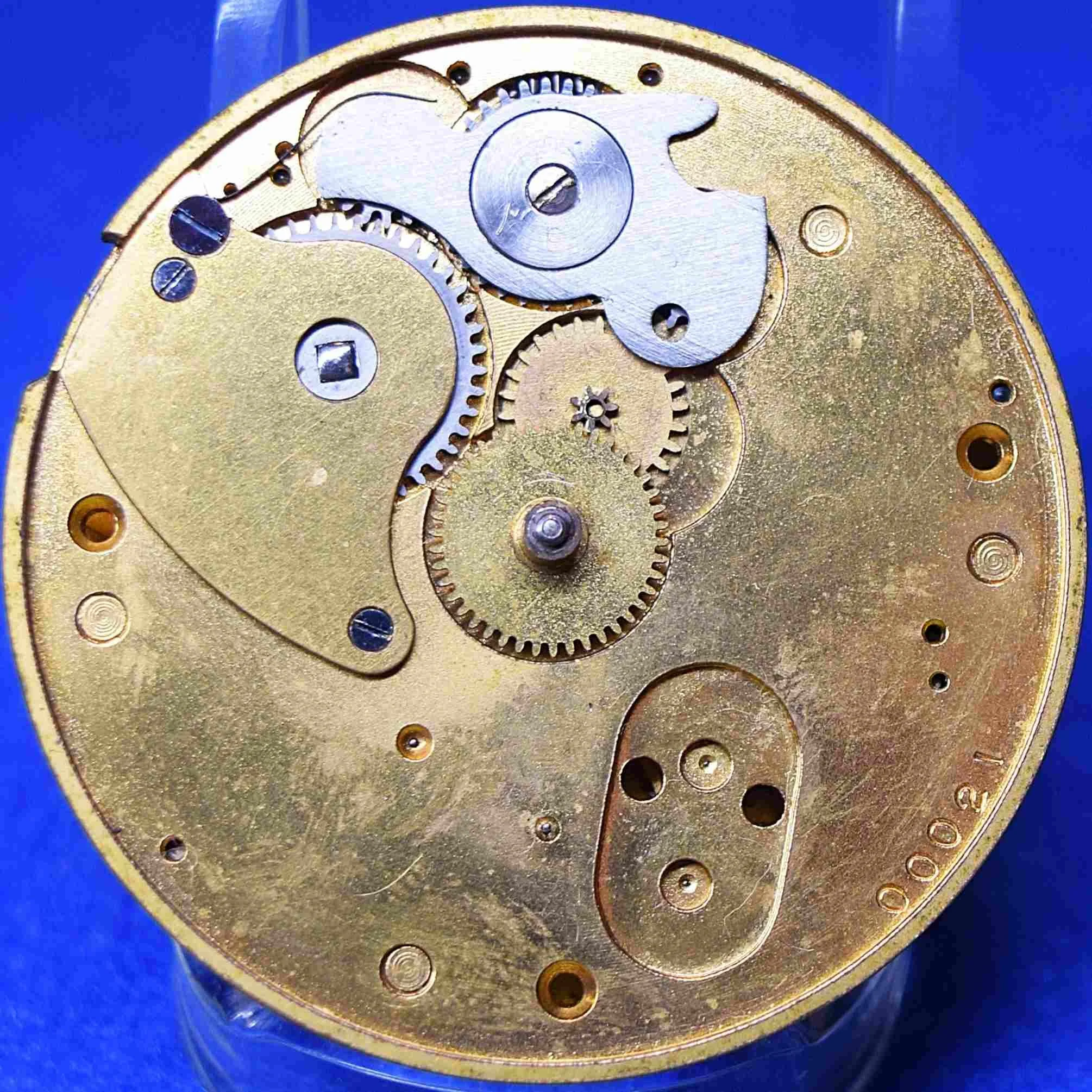
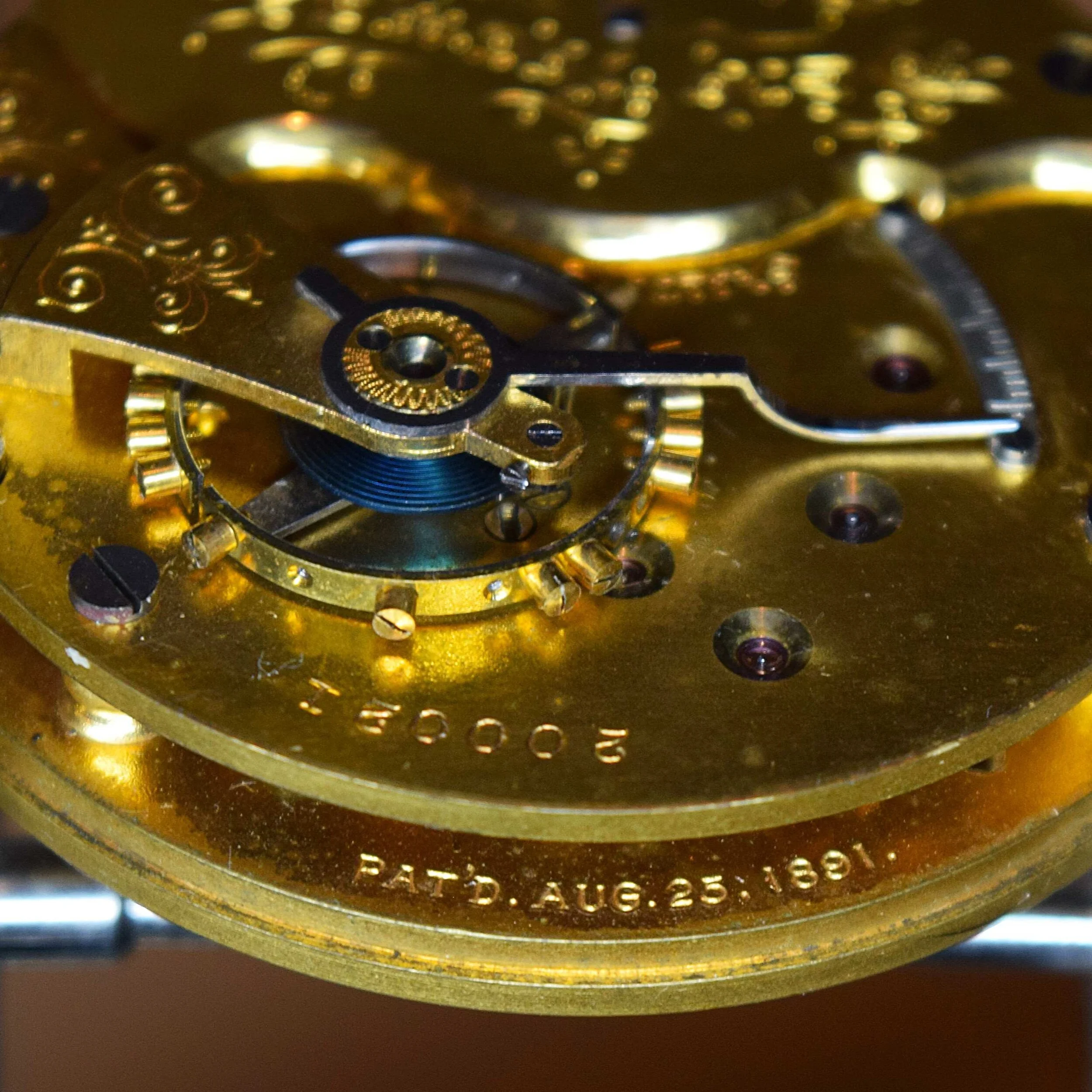
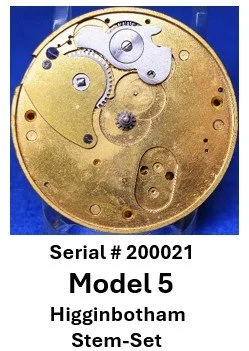
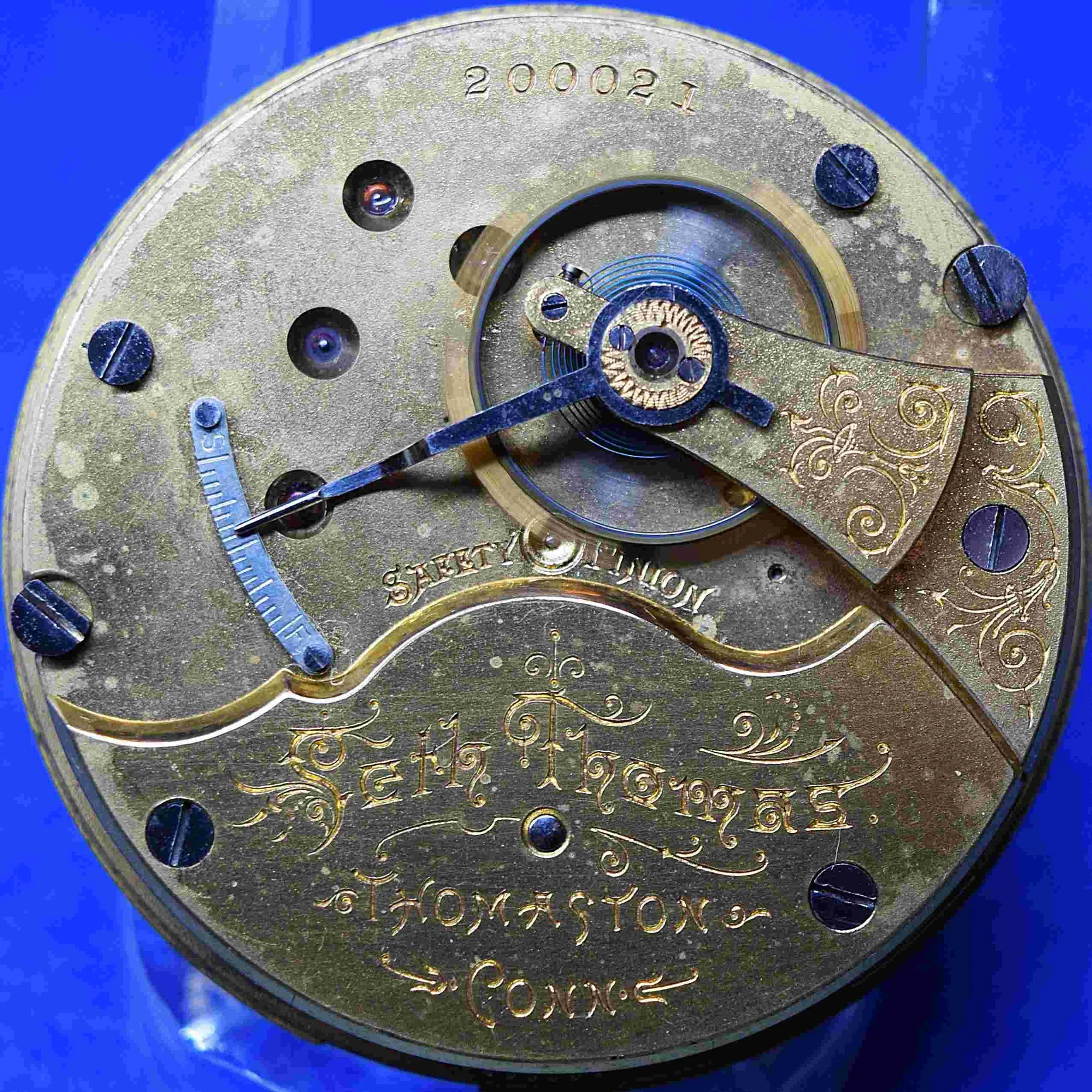
Serial Number 200021 - 11 Jewels - Grade 58 - Higginbotham’s 1891 Patented “Stem Wound and Set Watch”

This 1893 Seth Thomas open-face 18-size Model 5 pocket watch was manufactured with a gilt finished full plate, 11 jewels, and it is non-adjusted. The movement is stem wound and stem set, with a Breguet hair spring, and plain/simple regulator. Its serial number is 200021, and its grade is Seth Thomas numbered grade 58. The movement is signed “Seth Thomas Thomaston, Conn.”. This is the 21st Seth Thomas Model 5 pocket watch produced.
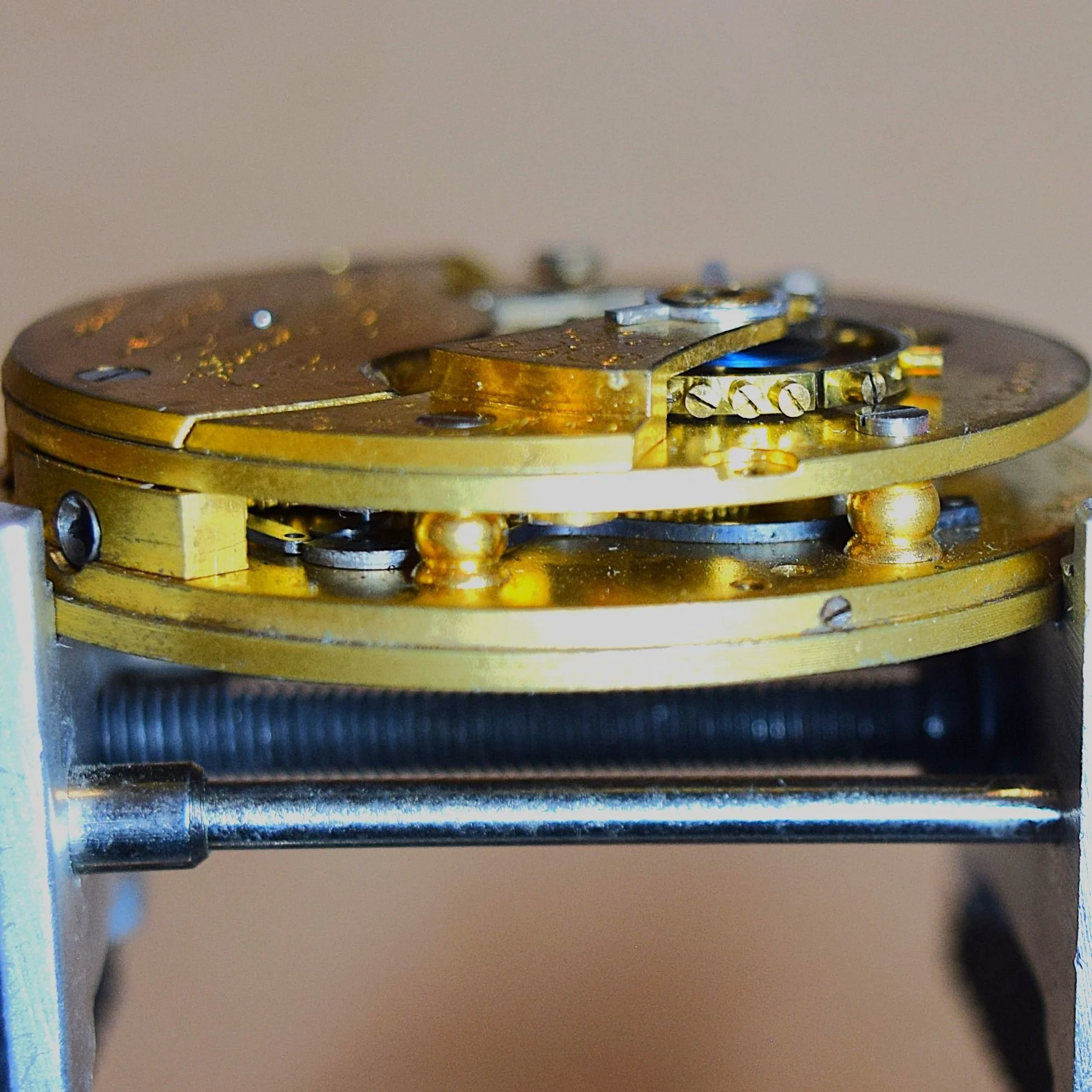
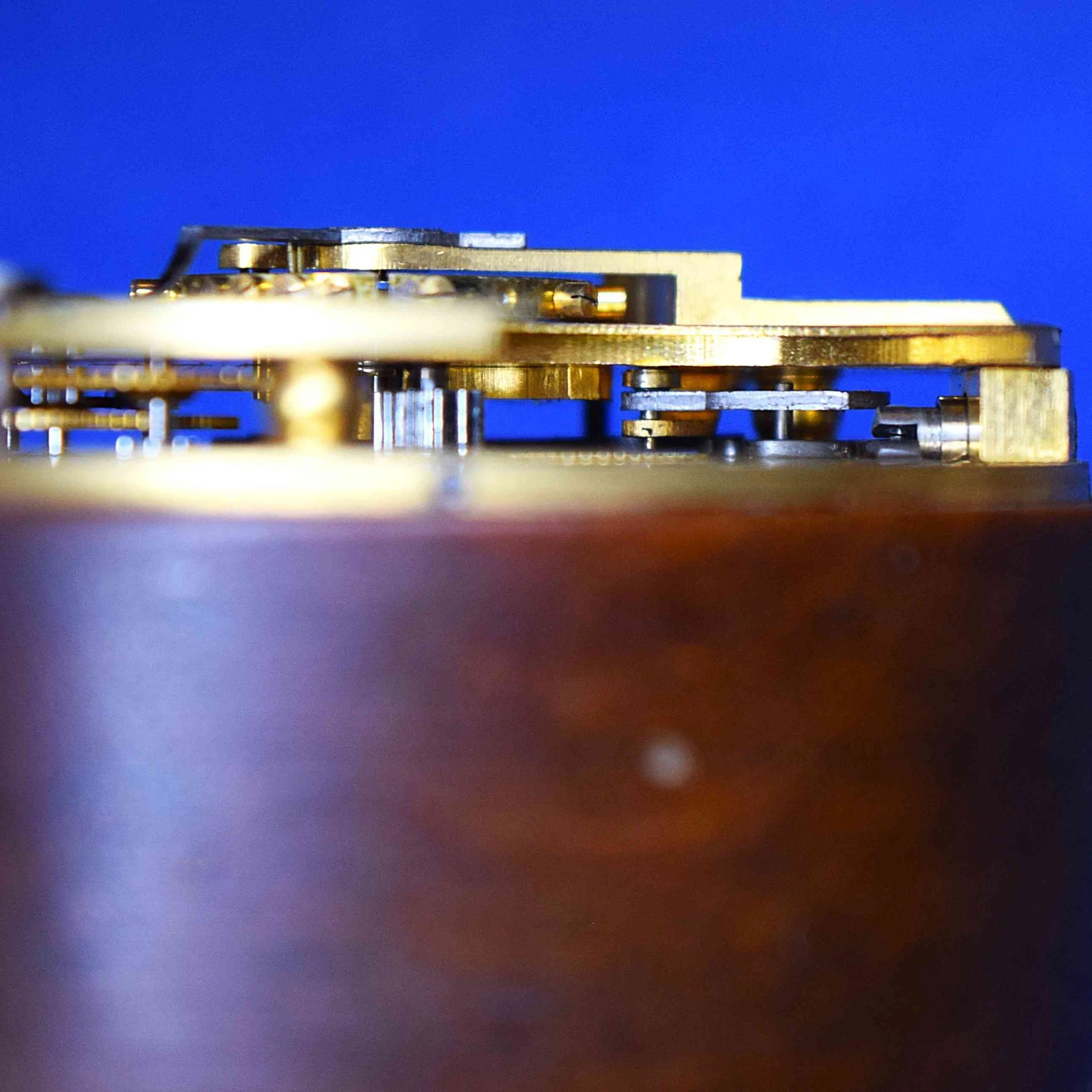
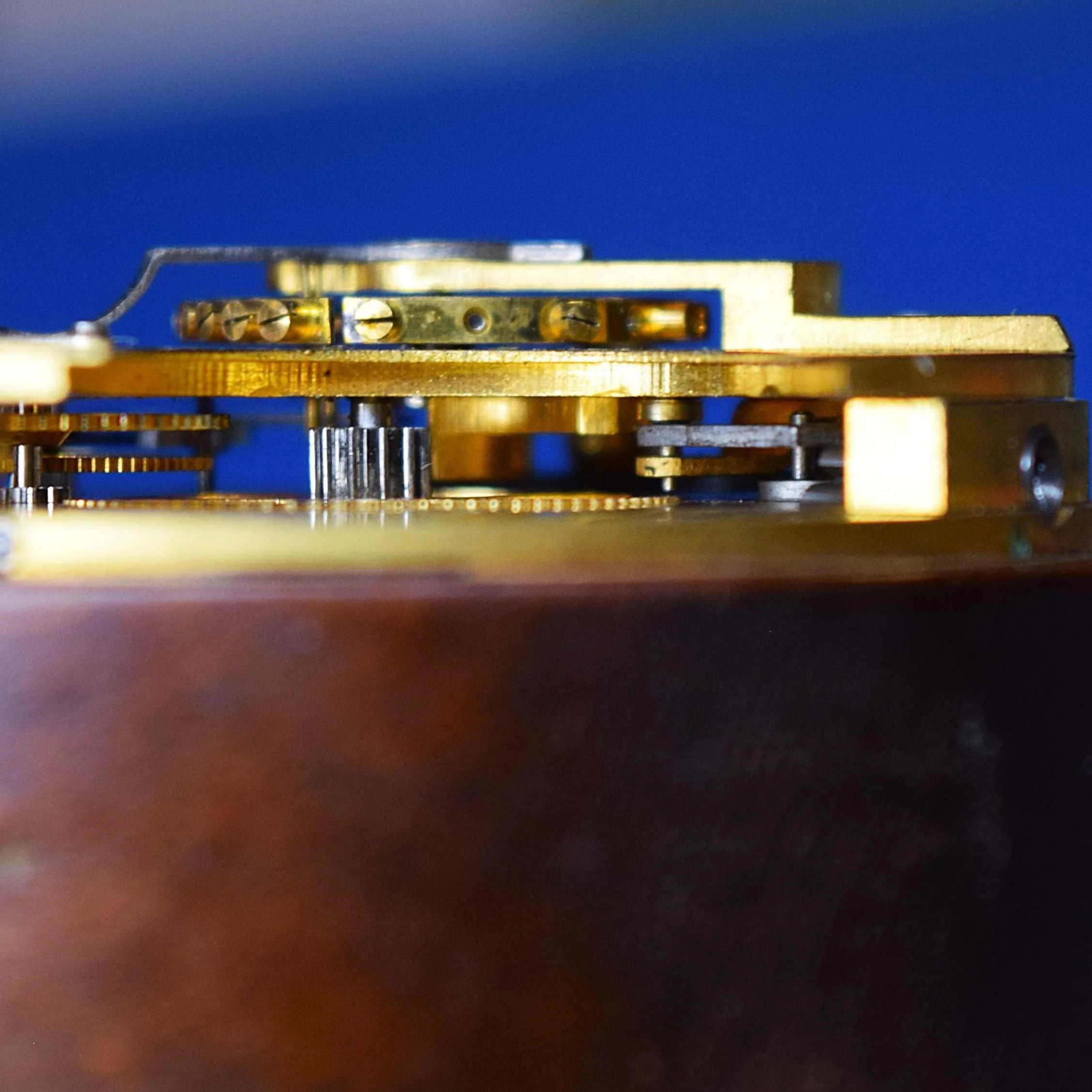
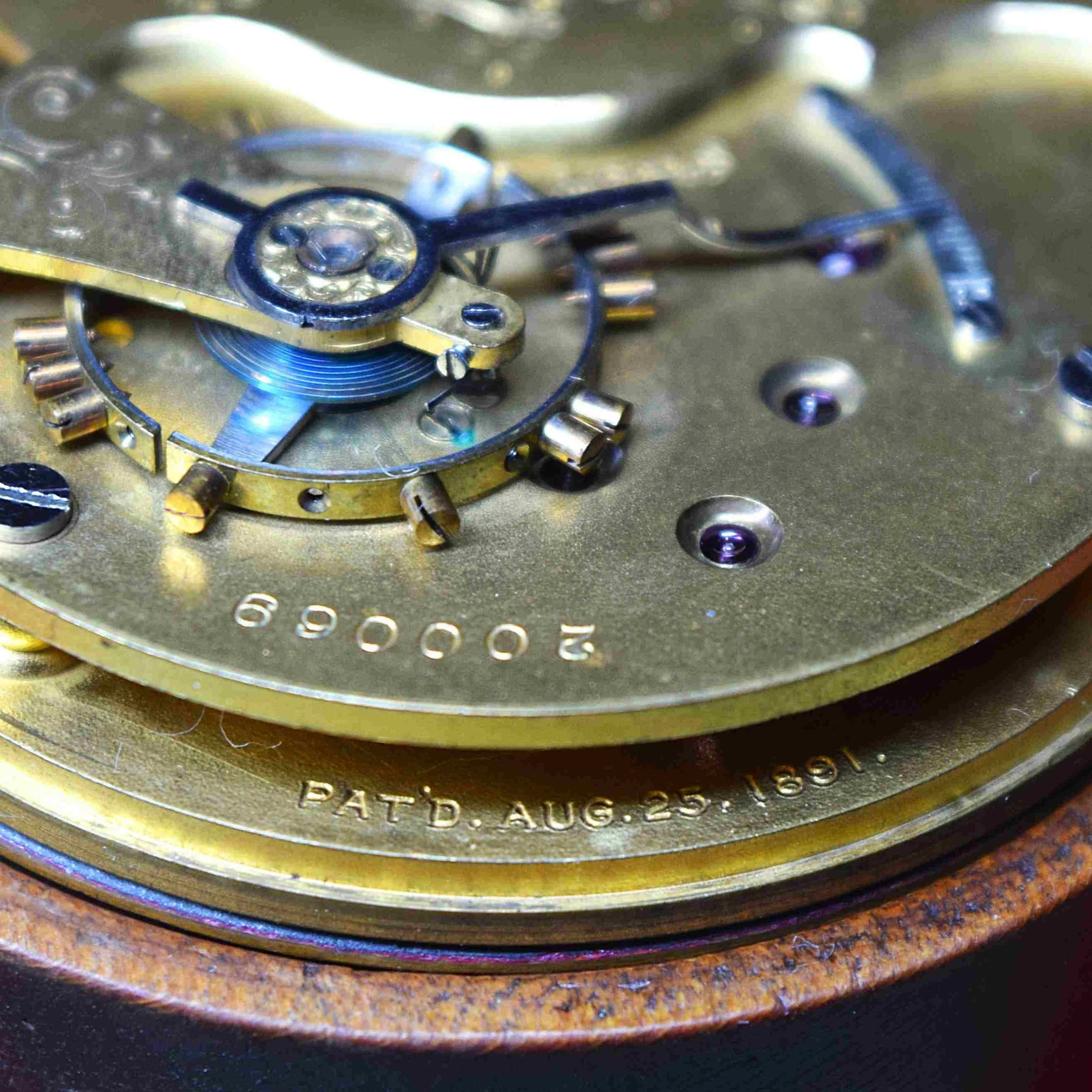
This movement is a Higginbotham Stem-Set movement, based upon the August 25, 1891 Higginbotham patent for “Stem Winding and Setting Watches”. Serial number 200021 is a rare survivor with the functioning original stem-set material still in place. It is presently functioning in every manner that the later pendant-set Model 5 movements function. See the video below of #200021 in a temporary case to demonstrate the stem-winding and stem-setting functions. Other early movements within this initial production window were re-worked into lever-set movements. Serial number 200069 featured below is one of the re-worked stem-set to lever-set movements. Photographic evidence has also been provided by another NAWCC member that 200174 was also a re-worked stem-set to lever-set movement. All observed early specimens examined to date also exhibit re-milling of the minute wheel space. The subsequent blocks that did not have the re-milled space for the minute wheel did still have the Higginbotham patent date stamped on the back of the pillar plate, some of the screw holes for the installation of the Higginbotham stem-set mechanism and milling for the operating-lever to function underneath the mainspring barrel. Based on an examination of a portion of the Model 5 movements in my collection, it is suggesting that preparatory features associated with the Higginbotham system extended across a substantial portion of Model 5 production, potentially encompassing many thousands of movements. The precise scale of this preparation cannot be determined from the surviving evidence. The highest serial number in the Seth Thomas Fan collection that has most of these features is serial number 208744. The Maiden Lane in this collection, serial number 208824, has the Higginbotham patent date stamped on the back of the pillar plate; but does not have the milling for an operating-lever to function under the mainspring barrel or any of the screw holes for the installation of the Higginbotham stem-set mechanism. The next highest serial number in this collection is serial number 210670. Serial number 210670 does not have the Higginbotham patent date stamped on the back of the pillar plate, the screw holes for installation of the Higginbotham stem-set mechanism, or the milling for an operating-lever to function beneath the mainspring barrel. This is suggesting that preparatory features extended well beyond the earliest serials. The full scale of this preparation remains unknown.
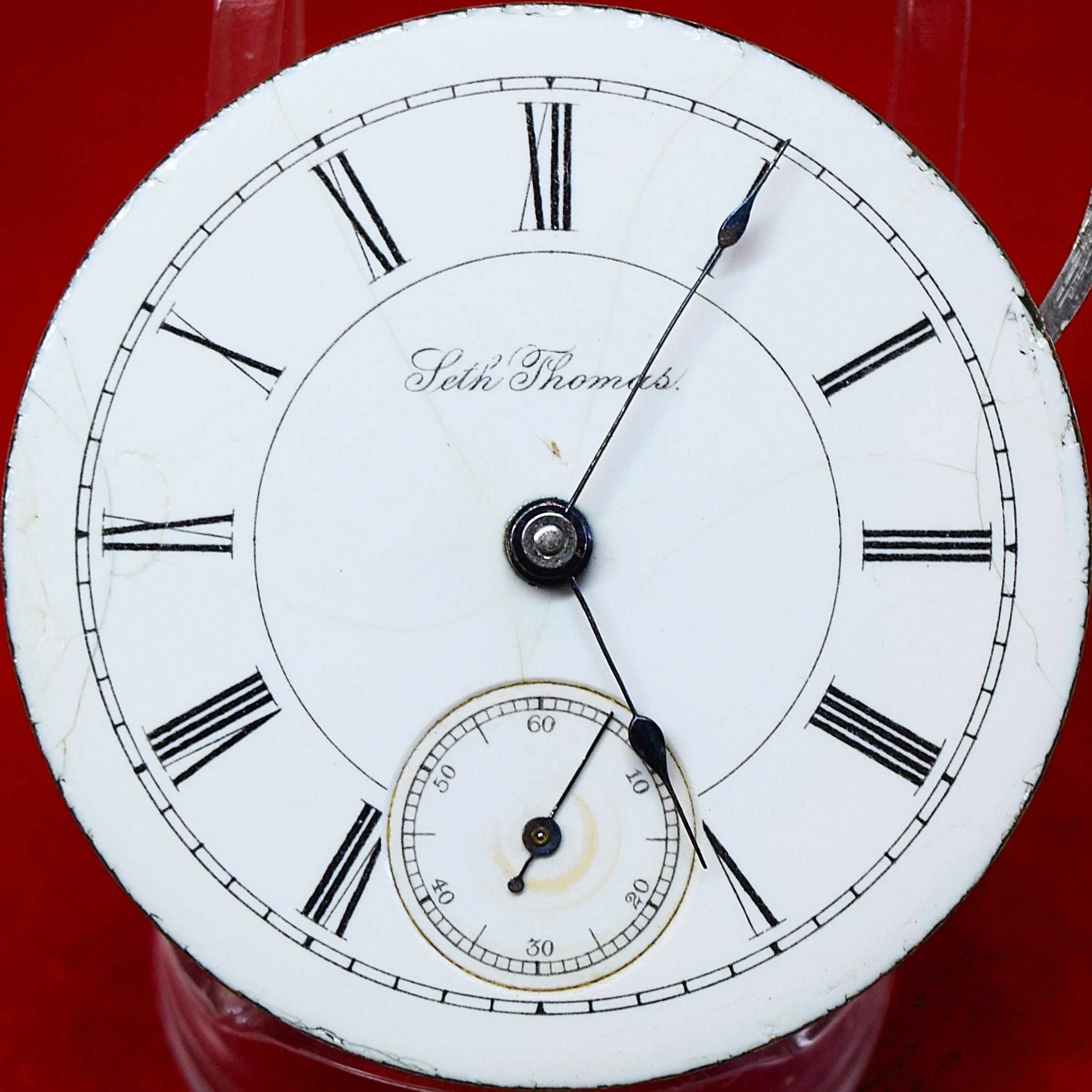
The movement presents with an 18-size unsigned heavy Roman dial with a ring minute track and no marginals. It is fitted with Seth Thomas #1282 blued spade & whip railroad hands, 18-size.
The movement is not presently cased.
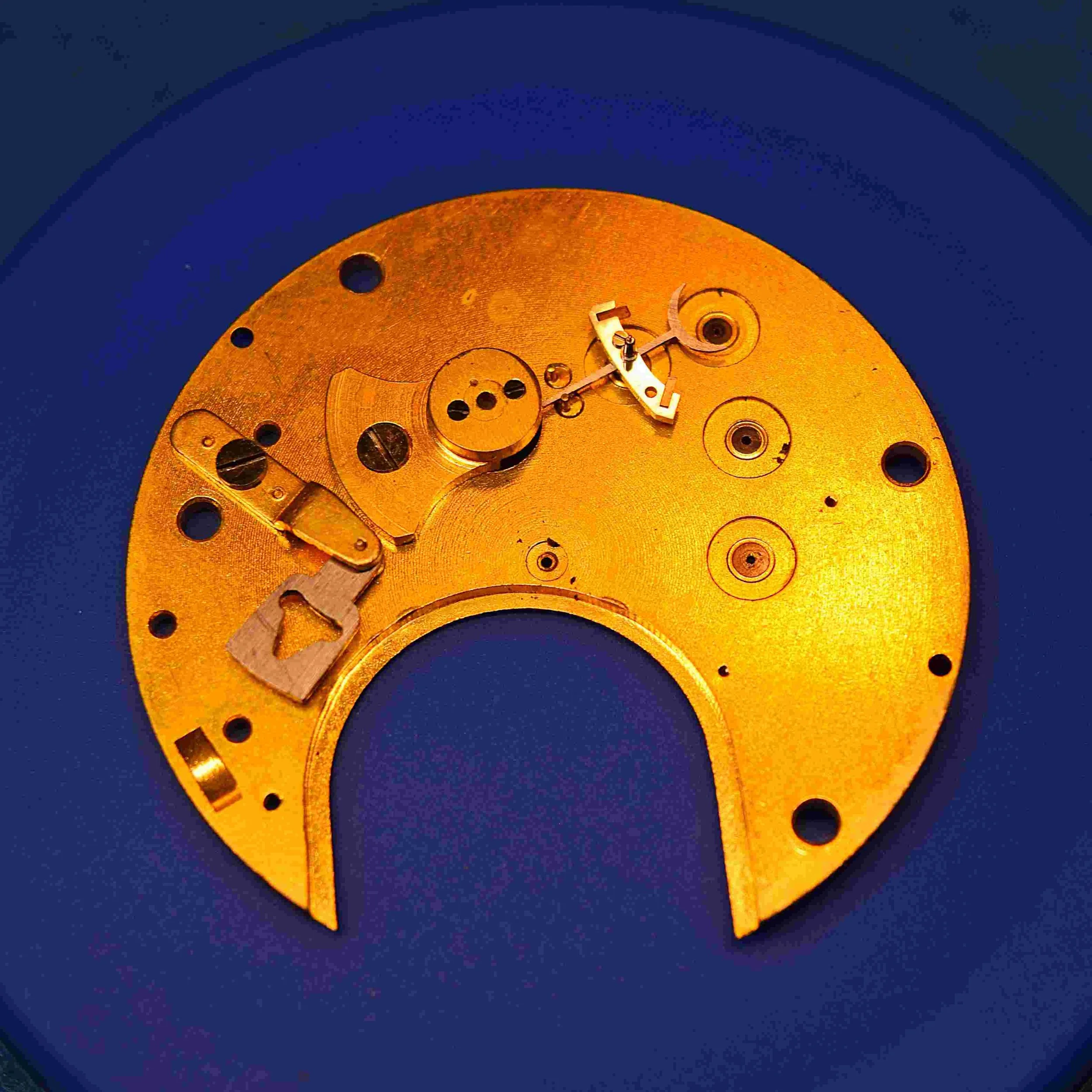
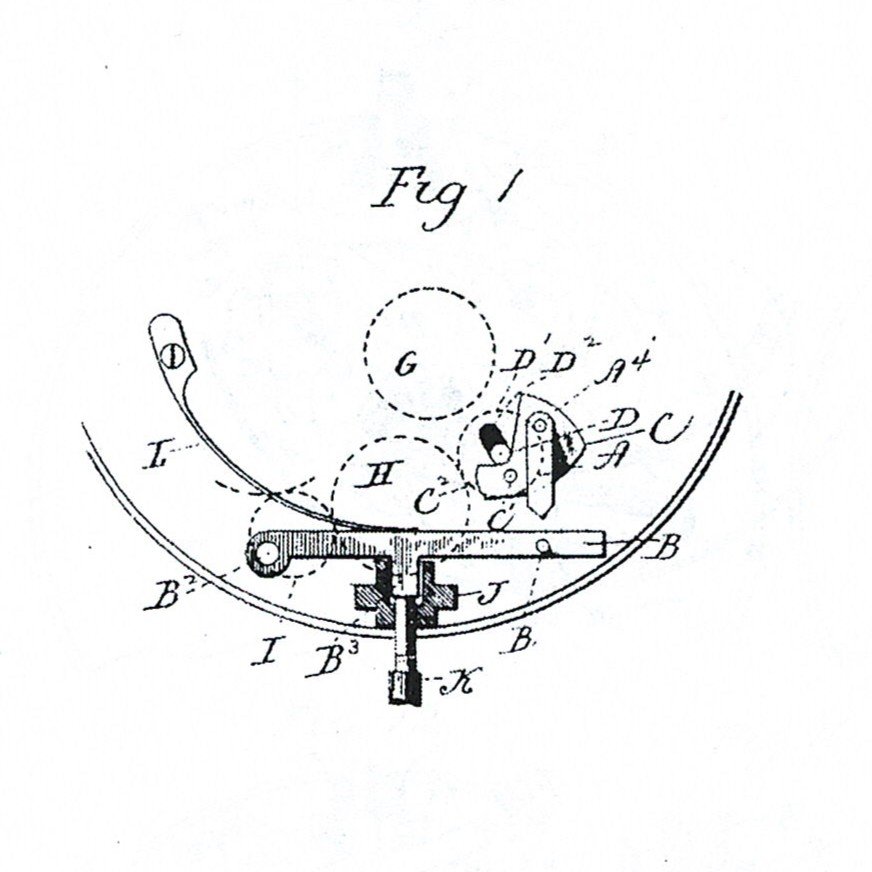
The components of the Higginbotham stem-setting mechanism look slightly different in the photographs presented here than they did when they were initially envisioned and sketched in the patent documents, shown below, prior to actual production. That is normal and not at all a variation from the patent, as what is being patented is the concept of how the components work together to accomplish the function described in the patent. An example here is that the springs in the actual watches press on the operating-cam which transmits the springs’ energy to the operating-lever. The patent sketch/diagram shows the spring making direct contact with the operating-lever. Another example is the shape of the gravity-coupler.








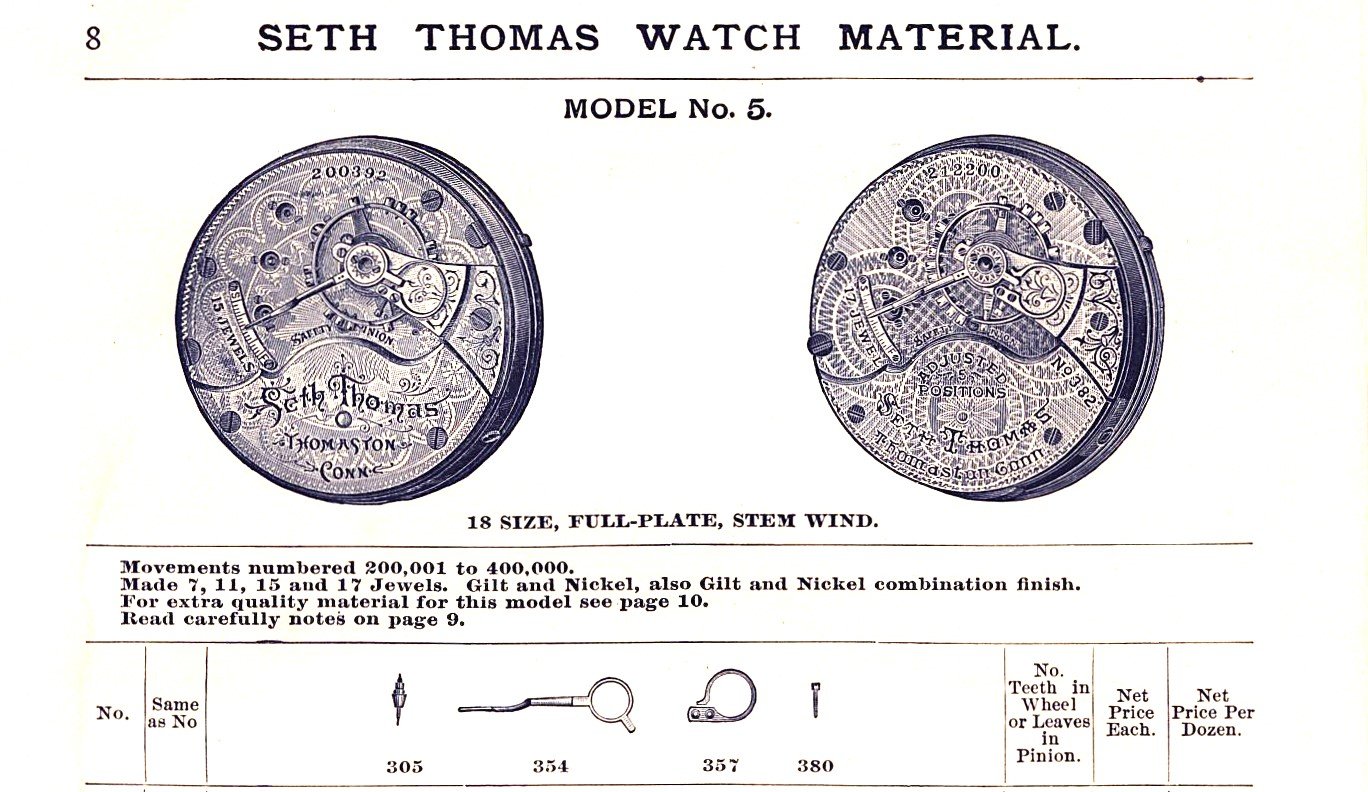
The engraved movement and model illustrations shown here are derived from an early Seth Thomas Watch Co. trade catalog or jobber circular dating to approximately 1891–1893. These images were reproduced as part of a composite plate in Roy Ehrhardt’s Pocket Watch Price Guide (1972).
Roy Ehrhardt’s publication does not identify the original source publication or exact date of the individual catalog fragments. Based on typography, layout, model descriptions, and serial-number ranges, the original material is consistent with factory-issued Seth Thomas advertising from the early 1890s, coinciding with the initial production period of the Model 5.
First and Only Known Working Specimen of Seth Thomas Early Model 5 Higginbotham Stem Wound Movements
After several days of inspecting, comparing, consulting, and interpreting evidence around the peculiar construction and apparent reworking of several specimens from a small number of very early Model 5 movements produced by Seth Thomas, it seems that we have at last arrived at a tenable foundational understanding of the truth. There are still unanswered questions; but one thing is abundantly clear. The observed specimens were manufactured as Higginbotham stem-set movements based upon Higginbotham’s 1891 patent.
Seth Thomas Model 5 serial number 200021 is the first, and only, known surviving and working specimen of an early Model 5 Higginbotham stem-set movement. There is now photographic evidence that movements #200021, #200069, and #200174 were all initially manufactured as Higginbotham stem-set movements. All of the stem-winding/setting mechanism was located between the plates. Serial number 200069 exhibits empty screw holes at the connection points where serial number 200021 still has the original stem-winding/setting mechanism in place and is functioning as originally intended. Serial numbers 200021 and 200174 each have the Higginbotham patent date marked on the back of the pillar plated visible between the plates near the balance wheel.
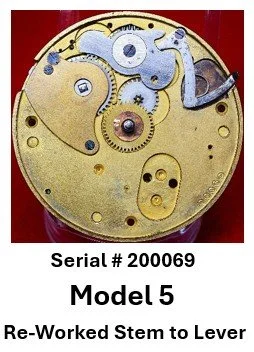
Seth Thomas serial numbers 200069 and 200174 were re-worked by the factory, or have been reported to have been re-worked and converted to lever-set movements. This re-working involved removing the stem-winding mechanism from between the plates and milling out a space for the setting lever spring. The same yoke assembly is used on the stem-set mechanisms as on the lever-set mechanisms. No change seems to have been made there. The historical details of exactly how, why, and when this re-working and conversion took place are still uncertain. The serial numbers of the specimens observed so far imply that a small number of very early Model 5 movements were a part of this stem-set production and subsequent re-working. Photographs and videos are included here of #200021 and #200069 from the Seth Thomas Fan collection. Images of 200174 may be seen on the Pocket Watch Database in the Model 5 Gallery Seth Thomas Watch Co. Watches Photo Gallery | Pocket Watch Database.
The Higginbotham Stem Winding and Setting Watch movements wind just like all pendant set movements. However, when it comes to setting the hands to the right time; that’s a little bit of a different procedure. All of the activation components to initiate the setting process are internal, between the plates. The Higginbotham system relies on gravity to keep the watch out of setting mode unless specific steps are followed to activate that mode. First, the watch must be turned upside down, with the pendant pointing straight down at the ground. Next the pendant/stem needs to be pushed in to exit the winding mode and enter the setting mode. Once that is done the hands can be set regardless of the orientation of the movement. In order to exit the winding mode, the watch must be right-side up with the pendant pointing straight up. Next the pendant/stem needs to be pushed in to exit the setting mode and enter the winding mode. I have found that this characteristic is not consistent in the way that #200021 performs. Sometimes the winding/setting mechanism changes modes regardless of spatial orientation and when cased can operate exactly the way that the later Seth Thomas pendant-set movements operate.


Serial Number 200069 - 11 Jewels - Grade 58

This 1893 Seth Thomas open-face 18-size Model 5 pocket watch was manufactured with a gilt finished full plate, 11 jewels, and it is non-adjusted. The movement is stem wound and lever set, with a Breguet hair spring, and plain/simple regulator. Its serial number is 200069, and its grade is Seth Thomas numbered grade 58. The movement is signed “Seth Thomas Thomaston, Conn.”. You can see that movement 200069 was re-worked from a failed stem-set design into a lever set movement by the Seth Thomas factory. Evidence of this includes the presence of the original milling that positioned the minute wheel, and the non-standard milling of the space for the setting lever spring to operate. The back of the pillar plate is marked with the patent date of the Higginbotham Stem Wound and Set Watch. You can also see mounting holes on the back of both plates where the stem-setting material was removed. Serial number 200021 is a rare surviving specimen of the Higginbotham Stem Wound Stem Set Watch Movements.
The movement presents with an 18-size Seth Thomas Roman dial with a ring minute track and no marginals. It is fitted with Seth Thomas #1281 blued spade hands, 18-size.
The movement is not presently cased.



Model 5 Movement Markings
There were two styles of standard movement markings used on Seth Thomas Model 5 pocket watches.
The standard Model 5 movement markings started out with the “Seth Thomas” portion of the signature inscribed to subtly follow the curves of barrel bridge upon which it is inscribed. The “Thomaston, Conn.” portion of the signature is inscribed in two lines below the first half of the signature. Both halves of the signature present in some variation of an Old English Text font. The movement serial number is located at the top center of the train bridge and “SAFETY PINION” is inscribed on the train bridge just above the upward curve of the mainspring barrel bridge. Serial number 207258 is the highest serial number utilizing this marking format for which photographic documentation is available on the Pocket Watch Database.
Movement Marking Style 1 - Documented serial number range 200021 - 207258.
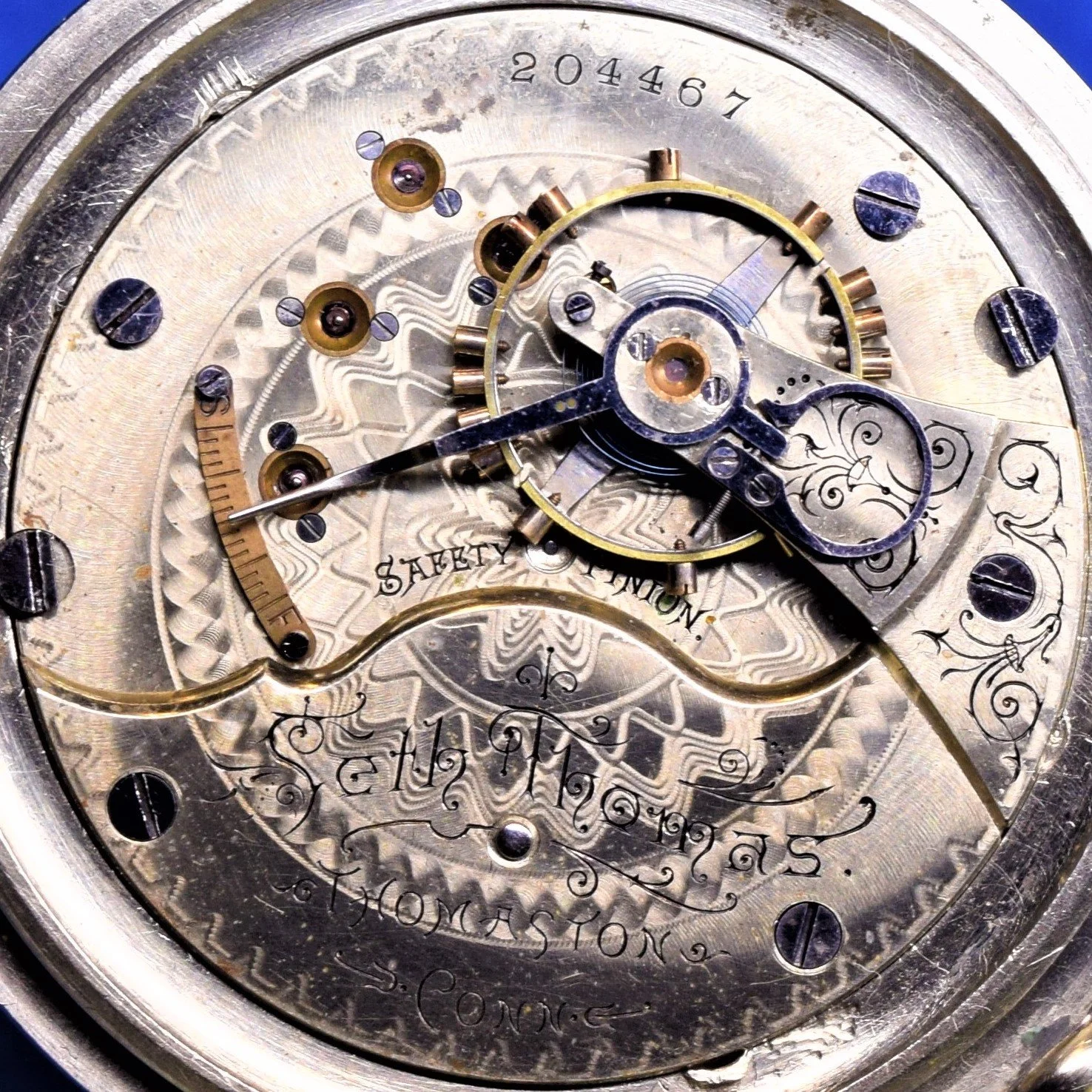

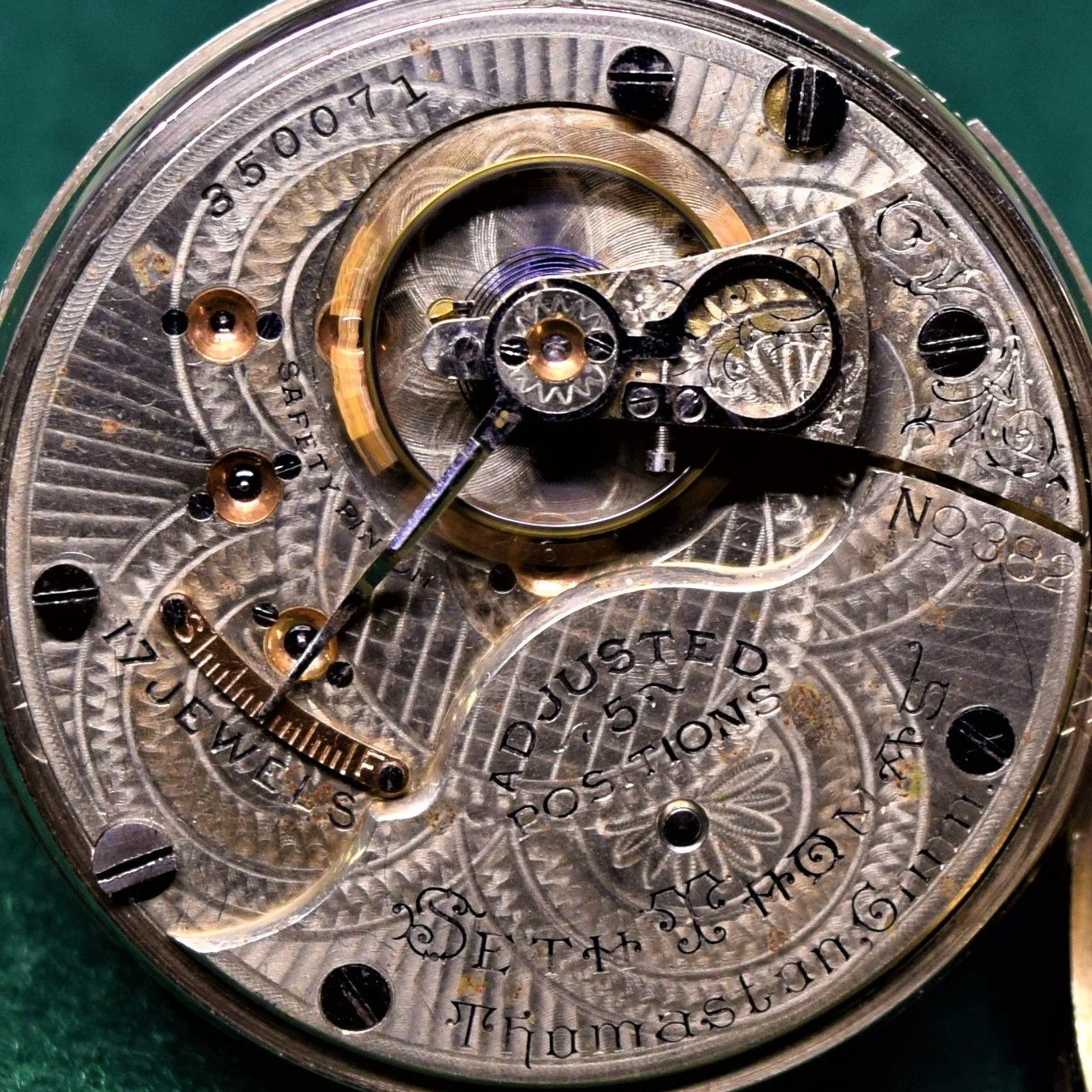
Somewhere between movements number 207258 and 207886 the Model 5 signature was moved to follow the outer perimeter of the barrel bridge with the “Thomaston, Conn.” portion arranged in one line. This allows for jewel counts and positions of adjustment to be marked on the movements. Serial number 350919 is the highest serial number utilizing this marking format for which photographic documentation is available on the Pocket Watch Database.
Movement Marking Style 2 - Documented serial number range 207886 - 350919.


Maiden Lane is a factory named grade manufactured by Seth Thomas in Model 5 with 17, 21, 24, or 25 jewels, and they were adjusted to either five or six positions. All Maiden Lane factory named grade movements are Model 5 and are signed with the marking “Maiden Lane” instead of “Seth Thomas Thomaston, Conn.”. Maiden Lane is the highest factory named grade to be manufactured by Seth Thomas. It was a Railroad Grade pocket watch.


You can support and assist our Seth Thomas Fan Space Research Project by uploading photographs of your Seth Thomas pocket watches to the Pocket Watch Database. Pocket Watch Database accounts are free of charge, and you will have full access to the photographs and descriptive information that you share, and you will have the ability to edit, change, or delete the information and photographs that you submit as you see fit.
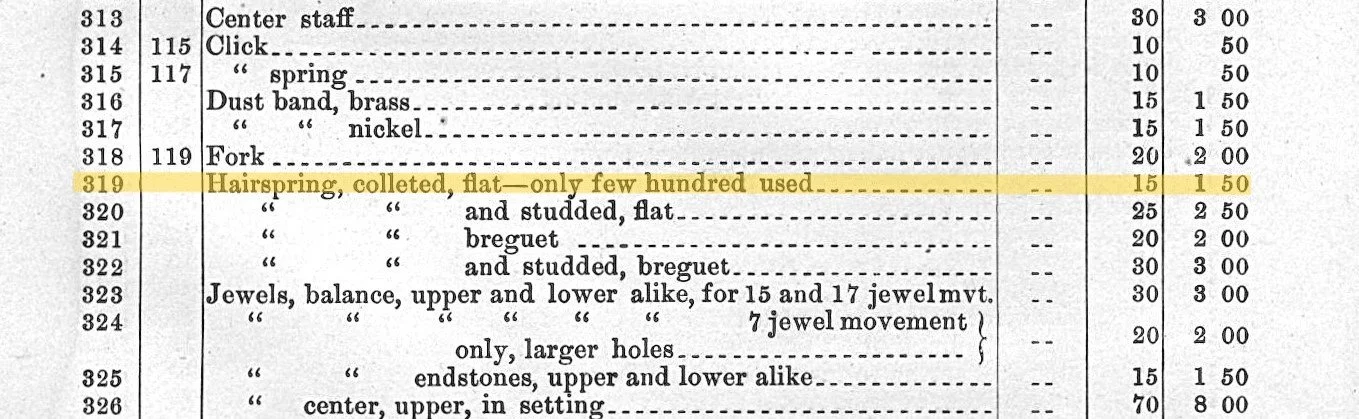
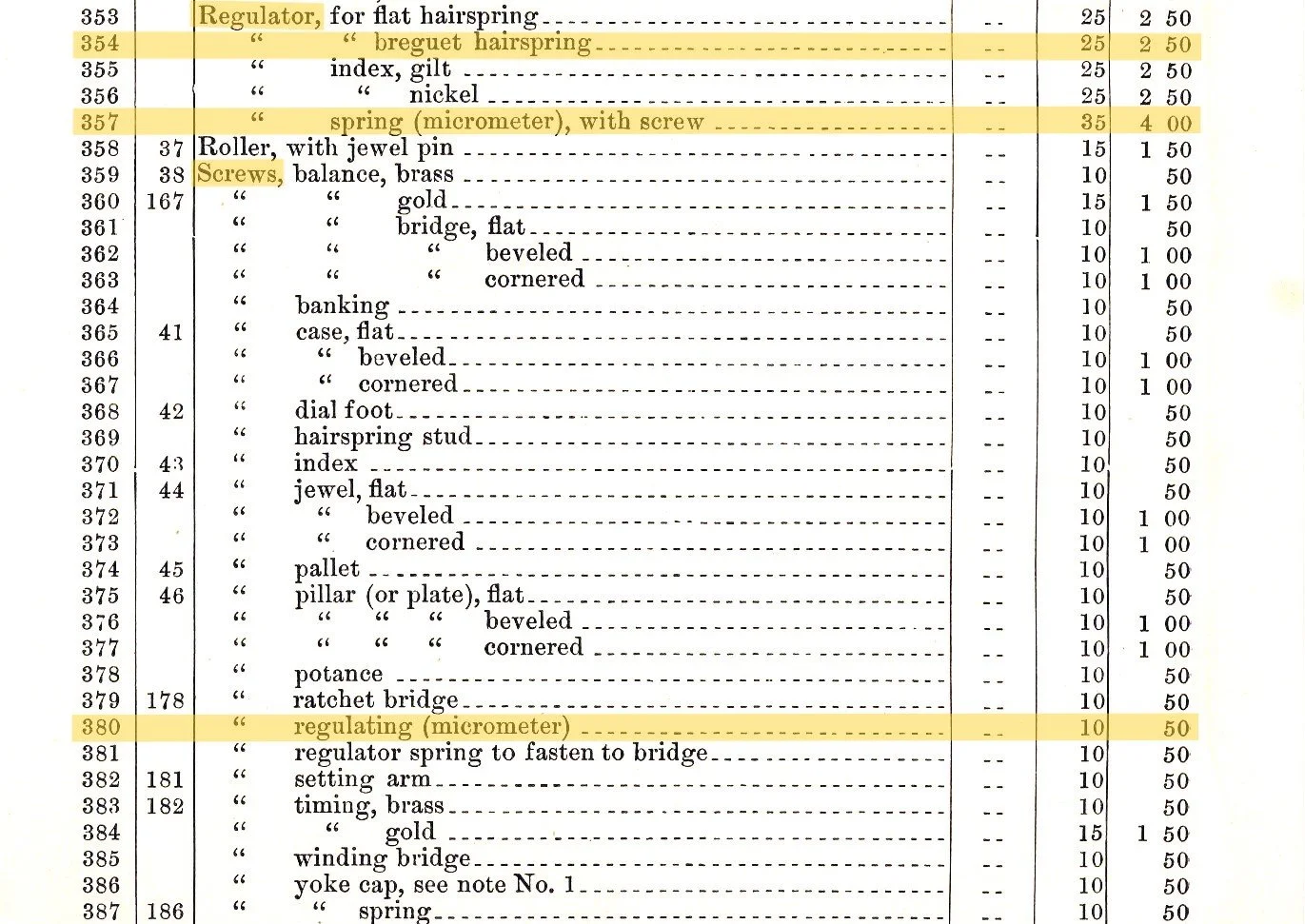
In the 1904 Seth Thomas Watch Material Catalog No. 650 visual differentiation was provided to tell us which regulator was designed to be compatible for use on Model 5 movements with the Breguet hairspring, part number 354. We were also shown a cut of the spring and screw that could be used on Model 5 with either the Breguet hairspring regulator or the flat hairspring regulator if micrometric regulation was to be provided. Only a “few hundred” flat hairsprings were used in the production of Model 5. The rest were Breguet hairsprings. The regulator designed for use on Model 5 with Breguet hairsprings has a much more impressive appearance with its index that was available in either gilt (part number 355) or nickel (part number 356). Model 5 is the only Seth Thomas model to offer this spectacular mechanical and artistically appealing regulator style for use with the Breguet hairspring; although other models did utilize modifications to the balance bridge and regulator to extract maximum benefit from the Breguet hairspring.
Click this link to open the Model 5 Photo Album in a new tab.
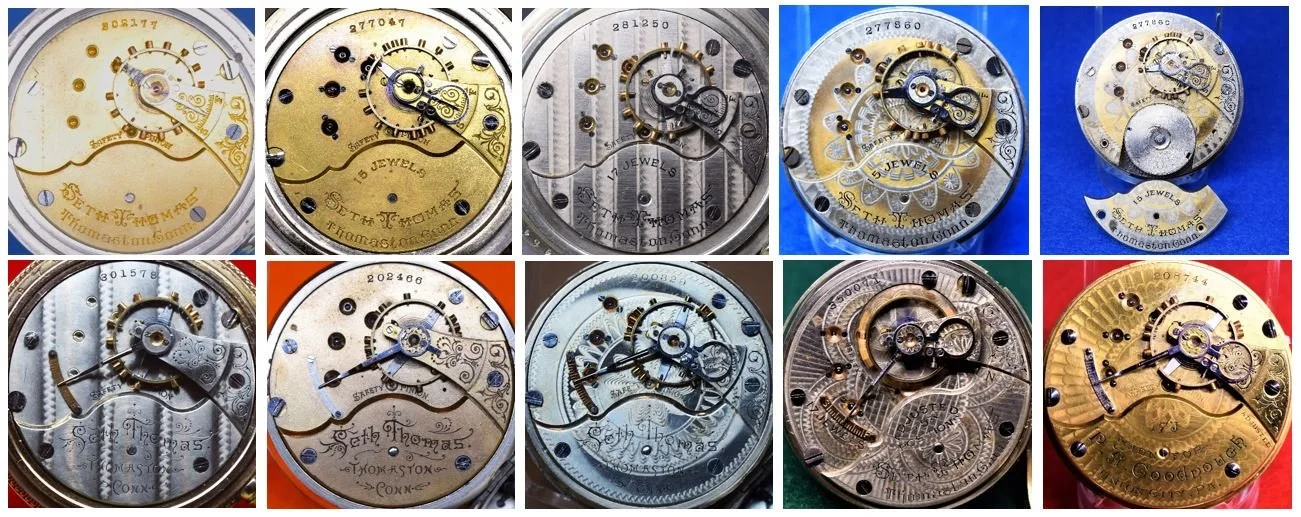
The photographs below shows the gilt, nickel, and two-tone finishes available on Model 5 movements. Model 5 exhibits some of the finest, and most intricate finish patterns found on Seth Thomas pocket watches. The photograph on the far right end of the bottom row also shows an example of the gilt damaskeened finish found on some Model 5 movements.
The photographs below also show examples of the simple and micrometric regulators used on Model 5 movements with the flat hairspring type illustrated on the top row. The photograph on the right-hand end of the top row shows the barrel plate portion of the full plate removed to expose the mainspring barrel.
The bottom row of photographs illustrates the types of simple and micrometric regulators used on Model 5 movements with Breguet hairsprings.
Click this link to open the Model 5 Photo Album in a new tab.
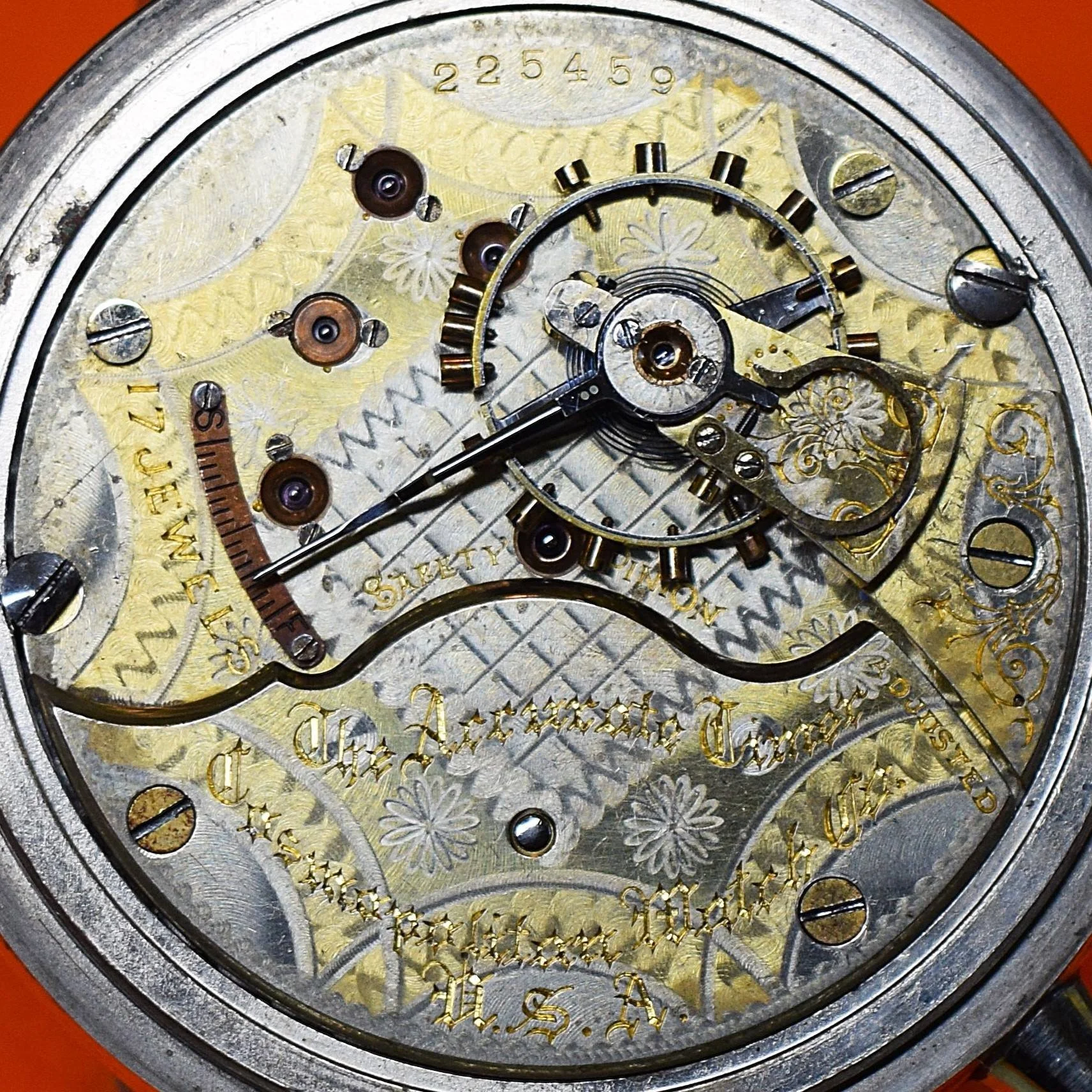
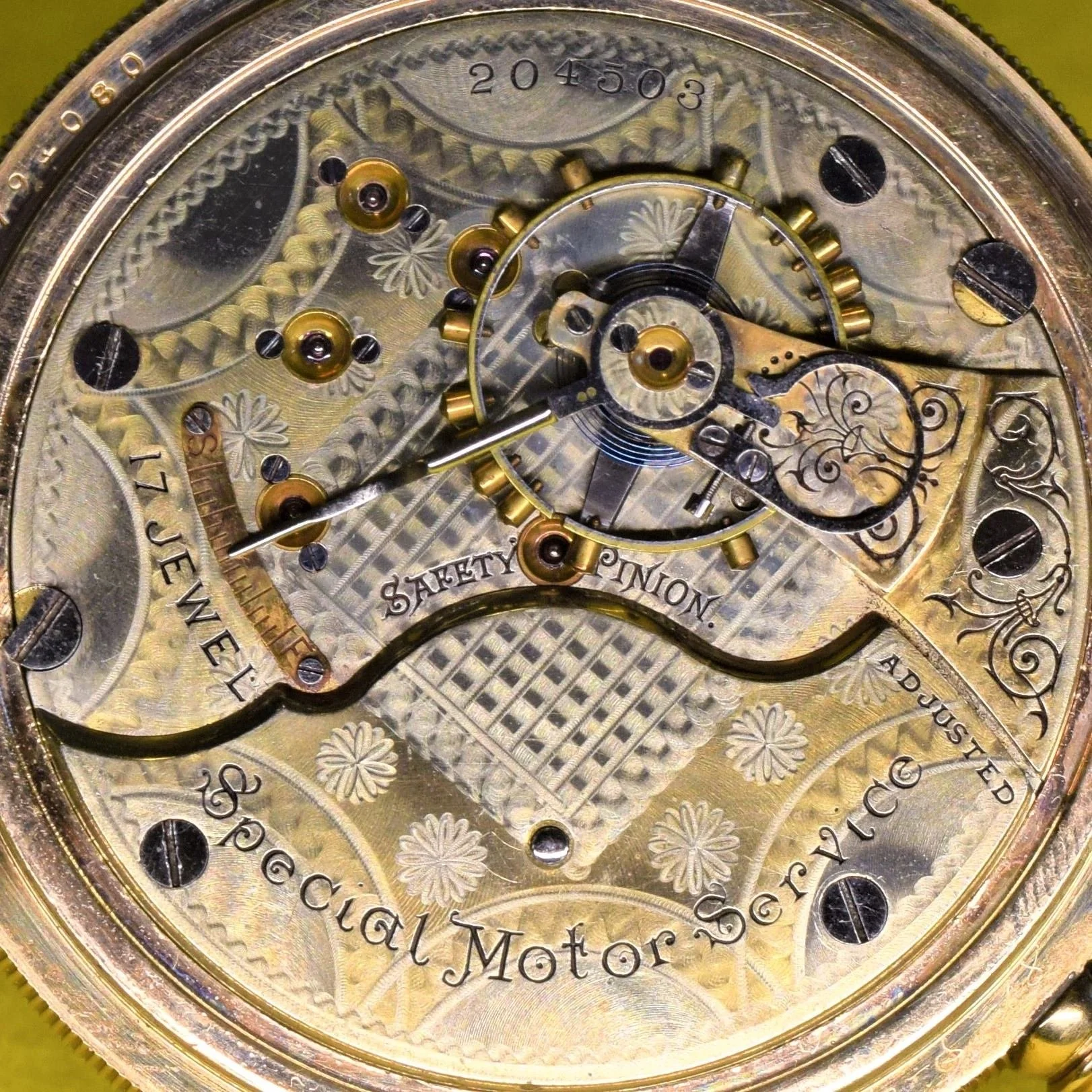
Some Private Label Pocket Watches within Model 5
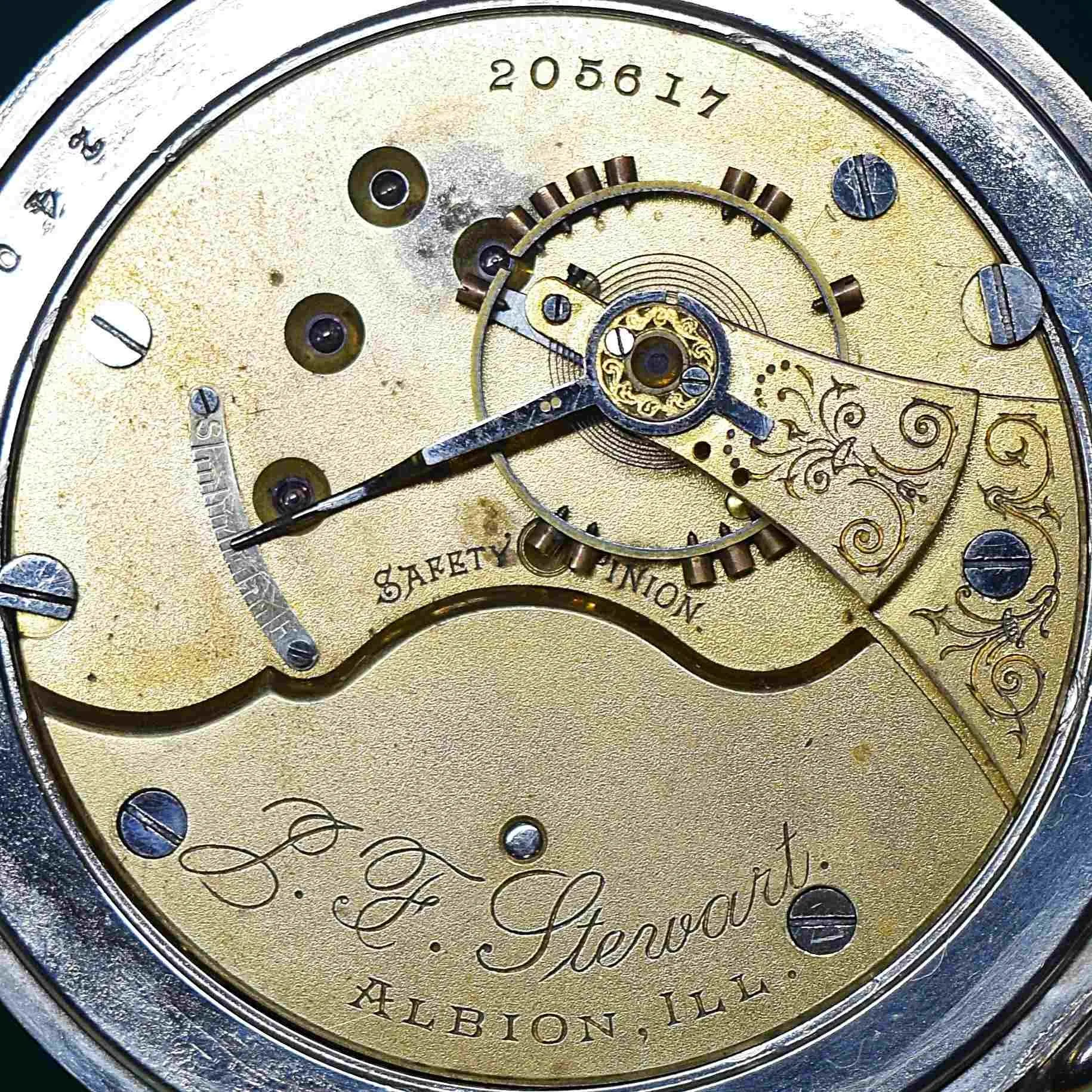
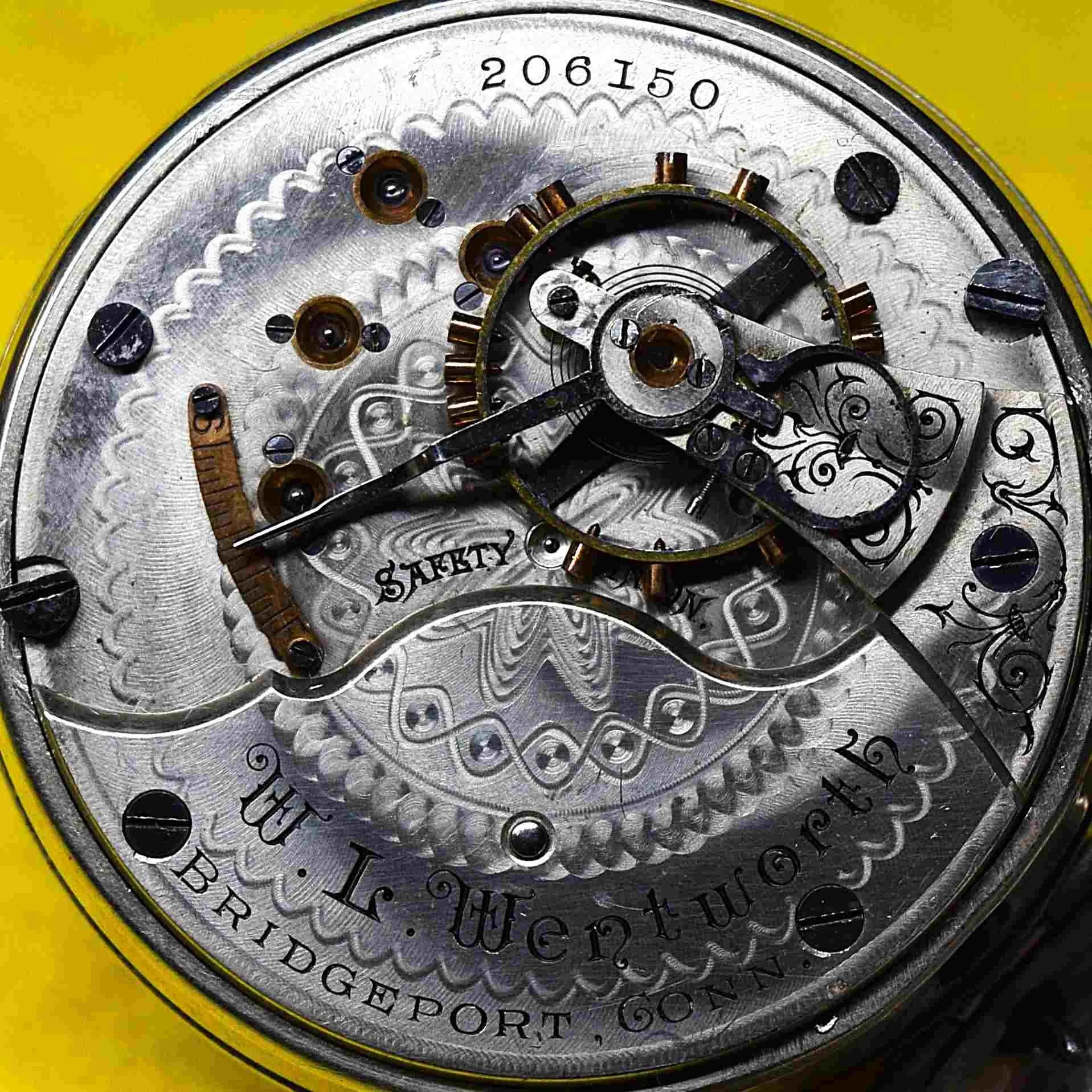
For detailed information about each private label pocket watch please use the link in the heading above and find the private labels organized alphabetically across the pages of the Private Labels section. If you have verifiable information about any private label pocket watch illustrated on this website, please share it through the Contact Us link located at the bottom of each page.


















Jewel Counts in Seth Thomas Model 5 Pocket Watches
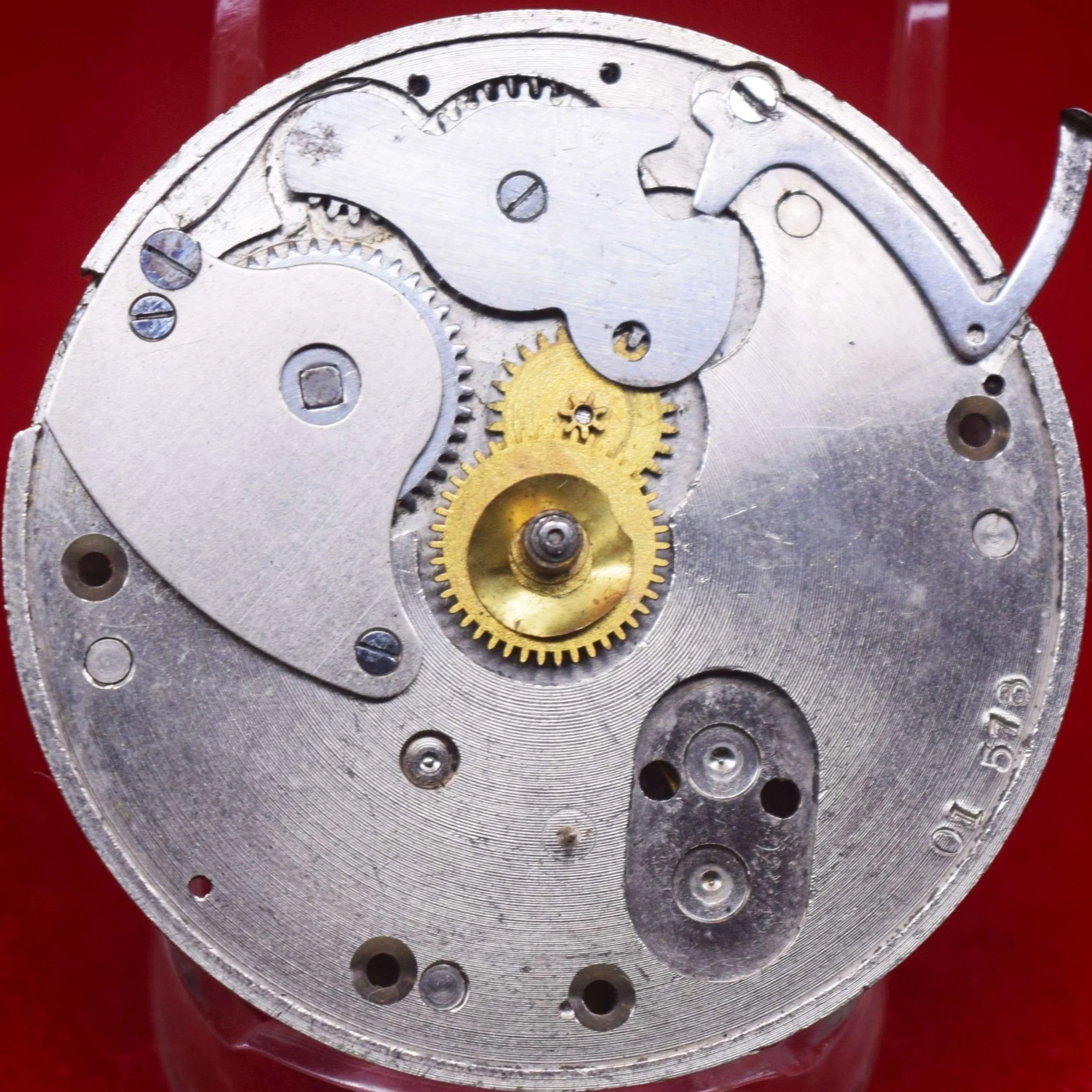
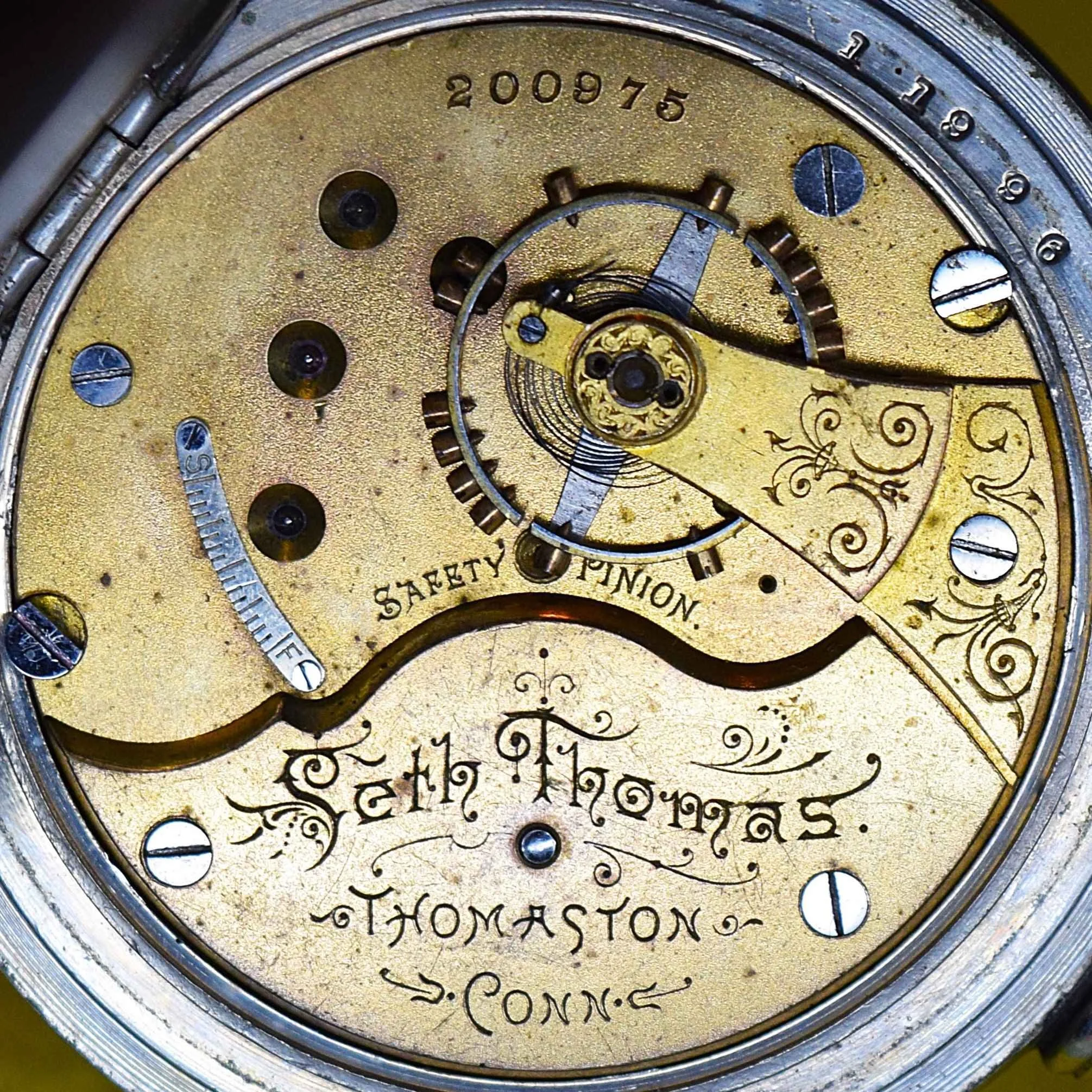

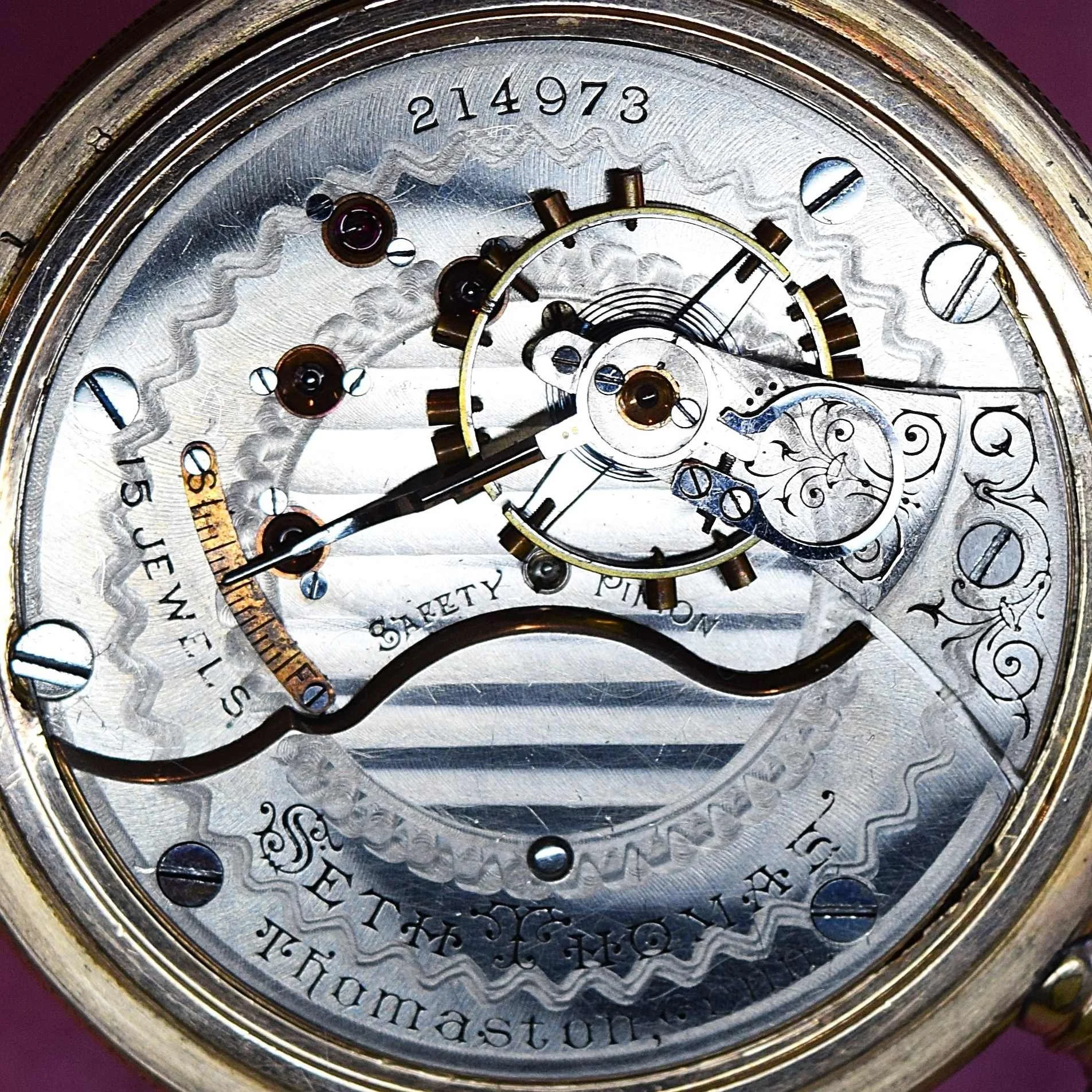


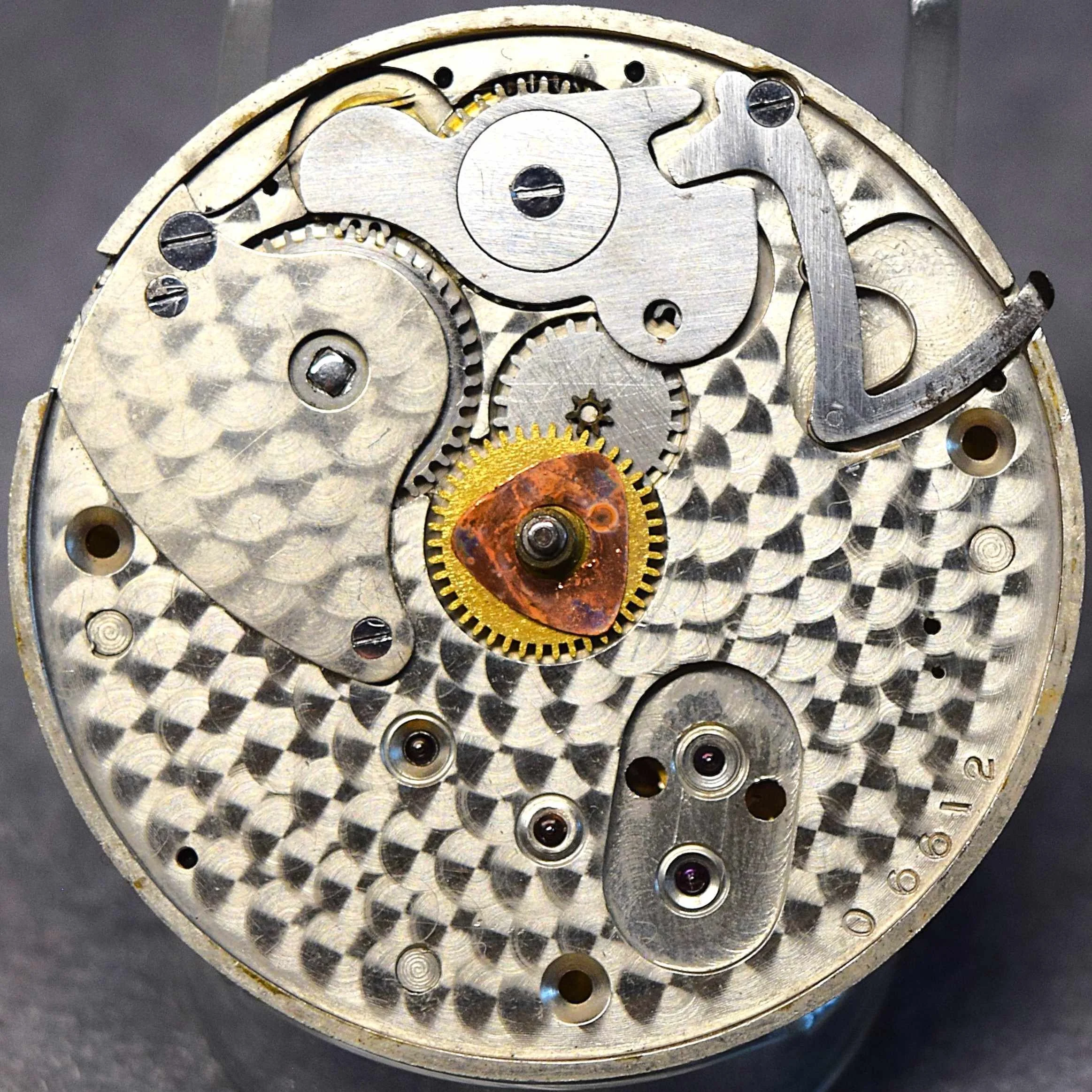
The four most common Seth Thomas jewel counts, 7 jewels, 11 jewels, 15 jewels, and 17 jewels, are shown above from left to right respectively. The top row shows the “Top Plate” and the bottom row shows the “Pillar Plate”, which is usually covered by the dial.
7-Jewel Movements
The top two images below show the 7-jewel movement with its two visible jewels highlighted in red.
The image on the left, the Top Plate, shows the balance staff’s top cap stone/jewel, which is protecting the balance staff’s top jewel (hole jewel) directly beneath it. A Cap Jewel acts as a barrier between the hole jewel and outside environmental contaminants that could reduce efficiency and effectiveness of a hole jewel. When a Cap Jewel is used the wheels pivot rides on the Cap Jewel and is stabilized by passing through the hole jewel.

The image on the right, the Pillar Plate, does not show the balance staff’s bottom cap jewel on Seth Thomas Model 5. Because the balance bridge is on top of the full plate a potance is attached to the back of the top plate holding the hole jewel and the balance staff’s bottom cap stone/jewel. The potance can be seen in the second set of two photos below. There are no jewels visible on Model 5’s 7-jewel movements.
There are five more jewels that are hidden between the plates:
In Seth Thomas Model 5 movements the Bottom Balance Staff Jewel and the Bottom Balance Staff Cap Stone/Jewel are between the plates.
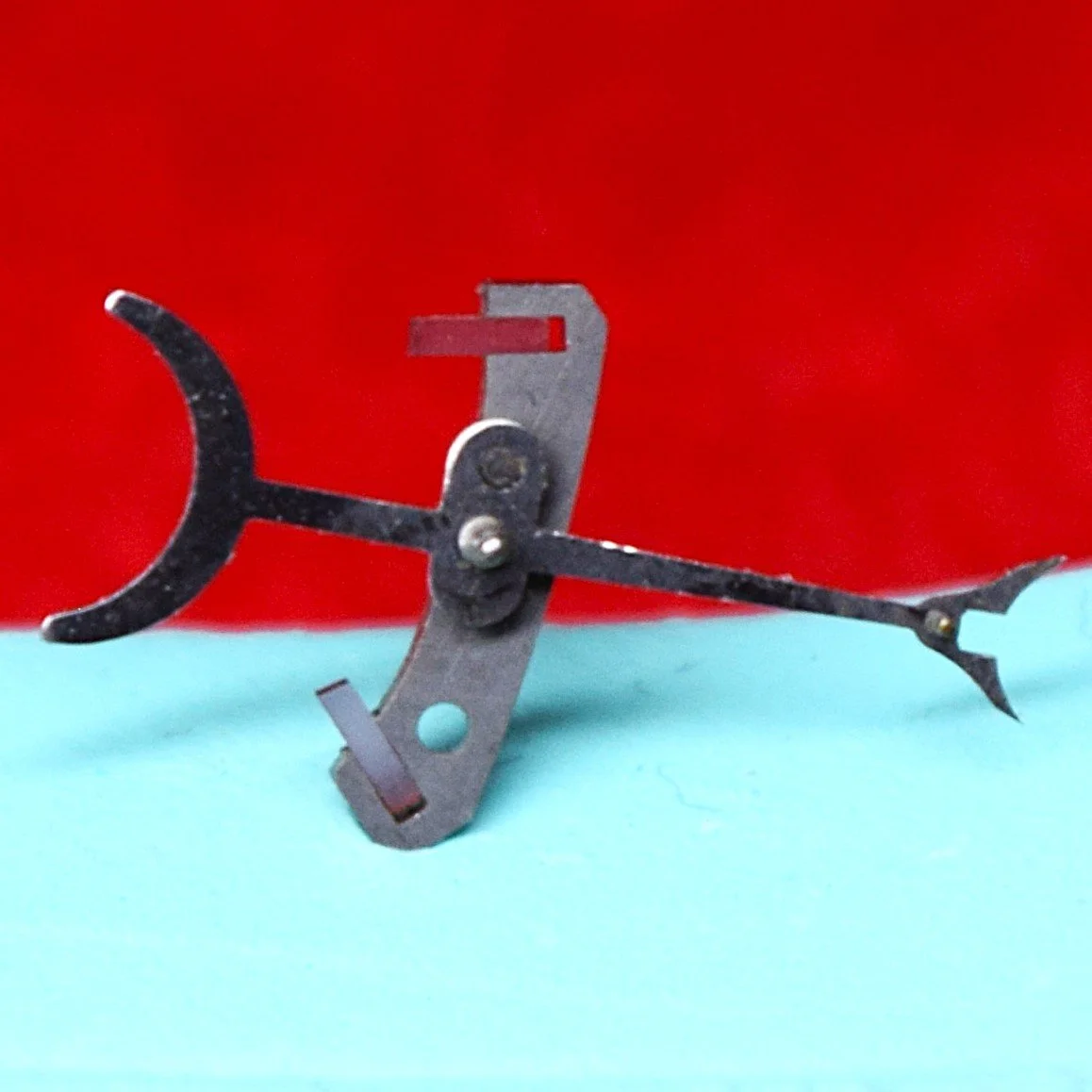
The two pallet jewels are on the wide end of the pallet fork that make contact with the escape wheel. As the escape wheel turns due to the release of power from the main spring it makes contact with the two pallet jewels in such a way that it causes the pallet fork to swing from side to side. This also moves the narrow end of the pallet fork from side to side making intermittent contact with the impulse jewel, pushing it from side to side.
The impulse jewel rides beneath the roller table near the bottom of the balance staff. As the tip of the pallet fork moves the impulse jewel from side to side it turns the roller table, hairspring, and balance wheel back and forth providing resistance to the power being released from the mainspring. By regulating the strength of this resistance, we are able to regulate the rate at which the power can be released from the mainspring through the gear train, and ultimately the rate at which the hands of the watch move around the dial.
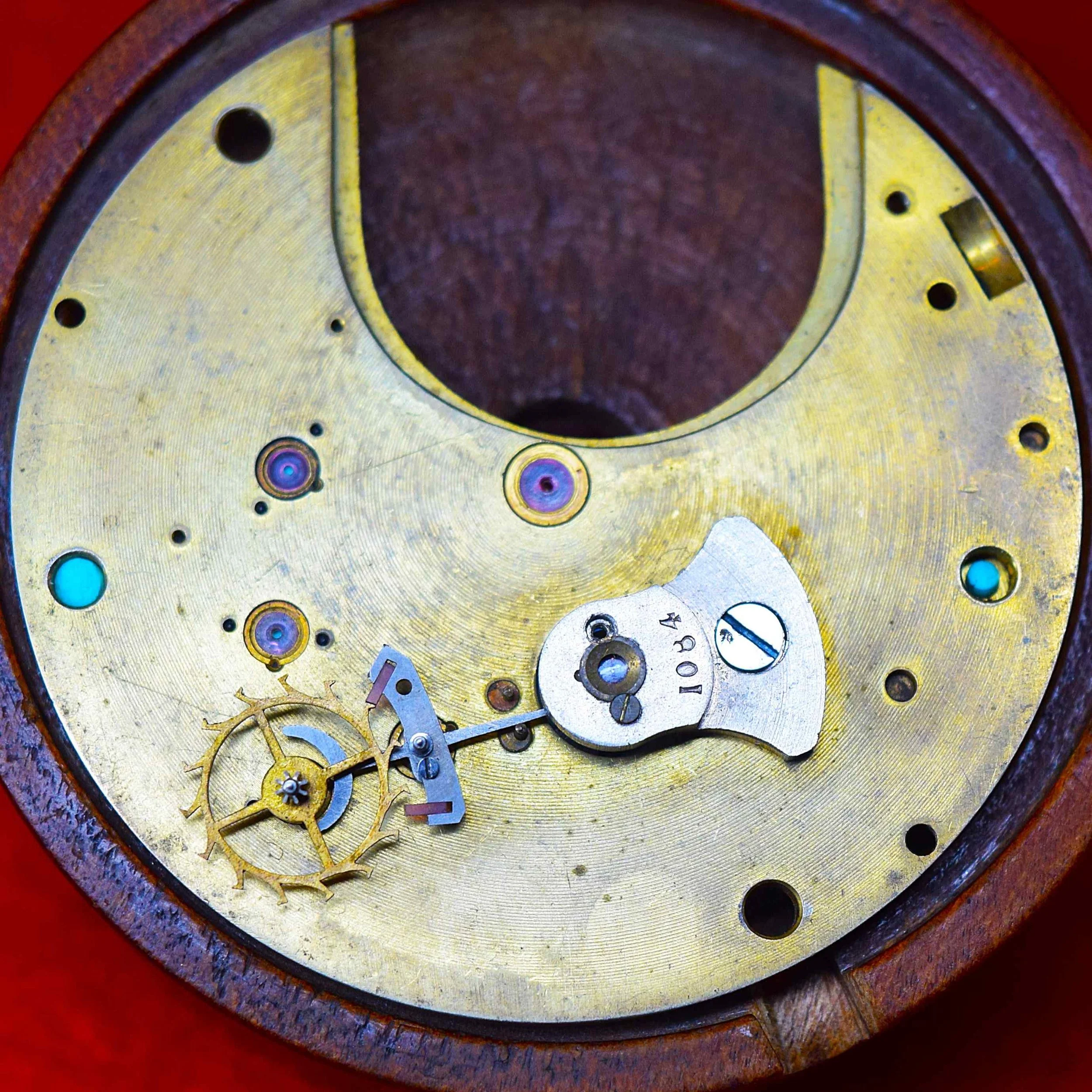
The second two images are of an impulse jewel, a pallet fork with their pallet jewels visible, and the potance.
The bottom image shows how the Pallet Fork Jewels engage the Escape Wheel.

11-Jewel Movements
The two images below show the 11-jewel movement with its six visible jewels highlighted.
The image on the left, the Top Plate, shows the balance staff’s top cap stone/jewel, which is protecting the balance staff’s top jewel (hole jewel) directly beneath it highlighted in red. Notice that all settings for hole jewels on the top plate of the 11-jewel movement are pressed, instead of screw-set. This is quick way to tell Seth Thomas 11-jewel movements from 15-jewel movements in this model.
It shows the top pallet jewel (hole jewel) highlighted in blue. The jewel reduces friction in the movement of the pallet fork that occurs with metal pivot passing through a metal bearing.
The image also shows the top escape wheel jewel (hole jewel) highlighted in white.

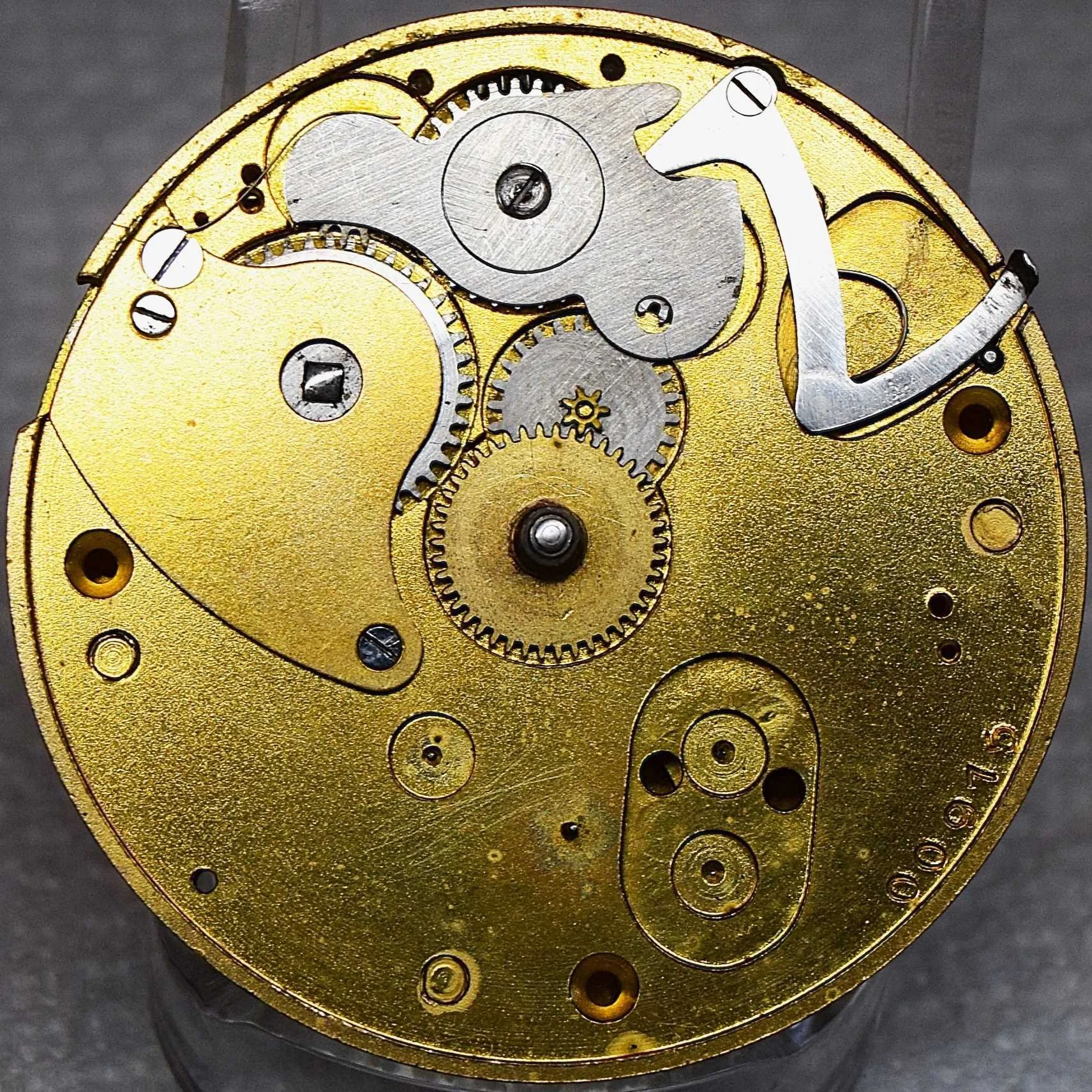
The image on the right, the Pillar Plate, does not show any jewels in Model 5’s 11-jewel movements.
There are five more jewels that are hidden between the plates:
In Seth Thomas Model 5 movements the Bottom Balance Staff Jewel and the Bottom Balance Staff Cap Stone/Jewel are between the plates.
The two pallet jewels are on the wide end of the pallet fork that make contact with the escape wheel. As the escape wheel turns due to the release of power from the main spring it makes contact with the two pallet jewels in such a way that it causes the pallet fork to swing from side to side. This also moves the narrow end of the pallet fork from side to side making intermittent contact with the impulse jewel, pushing it from side to side.
The impulse jewel rides beneath the roller table near the bottom of the balance staff. As the tip of the pallet fork moves the impulse jewel from side to side it turns the roller table, hairspring, and balance wheel back and forth providing resistance to the power being released from the mainspring. By regulating the strength of this resistance, we are able to regulate the rate at which the power can be released from the mainspring through the gear train, and ultimately the rate at which the hands of the watch move around the dial.
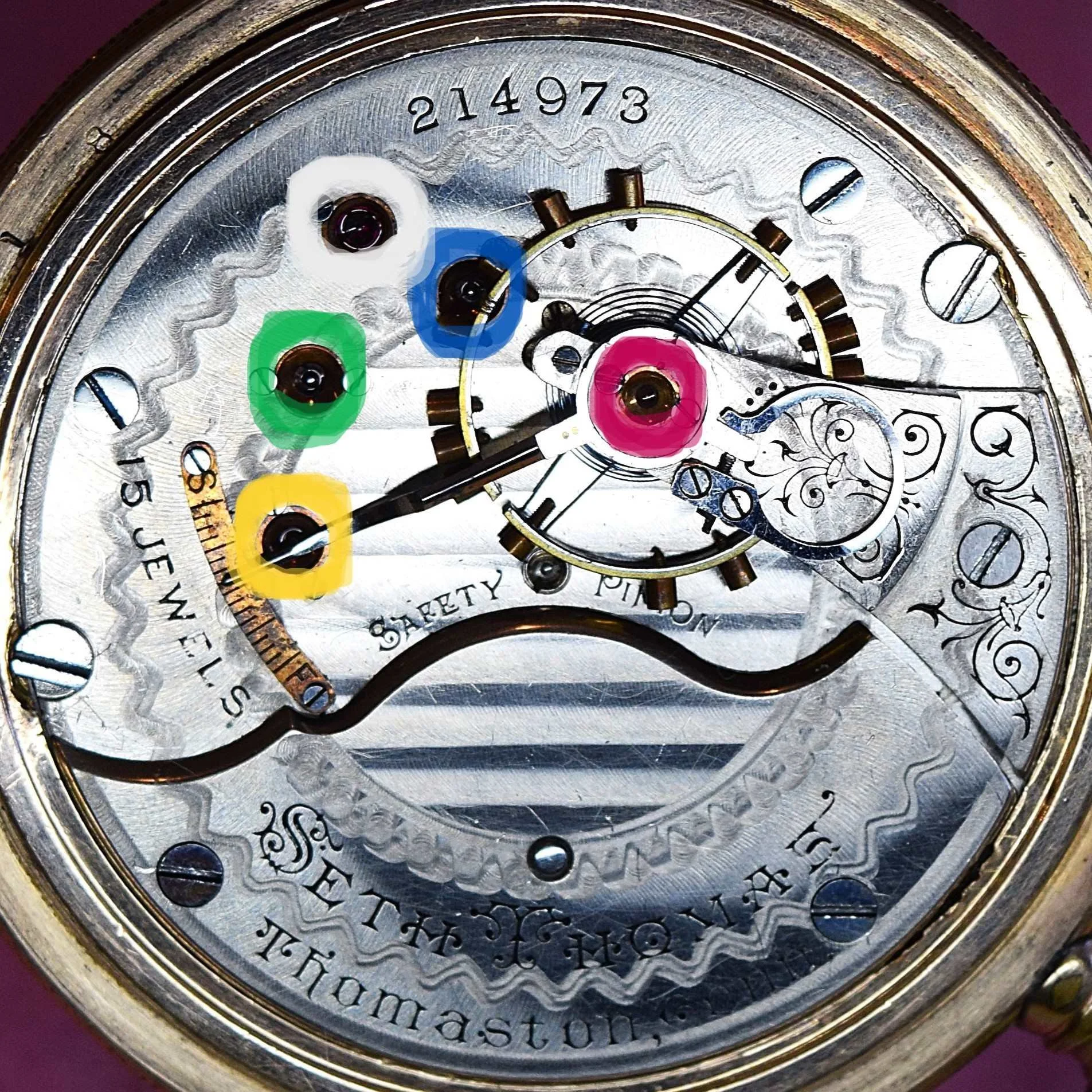
15-Jewel Movements
The two images below show the 15-jewel movement with its ten visible jewels highlighted.
The image on the left, the Top Plate, shows the balance staff’s top cap jewel, which is protecting the balance staff’s top jewel (hole jewel) directly beneath it highlighted in red.
It shows the top pallet jewel (hole jewel) highlighted in blue. The jewel reduces friction in the movement of the pallet fork that occurs with metal pivot passing through a metal bearing.
The image shows the top escape wheel jewel (hole jewel) highlighted in white.
It shows the 3rd Wheel top jewel (hole jewel) highlighted in yellow.
The image also shows the 4th Wheel Top Jewel (hole jewel) highlighted in green.
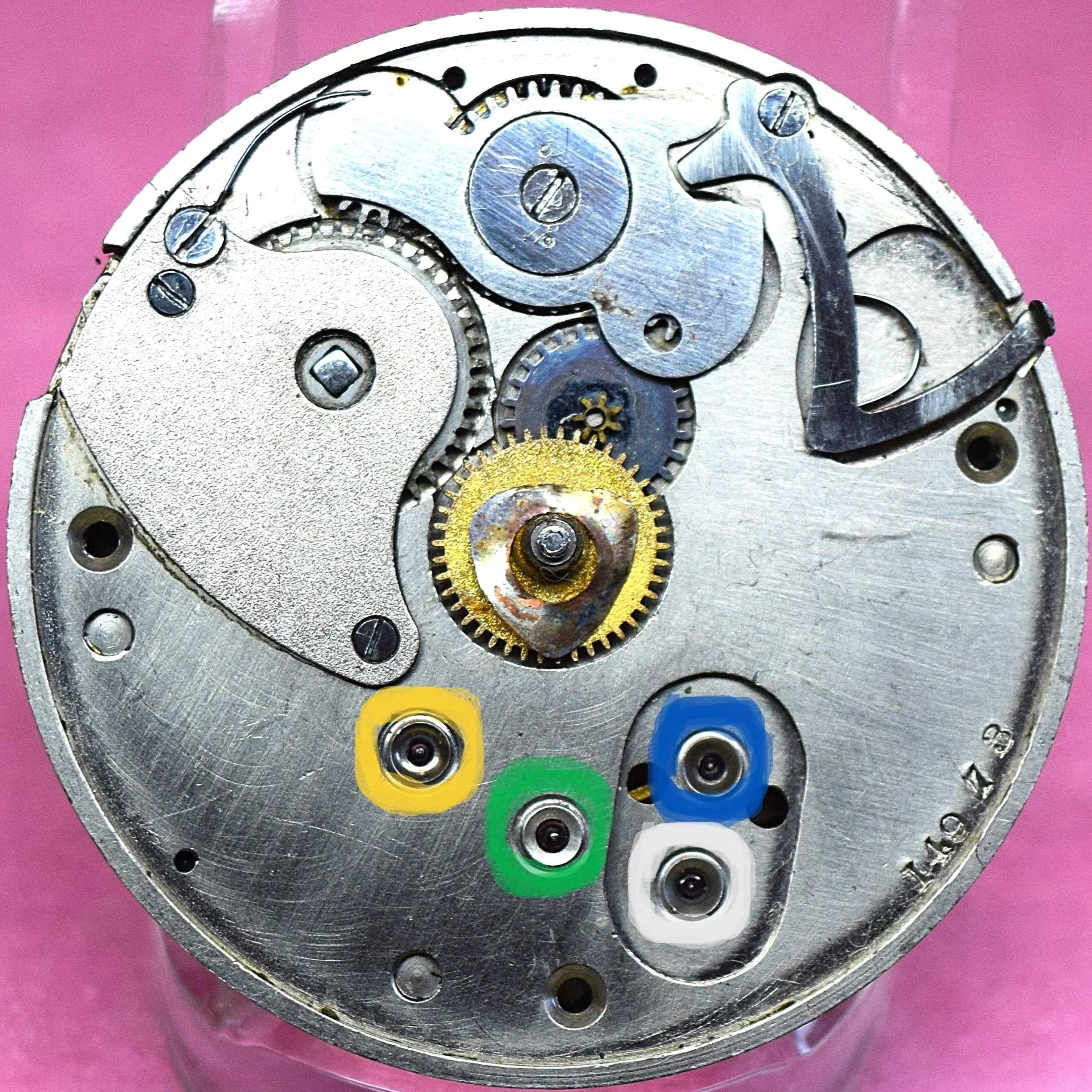
The image on the right, the Pillar Plate, shows the Bottom Pallet Jewel (hole jewel) highlighted in blue. This jewel reduces friction in the movement of the pallet fork.
The image also shows the Bottom Escape Wheel Jewel (hole jewel) highlighted in white.
It shows the 3rd Wheel Bottom Jewel (hole jewel) highlighted in yellow.
The image also shows the 4th Wheel Bottom Jewel (hole jewel) highlighted in green.
There are five more jewels that are hidden between the plates:
In Seth Thomas Model 5 movements the Bottom Balance Staff Jewel and the Bottom Balance Staff Cap Stone/Jewel are between the plates.
The two pallet jewels are on the wide end of the pallet fork that make contact with the escape wheel. As the escape wheel turns due to the release of power from the main spring it makes contact with the two pallet jewels in such a way that it causes the pallet fork to swing from side to side. This also moves the narrow end of the pallet fork from side to side making intermittent contact with the impulse jewel, pushing it from side to side.
The impulse jewel rides beneath the roller table near the bottom of the balance staff. As the tip of the pallet fork moves the impulse jewel from side to side it turns the roller table, hairspring, and balance wheel back and forth providing resistance to the power being released from the mainspring. By regulating the strength of this resistance, we are able to regulate the rate at which the power can be released from the mainspring through the gear train, and ultimately the rate at which the hands of the watch move around the dial.
17-Jewel Movements
The two images below show the 17-jewel movement with its twelve visible jewels highlighted.
The image on the left, the Top Plate, shows the balance staff’s top cap jewel, which is protecting the balance staff’s top jewel (hole jewel) directly beneath it highlighted in red.
It shows the top pallet jewel (hole jewel) highlighted in blue. The jewel reduces friction in the movement of the pallet fork that occurs with metal pivot passing through a metal bearing.
The image shows the top escape wheel jewel (hole jewel) highlighted in white.
It shows the 3rd Wheel top jewel (hole jewel) highlighted in yellow.
The image also shows the 4th Wheel Top Jewel (hole jewel) highlighted in green.
It shows the Center Wheel Jewel highlighted in orange.


The image on the right, the Pillar Plate, shows the Bottom Pallet Jewel (hole jewel) highlighted in blue. This jewel reduces friction in the movement of the pallet fork.
The image also shows the Bottom Escape Wheel Jewel (hole jewel) highlighted in white.
It shows the 3rd Wheel Bottom Jewel (hole jewel) highlighted in yellow.
The image also shows the 4th Wheel Bottom Jewel (hole jewel) highlighted in green.
It shows the Center Wheel Jewel with the cannon pinion removed and the Bottom Center Wheel Jewel is visible highlighted in orange.
There are five more jewels that are hidden between the plates:
In Seth Thomas Model 5 movements the Bottom Balance Staff Jewel and the Bottom Balance Staff Cap Stone/Jewel are between the plates.
The two pallet jewels are on the wide end of the pallet fork that make contact with the escape wheel. As the escape wheel turns due to the release of power from the main spring it makes contact with the two pallet jewels in such a way that it causes the pallet fork to swing from side to side. This also moves the narrow end of the pallet fork from side to side making intermittent contact with the impulse jewel, pushing it from side to side.
The impulse jewel rides beneath the roller table near the bottom of the balance staff. As the tip of the pallet fork moves the impulse jewel from side to side it turns the roller table, hairspring, and balance wheel back and forth providing resistance to the power being released from the mainspring. By regulating the strength of this resistance, we are able to regulate the rate at which the power can be released from the mainspring through the gear train, and ultimately the rate at which the hands of the watch move around the dial.
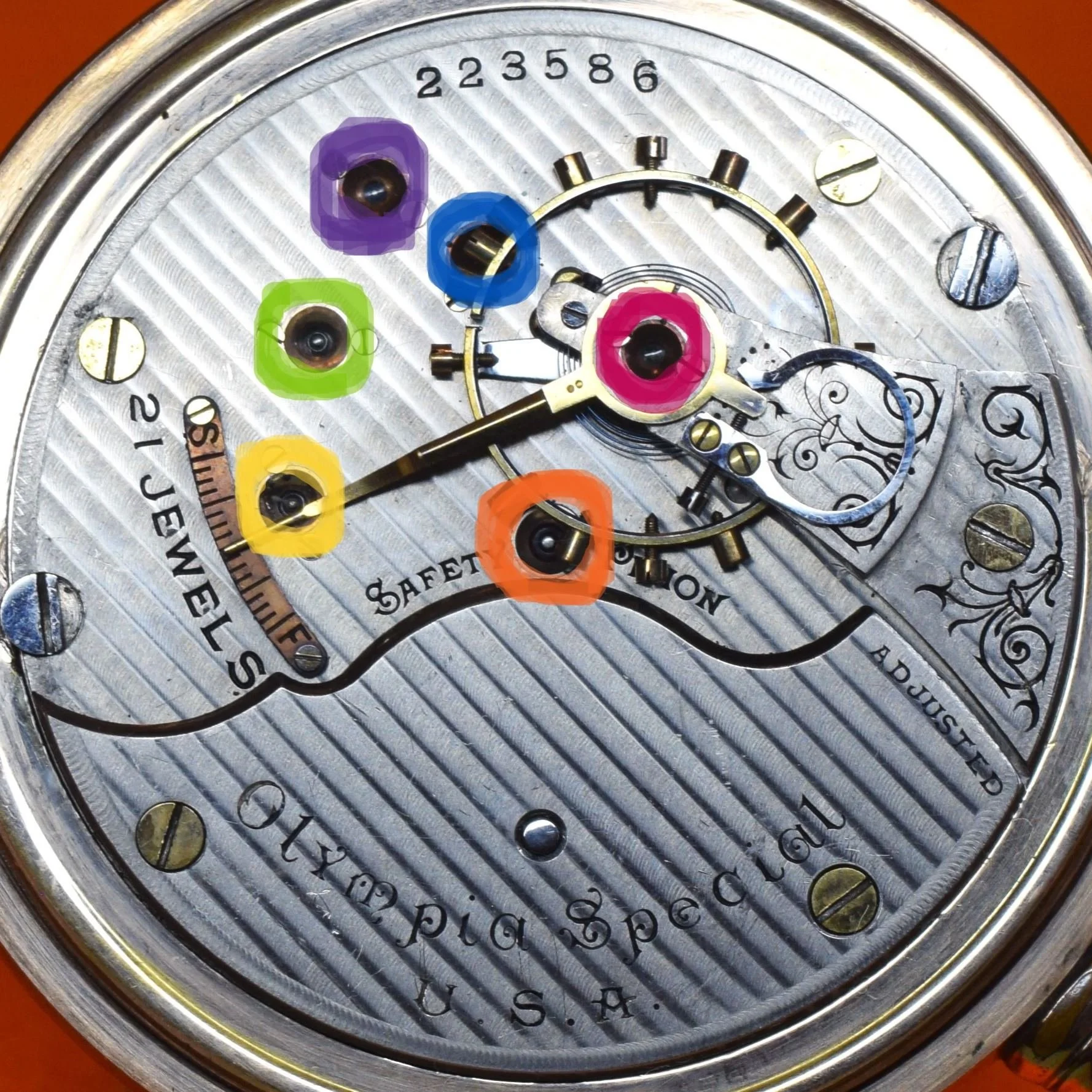
21-Jewel Movements
The two images below show the 21-jewel movement with its sixteen visible jewels highlighted.
The image on the left, the Top Plate, shows the balance staff’s top cap jewel, which is protecting the balance staff’s top jewel (hole jewel) directly beneath it highlighted in red.
It shows the top pallet jewel (hole jewel) and a top cap jewel highlighted in blue. These jewels reduce friction in the movement of the pallet fork that occurs with metal pivot passing through a metal bearing.
The image shows the top escape wheel jewel (hole jewel) and a top cap jewel highlighted in white.
It shows the 3rd Wheel top jewel (hole jewel) highlighted in yellow.
The image also shows the 4th Wheel Top Jewel (hole jewel) highlighted in green.
It shows the Center Wheel Jewel highlighted in orange.
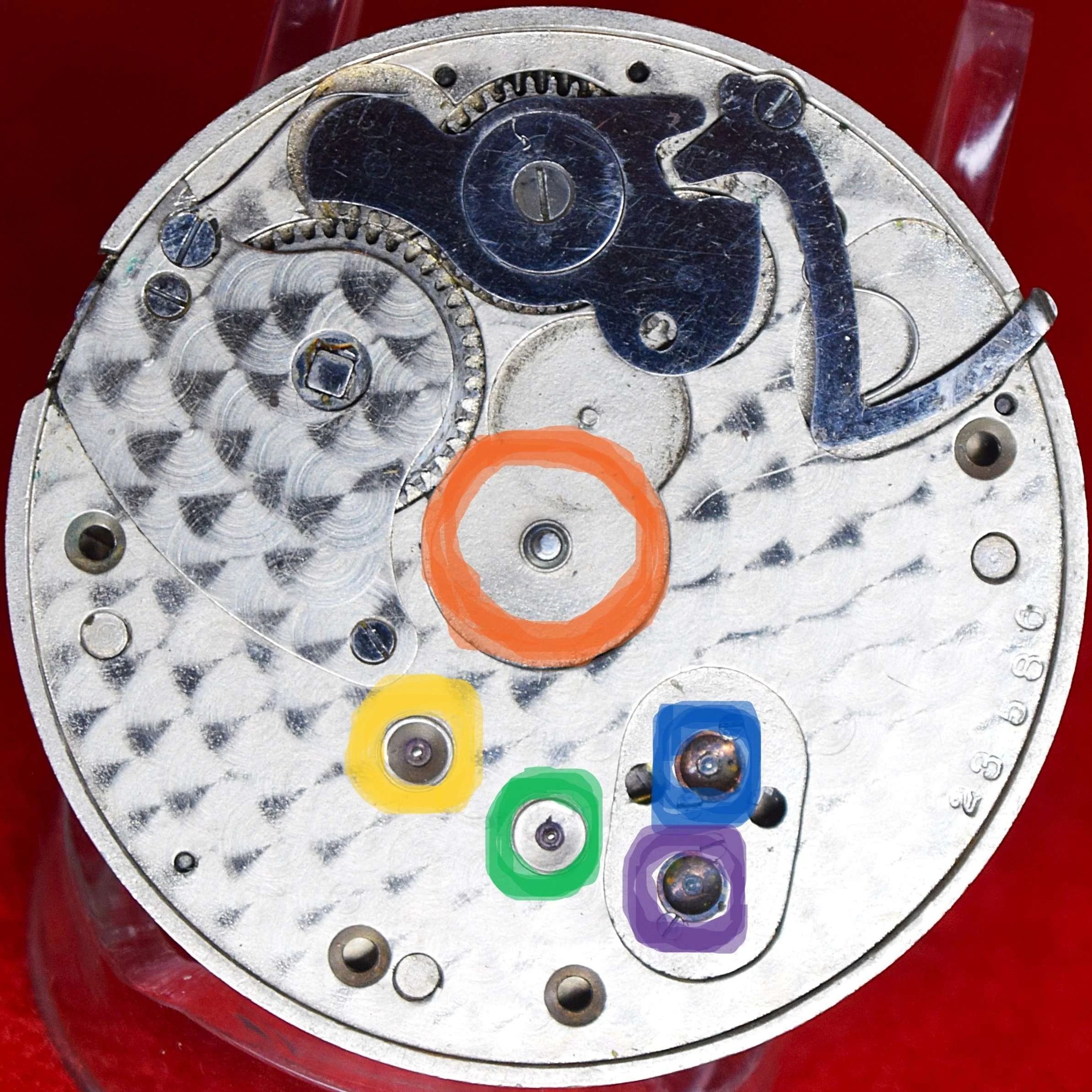
The image on the right, the Pillar Plate, shows the Bottom Pallet Jewel (hole jewel) and a bottom cap jewel highlighted in blue. These jewels reduce friction in the movement of the pallet fork.
The image also shows the Bottom Escape Wheel Jewel (hole jewel) and a bottom cap jewel highlighted in white.
It shows the 3rd Wheel Bottom Jewel (hole jewel) highlighted in yellow.
The image also shows the 4th Wheel Bottom Jewel (hole jewel) highlighted in green.
It shows the Center Wheel Jewel with the cannon pinion removed and the Bottom Center Wheel Jewel is visible highlighted in orange.
There are five more jewels that are hidden between the plates:
In Seth Thomas Model 5 movements the Bottom Balance Staff Jewel and the Bottom Balance Staff Cap Stone/Jewel are between the plates.
The two pallet jewels are on the wide end of the pallet fork that make contact with the escape wheel. As the escape wheel turns due to the release of power from the main spring it makes contact with the two pallet jewels in such a way that it causes the pallet fork to swing from side to side. This also moves the narrow end of the pallet fork from side to side making intermittent contact with the impulse jewel, pushing it from side to side.
The impulse jewel rides beneath the roller table near the bottom of the balance staff. As the tip of the pallet fork moves the impulse jewel from side to side it turns the roller table, hairspring, and balance wheel back and forth providing resistance to the power being released from the mainspring. By regulating the strength of this resistance, we are able to regulate the rate at which the power can be released from the mainspring through the gear train, and ultimately the rate at which the hands of the watch move around the dial.
Select Illustrated Grades within Model 5
Seth Thomas Grade 47
11 Jewel - Model 5

This 1913 Seth Thomas open-face 18-size Model 5 pocket watch was manufactured with a gilt finished full plate, 7 jewels, and it is non-adjusted. The movement is stem wound and lever set, with a Breguet hair spring, and plain/simple regulator. Its serial number is 302177, and its grade is Seth Thomas numbered grade 47. The movement is signed “Seth Thomas Thomaston, Conn.”.
The movement presents with an 18-size Seth Thomas #1240 Roman Canadian dial with red 24-hour numerals and a hash marks minute track with no marginals, fitted with Seth Thomas #1291 blued spade & whip railroad hands 18-size.
The movement is cased in an 18-size Star Watch Case Company open-face nickel watch case with screw back and bezel, serial number, 1231476.
Seth Thomas Grade 57
7 Jewel - Model 5

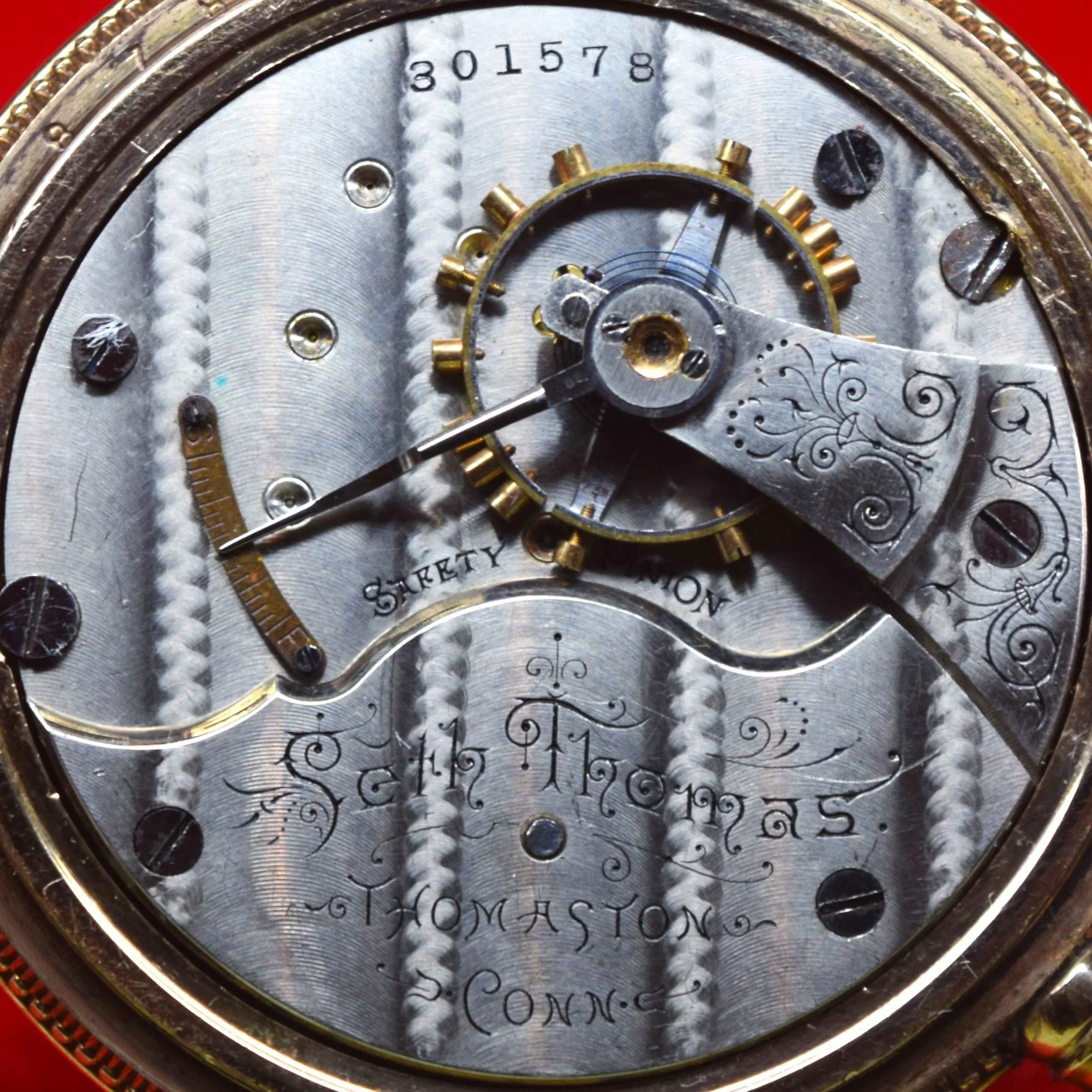
This 1913 Seth Thomas open-face 18-size Model 5 pocket watch was manufactured with a nickel finished full plate, 7 jewels, and it is non-adjusted. The movement is stem wound and lever set, with a Breguet hair spring, and plain/simple regulator. Its serial number is 301578, and its grade is Seth Thomas numbered grade 57. The movement is signed “Seth Thomas Thomaston, Conn.”.
The movement presents with an 18-size Seth Thomas #1238 Roman Canadian dial with black 24-hour numerals and a hash marks minute track with no marginals, fitted with Seth Thomas #1291 blued spade & whip railroad hands 18-size.
18-size Philadelphia Watch Case Company Open-Face 10K Gold-filled Premier Case - Ser # 5078785
Seth Thomas Grade 58
11 Jewel - Model 5

This 1893 Seth Thomas open-face 18-size Model 5 pocket watch was manufactured with a gilt finished full plate, 11 jewels, and it is non-adjusted. The movement is stem wound and lever set, with a Breguet hair spring, and simple/plain regulator. Its serial number is 202466, and its grade is Seth Thomas numbered grade 58. The movement is signed “Seth Thomas Thomaston, Conn.”.
The movement presents with a double-sunk 18-size Seth Thomas #1229 Arabic dial with a hashmarks minute track and red five-minute marginals. It is fitted with Seth Thomas #1282 blued R.R. spade & whip hands, 18-size.
The movement is cased in an open-face 18-size Illinois Watch Case Company nickel open-face swing out case, serial number 658069.
Seth Thomas Grade 82
17 Jewel - Model 5
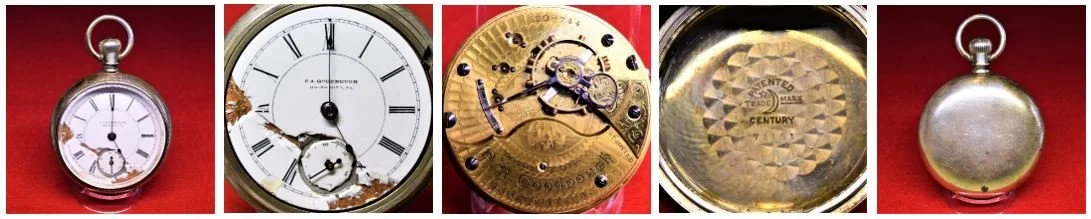
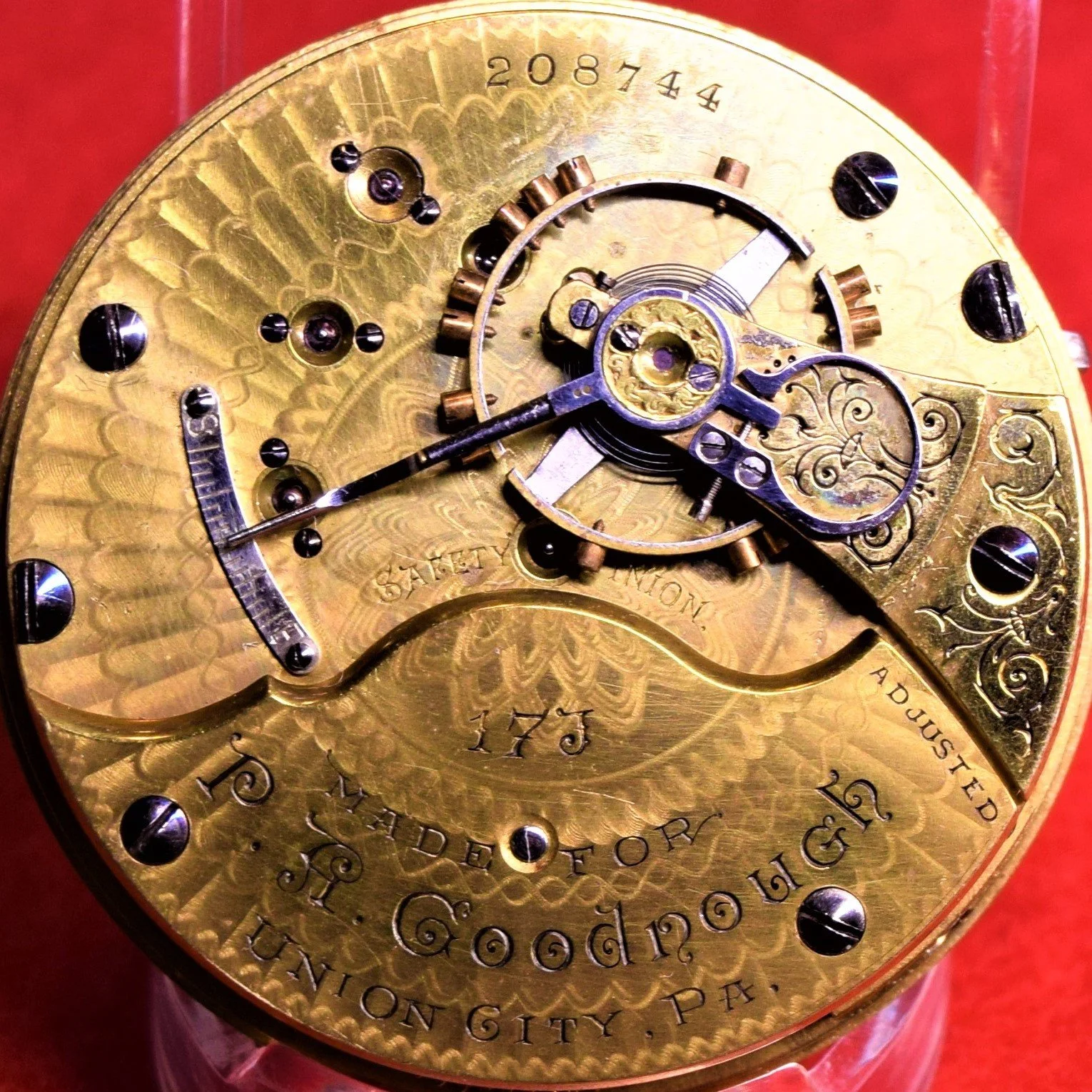
This 1899 Seth Thomas open-face 18-size Model 5 pocket watch was manufactured with a gilt damaskeened finished full plate, 17 jewels, and it is non-adjusted. The movement is stem wound and lever set, with a Breguet hair spring, and micrometric regulator. Its serial number is 208744, and its grade is Seth Thomas numbered grade 82. The movement is signed “MADE FOR P.A. GOODNOUGH UNION CITY, PA.”.
The movement presents with an 18-size private label “P.A. Goodnough Union City, PA.” Roman dial with a ring minute track and no marginals. It is fitted with Seth Thomas #1281 blued spade hands, 18-size.
The movement is cased in an open-face 18-size Crescent Watch Case Company nickel Century open-face watch case with a swing out movement ring, serial number 71151.
Seth Thomas Grade 149
15 Jewel - Model 5

This 1913 Seth Thomas open-face 18-size Model 5 pocket watch was manufactured with a gilt finished full plate, 15 jewels, and it is non-adjusted. The movement is stem wound and lever set, with a Breguet hair spring, and micrometric regulator. Its serial number is 292824, and its grade is Seth Thomas numbered grade 149. The movement is signed “Seth Thomas Thomaston, Conn.”.
The movement presents with an 18-size Seth Thomas #1225 Arabic dial with red five-minute marginals, fitted with Seth Thomas #1291 blued spade & whip railroad hands 18-size.
The movement is cased in an 18-size Crescent Watch Case Company open-face nickel swing-out watch case, serial number 25193.
Seth Thomas Grade 159
15 Jewel - Model 5

This 1904 Seth Thomas open-face 18-size Model 5 pocket watch was manufactured with a nickel finished full plate, 17 jewels, and it is non-adjusted. The movement is stem wound and lever set, with a Breguet hair spring, and micrometric regulator. Its serial number is 225562, and its grade is Seth Thomas numbered grade 159. The movement is signed “Seth Thomas Thomaston, Conn.”.
The movement presents with an 18-size "Bosell Couri" private label Roman dial with the image of a Locomotive on the dial, a ring minute track and red five-minute marginals, fitted with Seth Thomas #1282 Heavy Spade Railroad Blued Hands 18-size.
The movement is cased in an open-face 18-size Fahys Watch Case Company, gold-filled Montauk watch case with ornate engraving on back cover, serial number 9441341.
Seth Thomas Grade 169
17 Jewel - Model 5

This 1910 Seth Thomas open-face 18-size Model 5 pocket watch was manufactured with a two-tone finished full plate, 17 jewels, and it is non-adjusted. The movement is stem wound and lever set, with a Breguet hair spring, and micrometric regulator. Its serial number is 287065, and its grade is Seth Thomas numbered grade 169. The private label movement is signed “The King Siegel Bros. Boston Mass.”.
The movement presents with an 18-size Blue Fancy dial, unsigned, with a ring minute track, black five-minute marginals; fitted with Seth Thomas #1285 Open Morning Glory hands 18-size.
The 1908 Boston Massachusetts City Directory identifies Eli and George Siegel as the “Siegel Bros.” jewelers at 387 Washington Street in Boston. Their business is also identified as Washington Jewelry Co. in other period documents.
The movement is cased in an 18-size Dueber Watch Case Mfg. Company 10k gold-filled open-face Champion watch case, serial number 2762588.
Seth Thomas Grade 173
15 Jewel - Model 5
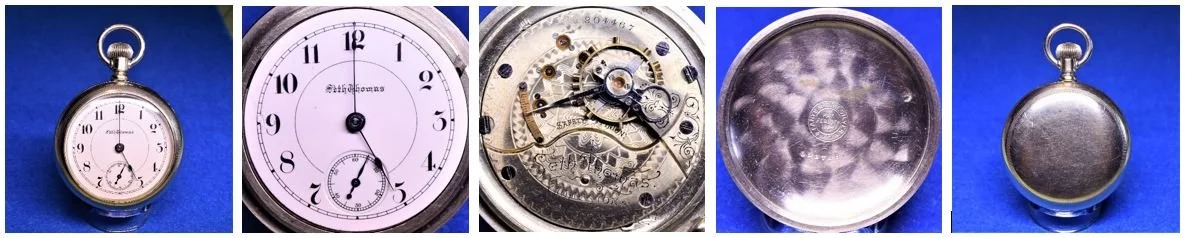
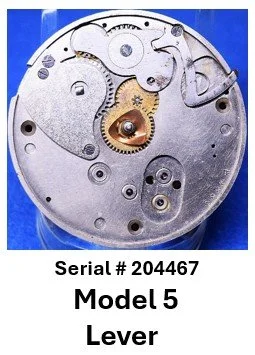
This 1895 Seth Thomas open-face 18-size Model 5 pocket watch was manufactured with a nickel finished full plate, 15 jewels, and it is non-adjusted. The movement is stem wound and lever set, with a Breguet hair spring, and micrometric regulator. Its serial number is 204467, and its grade is Seth Thomas numbered grade 173. The movement is signed “Seth Thomas Thomaston, Conn.”.
The movement presents with an 18-size Seth Thomas Arabic Dial with Ring Minute Track and No Marginals, fitted with Seth Thomas #1281 Spade Blued Hands 18-size.
The movement is cased in an open-face 18-size Fahys Watch Case Company, ORESILVER watch case, serial number 5587287.
Seth Thomas Grade 182
17 Jewel - Model 5 - Adjusted

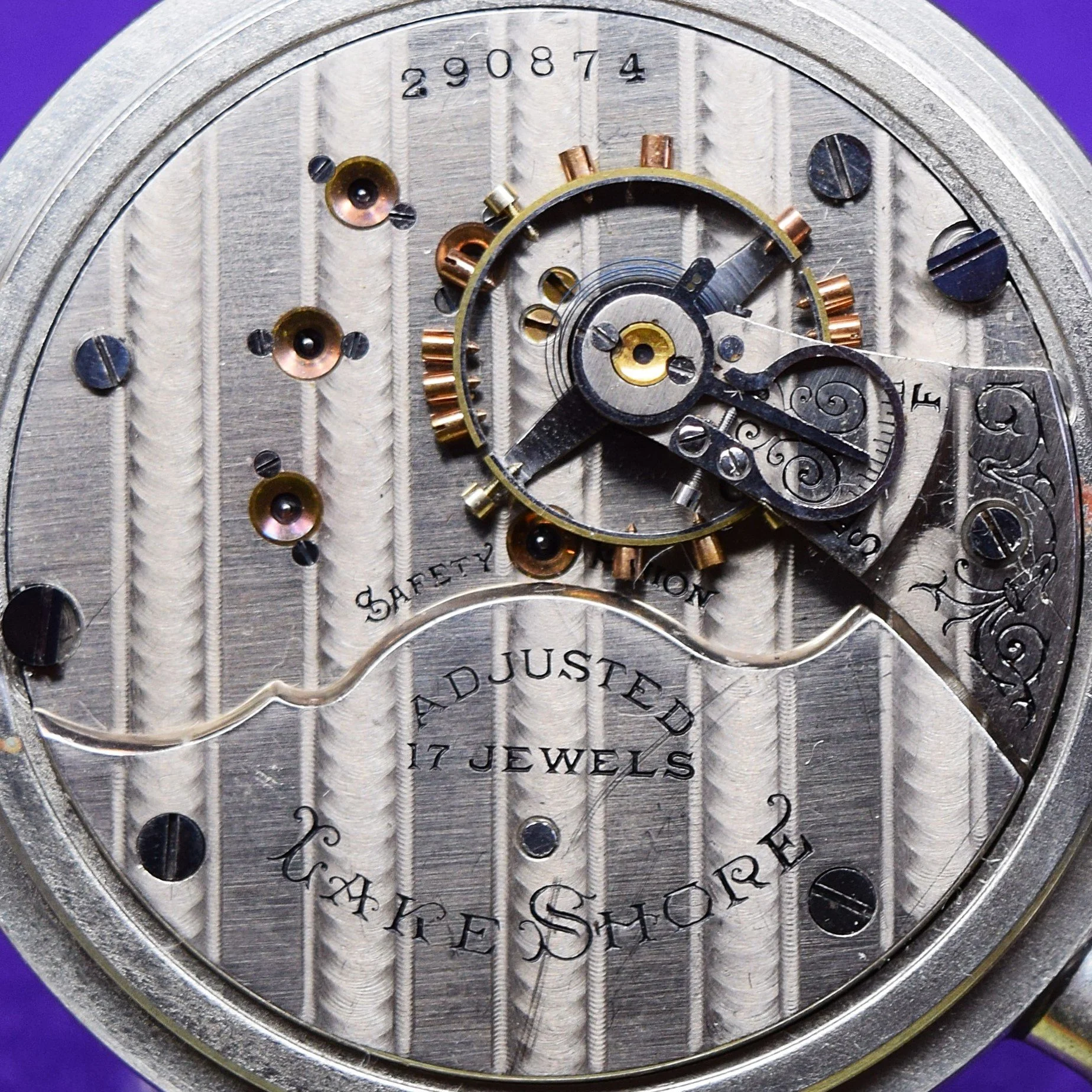
This 1912 Seth Thomas open-face 18-size Model 5 pocket watch was manufactured with a nickel finished full plate, 17 jewels, and it is adjusted. The movement is stem wound and lever set, with a Breguet hair spring, and micrometric regulator. Its serial number is 290874, and its grade is Seth Thomas numbered grade 182. The private label movement is signed “Lake Shore”.
The movement presents with an 18-size private label “Lakeshore“ Arabic dial with a hash marks minute track and red five-minute marginals. It is fitted with Seth Thomas #1282 blued spade Railroad hands, 18-size.
The movement is cased in an 18-size Keystone Watch Case Co. Nickeloid open-face watch case, serial number 412235.
Seth Thomas Grade 204
15 Jewel - Model 5 - Adjusted

This 1893 Seth Thomas open-face 18-size Model 5 pocket watch was manufactured with a nickel finished full plate, 17 jewels, and it is adjusted. The movement is stem wound and lever set, with a Breguet hair spring, and micrometric regulator. Its serial number is 203701, and its grade is Seth Thomas numbered grade 182. The private label movement is signed “Providence, R.I.”.
The movement presents with an 18-size private label “AWCo” Roman dial with a ring minute track and red five-minute marginals; fitted with Seth Thomas #1281 spade blued hands 18-size. The dial is marked with a stylize cluster of the overlain letters AWCo. Pocket Watch Database notes that the AWCo monogram may be for Albert Walker Company in Providence Rhode Island.
The movement is cased in an open-face 18-size Fahys Watch Case Company Oresilver No. 1 watch case, serial number 5537287.
Seth Thomas Grade 260
21 Jewel - Model 5 - Adjusted 6 Positions
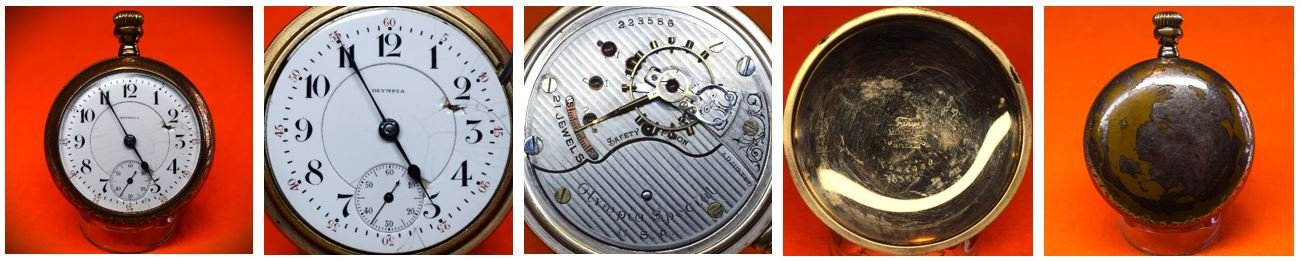
This 1890-1894 Seth Thomas open-face 18-size Model 5 pocket watch was manufactured with a two-tone finished full plate, 21 jewels, and it is adjusted to six positions. The movement is stem wound and lever set, with a Breguet hair spring, and micrometric regulator. Its serial number is 223586, and its grade is Seth Thomas numbered grade 260. The private label movement is signed “Olympia Special”.
The movement is fitted with an 18-size private label “Olympia“ Arabic dial with a hash marks minute track and red five-minute marginals. It is fitted with Seth Thomas #1282 blued spade Railroad hands, 18-size. Olympia Special is a private label in Seth Thomas Model 5.
The movement is cased in an 18-size Fahys Watch Case Company 20 Years 10k gold-filled open-face Montauk watch case with screw back and bezel, serial number 7524956.
Seth Thomas Marked Grade 260
21 Jewel - Model 5 - Adjusted 6 Positions

This 1899 Seth Thomas open-face 18-size Model 5 pocket watch was manufactured with a nickel finished full plate, 21 jewels, and it is adjusted to six positions. The movement is stem wound and lever set, with a Breguet hair spring, and micrometric regulator. Its serial number is 210670, and its grade is Seth Thomas marked grade 260. The movement is signed “Seth Thomas Thomaston, Conn.”.
The movement presents with an 18-size Seth Thomas #1229 double-sunk Arabic dial with a hash marks minute track and red five-minute marginals, fitted with Seth Thomas #1281 blued spade hands 18-size.
The movement is not presently cased.
Seth Thomas Marked Grade 282
17 Jewel - Model 5 - Adjusted 3 Positions

This 1904 Seth Thomas open-face 18-size Model 5 pocket watch was manufactured with a two-tone finished full plate, 17 jewels, and it is adjusted to three positions. The movement is stem wound and lever set, with a Breguet hair spring, and micrometric regulator. Its serial number is 223338, and its grade is Seth Thomas numbered grade 282. The movement is signed “Seth Thomas Thomaston, Conn.”.
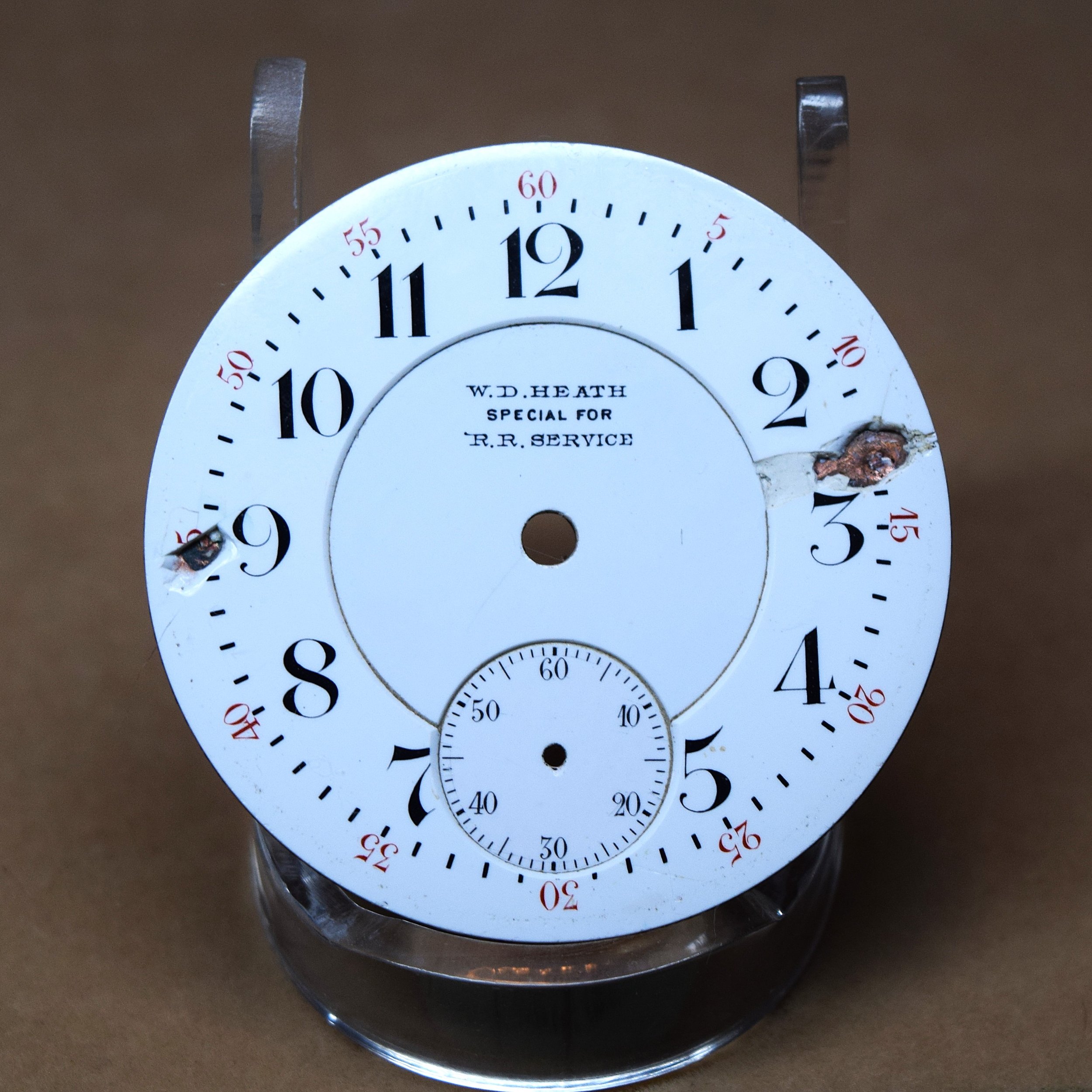
The movement presents with an 18-size private label “W.D. Heath Special For R.R. Service” Arabic dial with a hash marks minute track and red five-minute marginals, fitted with Seth Thomas #1281 blued spade hands 18-size.
The movement is presently cased in an 18-size Fahys Watch Case Company watch open-face Oresilver No. 1 (nickel) case with screw back and bezel, serial number 338512.
Seth Thomas Marked Grade 382
21 Jewel - Model 5 - Adjusted 5 Positions
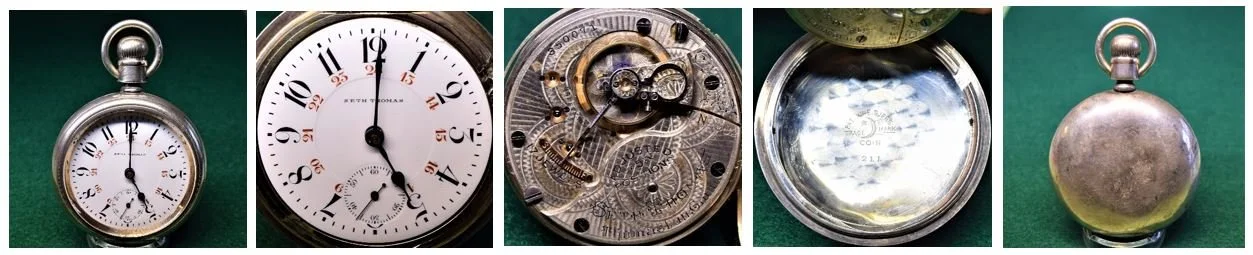
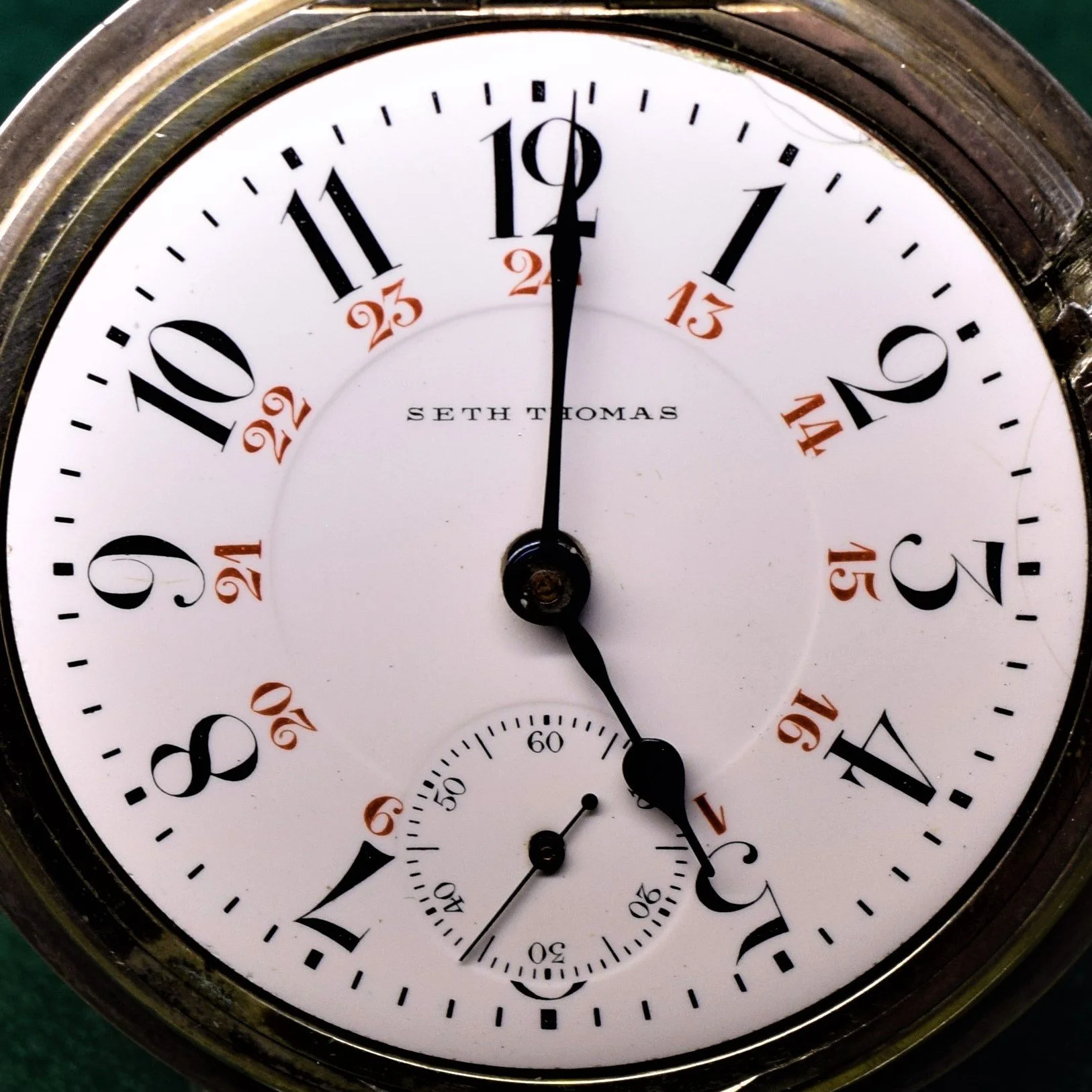
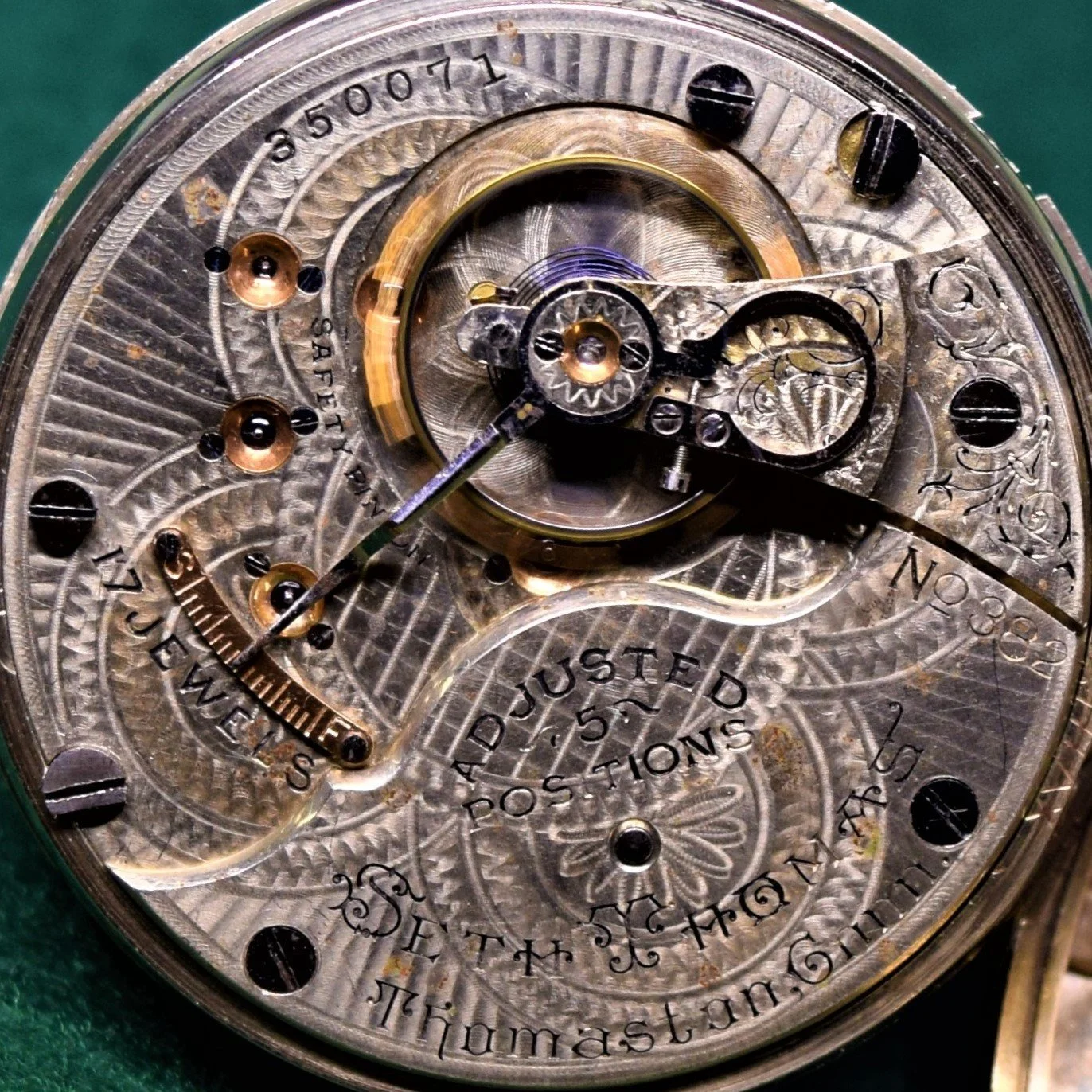
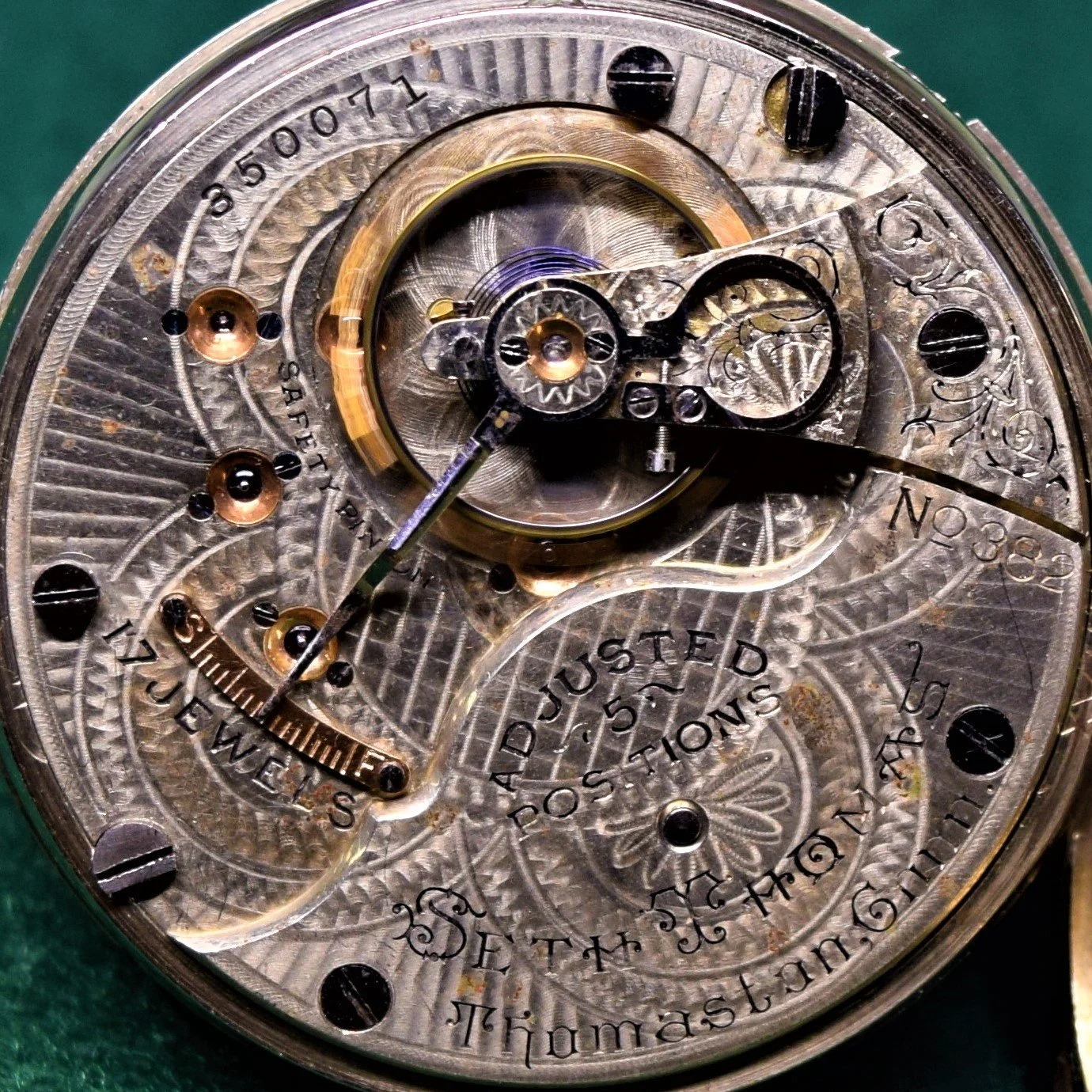
This 1913 Seth Thomas open-face 18-size Model 5 pocket watch was manufactured with a nickel finished full plate, 17 jewels, and it is adjusted to five positions. The movement is stem wound and lever set, with a Breguet hair spring, and plain/simple regulator. Its serial number is 350071, and its grade is Seth Thomas numbered grade 382. The movement is signed “Seth Thomas Thomaston, Conn.”.
The movement presents with an 18-size Seth Thomas #1241 Roman Canadian dial with red 24-hour numerals and a hash marks minute track with no marginals, fitted with Seth Thomas #1291 blued spade & whip railroad hands 18-size.
The movement is cased in an 18-size Crescent Watch Case Co – Coin Silver – Serial # 211 - Open Face – Threaded Front/Tilt
Movement–– Pat Nine 9 1885.
Seth Thomas Named Grade Maiden Lane
21 Jewel - Model 5 - Adjusted 5 Positions

This 1899 Seth Thomas open-face 18-size Model 5 pocket watch was manufactured with a two-tone finished full plate, 21 jewels, and it is adjusted to five positions. The movement is stem wound and lever set, with a Breguet hair spring, and micrometric regulator. Its serial number is 208824, and its grade is Seth Thomas factory named grade Maiden Lane. The movement is signed “Maiden Lane”.
The movement presents with an 18-size Seth Thomas #1228 double-sunk Roman dial with a ring minute track and red five-minute marginals, fitted with Seth Thomas #1284 blued fleur-de-lis hands 18-size.
The movement is cased in an 18-size Keystone Watch Case Company open-face 20-years 14k gold-filled J. Boss Crown Scales watch case with screw back and bezel, serial number 2754533.
Seth Thomas Marked Grades
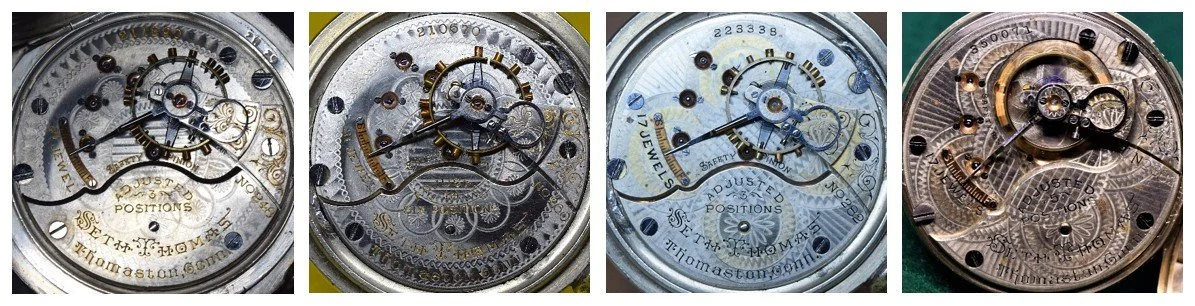

Seth Thomas manufactured pocket watches from 1885 until 1915, in 24 models and in an untold number of grades. It is accurate to report an untold number of grades because the records of design and production were almost completely destroyed in the great Connecticut Flood of 1955, and a number of existing movements have been documented that do not match any of the grades described in existing factory records or advertisements.
The undisputed expert resource in determining what a non-documented Seth Thomas grade would have logically been called is the Pocket Watch Database. By entering the serial number of a movement in the serial number search box at the upper right-hand corner of the Pocket Watch Database page and hitting enter you will be presented with an extremely detailed, and accurate Database Lookup Report listing every specification for that movement that is known to exist. The only time that you might receive an inaccurate report is when insufficient data points are available to create an historically accurate data table for the search engine to explore. That is why this Seth Thomas Fan Space website implores collectors to upload photographs and data related to all Seth Thomas pocket watch movements in their collections to the Pocket Watch Database.
No. 282 - Nickel and Gilt, 17 Jewels, Breguet Hair Spring, Patent Micrometer Regulator, Adjusted to Temperature, Isochronism, and Three Positions. Steel Escape Wheel, D. S. Railroad Dial and Hands. Polished dust band. Lever Set…………………………………………………..
No. 382 - Same as No. 282; but Adjusted to Five Positions. Lever Set…………………………………
No. 248 - Nickel, 21 Jewels, Breguet Hair Spring, Patent Micrometer Regulator, Adjusted to Temperature, Isochronism, and Three Positions. Steel Escape Wheel, D. S. Railroad Dial and Hands. The Pallet Arbor and Escape Pinion are Cone Pivoted and Cap Jeweled. Polished dust band. Movement is Closely Timed and Finely Finished Throughout. Lever Set………………………………………………………………………………………………………………………………………….
No. 260 - Nickel, 21 Jewels, Breguet Hair Spring, Patent Micrometer Regulator, Adjusted to Temperature, Isochronism, and Six Positions. Steel Escape Wheel, D. S. Railroad Dial and Hands. The Pallet Arbor and Escape Pinion are Cone Pivoted and Cap Jeweled. Polished dust band. Movement is Closely Timed and Finely Finished Throughout, and is Recommended for the Most Exacting Service. Lever Set……………………………………………………
$15.00
18.00
20.00
25.00
The Four Seth Thomas Marked Grades
There are four Seth Thomas numerical grades that never need to be disputed because they are Marked Grades, movements with the grade marked on the top plate. The four Seth Thomas Marked Grades are No. 248, No. 260, No. 282, and No. 382 all shown in the block of photographs above.
Specimens of each of the Marked Grade movements are described in greater detail below.
The 1905 Illustrated Price List No. 655, Seth Thomas Watch Movements
The 1905 Illustrated Price List No. 655, Seth Thomas Watch Movements. Trade Price List September 15, 1905 describes: Seth Thomas Watch Movements with Breguet Hairspring, Cut Compensation Balance with Timing Screws, and Safety Pinion. In the category of “18 Size, Full Plate, Open Face”, four movements with numbered grades stand out from the others as extraordinary. They are:
Understanding Pocket Watch Adjustment
Pocket Watch Adjustments for Position
The 6 Standard Positions
The six basic positions are typically defined by the orientation of the DIAL and the location of the winding crown, called the PENDANT:
Dial Up (DU): The watch is lying flat on a surface with the dial facing upwards.
Dial Down (DD): The watch is lying flat on a surface with the dial facing downwards.
Pendant Up (PU): The watch is held or standing vertically, with the crown pointing straight up (at the 12 o'clock position).
Pendant Down (PD): The watch is held or standing vertically, with the crown pointing straight down (at the 6 o'clock position).
Pendant Right (PR): The watch is held vertically, with the crown pointing to the right (at the 3 o'clock position).
Pendant Left (PL): The watch is held vertically, with the crown pointing to the left (at the 9 o'clock position).
The Most Common Adjustment Configurations
3 Positions: Usually includes Dial Up, Dial Down, and Pendant Up.
4 Positions: Typically includes Dial Up, Dial Down, Pendant Up, and Pendant Down.
5 Positions: Includes Dial Up, Dial Down, Pendant Up, Pendant Left, and Pendant Right. This was the standard requirement for most American railroad watches after 1908.
6 Positions: Includes all six orientations listed above.
Other Common Pocket Watch Adjustments
An adjusted pocket watch is generally also calibrated for TEMPERATURE VARIATIONS, how heat and cold affect metal expansion, and ISOCHRONISM, how well it keeps time as the mainspring winds down.
Examples of Seth Thomas Marked Grade Movements
Serial Number 211890 - 21 Jewels - Marked Grade 248 - Adjusted to Three Positions - Marked Grade No. 248

This 1905 Seth Thomas open-face 18-size Model 5 pocket watch was manufactured with a nickel finished full plate, 21 jewels, and it is adjusted to three positions. The movement is stem wound and lever set, with a Breguet hair spring, and micrometric regulator. Its serial number is 211890, and its grade is Seth Thomas marked grade 248. The movement is signed “Seth Thomas Thomaston, Conn.”.
The movement presents with an 18-size Seth Thomas #1229 double-sunk Arabic dial with a hash marks minute track and red five-minute marginals, fitted with Seth Thomas #1281 blued spade hands 18-size.
The movement is cased in an 18-size Dueber Watch Case Company open-face Coin Silver pocket watch case with hinged back and bezel, serial number 322829.


Serial Number 210670 - 21 Jewels - Marked Grade 260 - Adjusted to Six Positions - Marked Grade No. 260

This 1903 Seth Thomas open-face 18-size Model 5 pocket watch was manufactured with a nickel finished full plate, 21 jewels, and it is adjusted to six positions. The movement is stem wound and lever set, with a Breguet hair spring, and micrometric regulator. Its serial number is 210670, and its grade is Seth Thomas marked grade 260. The movement is signed “Seth Thomas Thomaston, Conn.”.
The movement presents with an 18-size Seth Thomas #1229 double-sunk Arabic dial with a hash marks minute track and red five-minute marginals, fitted with Seth Thomas #1281 blued spade hands 18-size.
The movement is temporarily cased in an 18-size Fahys Watch Case Company open-face Oresilver (nickel) pocket watch case with screw back and bezel, serial number 338512 for photographic purposes only.


Serial Number 223338 - 17 Jewels - Marked Grade 282 - Adjusted to Three Positions - Marked Grade No. 282
W. D. Heath Special for R.R. Service

This 1904 Seth Thomas open-face 18-size Model 5 pocket watch was manufactured with a two-tone finished full plate, 17 jewels, and it is adjusted to three positions. The movement is stem wound and lever set, with a Breguet hair spring, and micrometric regulator. Its serial number is 223338, and its grade is Seth Thomas Marked Numbered Grade 282. The movement is signed “Seth Thomas Thomaston, Conn.”.
The movement presents with an 18-size private label “W.D. Heath Special For R.R. Service” Arabic dial with a hash marks minute track and red five-minute marginals, fitted with Seth Thomas #1281 blued spade hands 18-size.
Walter D. Heath, born October 1866 owned a jewelry store in Lakeport New Hampshire. The store was located at 773 Union Avenue. Mr. Heath sold watches, clocks, phonographs, musical goods, and he was an optician. He and his wife, Maude, lived at 7 Hill Street in Lakeport. Walter D. Heath died on January 24, 1948, at the age of 82. The two postcards below show the immediate area of 773 Union Avenue during the time that Walter D. Heath owned his jewelry store.
The movement is presently cased in an 18-size Fahys Watch Case Company watch open-face Oresilver No. 1 (nickel) pocket watch case with screw back and bezel, serial number 338512.


Serial Number 350071 - 17 Jewels - Marked Grade 382 - Adjusted to Five Positions - Marked Grade No. 382

This 1912 Seth Thomas open-face 18-size Model 5 pocket watch was manufactured with a two-tone finished full plate, 17 jewels, and it is adjusted to five positions. The movement is stem wound and lever set, with a Breguet hair spring, and micrometric regulator. Its serial number is 350071, and its marked grade is Seth Thomas numbered Marked Grade 382. The movement is signed “Seth Thomas Thomaston, Conn.”.
The movement presents with an 18-size Seth Thomas #1241 Arabic 24-hour Canadian dial with red 24-hour numerals and a hash marks minute track with no marginals, fitted with Seth Thomas #1291 blued spade & whip railroad hands 18-size.
The movement is cased in an 18-size Crescent Watch Case Company Coin Silver open-face tilt-out pocket watch case, serial number 211. Patented Nine, 9, 1885.