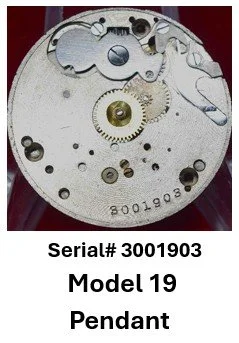
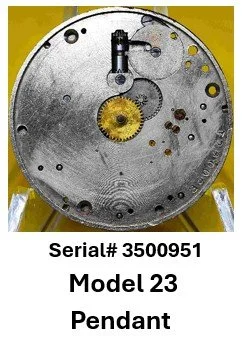
Winding & Setting of Seth Thomas Pocket Watches
Viewing Images:
For the clearest, largest view of any pocket-watch image, right-click the picture and choose “Open Image in New Tab”. You can then zoom in or out on the image with the Ctrl+ or Ctrl– keystroke combinations. It is most beneficial to view the videos on this website in the Full Screen Mode as the interaction between many tiny mechanical parts will be otherwise missed.
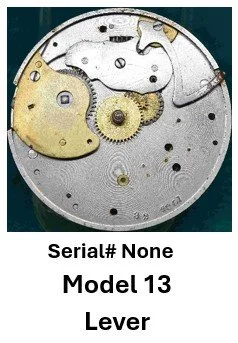
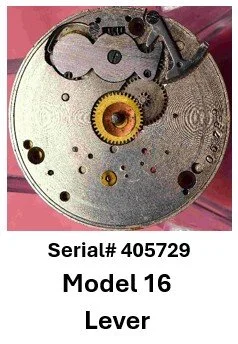
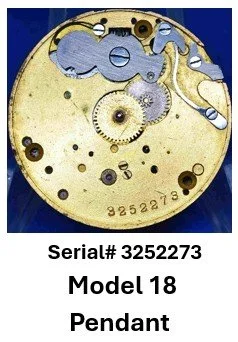
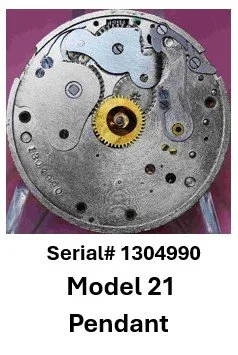
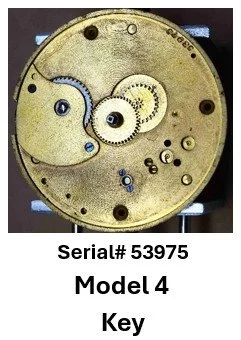
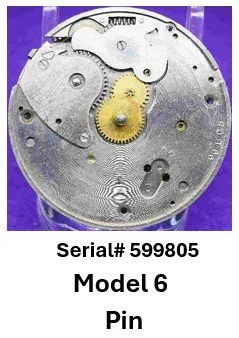
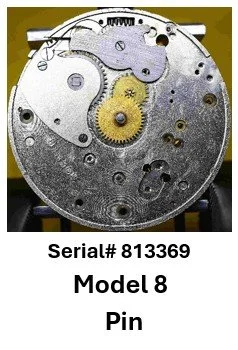
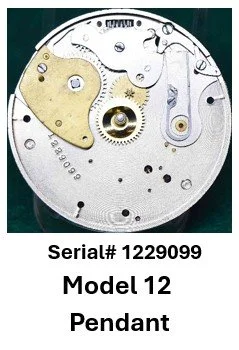
Overview of Winding & Setting Methods

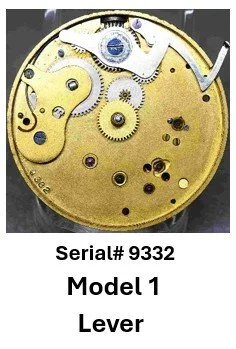
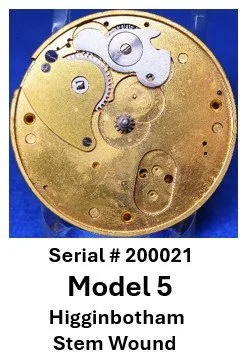
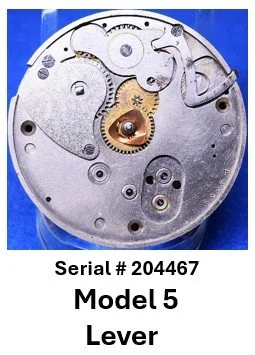
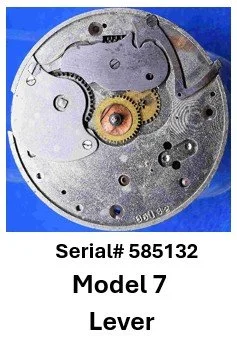
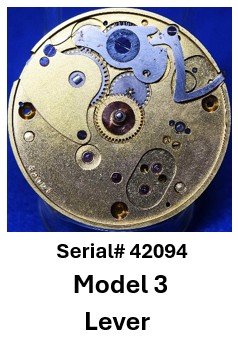
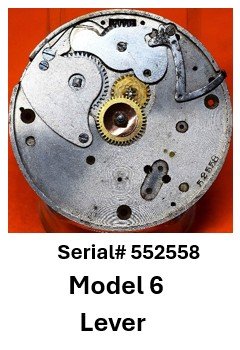
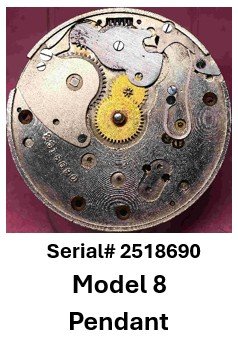
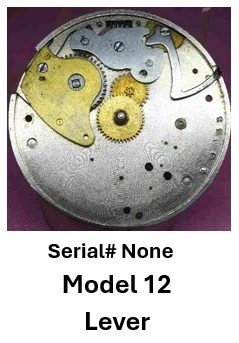
Seth Thomas produced movements using five distinct winding and setting systems. Most of these systems can be easily identified visually. The illustration above introduces representative examples of each system. The Higginbotham Stem-wound & Stem-set movement is the only one with no visible winding and setting components easily discerned as many of those components are between the top plate and the pillar plate.
Top row: Mechanism view for each visible winding system.
Middle row: Dial view for each setting system where visible.
Bottom row: Pillar plate showing winding/setting mechanism where visible.
Key Wound & Key Set Movements
Seth Thomas Model 4 movements are all key wound and key set. A small number of Model 2 movements are also key wound and key set. Key winding and key setting are more direct and less complicated than other methods. As you can see in the photographs below, both the cannon pinion and the barrel arbor have square protrusions that can be captured by a watch key for setting the time and winding the mainspring respectively.


The square hole of the minute hand engages with the square top of the cannon pinion. When using a key to turn the portion of the cannon pinion that protrudes through the minute hand, the bottom gear teeth of the cannon pinion turn the outer gear teeth of the minute wheel. The upper central gear teeth of the minute wheel pinion engage with the teeth on the bottom of the hour wheel upon which the hour hand rides. In the video below, the hour wheel can be seen to turn much more slowly than the key is turning the cannon pinion upon which the hour wheel rests.


When using a key to turn the square portion of the barrel arbor that protrudes through top plate of the movement, the mainspring is wound within the barrel. The winding energy is stored and maintained within the barrel by means of a ratchet wheel, click, and click spring which can all be accessed by removing the dial to expose the pillar plate, and then removing the ratchet bridge.


Because the Model 4 movements were key-wound and key-set; there was no winding bridge and pinion or any of the other mechanical systems that were present in the stem-wound and lever-set movements of the day. Because the key-wound and key-set movements did not need to depend on accepting a watch case’s stem; they could be cased in either the hunting or the open-face configuration. Model 4 serial number 35843 is shown above, cased in the open-face configuration while Model 4 serial number 57617 is shown cased in the hunting configuration.
Model 4 serial number 35843 is shown above without the winding cup, and Model 4 serial number 57617 is shown with the winding cup. Many of the early movements, without the winding cup, show a degree of damage to the top plate from being wound without a cup present for protection.
Model 4 movements were made with only 1 casing screw, at the VI o’clock position, to hold the movement in the case; but there is also a small brass pin protruding from the side of the perimeter of the movement, at the XI o’clock position, which matches a notch on the inside of the special open-face watch cases made for key wound movements. Inserting the brass pin into this notch helps to stabilize the movement in the open-face orientation in the case. There is also a special notch in the special hunting watch case, at two o’clock position, to help stabilize the movement in the hunting case orientation. Because there is no winding stem orientation to consider Model 4 is adaptable to either open-face or hunting case orientation.

Pocket Watch Keys
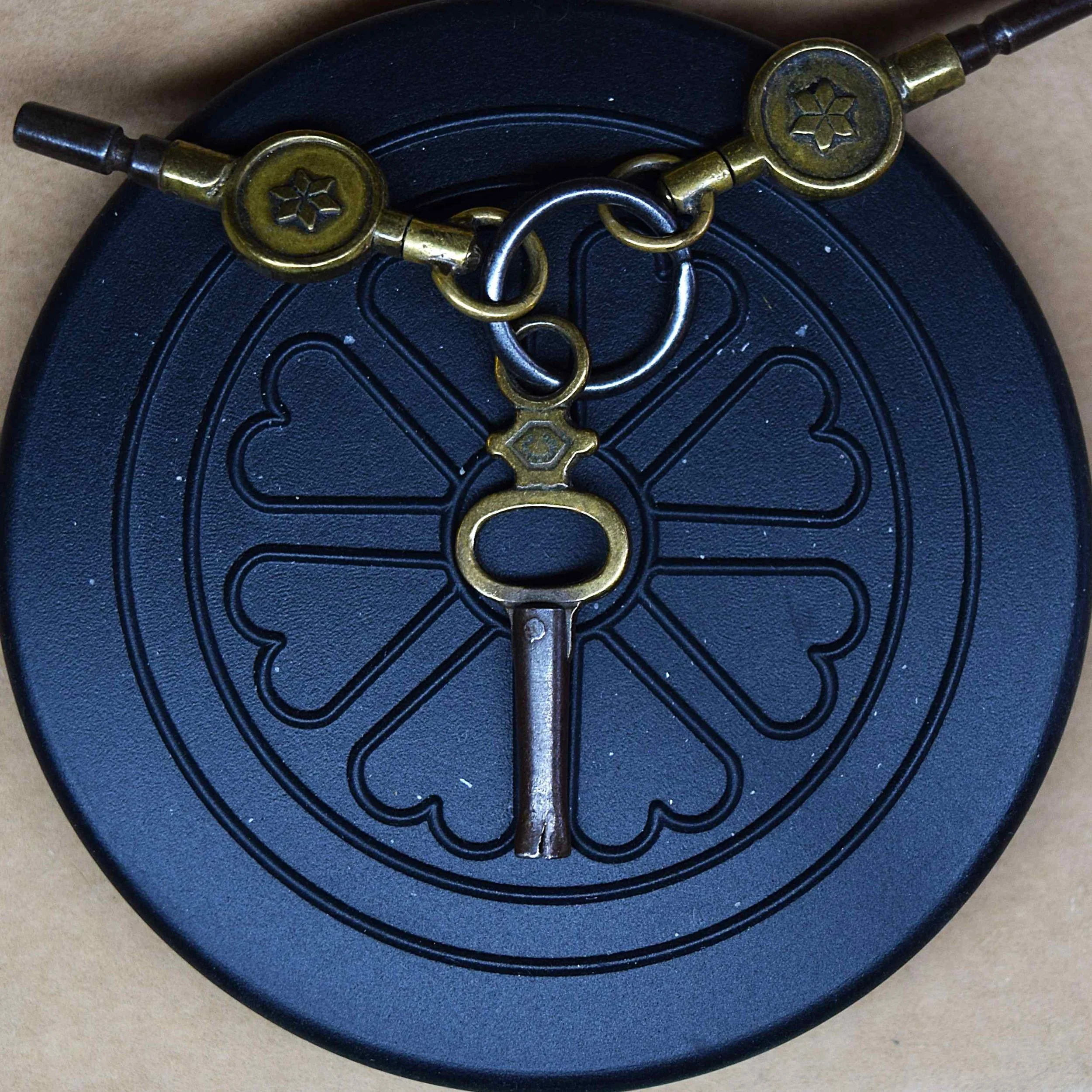
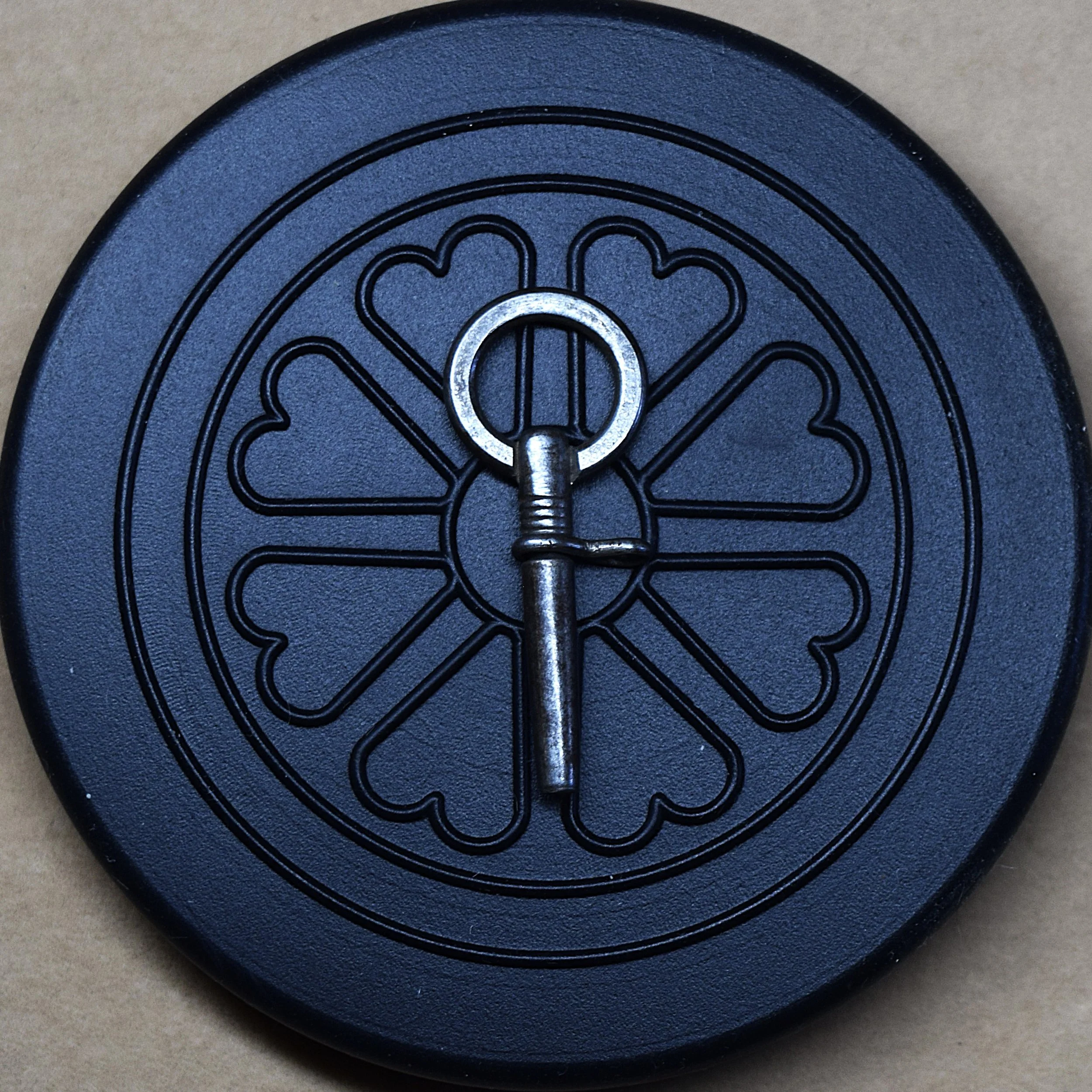
Owners of key-wound and key-set Seth Thomas Model 4 movements clearly needed to be supplied with one obvious pocket watch accessory, a pocket watch key. Pocket watch keys were manufactured in many shapes, configurations, and sizes. Seth Thomas Model 4 key-wound and key-set movements most frequently require a size 5 watch key. It should not be surprising to discover that any particular Seth Thomas Model 4 could require the use of a size 4 key or size 6 key instead. Some key-wound/key-set movements require one size key to wind them and a different size key to set the time. I don’t know why. That’s just the way it seems to be after 100+ years of use, repairs, and modifications. Below are photos of a handful of pocket watch keys that I have acquired over the past few years as a collector. Some of them are interesting to look at; but would not be considered exotic, which may be why many of them accompanied a pocket watch upon its purchase.





Stem Wound & Lever Set Movements
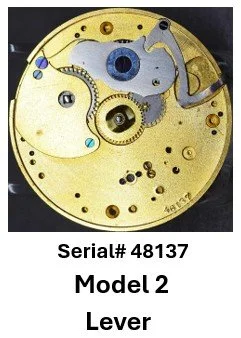
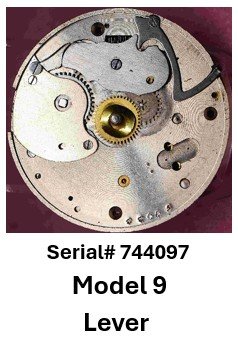
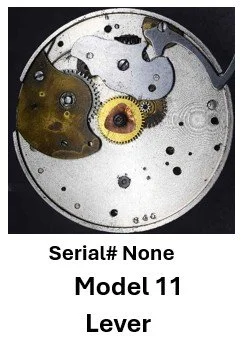
In the Stem Wound & Lever Set Movements the crown is used to both set the time of day and to wind the mainspring depending on the position of the setting lever. As seen in the first video below, with the setting lever pulled out turning the crown results in movement of the hands. By returning the setting lever to the normal hidden position turning the crown results in winding the mainspring. The second video demonstrates the mechanics of how these functions each work.


In the Stem Wound & Lever Set Movements the crown is used to both set the time of day and to wind the mainspring depending on the position of the setting lever. As seen in the video below, with the setting lever pulled out the yoke is tipped to engage the intermediate setting wheel, and in turn disengages the mainspring winding function permitting setting of the hands to indicate the correct time. By returning the setting lever to the normal hidden position the yoke is tipped to engage the intermediate winding wheel, disengaging the intermediate setting wheel, to permit winding of the mainspring.


Stem Wound & Stem Set Movements
Documented Early Production Configuration Model 5 Case Study
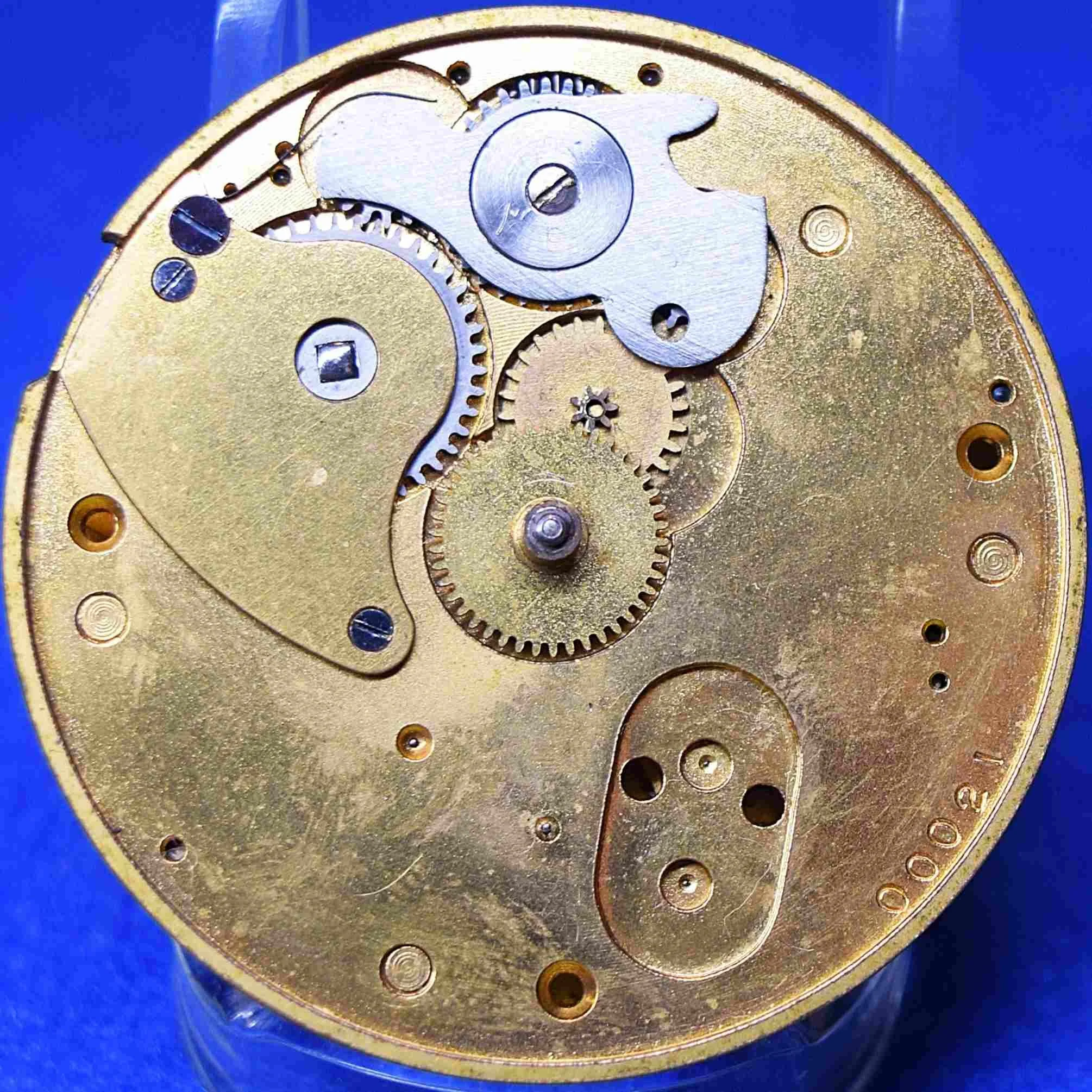
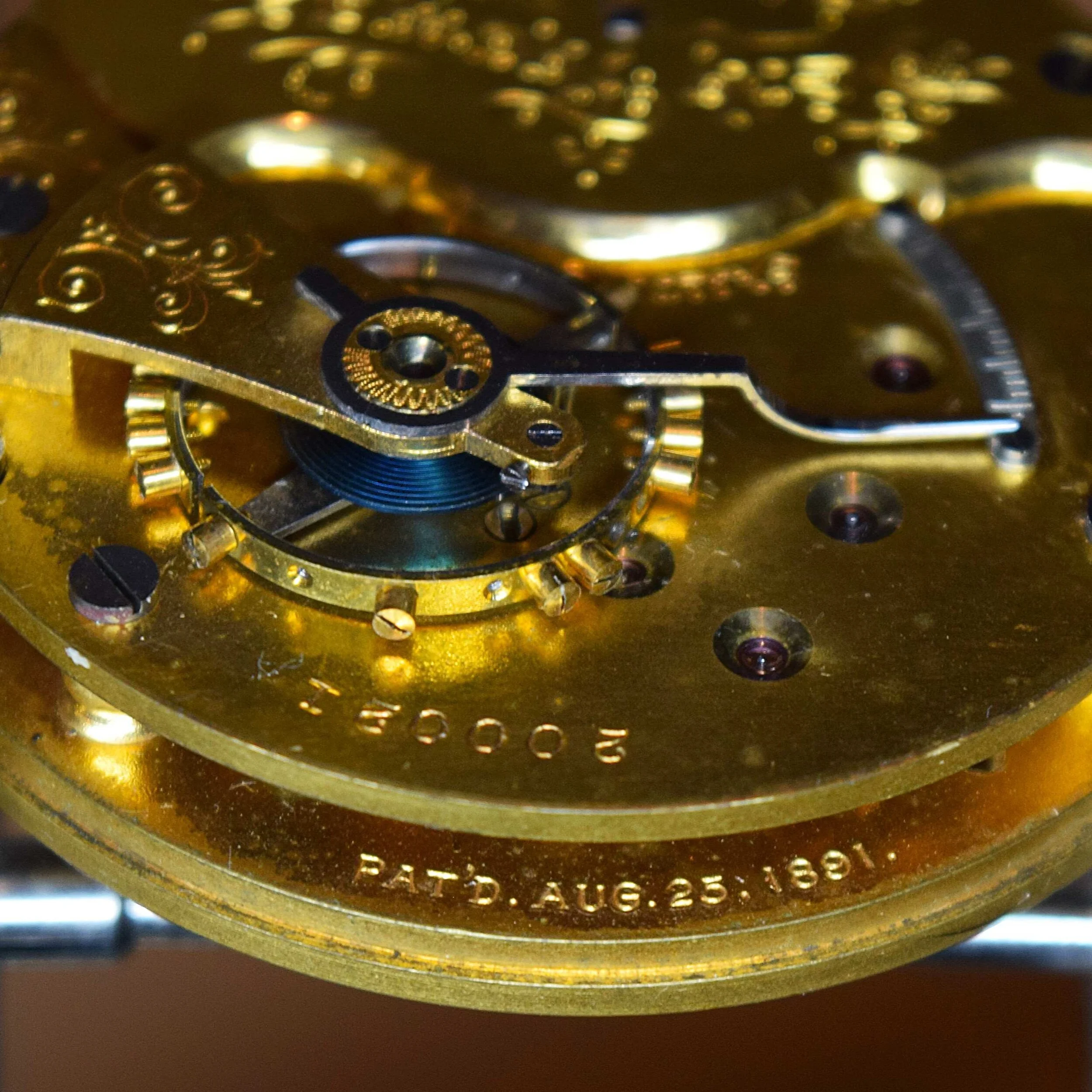
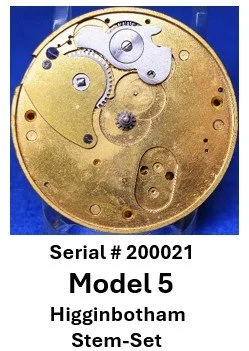
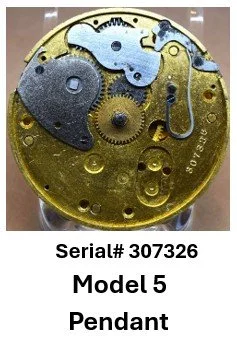
The Higginbotham stem-wound & stem-set Model 5 represents a documented but extremely rare configuration in early Seth Thomas production. Only one verified working example (Serial 200021) is presently known. The following discussion summarizes the surviving evidence and its implications for understanding early Model 5 manufacturing.
Although time-setting is initiated through the pendant stem, the Higginbotham mechanism differs fundamentally from later pendant-set systems used in subsequent Model 5 production. The setting components operate through an internal cam and lever arrangement described in the 1891 patent. This differs from the simpler pull-out clutch mechanism found in later pendant-set movements. For clarity, this early configuration is referred to here as “stem-set” to distinguish it from the later “pendant-set” Model 5 system.

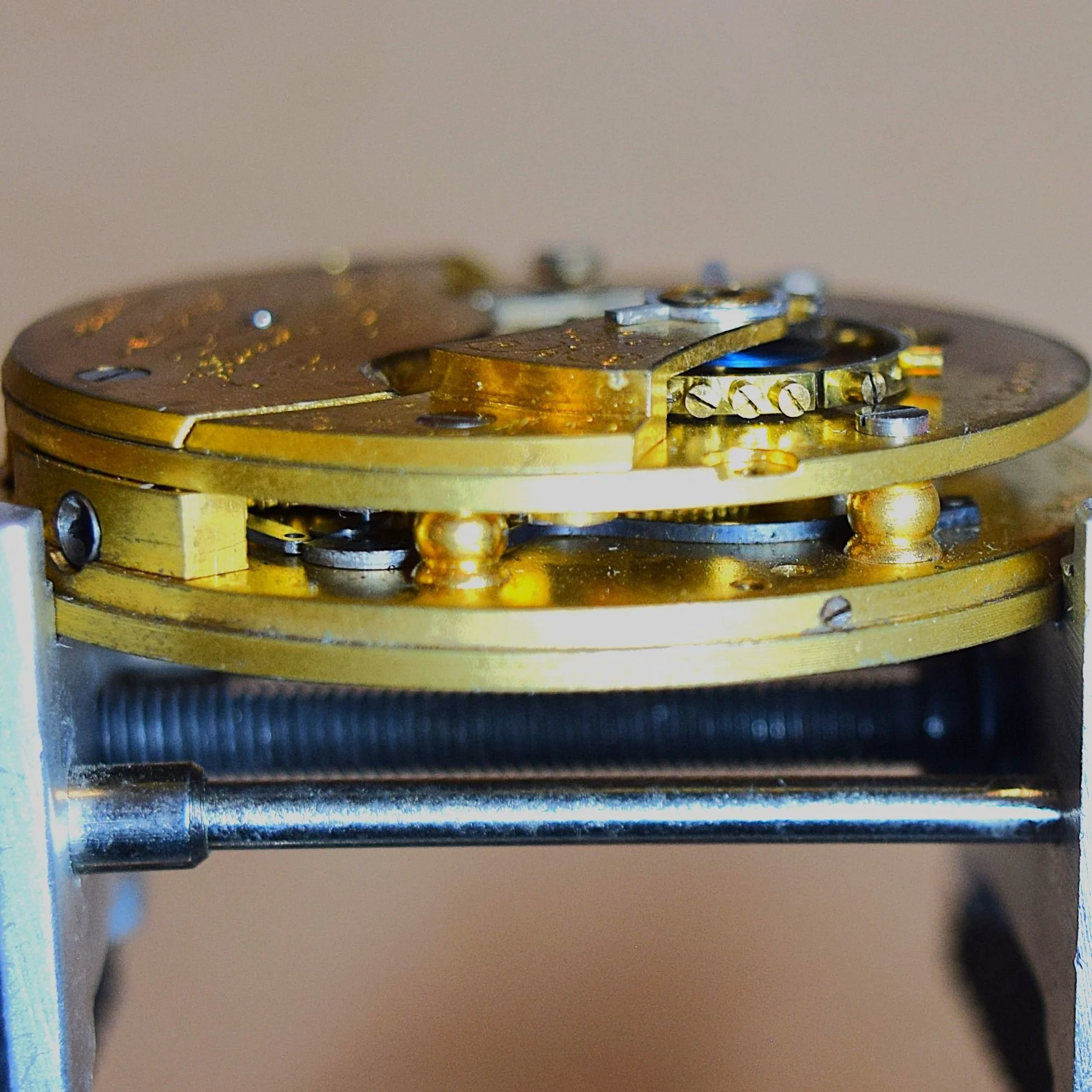
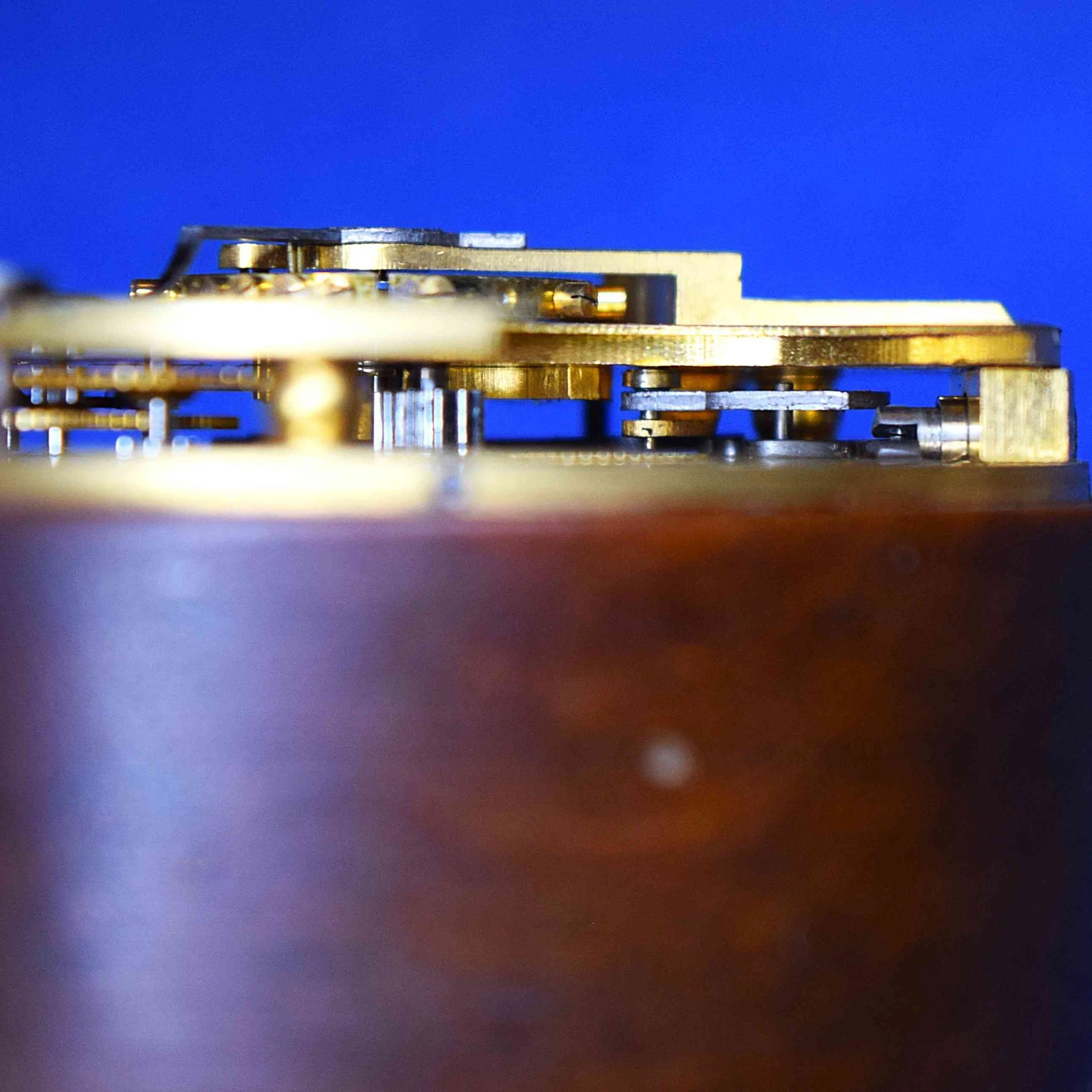
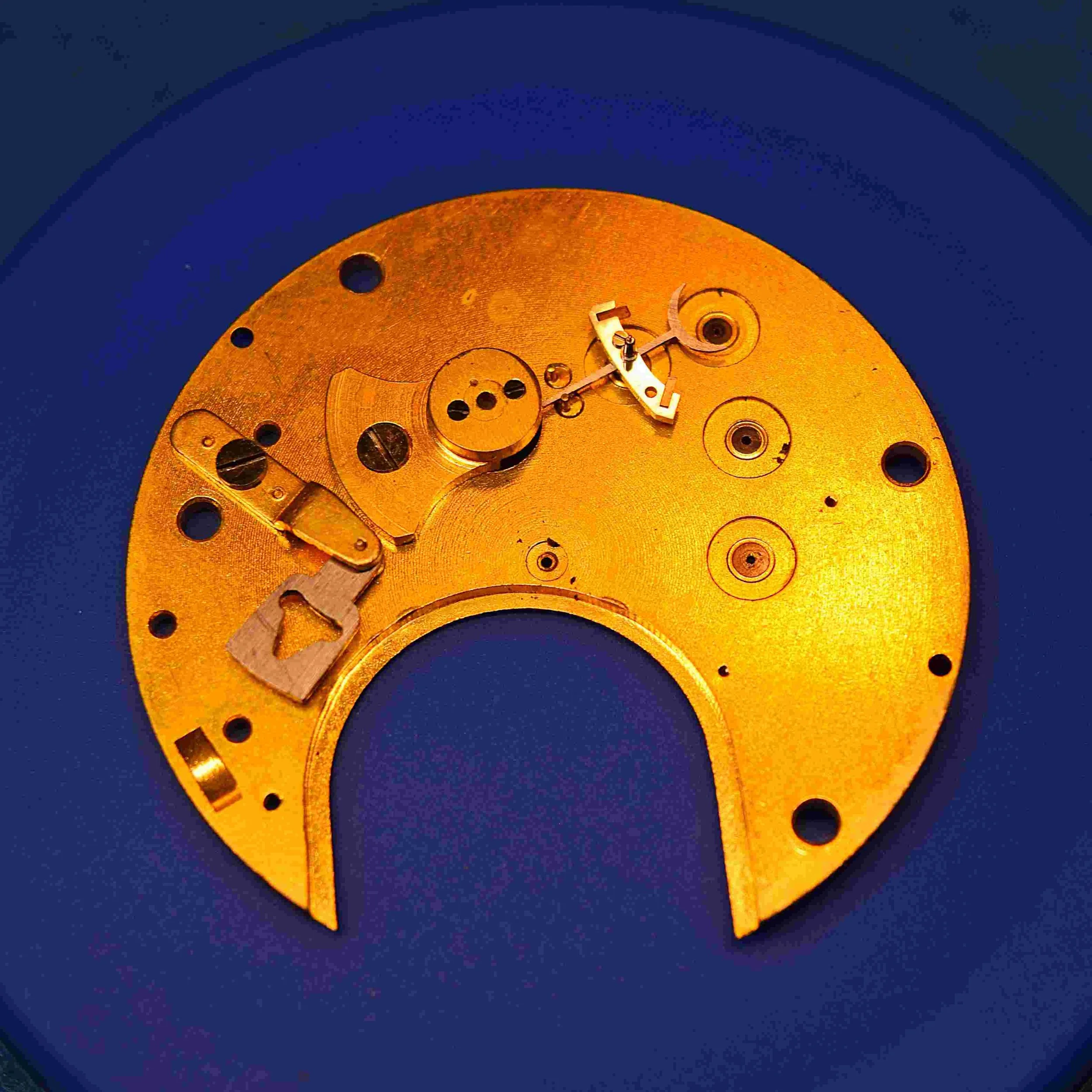
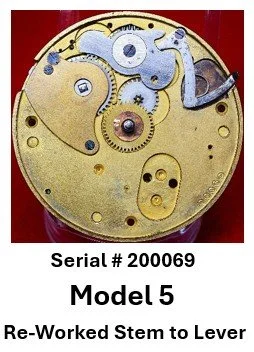
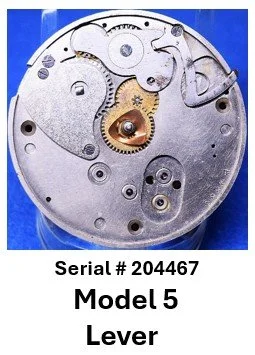
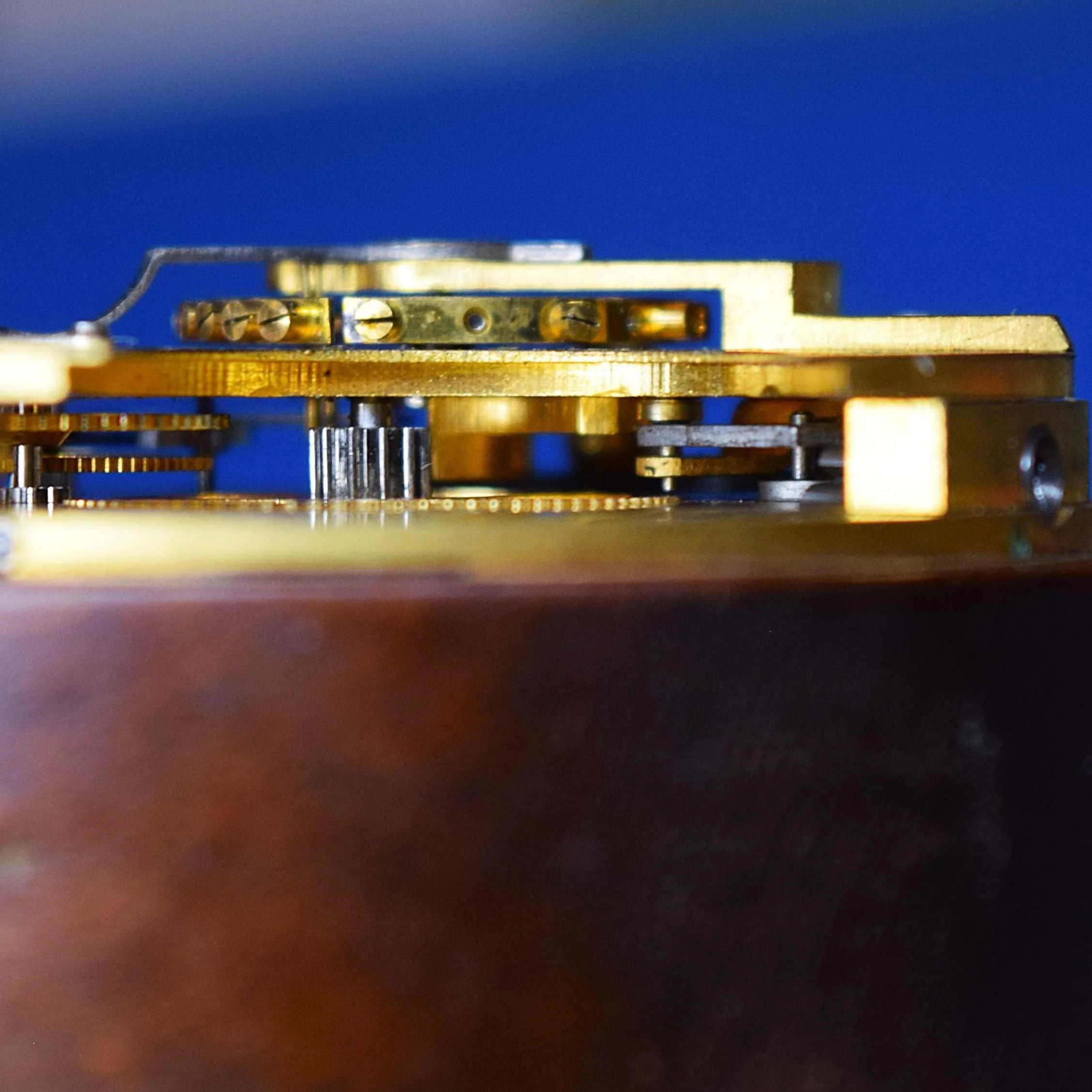
This movement is a Higginbotham Stem-Set movement, based upon the August 25, 1891 Higginbotham patent for “Stem Winding and Setting Watches”. Serial number 200021 is a rare survivor with the functioning original stem-set material still in place. It is presently functioning in every manner that the later pendant-set Model 5 movements function. See the video below of #200021 in a temporary case to demonstrate the stem-winding and stem-setting functions. Other early movements within this initial production window were re-worked into lever-set movements. Serial number 200069 featured below is one of the re-worked stem-set to lever-set movements. Photographic evidence has also been provided by another NAWCC member that 200174 was also a re-worked stem-set to lever-set movement. All observed early specimens examined to date also exhibit re-milling of the minute wheel space. The subsequent blocks that did not have the re-milled space for the minute wheel did still have the Higginbotham patent date stamped on the back of the pillar plate, some of the screw holes for the installation of the Higginbotham stem-set mechanism and milling for the operating-lever to function underneath the mainspring barrel. Based on an examination of a portion of the Model 5 movements in my collection, it is suggesting that preparatory features associated with the Higginbotham system extended across a substantial portion of Model 5 production, potentially encompassing many thousands of movements. The precise scale of this preparation cannot be determined from the surviving evidence. The highest serial number in the Seth Thomas Fan collection that has most of these features is serial number 208744. The Maiden Lane in this collection, serial number 208824, has the Higginbotham patent date stamped on the back of the pillar plate; but does not have the milling for an operating-lever to function under the mainspring barrel or any of the screw holes for the installation of the Higginbotham stem-set mechanism. The next highest serial number in this collection is serial number 210670. Serial number 210670 does not have the Higginbotham patent date stamped on the back of the pillar plate, the screw holes for installation of the Higginbotham stem-set mechanism, or the milling for an operating-lever to function beneath the mainspring barrel. This is suggesting that preparatory features extended well beyond the earliest serials. The full scale of this preparation remains unknown.
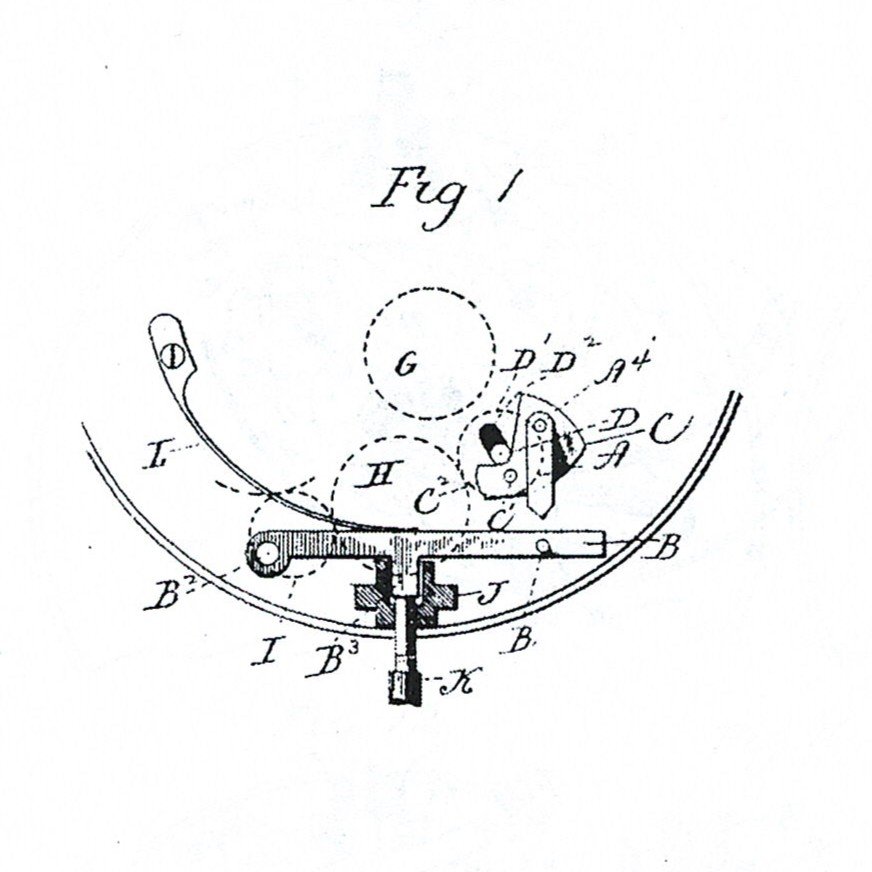
The components of the Higginbotham stem-setting mechanism look slightly different in the photographs presented here than they did when they were initially envisioned and sketched in the patent documents, shown below, prior to actual production. That is normal and not at all a variation from the patent, as what is being patented is the concept of how the components work together to accomplish the function described in the patent. An example here is that the springs in the actual watches press on the operating-cam which transmits the springs’ energy to the operating-lever. The patent sketch/diagram shows the spring making direct contact with the operating-lever. Another example is the shape of the gravity-coupler.





The engraved movement and model illustrations shown here are derived from an early Seth Thomas Watch Co. trade catalog or jobber circular dating to approximately 1891–1893. These images were reproduced as part of a composite plate in Roy Ehrhardt’s Pocket Watch Price Guide (1972).
Roy Ehrhardt’s publication does not identify the original source publication or exact date of the individual catalog fragments. Based on typography, layout, model descriptions, and serial-number ranges, the original material is consistent with factory-issued Seth Thomas advertising from the early 1890s, coinciding with the initial production period of the Model 5.
The following patent drawings and text illustrate the intended mechanical design upon which this movement is based.





Stem Wound & Pendant Set Movements
The photo on the left below shows the ratchet wheel, click, and click spring, components that are protected below the ratchet bridge. The photo on the right below shows the main winding wheel, intermediate winding wheel, intermediate setting wheel, and yoke spring, components that are protected below the yoke.

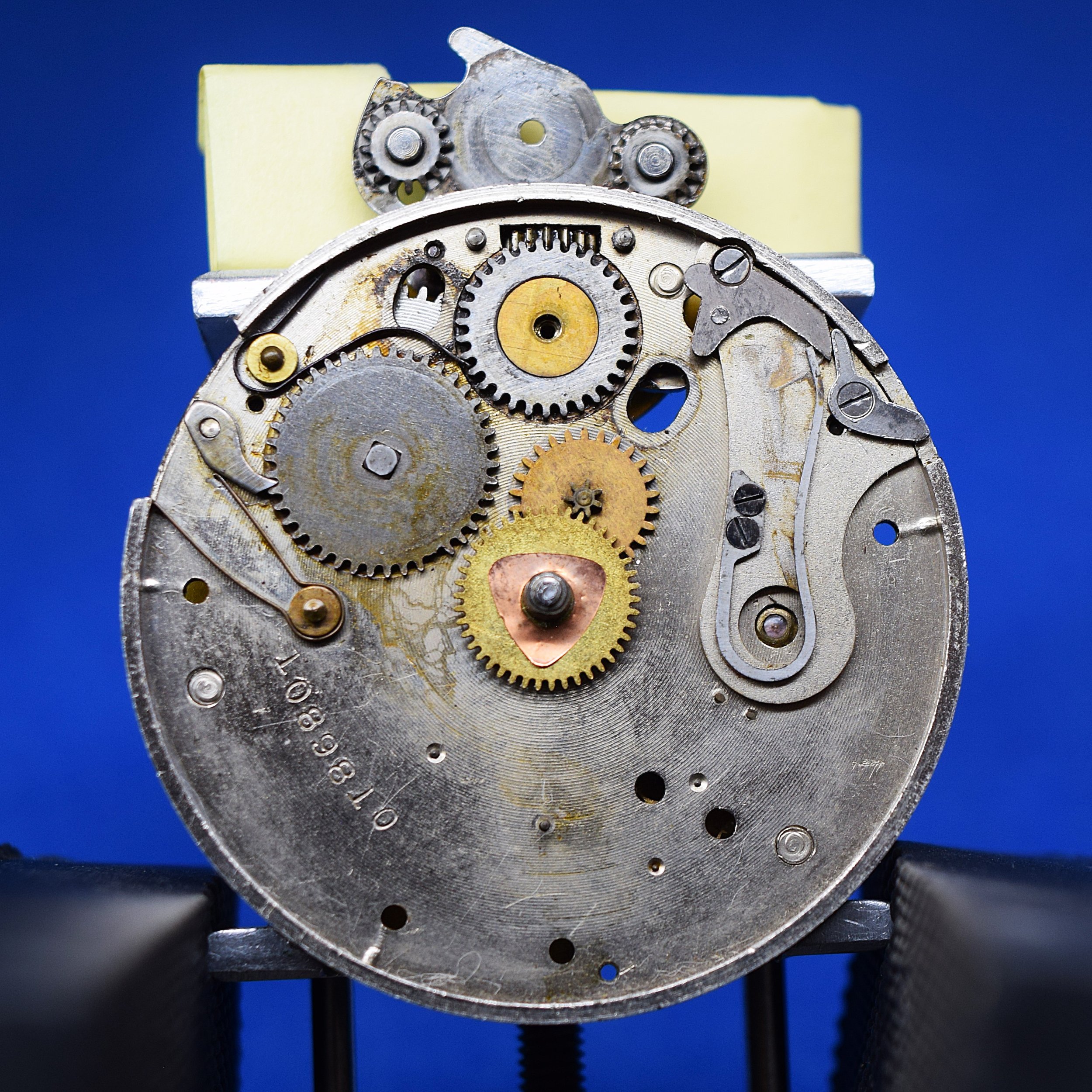
In the Stem Wound & Pendant Set Movements the crown and stem are used to both set the time of day and to wind the mainspring. As seen in the first video below, with the crown pulled into the uppermost position turning the crown results in movement of the hands. By returning the crown to the normal downmost position turning the crown results in winding the mainspring. The second video demonstrates the mechanics of how these functions each work.

In the Stem Wound & Pendant Set Movements the crown and stem are used to both set the time of day and to wind the mainspring. As seen in the video below, with the crown pulled into the uppermost position the yoke is tipped to engage the intermediate setting wheel, and in turn disengages the mainspring winding function permitting setting of the hands to indicate the correct time. By returning the crown to the normal downmost position the yoke is tipped to engage the intermediate winding wheel, disengaging the intermediate setting wheel, to permit winding of the mainspring.


Stem Wound & Pin Set Movements
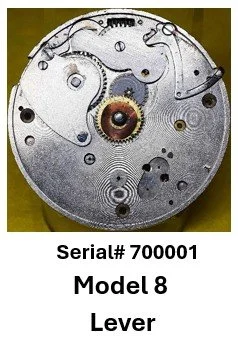
In the Stem Wound & Pin Set Movements the crown and stem are used to both set the time of day and to wind the mainspring depending on the position of the setting pin. As seen in the video below, with the setting pin in its normal, undepressed, position turning the crown results in winding the mainspring. By depressing and holding the setting pin turning the crown results in movement of the hands, and the ability to set them to the correct time.


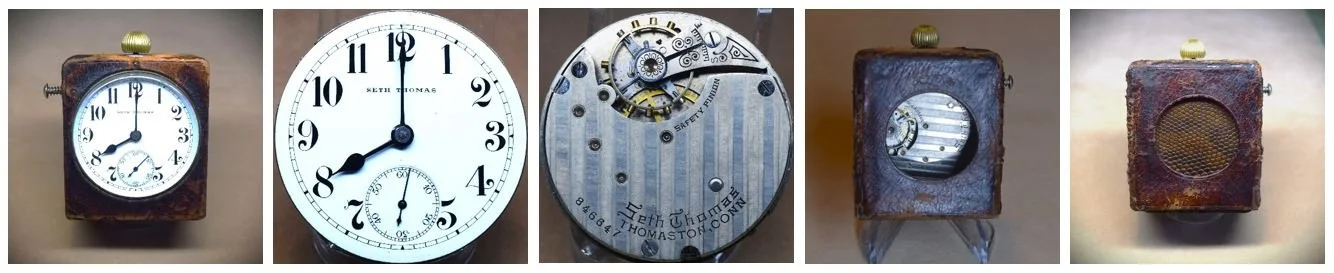
Seth Thomas Stem Wound & Pin Set movements were limited to use in the Companion travel timepiece, which was manufactured in two variants, the 1896 Model 6 version and the 1906 Model 8 version. These versions are illustrated below. You can find much more detailed information, including photographic illustrations, about workings of the Companion travel timepiece on Seth Thomas Fan Space at this link.

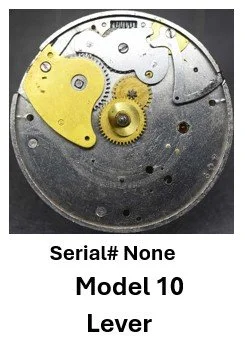
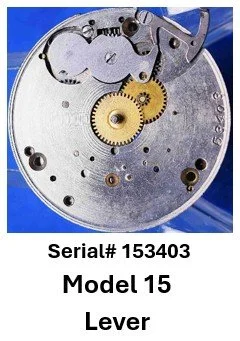
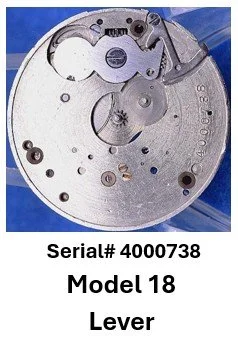
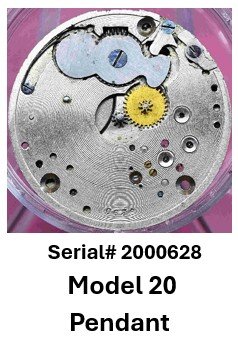
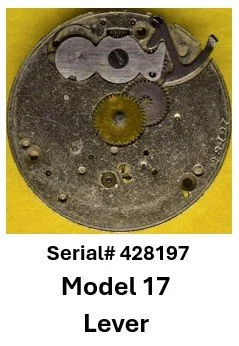
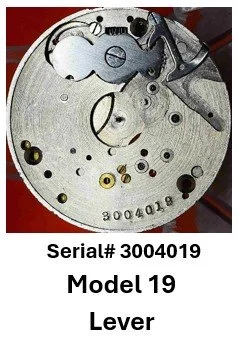
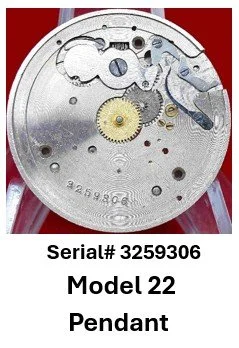
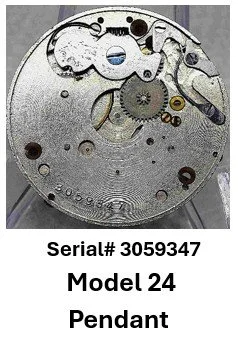
Seth Thomas Pillar Plates Can Reveal Setting Mechanism Design
The pillar plate is the plate located beneath the dial of a pocket watch. The “keys” for removing the dial are the dial-feet screws sunk into the outer edge of the pillar plate. Some Seth Thomas dials use two dial feet, others use three, so the pillar plate will have either two or three corresponding screws spaced around its perimeter. Their locations vary slightly because the placement of mechanical components always takes priority over dial-foot symmetry.
When the hands and dial are removed, the pillar plate exposes a set of mechanical landmarks that every Seth Thomas collector should learn to recognize. All movements shown on this page are oriented with the winding pinion at the 12:00 position (open-face orientation). Hunting-case movements normally function with the winding pinion at 3:00, but for comparison purposes they are shown in the same orientation as open-face models so that the shared pillar-plate landmarks are easier to recognize.
Central Components
At the center of the pillar plate is the hour wheel, typically covered by a copper dial washer. Removing these reveals the cannon pinion, which in turn lifts off to expose the center-wheel pivot on which it sits.
Upper (“Northern”) Landmarks
The minute wheel intersects the upper right side of the hour wheel in most models, except Model 14, where it intersects the lower left.
The minute wheel also engages the intermediate setting wheel located under the yoke, the bridge-like cover that houses the winding pinion and setting wheels. The yoke spans most of the upper-center portion of the pillar plate.
To the right of the yoke you will find either:
a setting arm/lever (lever-set models), or
a yoke spring (pendant-set models).
To the left of the yoke is the ratchet bridge.
Lower (“Southern”) Landmarks
The lower half of the pillar plate is stamped with the movement serial number, or a partial version of the serial number showing the last five digits of the full serial number. The lower half of the pillar plate also contains multiple bearing and jewel penetrations corresponding to the jewels found in elaborate settings on the top plate. These include the lower jewels or bearings for:
pallet fork
escape wheel
fourth wheel (seconds)
third wheel
center wheel
In most models, the pillar plate also carries the lower balance staff cap jewel and hole jewel. Model 5 is the exception: the balance-staff jewels are mounted in a potance suspended from the underside of the top plate, leaving no visible jewels on the pillar plate in 7- or 11-jewel versions.
Because Seth Thomas jewel placement varies widely, you cannot reliably determine jewel count from top-plate settings alone; learning to recognize pillar-plate jewel locations is an important skill for collectors.