Seth Thomas Fanfare
Newsletter of the Seth Thomas Fan Space website.

In This Issue of Seth Thomas Fanfare
Quick Train - of Thought from SethThomasFan
Private Label - Mail Pouch
Marking Time -Model 2 & Model 4
Breakthrough Moments -Original Model 5 Stem Set
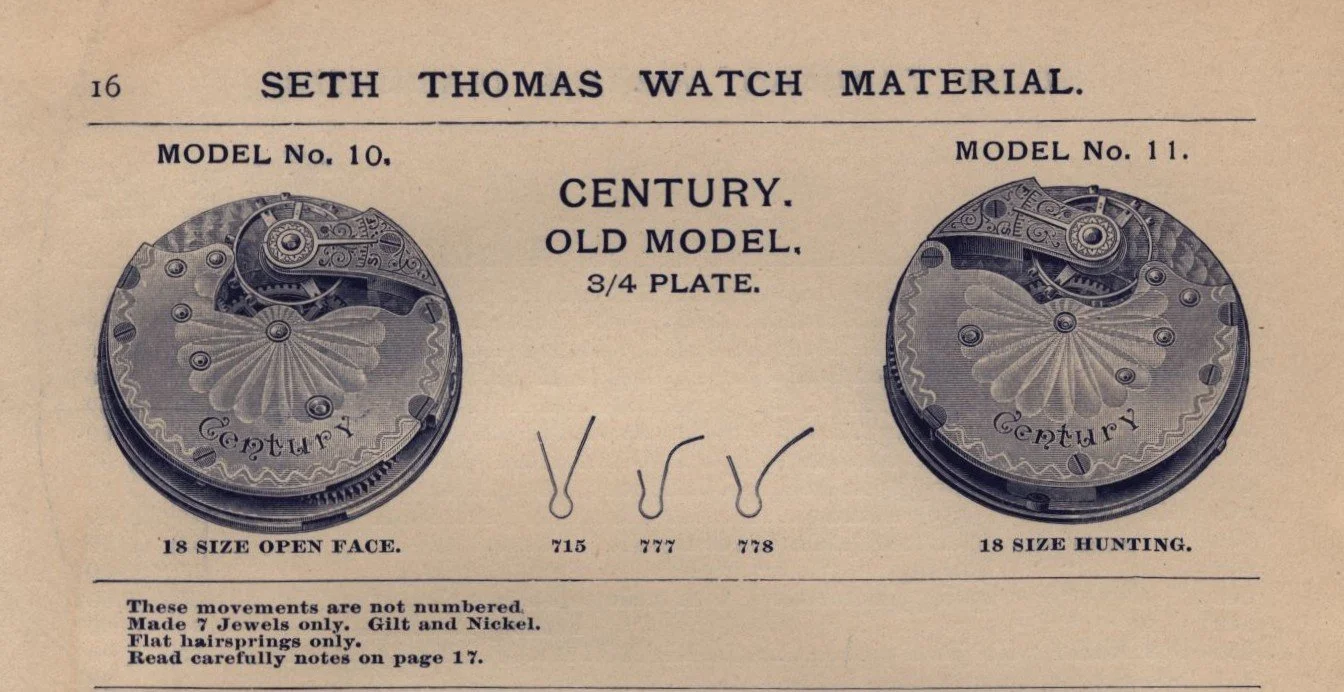
Balance Bridge -Model 10 & Model 11
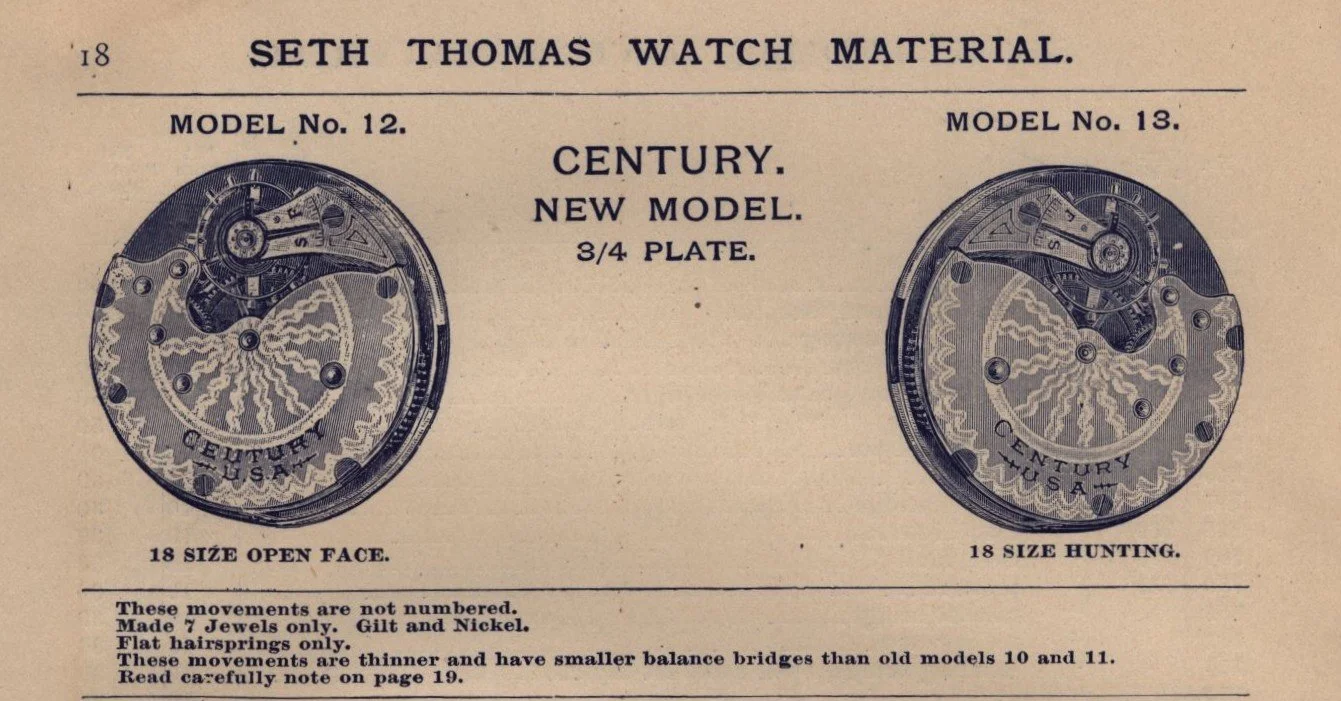
- Model 12 & Model 13
Minute Wheel -
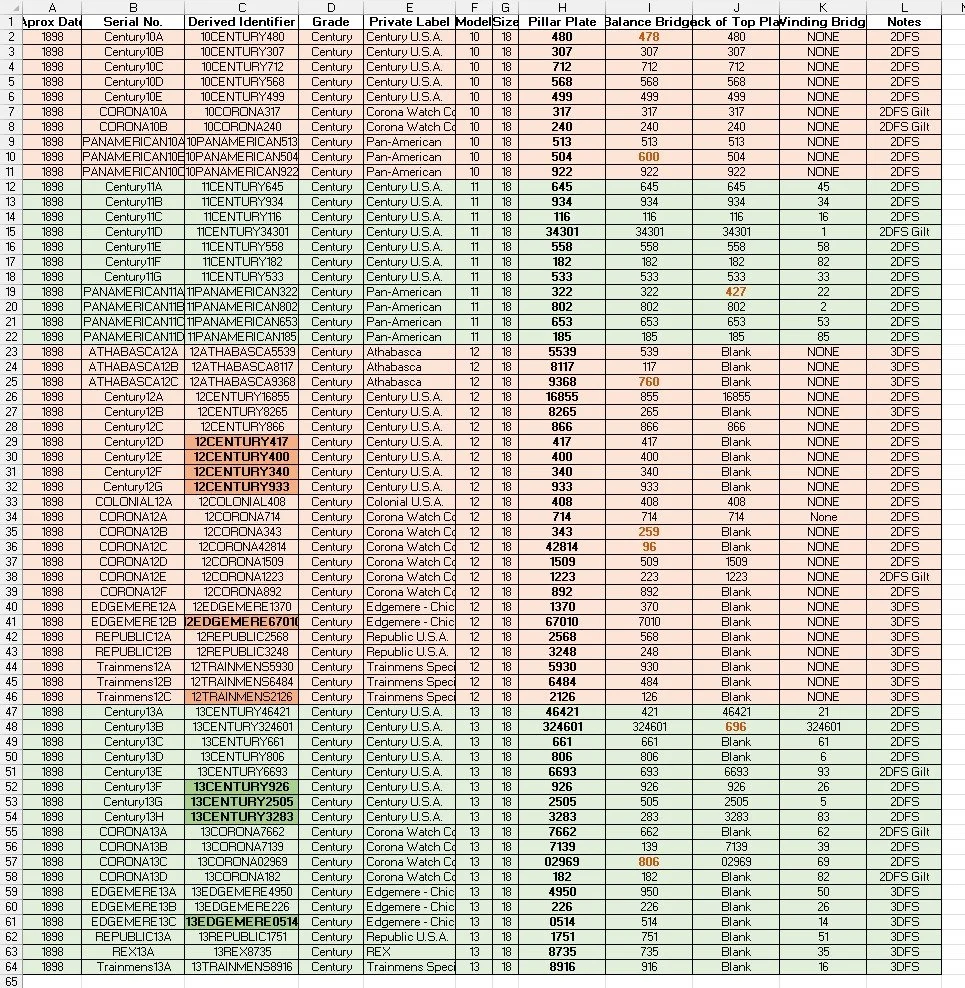
Only a fraction of the research entry records has been included in this newsletter article. To view all of the research entry record view the original Century-grade Factory Assigned Tracking Numbers section of the Seth Thomas Fan Space website.
The only Known Surviving Example is part of the Seth Thomas Fan Collection
2026 Volume - Issue 1, Winter



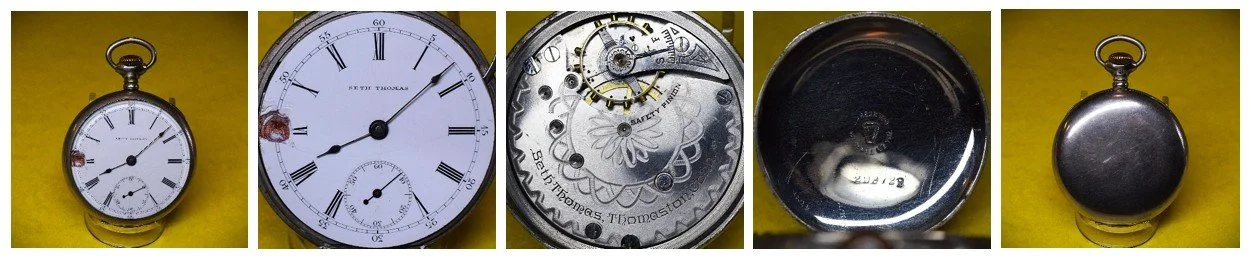
Quick Train - of Thought from Seth Thomas Fan in Winter 2026
Sometimes it has felt as though exciting new discoveries and acquisition were happening too quickly to keep up with. Moving from investigation of a Model 8 New Eagle movement marked only with the number “1” to finding the only known surviving example of Model 5’s original design and manufacture of Higginbotham’s patented Stem Winding and Setting Watch. Many thanks to Nathan Moore for his expert guidance and advice in interpreting the evidence involved in this investigation. Another winter highlight was the serious investigation of the Factory Assigned Tracking Numbers (FAT#’s) found marked on Seth Thomas Century-grade 18-size movements in Models 10 through 13.
The major website revisions and upgrades have included:
the addition of an automated Model Lookup Tool based upon movement serial numbers.
the addition of rarely seen private label movements including Colonial USA, Diamond Watch Co, Metropolitan, Monarch, Workingman’s Friend, and in Model 1: J. M. Heaney – Berlin Wis.
the inclusion of deeper background information and illustrations related to the origin stories of Seth Thomas private label pocket watches. The “Private Label” section was expanded to include movements not yet in the Seth Thomas Fan Collection. Readers are now able to access individual private label research entry pages while preserving the eight alphabetical Private Label browsing pages. This feature adds the benefit of following links directly to a specific private label referenced in other sections of the website without having to scroll through entire private label pages.
the acquisition and presentation of the 1908 Seth Thomas Trade Price List No. 671, 1909 Seth Thomas Trade Price List No. 676, Key to Discounts for Your 1900 Catalogue - Busiest House in America (Lapp & Flershem).
the reworking of the “Winding and Setting of Seth Thomas Pocket Watches” and “Pocket Watch Cases” sections provided more detailed and precise information including enhanced illustrations.
the first issue of this periodic newsletter was well received. This present issue of the Seth Thomas Fanfare newsletter is the 2026 Volume - Issue 1, Winter.
Thank you for your ongoing interest, input, and involvement in making Seth Thomas Fan Space the most successful, user-friendly, and informative website dedicated to uncovering, understanding, and sharing all of the known information about Seth Thomas pocket watches (and eventually clocks) that can be found.
Sincerely –
Jonathan Luysterborghs – Seth Thomas Fan
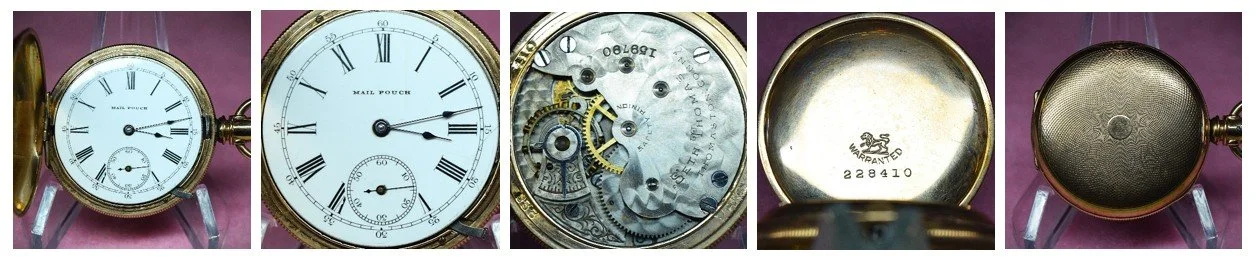
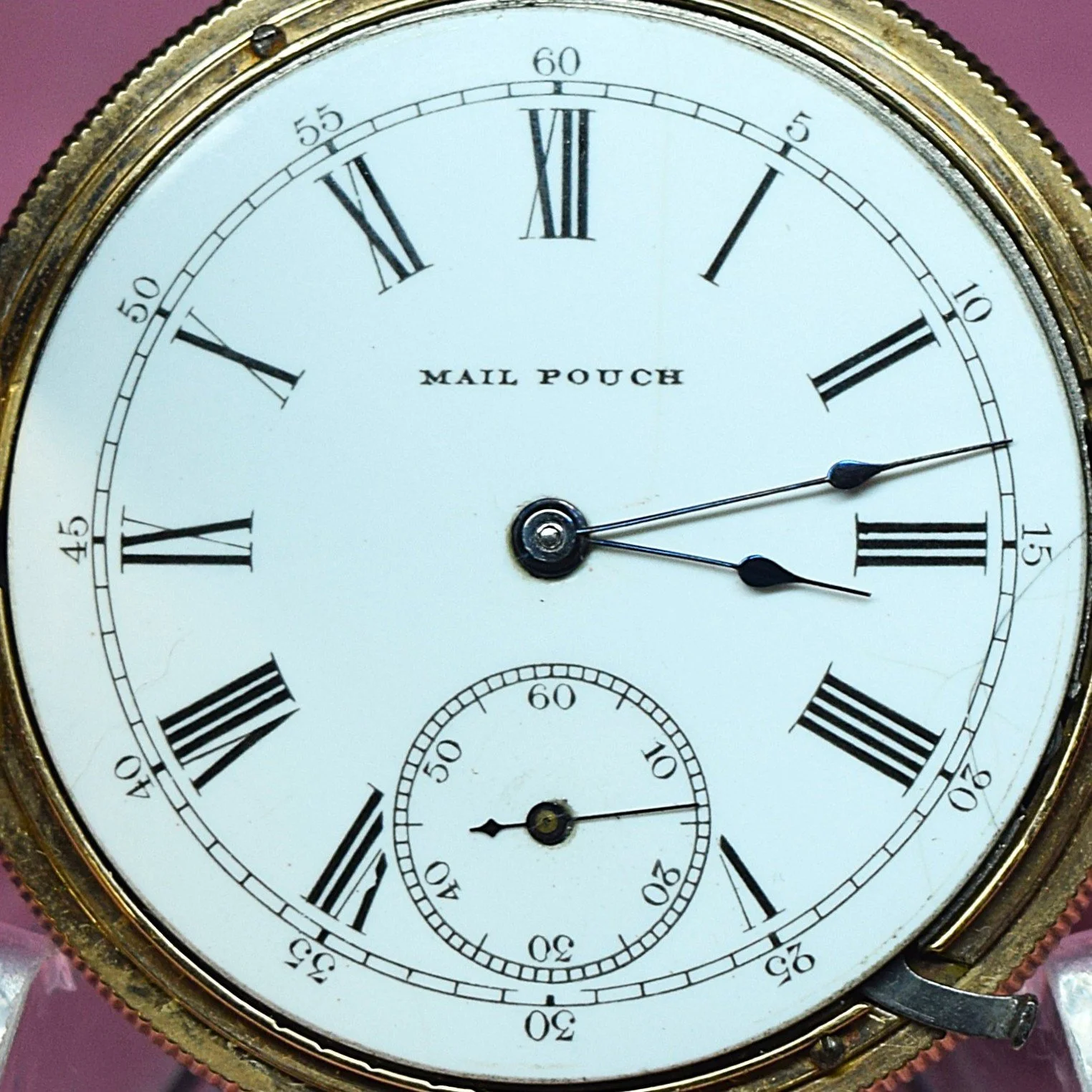
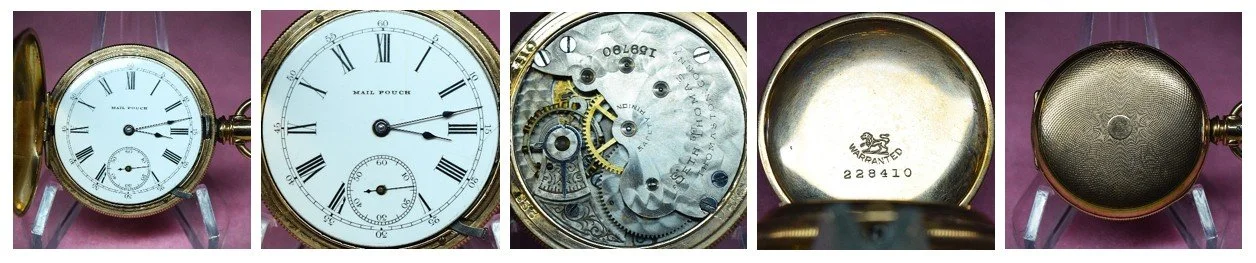
Mail Pouch is a private label in Seth Thomas 6-size Model 15.
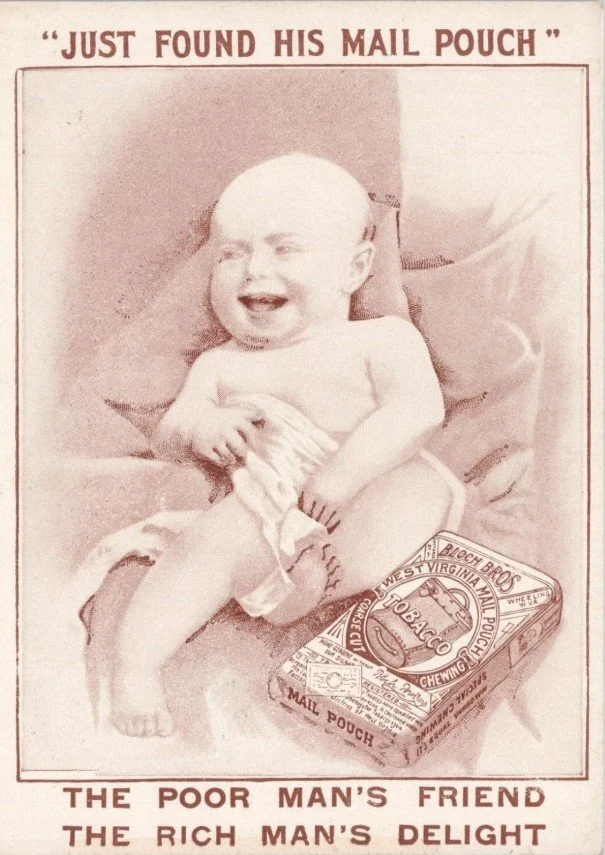
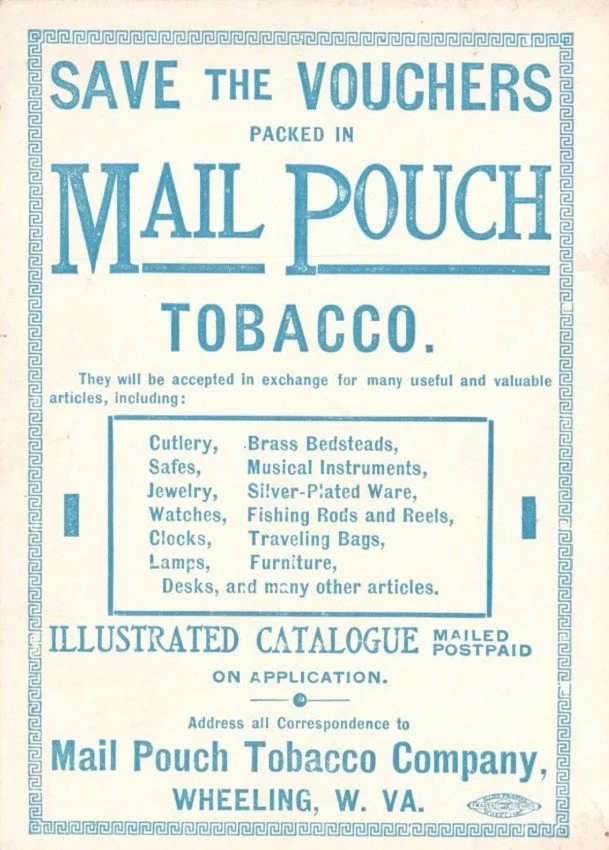
The Mail Pouch Tobacco Company offered premium products that could be obtained by redeeming product purchase vouchers. The premium products included cutlery, safes, jewelry, watches, clocks, lamps, brass bedsteads, musical instruments, silver-plated ware, fishing rods and reels, traveling bags, furniture, desks, and many other items. Based on the context and documentation, it is plausible that this private label pocket watch was offered as a premium for purchasing Mail Pouch Tobacco products.
Below you can see a Catalogue of Mail Pouch Tobacco Premiums. Based upon the merchandise offered within; I estimate this catalogue to have been issued around 1905. On page 13 below there is an advertisement at the top of the page for American-made Mail Pouch Watches. The 6-size Seth Thomas Mail Pouch pocket watch illustrated above on Seth Thomas Fan Space is not shown or described in this Mail Pouch advertisement; but a working relationship between the Mail Pouch Tobacco Company and the Seth Thomas Clock Company is demonstrated in the advertising on Page 30 and 31 where a 1905 Three-column Seth Thomas Sheffield Adamantine Mantel Clock and a 12-inch oak Seth Thomas Office Clock No. 6 are advertised. This catalog may have been issued after the Seth Thomas Clock Company stopped manufacturing pocket watches for the Mail Pouch Tobacco Company. It just seems too coincidental that Seth Thomas could have produced this Mail Pouch private label pocket watch for another company while the Mail Pouch Tobacco Company was selling the same product and selling Seth Thomas Clocks all at the same time.




Mail Pouch Premium Clocks
p. 30, Item 404 — Clock, parlor mantel, elaborate design, 8 day. 1750 vouchers. The woodcut corresponds to the Seth Thomas “Sheffield” Adamantine mantel clock (1905).
p. 31, Item 405 — Clock, for store, fine oak case, 8 days, pendulum, 12 inch dial. 1400 vouchers. The illustration and 12" dial specification match the Seth Thomas Office No. 6 (12").
These two consecutive listings show that Mail Pouch Tobacco Co. was sourcing Seth Thomas clocks for its premium program. In the same booklet (p. 13), Mail Pouch offered “Gentleman’s American Open Face” seven-jewel watches. The presence of multiple Seth Thomas clock models alongside those watch offerings strengthens the attribution that Mail Pouch–branded pocket watches could also have been supplied by Seth Thomas, consistent with my example (1899 Seth Thomas movement with Mail Pouch branding).
Open-Face vs. Hunting-Case Note.
The c.1905 Mail Pouch Tobacco Premiums Catalogue page reproduced here offers open-face watches (items 117–120, 902–903). My example is a hunting-case Seth Thomas Model 15 6-size Mail Pouch pocket watch using an 1899 movement. Premiums programs were frequently revised; other Mail Pouch catalogue printings very likely offered hunting-case options—or permitted an HC upgrade for additional vouchers—using the same American seven-jewel grade. This aligns with common practice in which brand programs purchased U.S. movements (Seth Thomas) and cased them through jobbers (e.g., Keystone/Dueber/Crescent) for specific mailings or later runs.

This advertisement appeared in The Weskansan on Saturday July 18, 1896, on page 3. The advertisement specifically prints “The ‘Mail Pouch’ Watches are made by a leading American Watch Company…” with only the words “Mail Pouch” in quotation marks indicating that the movement was marketed under the ‘Mail Pouch’ designation” tightening the description of the watch even more closely with the Seth Thomas Mail Pouch private label which carries a dial signature, “Mail Pouch”, only.
Mail Pouch
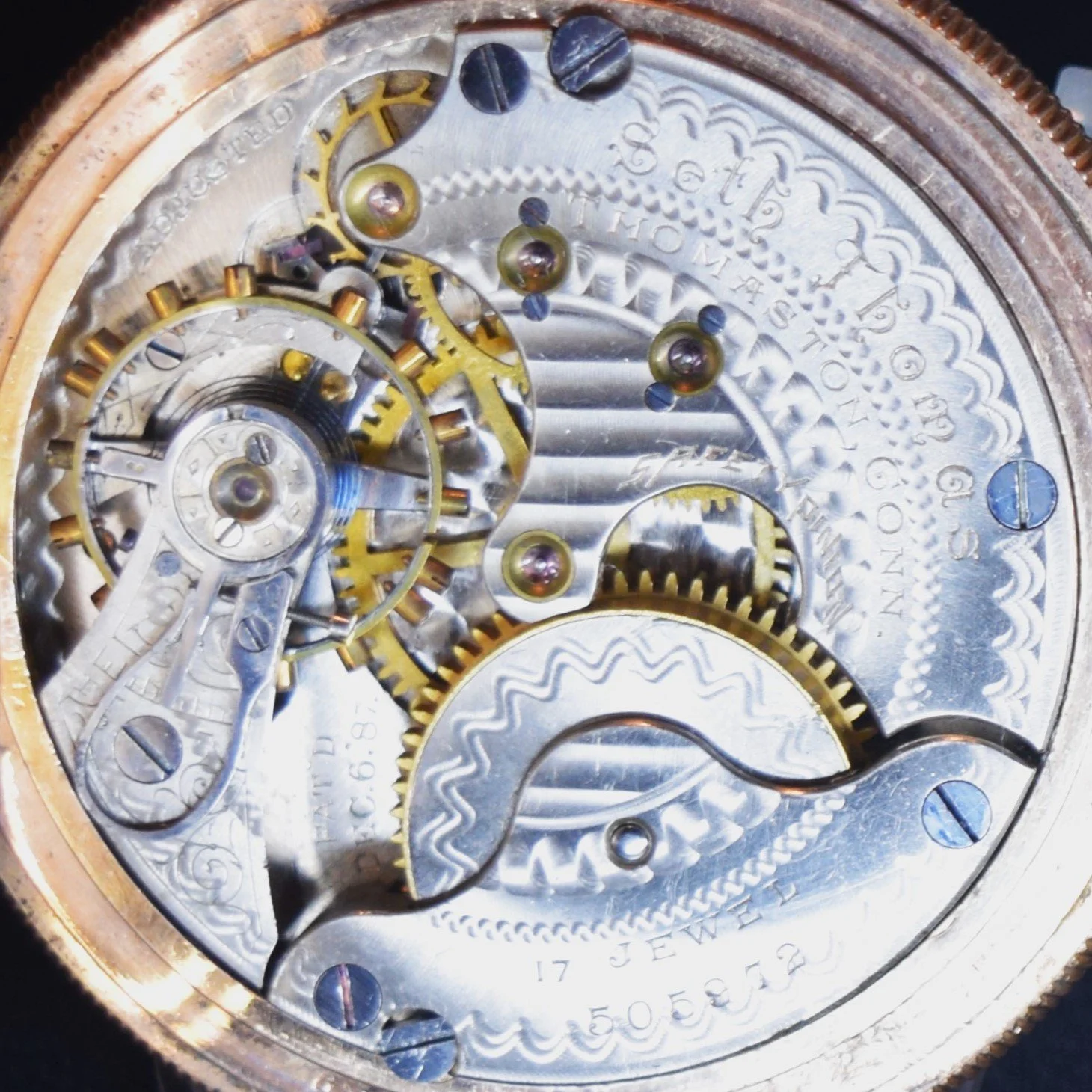
Model 2 Movement Markings
There were two styles of standard movement markings used on Seth Thomas Model 2 pocket watches.
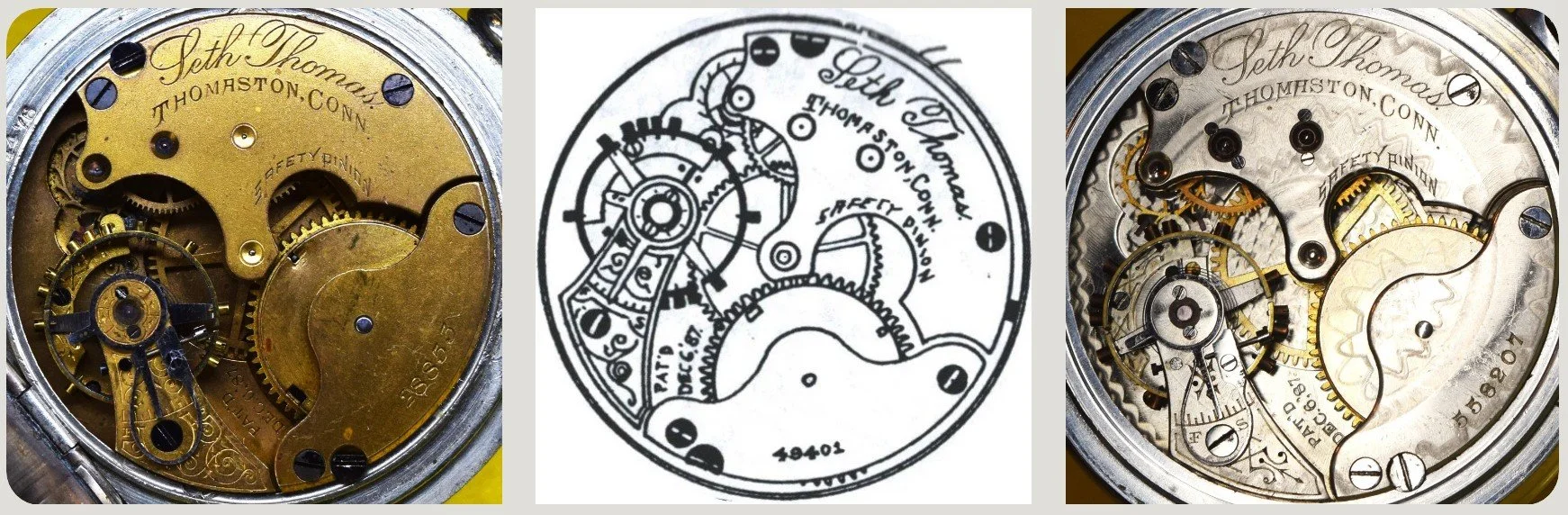
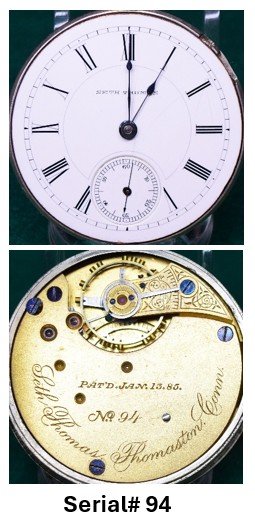
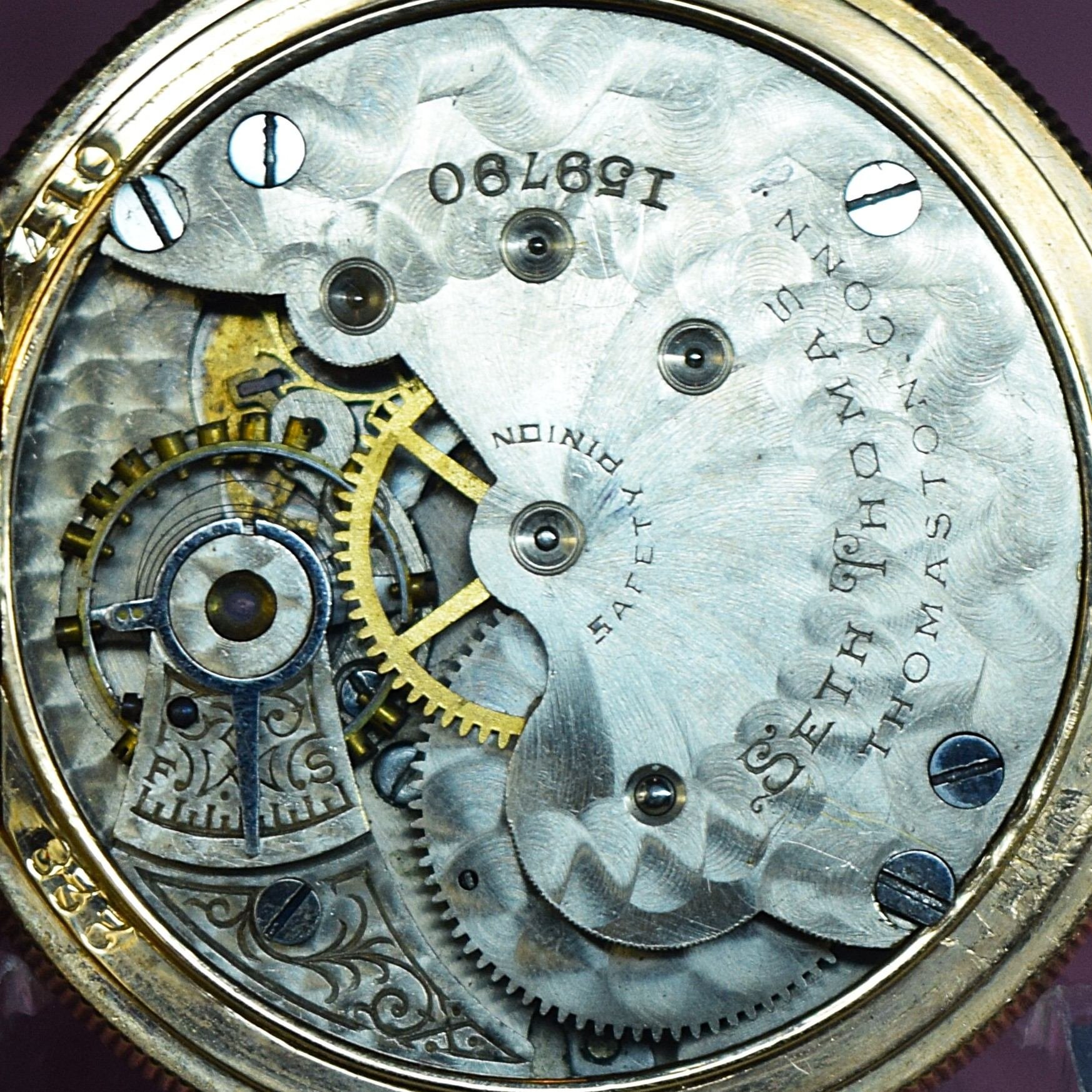
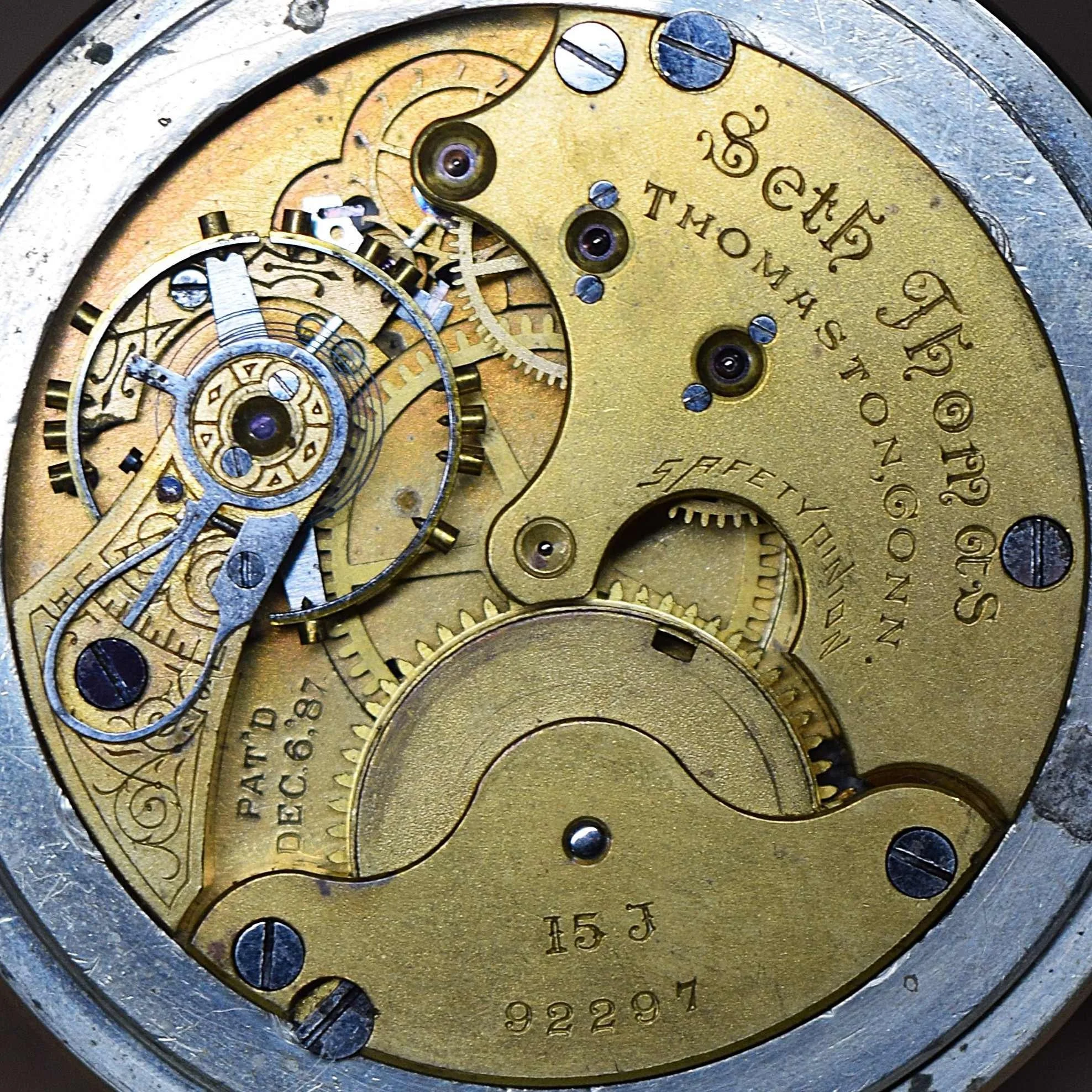
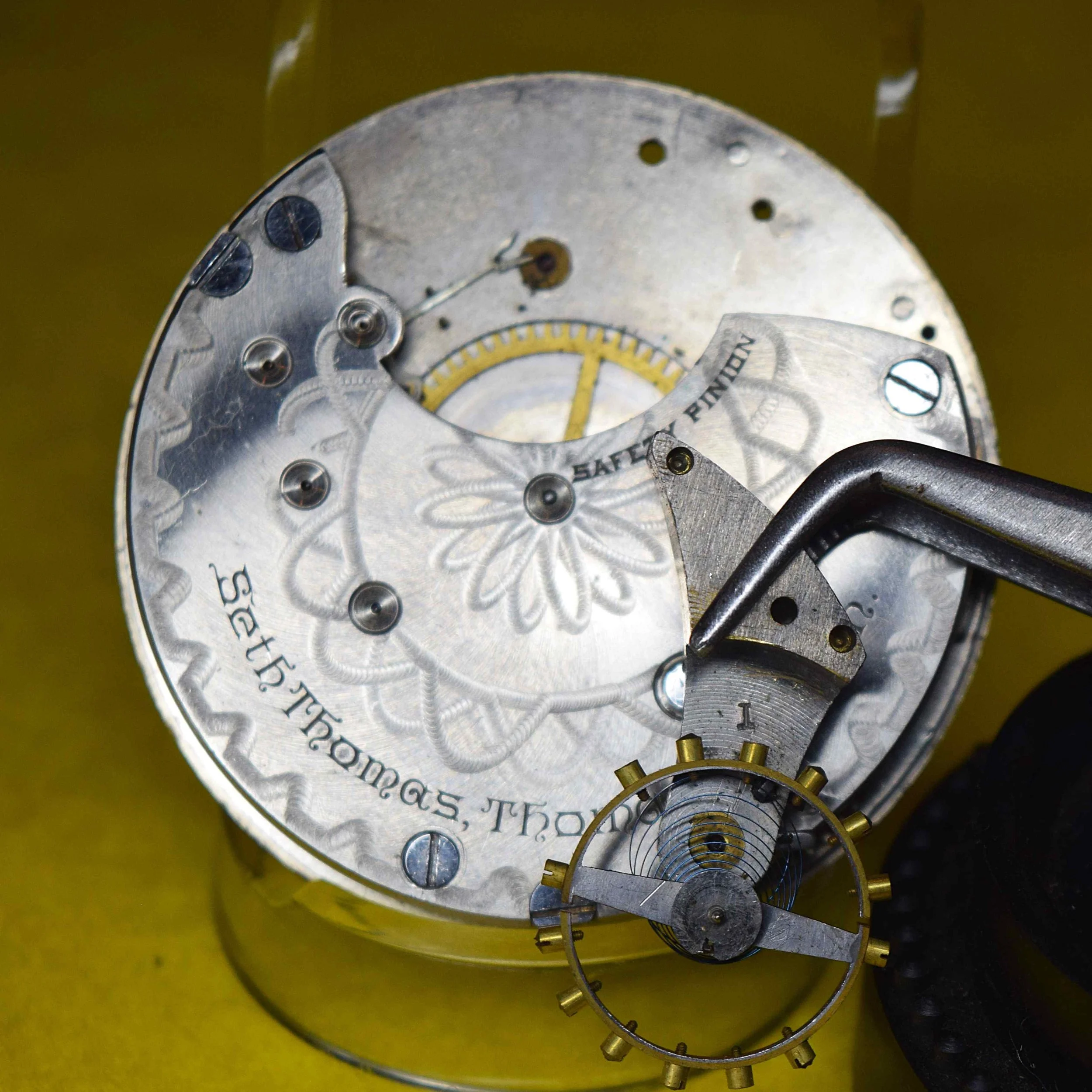
The standard movement markings on Model 2 movements started out with the signature “Seth Thomas Thomaston, Conn.” inscribed in two lines at the perimeter of the train bridge. The “Seth Thomas” portion of the signature presents in a Formal Script font. The “Thomaston, Conn.” portion of the signature presents in some variation of an Old English Text font. The movement serial number is located at the center perimeter of the barrel bridge. “SAFETY PINION” is inscribed at the bottom of the train bridge, just above the mainspring barrel. “PAT’D DEC. 6, ‘87.” is inscribed on the back of the pillar plate in two lines and is visible in the space between the balance bridge and the mainspring barrel. Serial number 558232 is the highest serial number utilizing this marking format for which photographic documentation is available on the Pocket Watch Database.
Movement Marking Style 1 - Documented serial number range 28044 - 558232.


The second standard movement markings on Model 2 movements is intermixed with the first style and is primarily used on movements with higher jewel counts. The configuration of the markings is the same. The only difference is with the “Seth Thomas“ portion of the signature presenting in stylized Old English Exaggerated Serif font. The “Thomaston, Conn.” portion of the signature presents in the same variation of an Old English Text font as Style 1. The movement serial number is still located at the center perimeter of the barrel bridge. “SAFETY PINION” is inscribed at the bottom of the train bridge, just above the mainspring barrel. “PAT’D DEC. 6, ‘87.” is inscribed on the back of the pillar plate in two lines and is visible in the space between the balance bridge and the mainspring barrel. Serial number 87929 is the first documented use of Style 2 and 558523 is the highest serial number utilizing this marking format for which photographic documentation is available on the Pocket Watch Database.
Movement Marking Style 2 - Documented serial number range 87565 - 558523.

Seth Thomas Model 4 Movement Markings
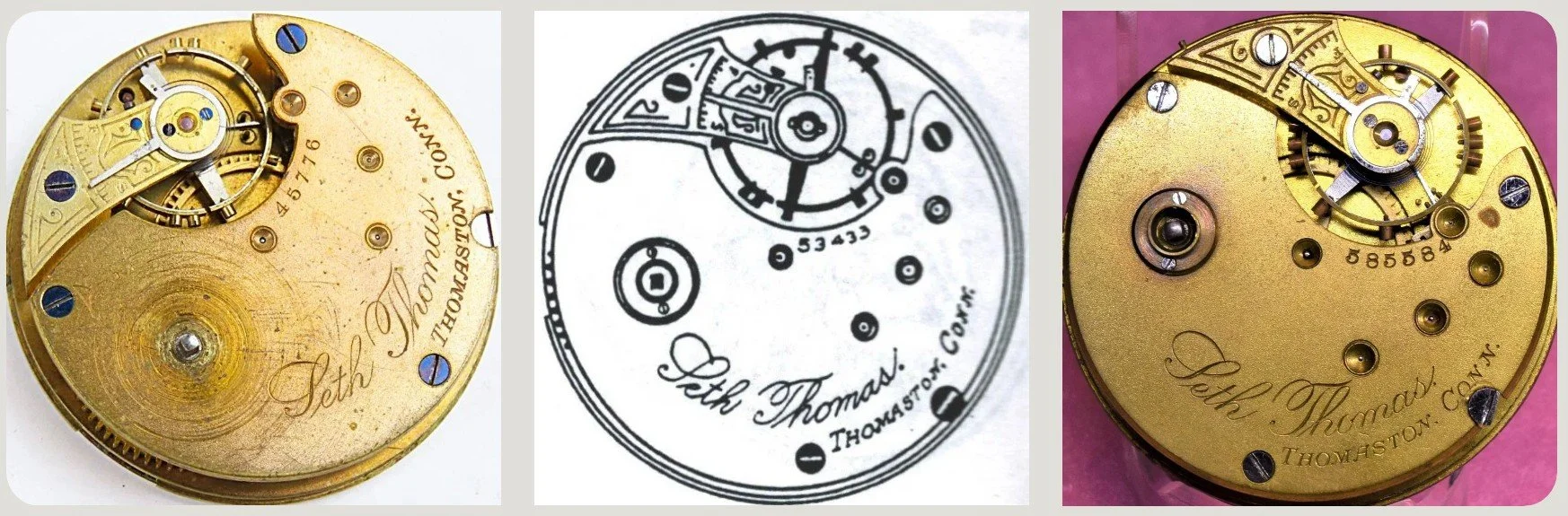
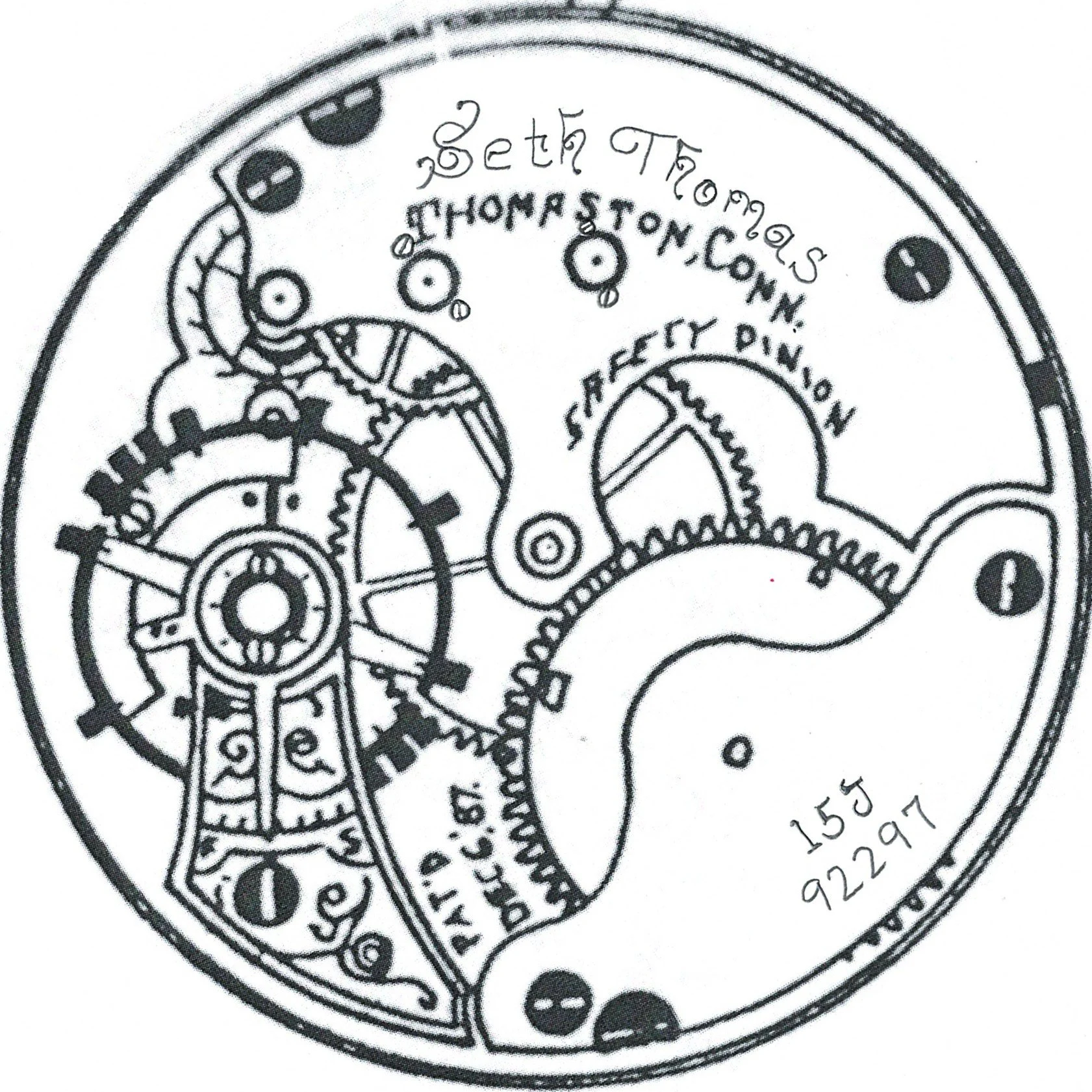
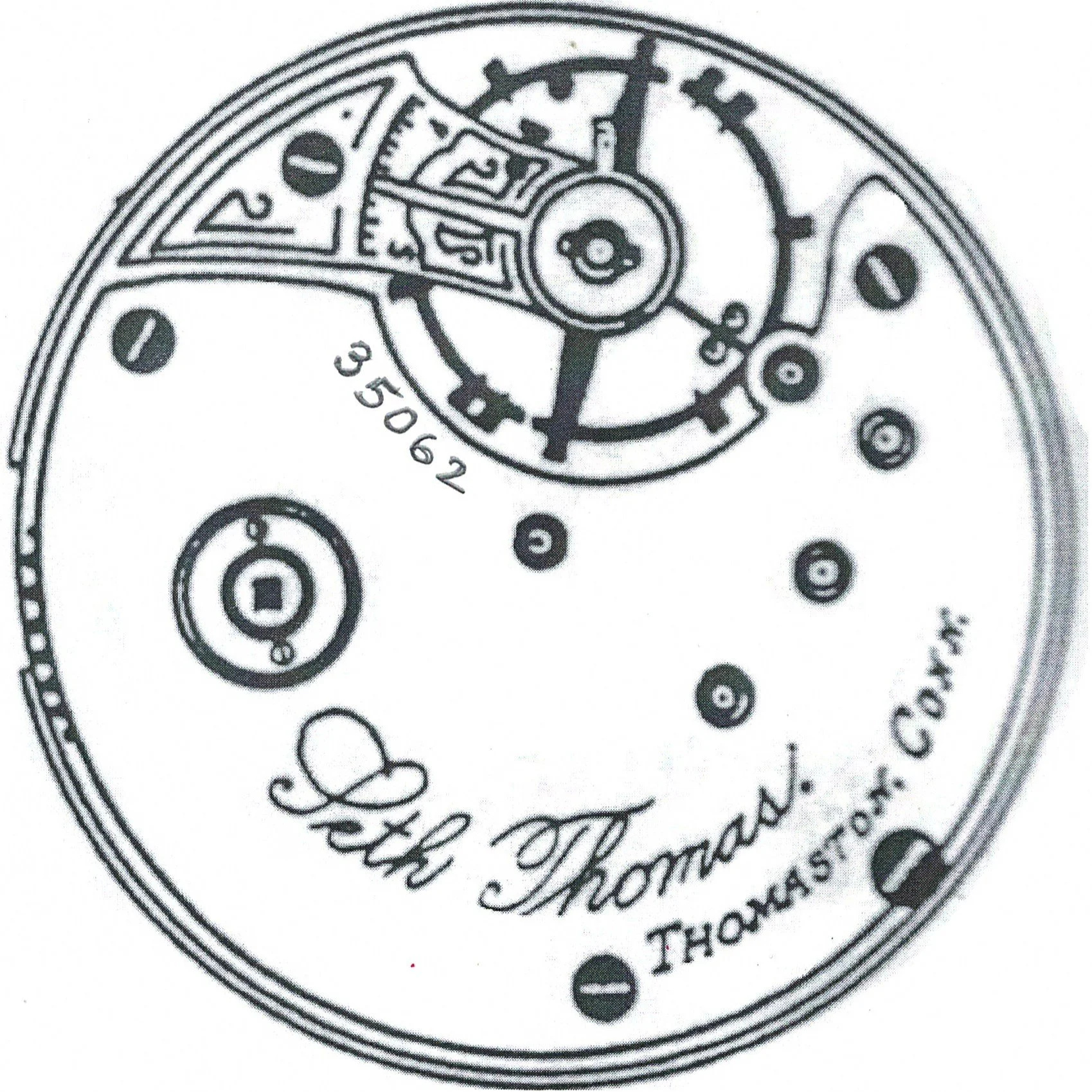
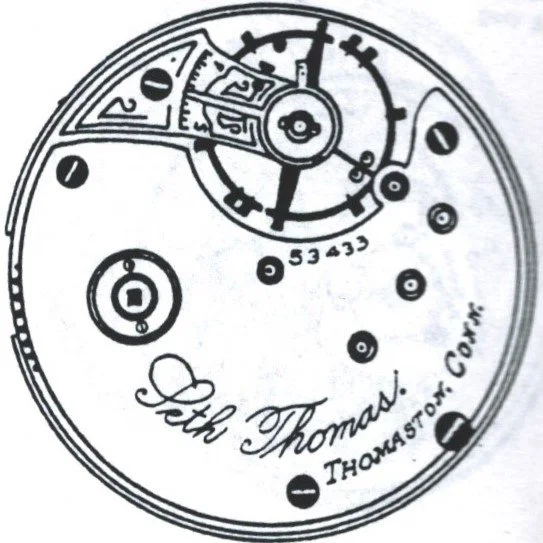
The standard movement markings on Seth Thomas key-wound Model 4 movements started at serial number 35001 with the “Seth Thomas” portion of the signature in a partially overlapping concentric arc just above the “Thomaston, Conn.” portion of the signature, also following the arc of the movement’s circumference. “Seth Thomas” is engraved in a Formal Script font, and “Thomaston, Conn.” is engraved in a Serif Caps font. The pattern of the signature on Seth Thomas key-wound Model 4 movements remained the same from the start to the finish of their production.
From serial number 35001 the movement serial number is located to the left-hand side below the cutout for the balance wheel. Serial number 35960 is the highest serial number utilizing this marking format for which photographic documentation is available on Page 1 of the Seth Thomas Model 4 Image Gallery of the Pocket Watch Database. Somewhere between serial numbers 35960 and 44913 the serial number marking was moved to the right-hand side below the cutout for the balance wheel. The serial number remained on the right-hand side for the remainder of Model 4’s production.
Movement Marking Style 1 - Documented serial number range 35062 - 35960.

Somewhere between serial numbers 35960 and 44913 the serial number marking was moved to the right-hand side below the cutout for the balance wheel. The serial number remained on the right-hand side for the remainder of Model 4’s production.
Movement Marking Style 2 - Documented serial number range 44913 - 585584.



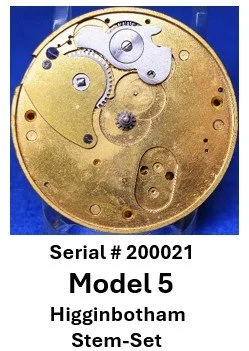
Serial Number 200021 - 11 Jewels - Grade 58 - Higginbotham’s 1891 Patented “Stem Wound and Set Watch”

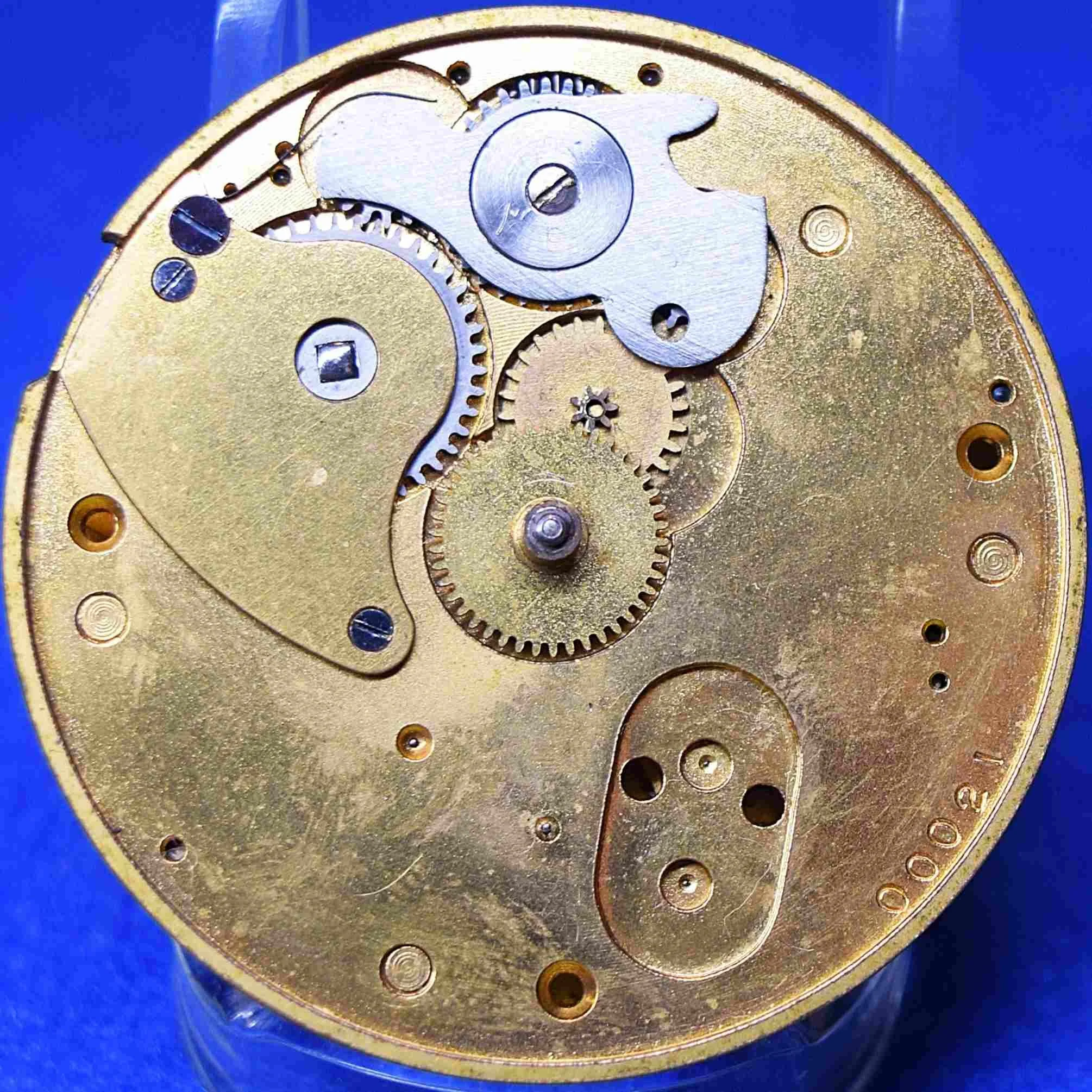
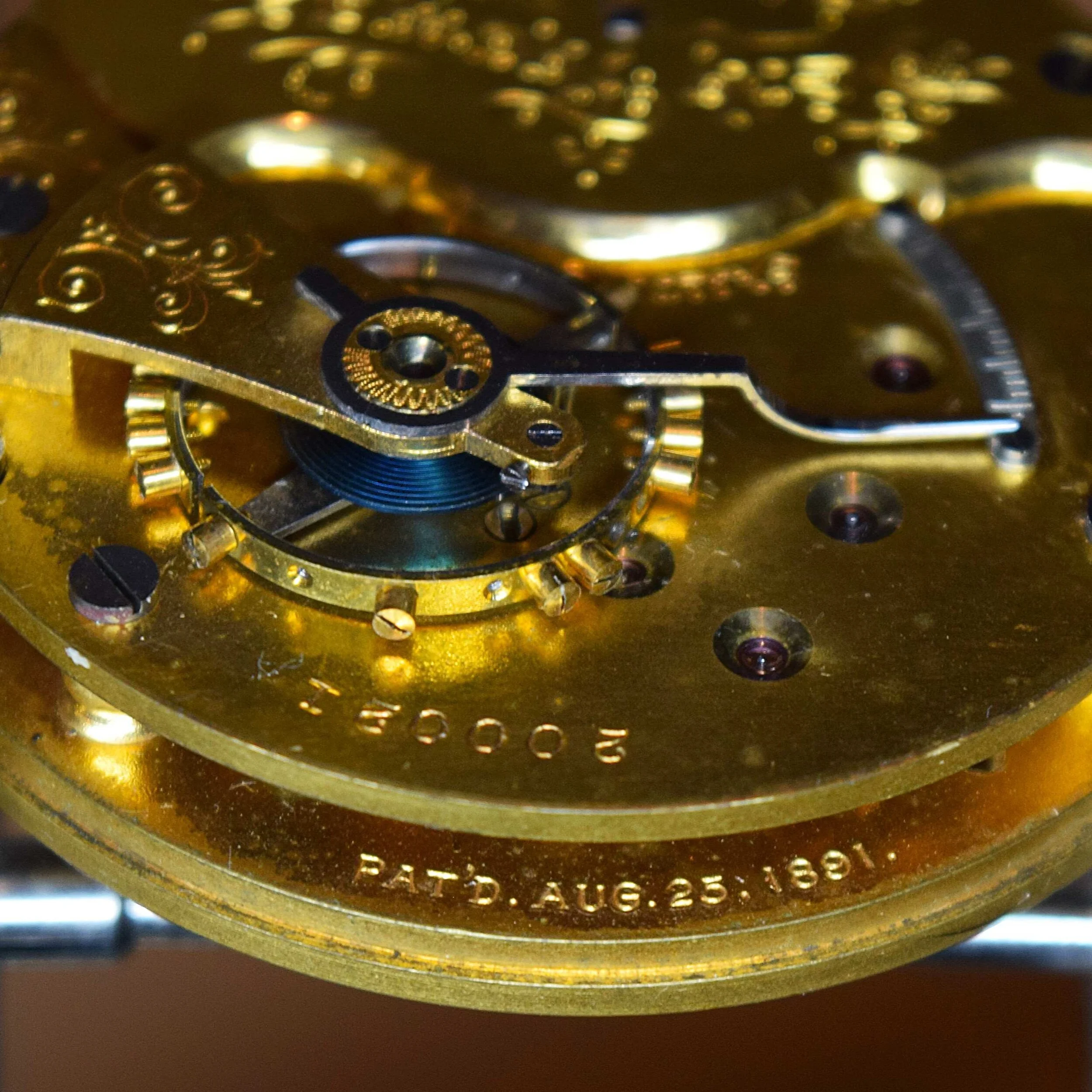
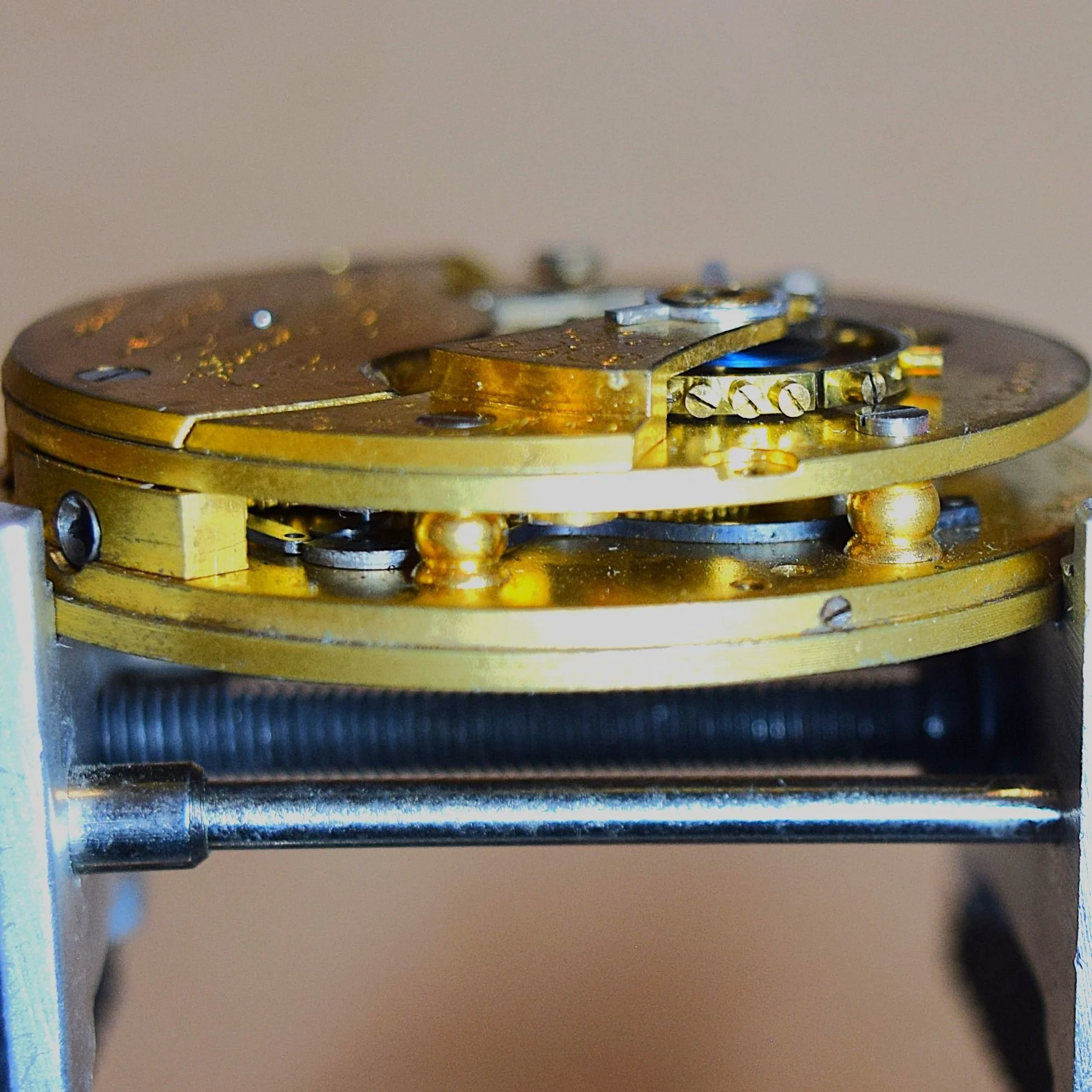
This 1893 Seth Thomas open-face 18-size Model 5 pocket watch was manufactured with a gilt finished full plate, 11 jewels, and it is non-adjusted. The movement is stem wound and stem set, with a Breguet hair spring, and plain/simple regulator. Its serial number is 200021, and its grade is Seth Thomas numbered grade 58. The movement is signed “Seth Thomas Thomaston, Conn.”. This is the 21st Seth Thomas Model 5 pocket watch produced.
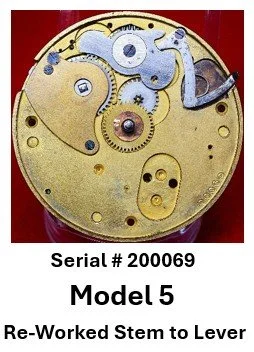
This movement is a Higginbotham Stem-Set movement, based upon the August 25, 1891 Higginbotham patent for “Stem Winding and Setting Watches”. Serial number 200021 is a rare survivor with the functioning original stem-set material still in place. It is presently functioning in every manner that the later pendant-set Model 5 movements function. See the video below of #200021 in a temporary case to demonstrate the stem-winding and stem-setting functions. Other early movements within this initial production window were re-worked into lever-set movements. Serial number 200069 featured below is one of the re-worked stem-set to lever-set movements. Photographic evidence has also been provided by another NAWCC member that 200174 was also a re-worked stem-set to lever-set movement. All observed early specimens examined to date also exhibit re-milling of the minute wheel space. The subsequent blocks that did not have the re-milled space for the minute wheel did still have the Higginbotham patent date stamped on the back of the pillar plate, some of the screw holes for the installation of the Higginbotham stem-set mechanism and milling for the operating-lever to function underneath the mainspring barrel. Based on an examination of a portion of the Model 5 movements in my collection, it is suggesting that preparatory features associated with the Higginbotham system extended across a substantial portion of Model 5 production, potentially encompassing many thousands of movements. The precise scale of this preparation cannot be determined from the surviving evidence. The highest serial number in the Seth Thomas Fan collection that has most of these features is serial number 208744. The Maiden Lane in this collection, serial number 208824, has the Higginbotham patent date stamped on the back of the pillar plate; but does not have the milling for an operating-lever to function under the mainspring barrel or any of the screw holes for the installation of the Higginbotham stem-set mechanism. The next highest serial number in this collection is serial number 210670. Serial number 210670 does not have the Higginbotham patent date stamped on the back of the pillar plate, the screw holes for installation of the Higginbotham stem-set mechanism, or the milling for an operating-lever to function beneath the mainspring barrel. This is suggesting that preparatory features extended well beyond the earliest serials. The full scale of this preparation remains unknown.
The movement presents with an 18-size unsigned heavy Roman dial with a ring minute track and no marginals. It is fitted with Seth Thomas #1282 blued spade & whip railroad hands, 18-size.
The movement is not presently cased.
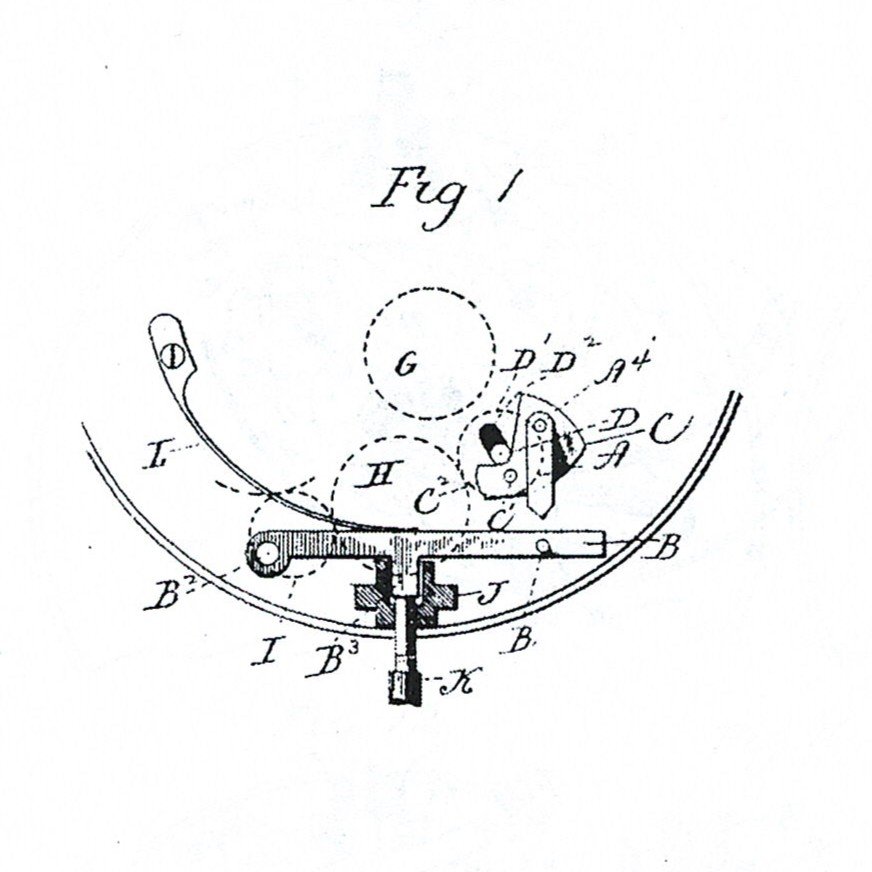
The components of the Higginbotham stem-setting mechanism look slightly different in the photographs presented here than they did when they were initially envisioned and sketched in the patent documents, shown below, prior to actual production. That is normal and not at all a variation from the patent, as what is being patented is the concept of how the components work together to accomplish the function described in the patent. An example here is that the springs in the actual watches press on the operating-cam which transmits the springs’ energy to the operating-lever. The patent sketch/diagram shows the spring making direct contact with the operating-lever. Another example is the shape of the gravity-coupler.





The engraved movement and model illustrations shown here are derived from an early Seth Thomas Watch Co. trade catalog or jobber circular dating to approximately 1891–1893. These images were reproduced as part of a composite plate in Roy Ehrhardt’s Pocket Watch Price Guide (1972).
Roy Ehrhardt’s publication does not identify the original source publication or exact date of the individual catalog fragments. Based on typography, layout, model descriptions, and serial-number ranges, the original material is consistent with factory-issued Seth Thomas advertising from the early 1890s, coinciding with the initial production period of the Model 5.
First and Only Known Working Specimen of Seth Thomas Early Model 5 Higginbotham Stem Wound Movements
After several days of inspecting, comparing, consulting, and interpreting evidence around the peculiar construction and apparent reworking of several specimens from a small number of very early Model 5 movements produced by Seth Thomas, it seems that we have at last arrived at a tenable foundational understanding of the truth. There are still unanswered questions; but one thing is abundantly clear. The observed specimens were manufactured as Higginbotham stem-set movements based upon Higginbotham’s 1891 patent.
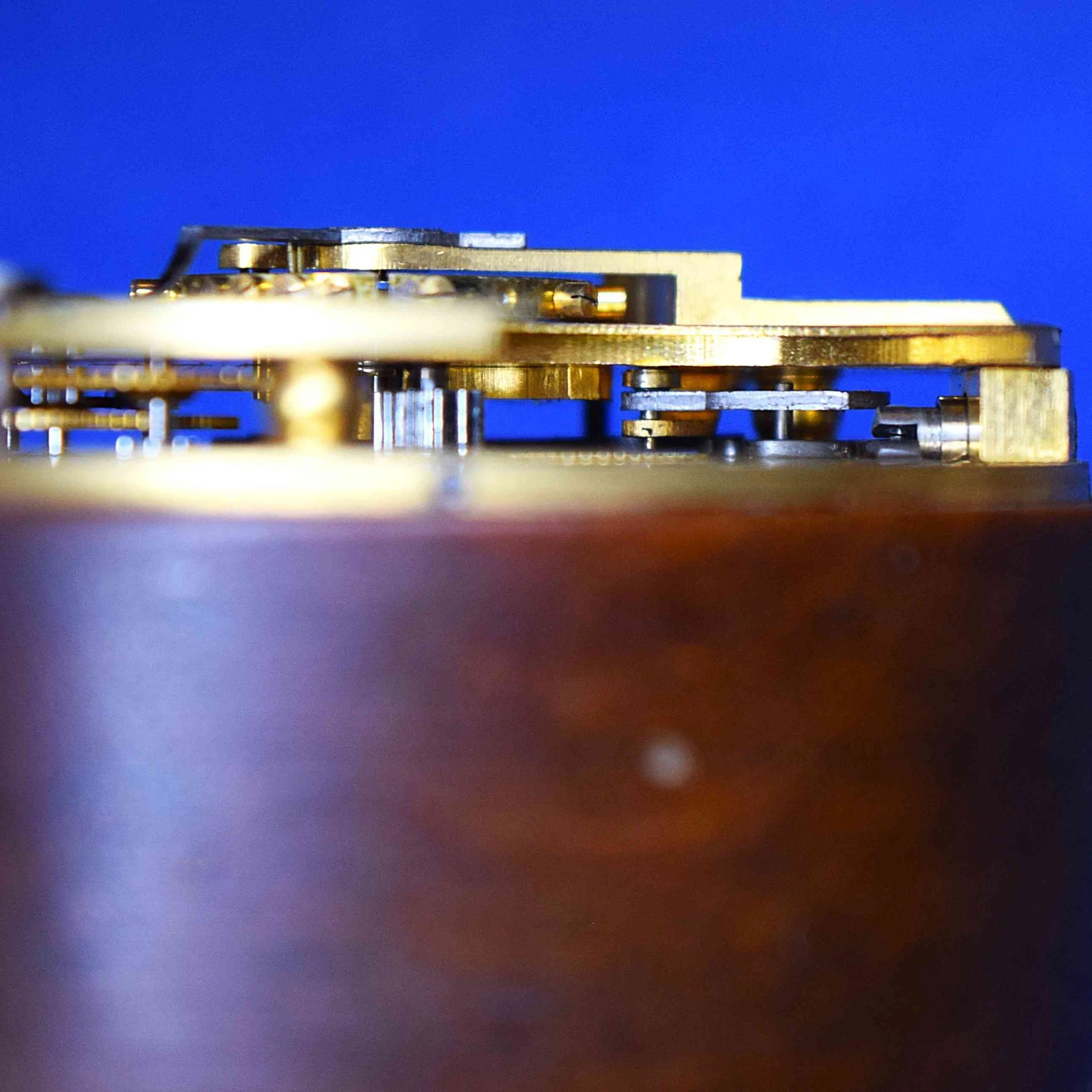
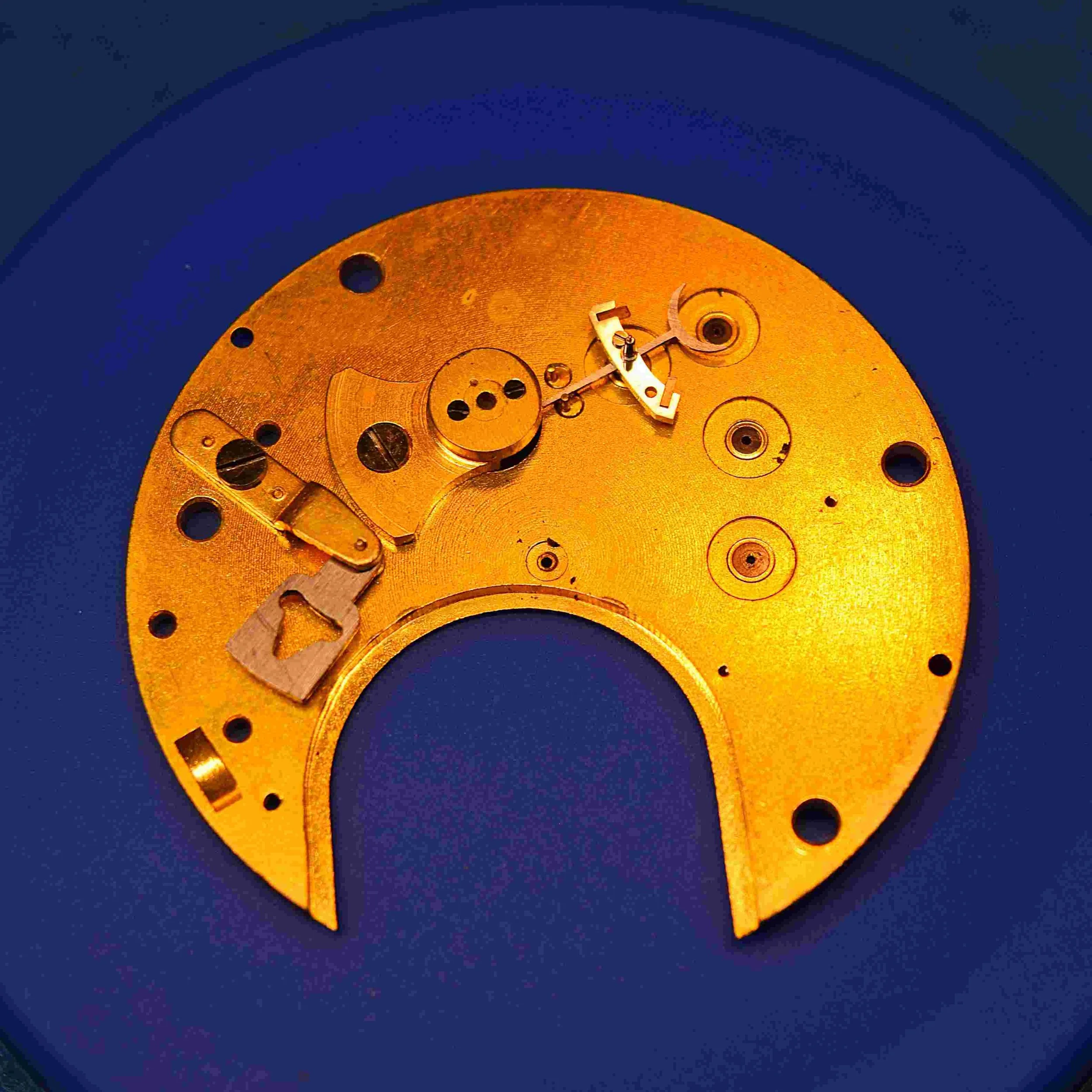
Seth Thomas Model 5 serial number 200021 is the first, and only, known surviving and working specimen of an early Model 5 Higginbotham stem-set movement. There is now photographic evidence that movements #200021, #200069, and #200174 were all initially manufactured as Higginbotham stem-set movements. All of the stem-winding/setting mechanism was located between the plates. Serial number 200069 exhibits empty screw holes at the connection points where serial number 200021 still has the original stem-winding/setting mechanism in place and is functioning as originally intended. Serial numbers 200021 and 200174 each have the Higginbotham patent date marked on the back of the pillar plated visible between the plates near the balance wheel.
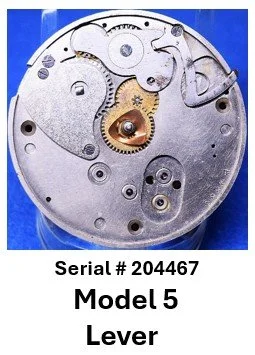
Seth Thomas serial numbers 200069 and 200174 were re-worked by the factory, or have been reported to have been re-worked and converted to lever-set movements. This re-working involved removing the stem-winding mechanism from between the plates and milling out a space for the setting lever spring. The same yoke assembly is used on the stem-set mechanisms as on the lever-set mechanisms. No change seems to have been made there. The historical details of exactly how, why, and when this re-working and conversion took place are still uncertain. The serial numbers of the specimens observed so far imply that a small number of very early Model 5 movements were a part of this stem-set production and subsequent re-working. Photographs and videos are included here of #200021 and #200069 from the Seth Thomas Fan collection. Images of 200174 may be seen on the Pocket Watch Database in the Model 5 Gallery Seth Thomas Watch Co. Watches Photo Gallery | Pocket Watch Database.
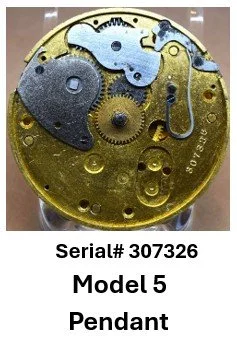
The Higginbotham Stem Winding and Setting Watch movements wind just like all pendant set movements. However, when it comes to setting the hands to the right time; that’s a little bit of a different procedure. All of the activation components to initiate the setting process are internal, between the plates. The Higginbotham system relies on gravity to keep the watch out of setting mode unless specific steps are followed to activate that mode. First, the watch must be turned upside down, with the pendant pointing straight down at the ground. Next the pendant/stem needs to be pushed in to exit the winding mode and enter the setting mode. Once that is done the hands can be set regardless of the orientation of the movement. In order to exit the winding mode, the watch must be right-side up with the pendant pointing straight up. Next the pendant/stem needs to be pushed in to exit the setting mode and enter the winding mode. I have found that this characteristic is not consistent in the way that #200021 performs. Sometimes the winding/setting mechanism changes modes regardless of spatial orientation and when cased can operate exactly the way that the later Seth Thomas pendant-set movements operate.


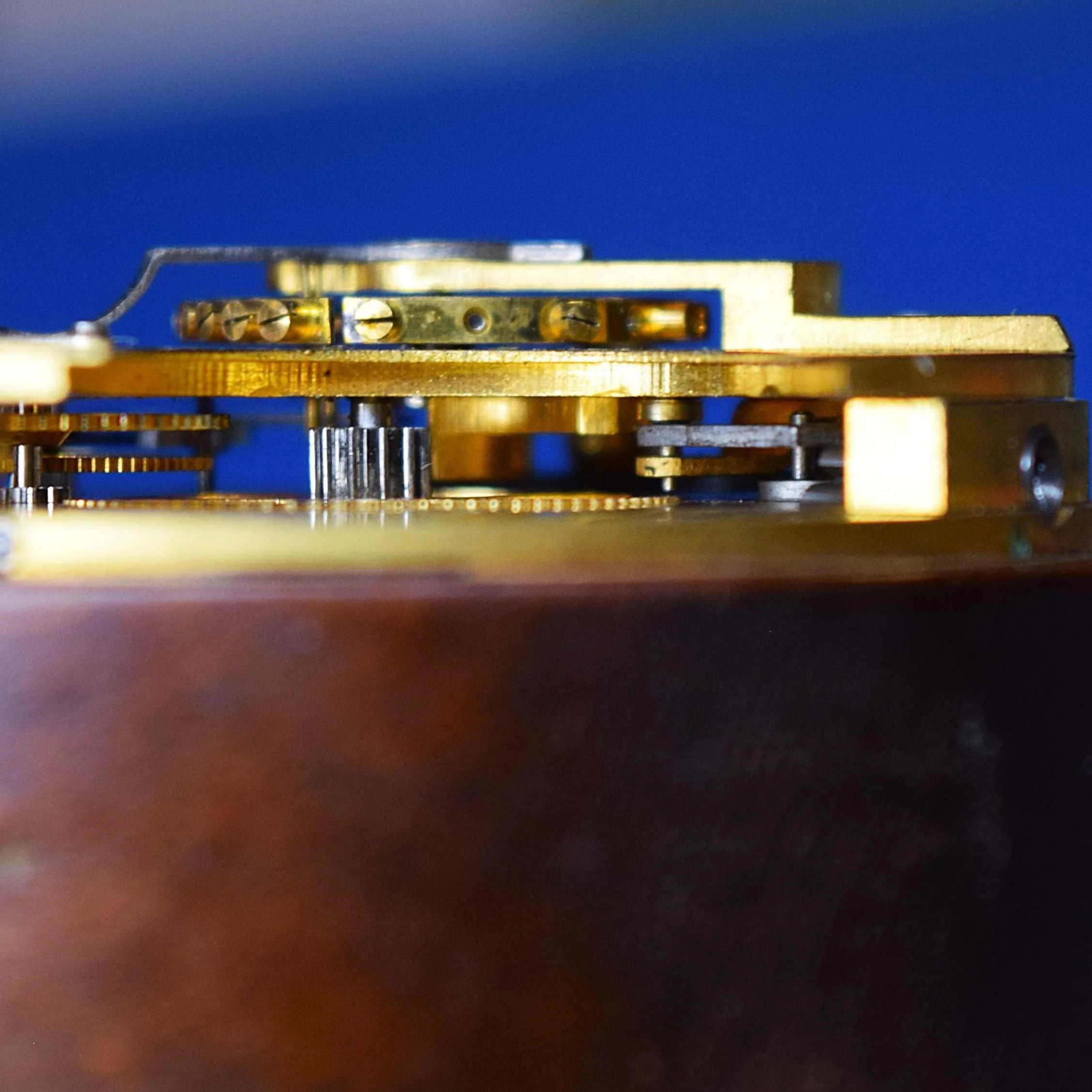



Serial Number 700001 - 7 Jewels - Grade 36 - No Serial Number on Top Plate
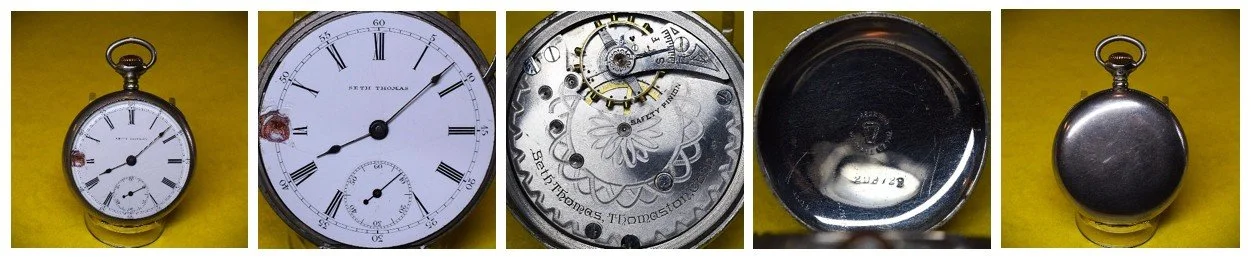
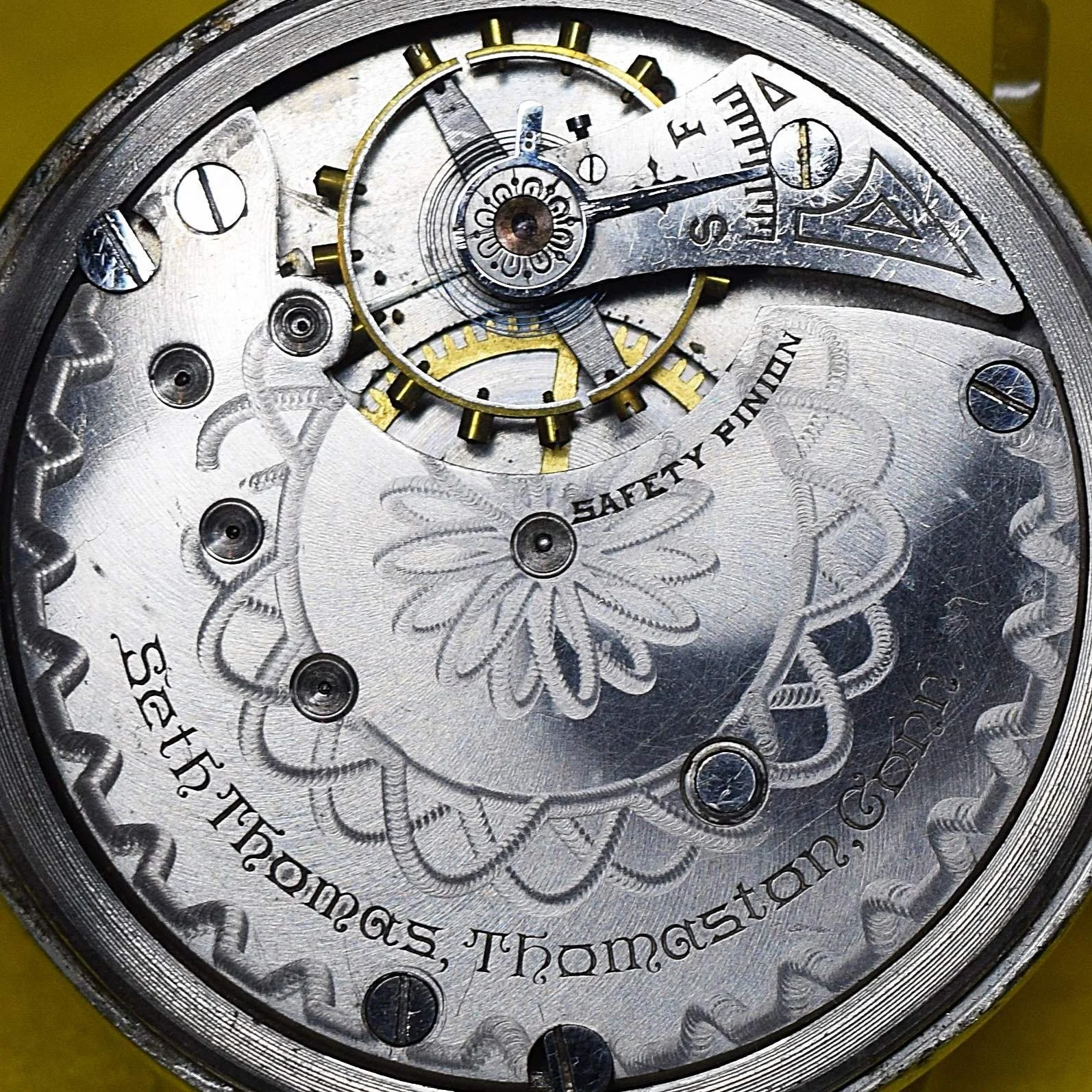
This 1904 Seth Thomas open-face 18-size Model 8 pocket watch was manufactured with a nickel finished 3/4 plate, 7 jewels, and it is non-adjusted. The movement is stem-wound and lever set, with a Breguet hair spring, slotted hairspring stud, and plain/simple regulator. [1.h] Its serial number is 700001, and its grade is Seth Thomas numbered grade 36. The movement is signed Seth Thomas Thomaston, Conn. There is no serial number stamped on the top plate. This movement is interpreted here as the earliest identified Seth Thomas New Eagle Model 8 pocket watch. Model 8 serial numbers started at 700001 and concluded at 2593000.
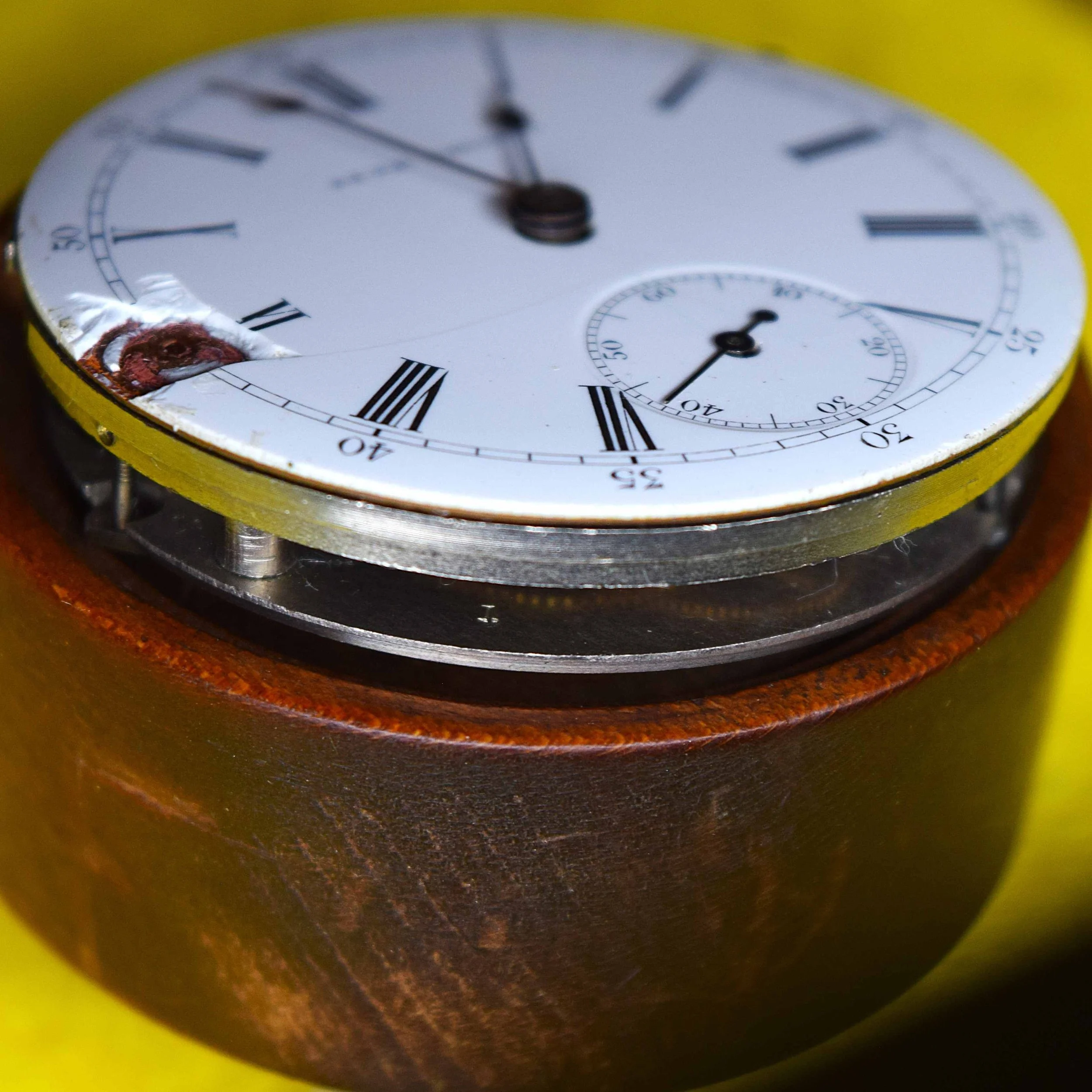
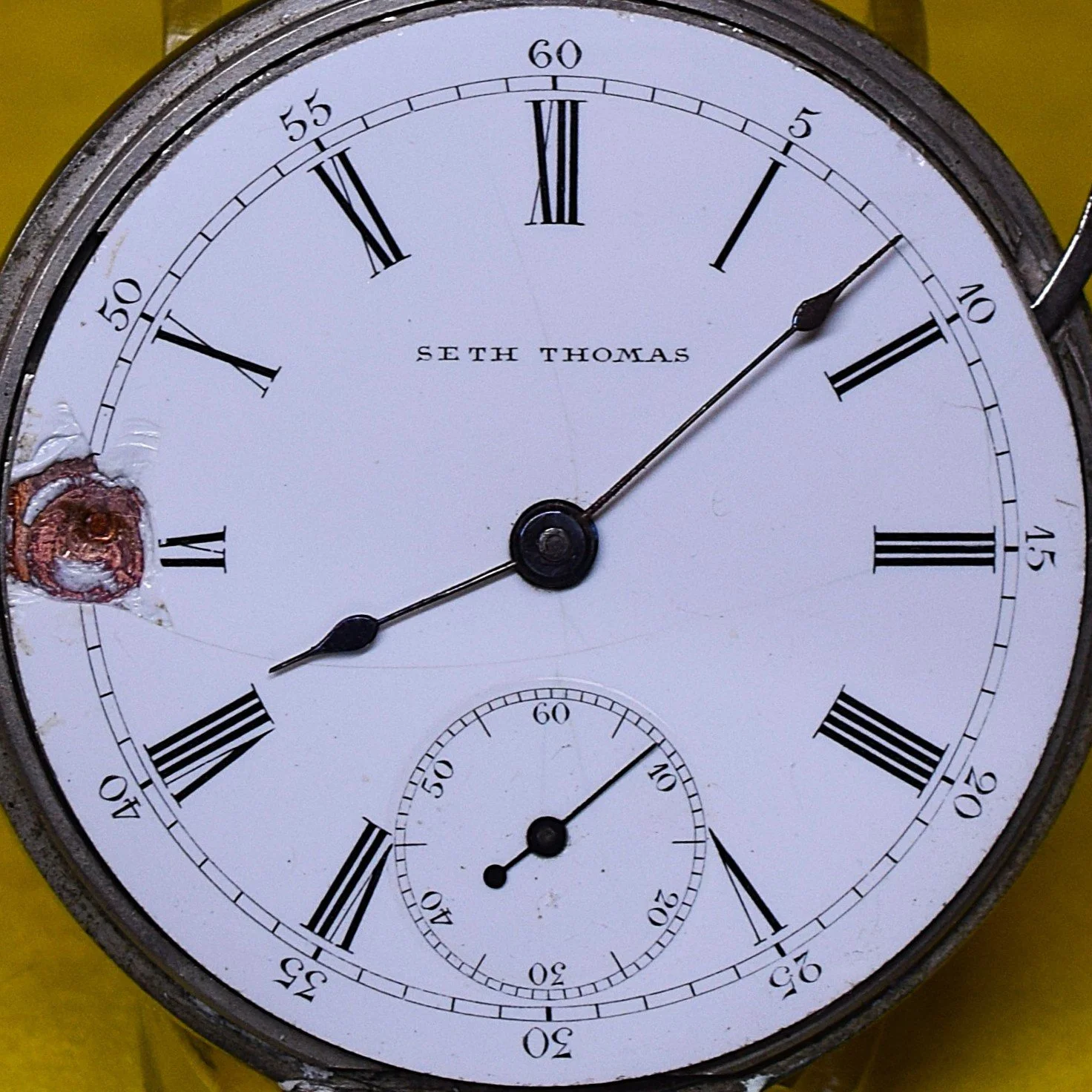
The movement presents with an 18-size Seth Thomas #1216 Roman dial with a ring minute track and black five-minute marginals, fitted with Seth Thomas #1281 blued spade hands 18-size. [1.h]
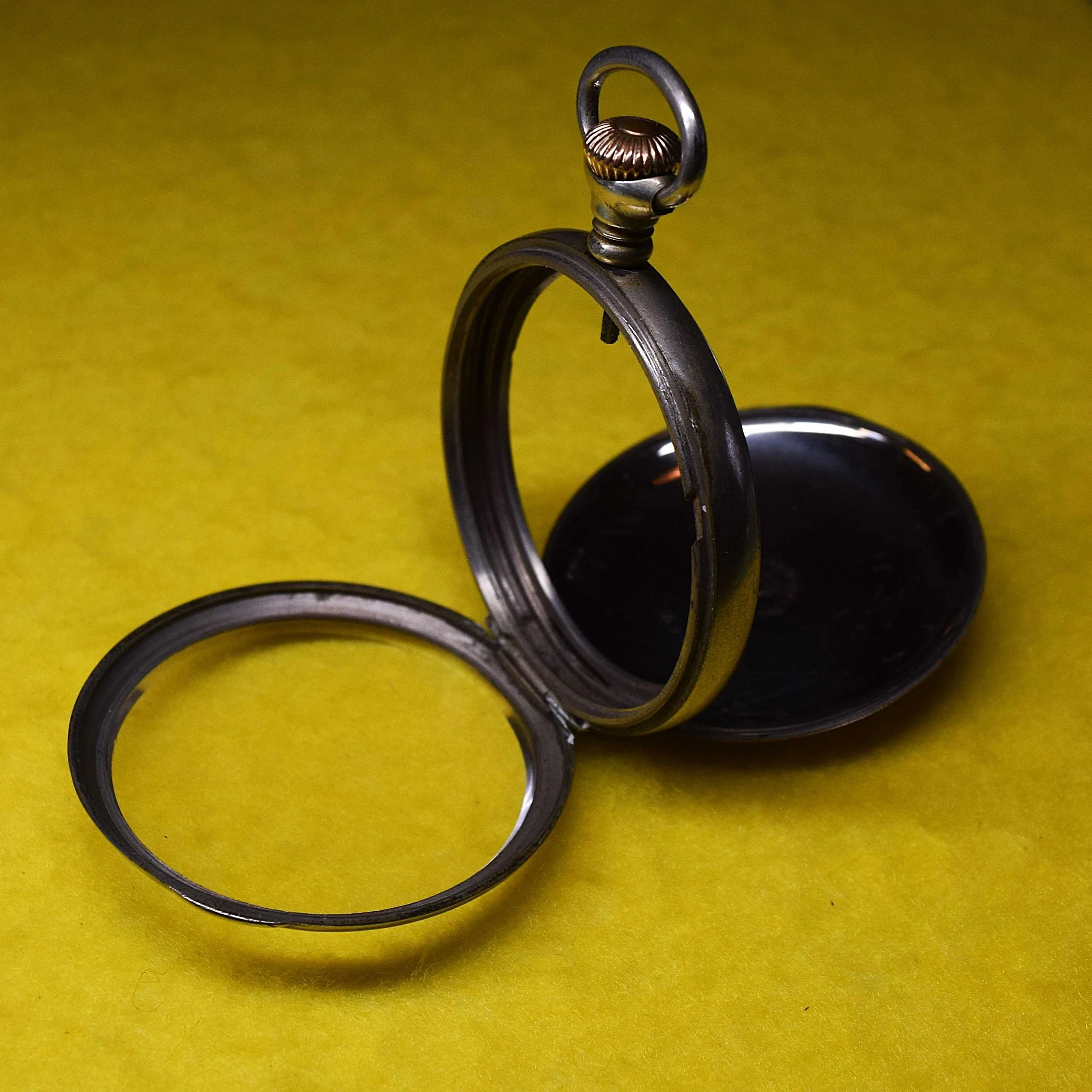
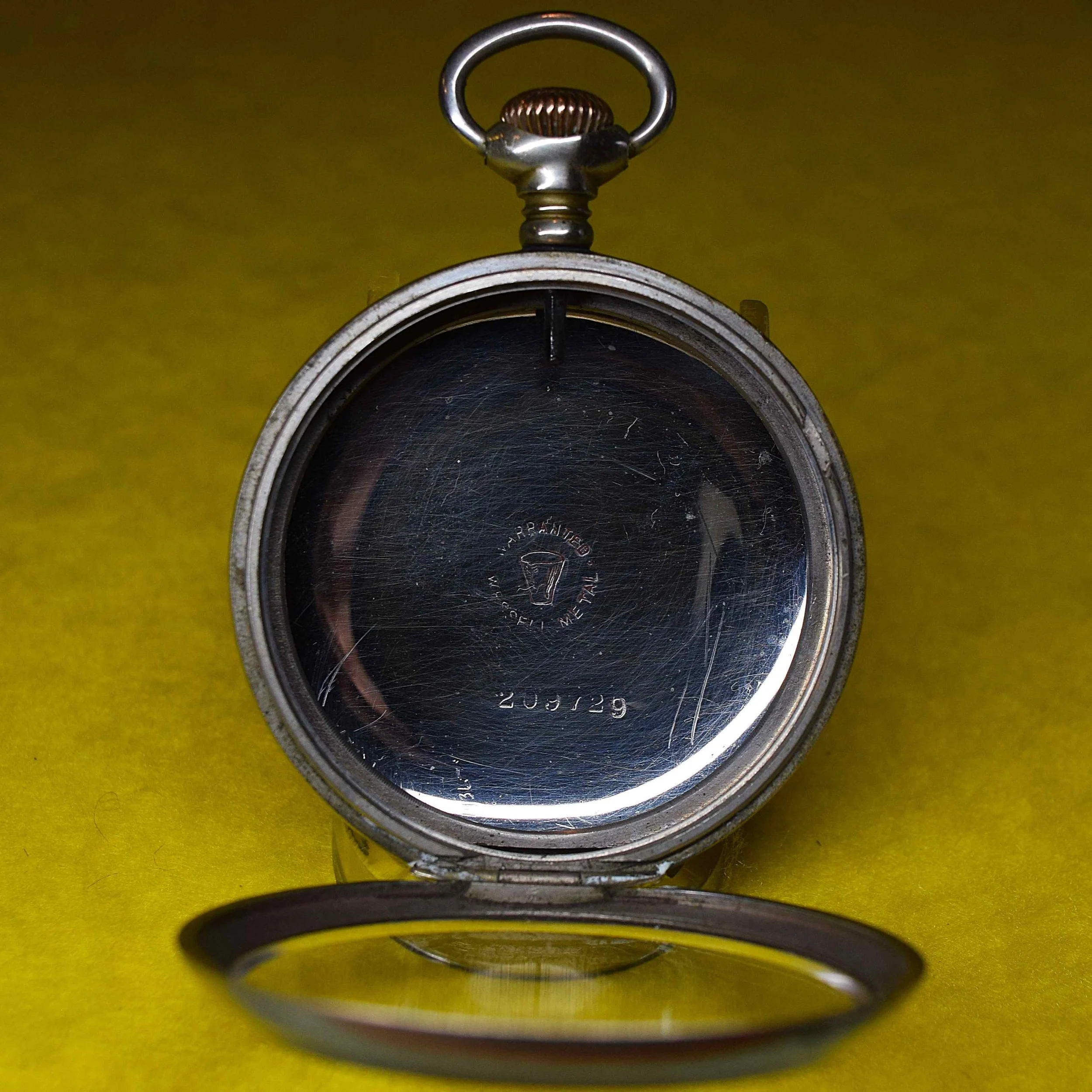
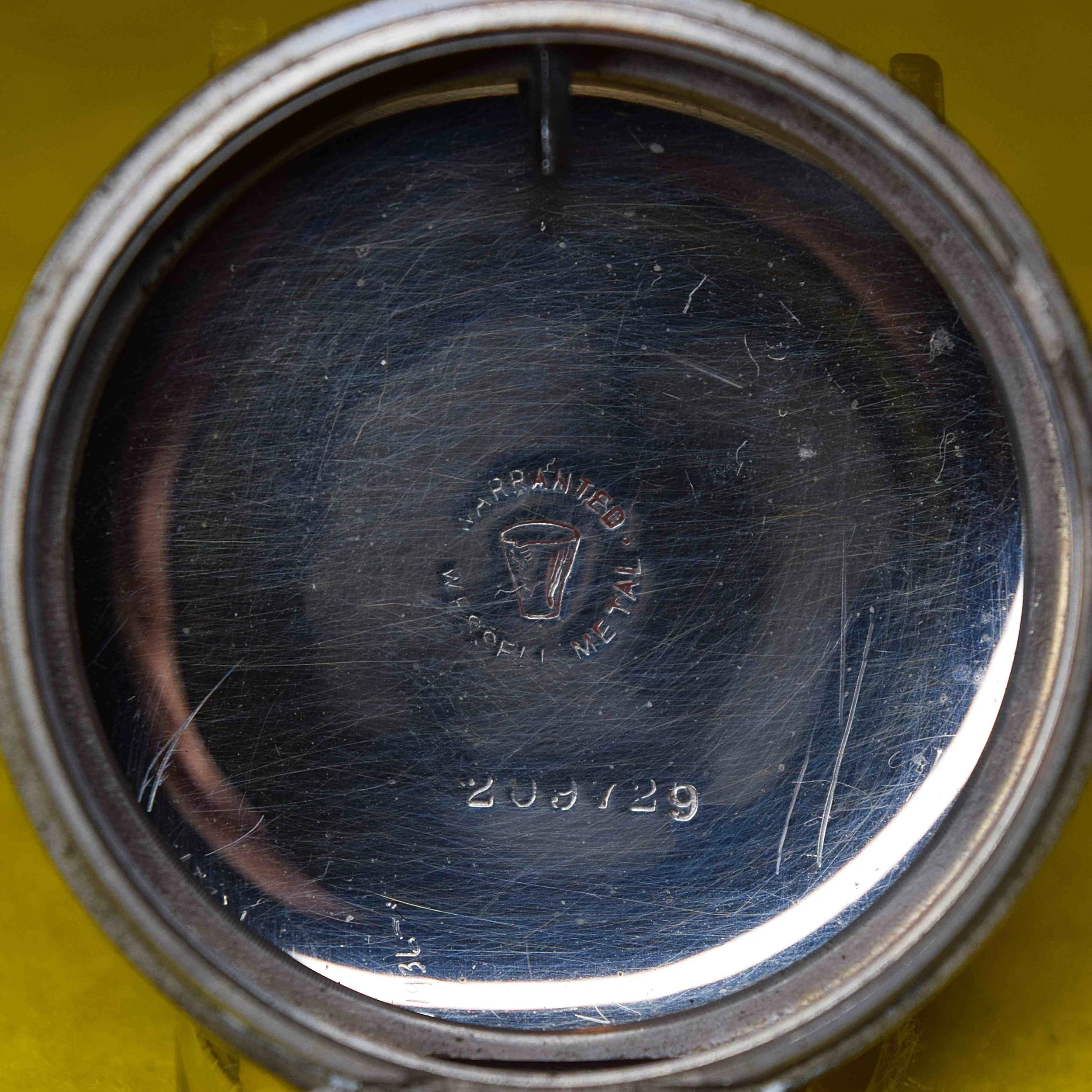
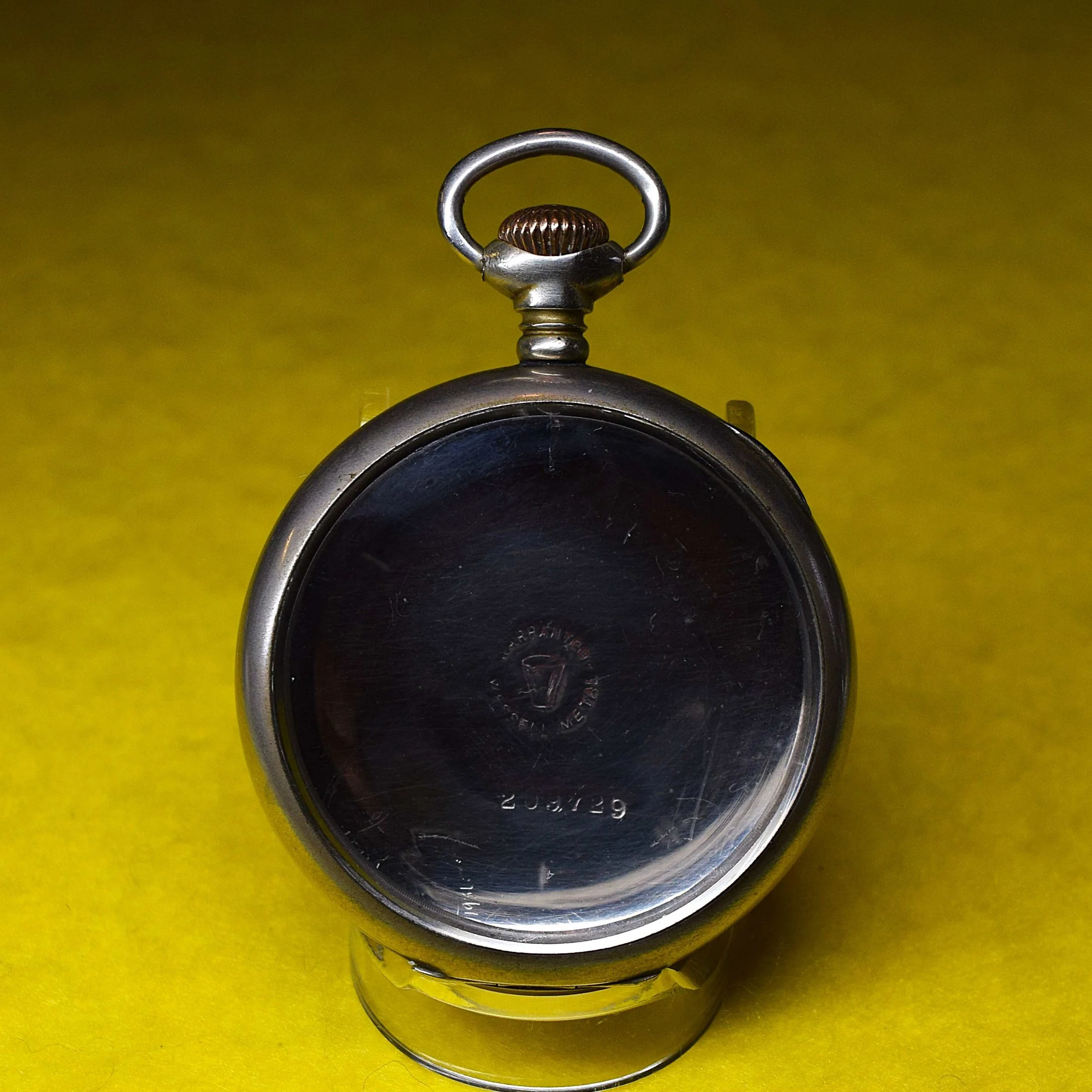
The movement is cased in an 18-size open-face Wessell Metal (silver plated) pocket watch case with hinged back and bezel, serial number 209729. This appears to be the original case for the movement.
A single numeral “1” has been documented in three canonical control locations:
Internal factory numbers:
Back of the top plate between the plates, visible between the 35 and 40-minute position.
Underside of the balance bridge (the usual “last-five” spot).
Underside rim of the balance wheel (scribed).
On Old Eagle Model 6 and Model 7, the last-five digits were stamped beside the banking pins; where this Model 8 shows a numeral “1” in that same legacy location.
Later Model 8s moved the last-five digits stamp under the 3rd-wheel pivot
Most economical identification:
The Model 8 serial block begins at 700001.
With internal control “00001” (placeholders omitted “1”) and no conflicting marks, the simplest, evidence-conserving reading is that this movement is the first in the Model 8 block: 700001.
Winding-Bridge Construction as a Dating Tool
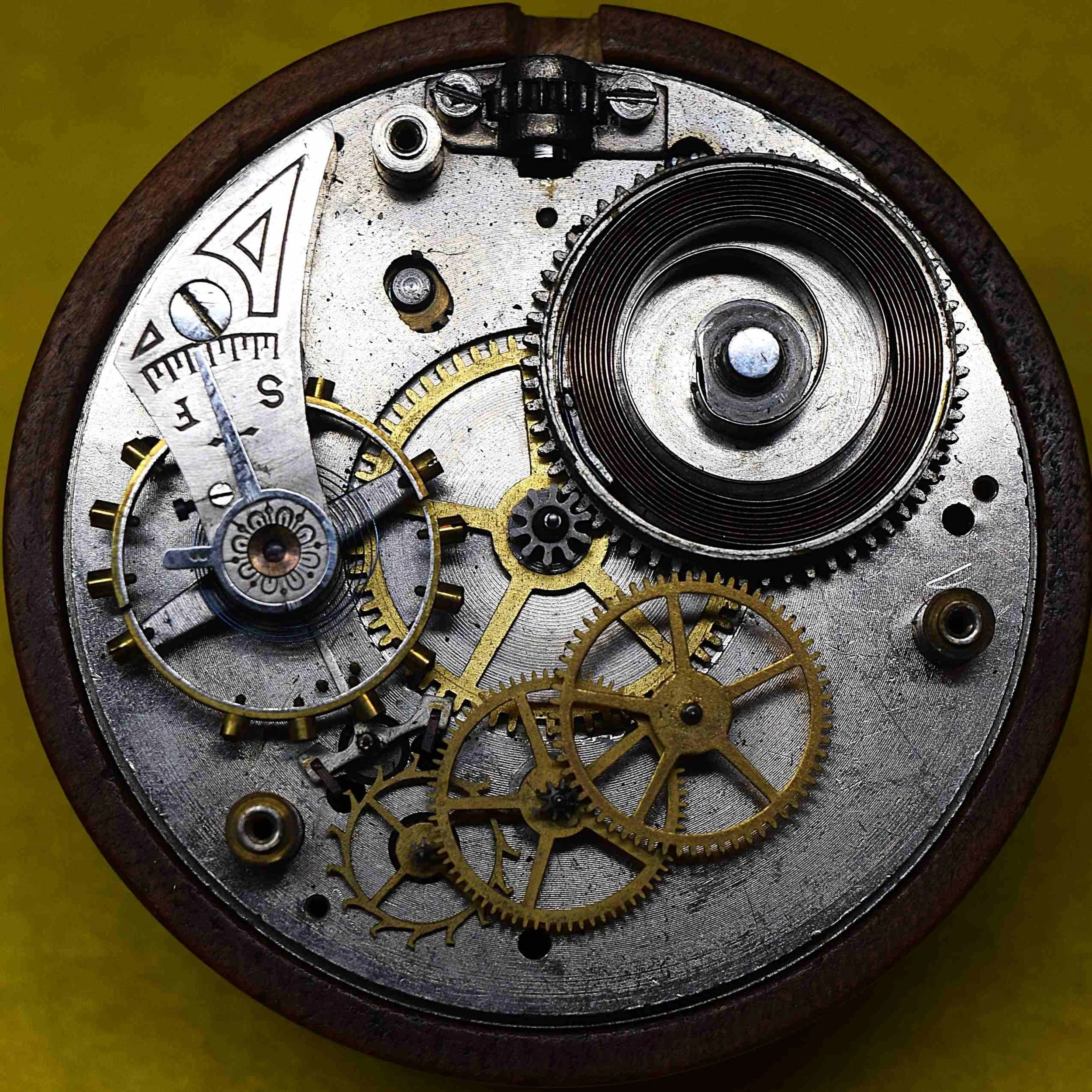
The winding-bridge on this movement is the clamp type, identical in structure to the ones used in Model 6, comparison example serial 597683 in this collection.
Seth Thomas shifted to a solid block winding bridge beginning somewhere between serial numbers 715597 and 731396.Movement Markings Are Consistent with Model 8 Style 1
There were three styles of standard movement markings used on Seth Thomas Model 8 pocket watches.
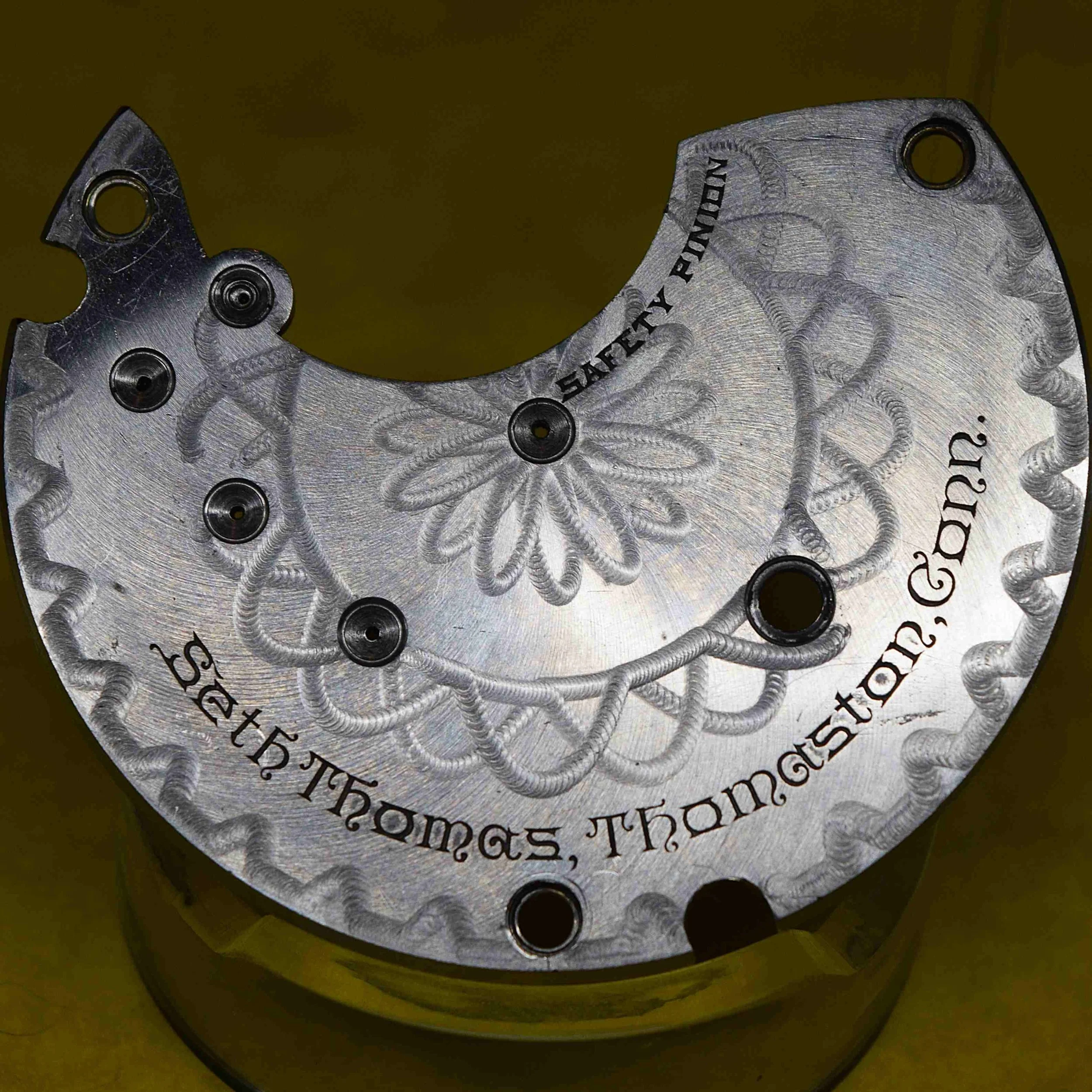
The standard movement markings on the open-face Model 8 movements started out exactly where open-face Model 6 left off, with the signature “Seth Thomas Thomaston, Conn.” inscribed around the lower 180 degrees of the perimeter. The signature presents in some variation of an Old English Text font. The movement serial number is located to the left of center below the cutout for the balance wheel and “SAFETY PINION” is inscribed to the right of center below the cutout in a Serif Caps font. Serial number 783931 is the highest serial number utilizing this marking format for which photographic documentation is available on the Pocket Watch Database. Aside from this movement not having a serial number located to the left of center below the cutout for the balance wheel, or anywhere else, the movement markings on this movement are consistent with Model 8 Style 1.
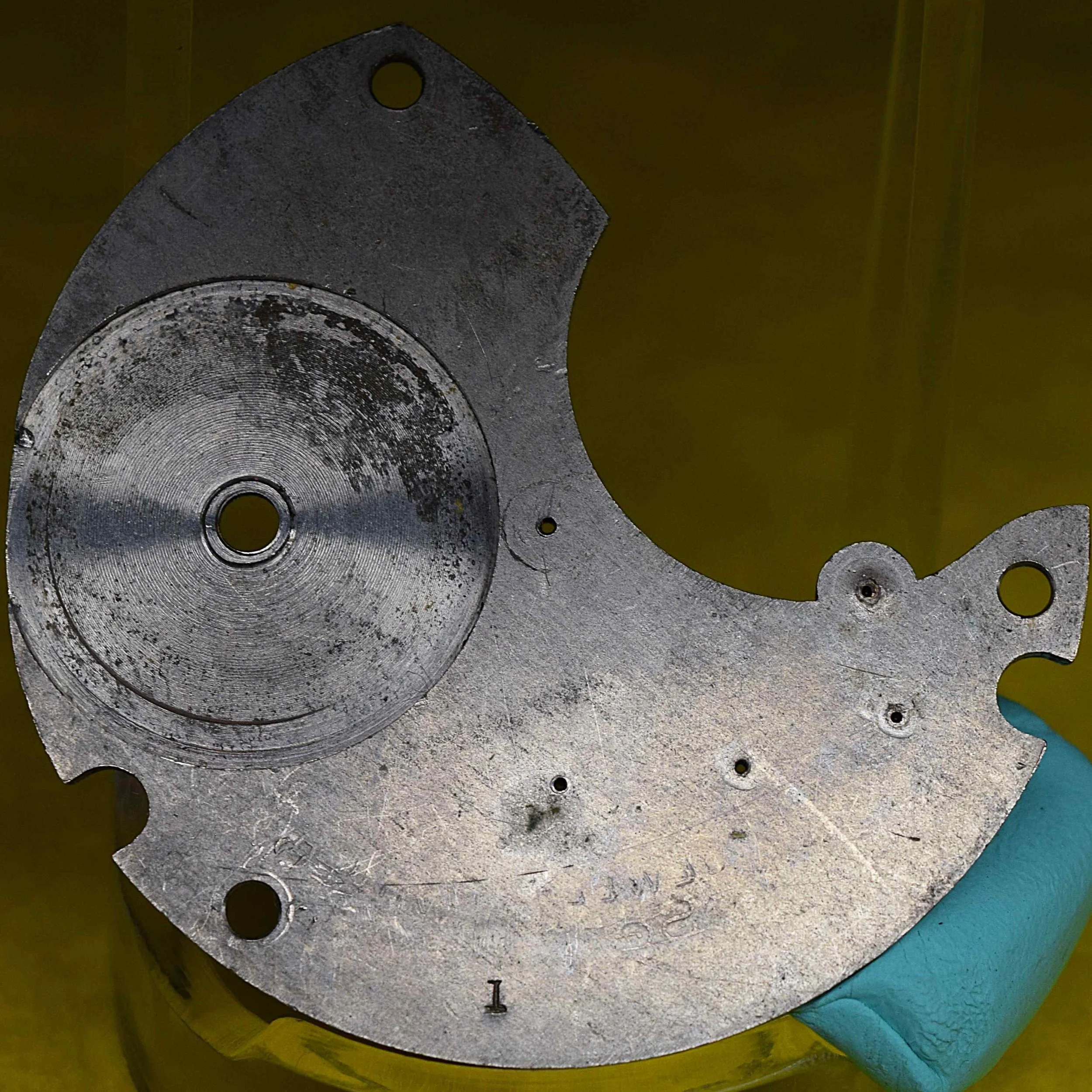
Top Plate Reverse Surface – Observed Engraving Residuals
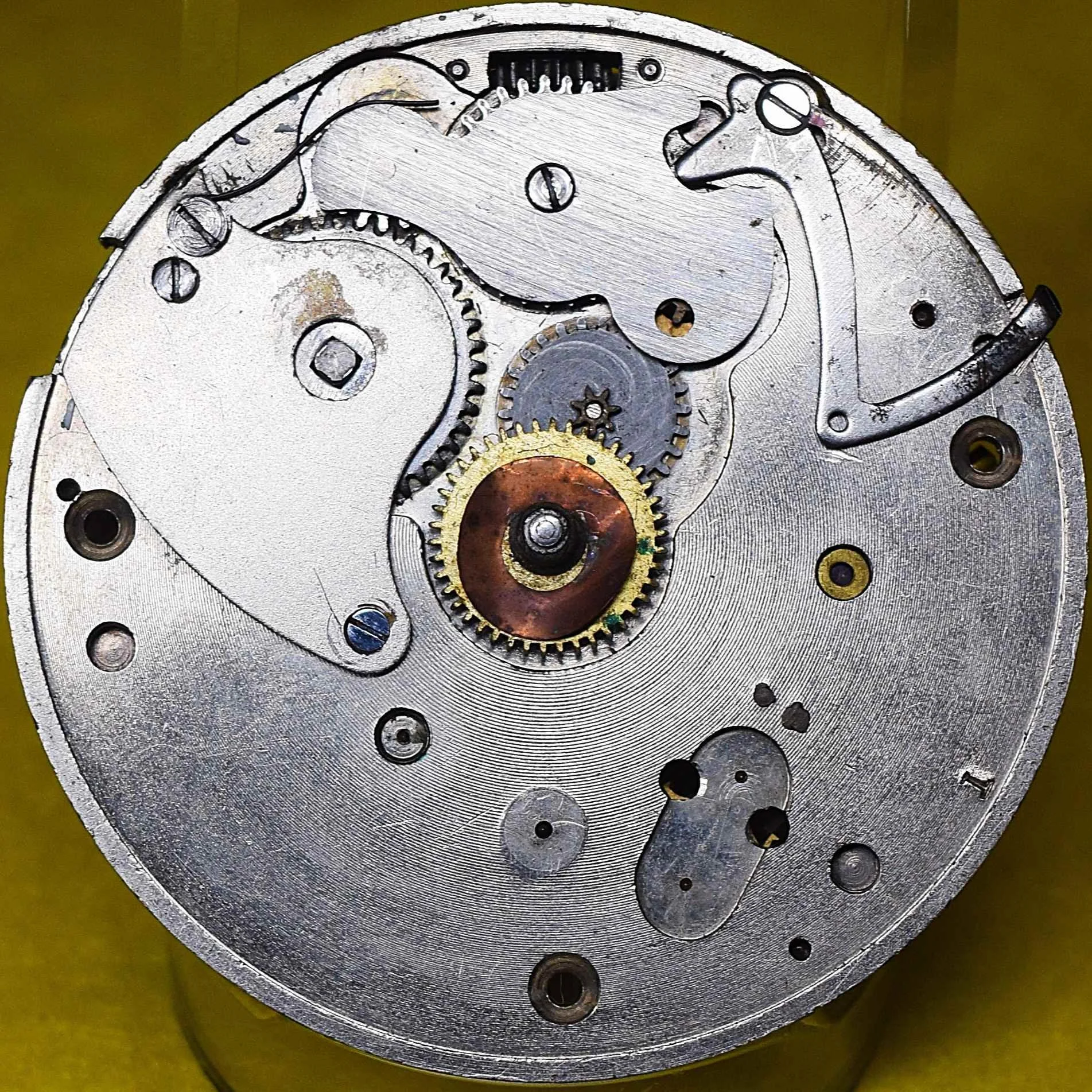
This image documents the reverse surface of the top plate removed from the unidentified early Seth Thomas Model 8 movement. The photograph was taken under raking illumination to reveal subsurface relief features.
The most notable anomaly is a faint, reversed impression of text corresponding to the front-side engravings (“Seth Thomas, Thomaston, Conn.” and the floral damaskeening pattern). These reverse impressions are characteristic of deeply cut, die-engraved plates and confirm that the top surface was engraved and damaskeened prior to final finishing.
More significantly, below the mainspring recess and slightly to the right of the plate’s center, there is a ghost marking consistent with a partially effaced “JEWELS” inscription. This marking does not appear on the front face of the plate and is not part of any known Model 8 production engraving pattern. The presence of this residual marking suggests that the plate may have been initially engraved using pre-standardized master dies that included jewel-count text, later polished away during rework or early refinement.
Taken together, the absence of a serial number on the top plate, the early clamp-type winding bridge, and the presence of residual engraving traces support the interpretation that this movement originates at or near the beginning of Model 8 production.
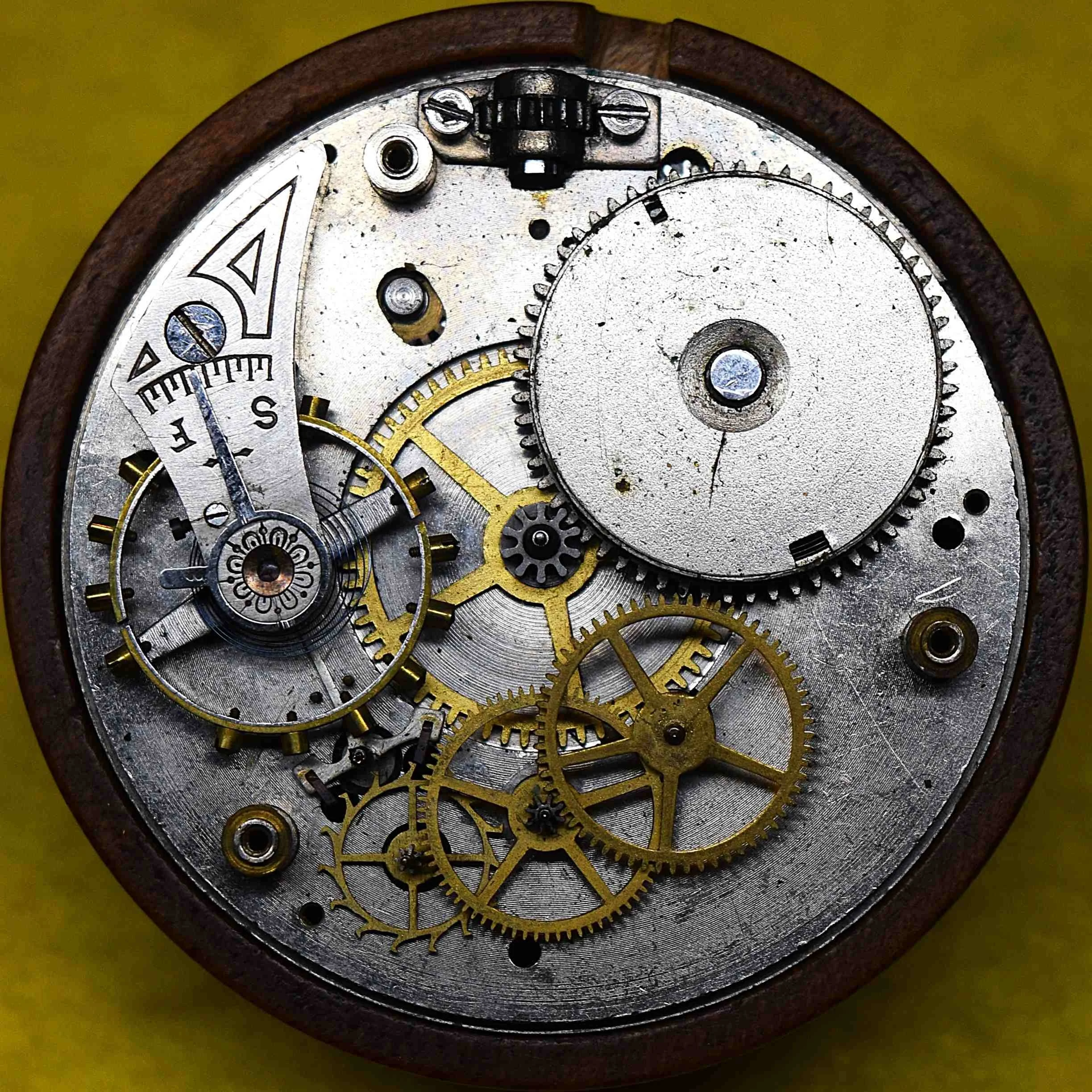
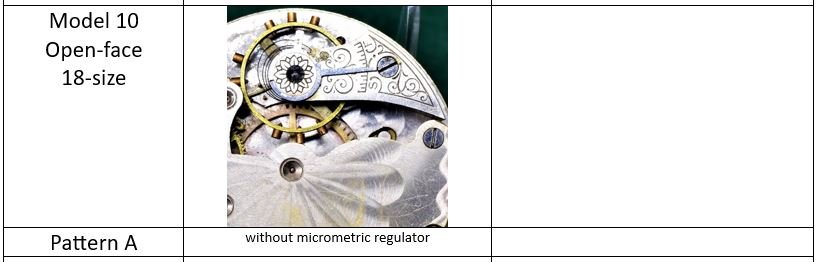
18-size Seth Thomas open-face Model 10 has one distinct decorative balance bridge engraving pattern.

A spiral vine pattern, and a butterfly pattern, with Lotus Blossom; sharp pointed wing tip.
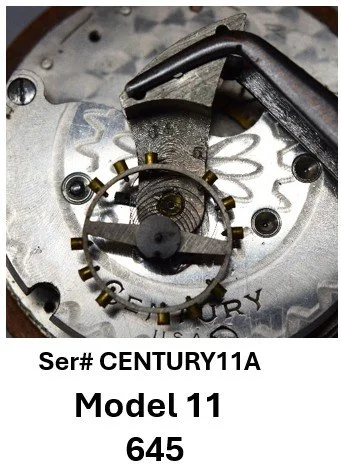
18-size Seth Thomas open-face Model 11 has one distinct decorative balance bridge engraving pattern.

A spiral vine pattern, and a butterfly pattern, with Lotus Blossom; sharp pointed wing tip.
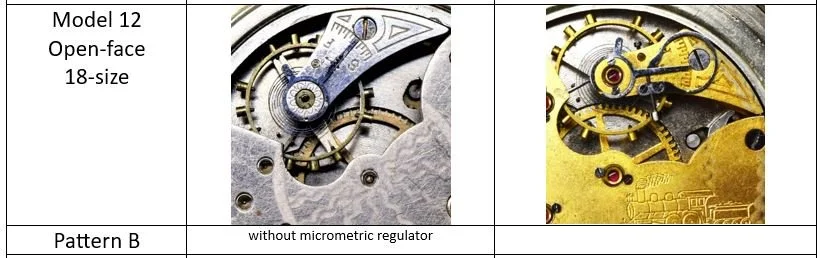
18-size Seth Thomas open-face Model 12 has two distinct decorative balance bridge engraving patterns.

A spiral vine pattern

A geometric pattern
18-size Seth Thomas hunting Model 13 has one distinct decorative balance bridge engraving pattern.

A geometric pattern
FAT Numbers
Factory Assigned Tracking Numbers
for Century Grade Movement Components
Sample Distribution by Model and Private Label (N = 71)
Model 10 Model 11 Model 12 Model 13 Totals
Athabasca = 0 Athabasca = 0 Athabasca = 3 Athabasca = 0 3
Century USA = 5 Century USA = 8 Century USA = 10 Century USA = 12 35
Colonial USA = 0 Colonial USA = 0 Colonial USA = 1 Colonial USA = 0 1
Corona Watch Co. = 2 Corona Watch Co. = 0 Corona Watch Co. = 6 Corona Watch Co. = 4 12
Edgemere = 0 Edgemere = 0 Edgemere = 2 Edgemere = 3 5
Pan-American = 3 Pan-American = 4 Pan-American = 0 Pan-American = 0 7
Republic USA = 0 Republic USA = 0 Republic USA = 2 Republic USA = 1 3
Rex = 0 Rex = 0 Rex = 0 Rex = 1 1
Trainmens Special = 0 Trainmens Special = 0 Trainmens Special = 3 Trainmens Special = 1 4
Totals 10 12 27 22 71
View individual private label entries: Athabasca, Century USA, Corona Watch Co, Edgemere, Pan-American, Republic USA, Rex, Trainmens Special.
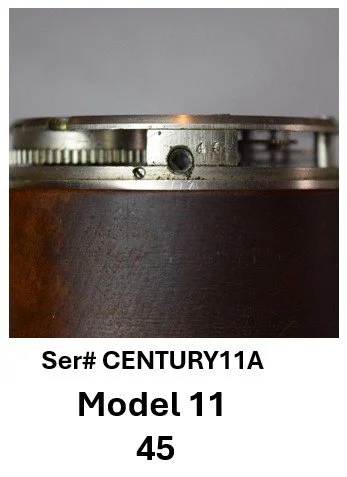
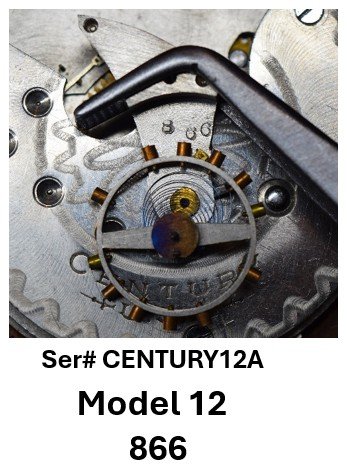
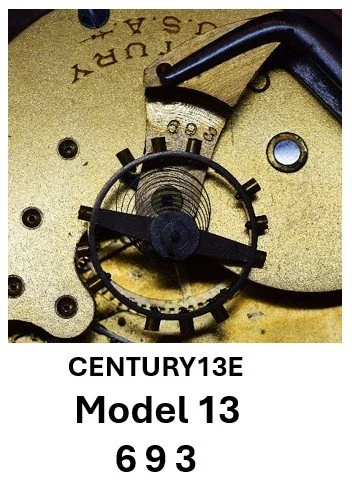
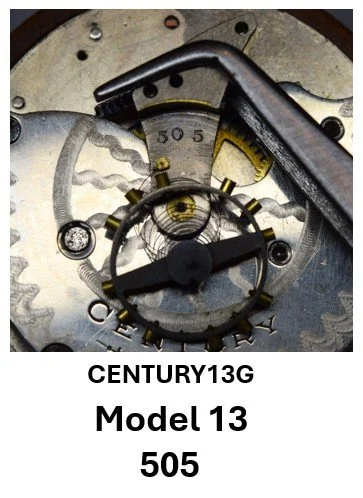
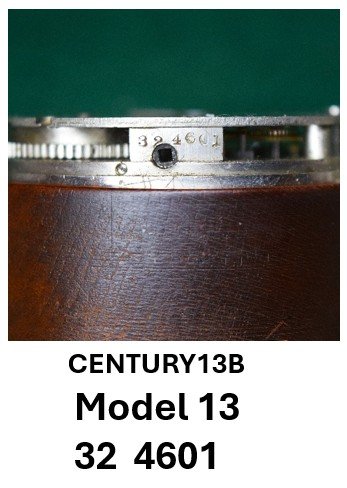
These non-numbered 18-size Century-grade pocket watch movements each carry a Factory Assigned Tracking Number (FAT Number) stamped on two to four of the following locations, the pillar plate, back of the top plate, underside of the balance bridge, and block style winding bridge.
Data shows that the FAT Number stamped on the pillar plate has not been omitted on any of the specimens examined. The FAT Number on the reverse side of the top plate, when present, has been exactly the same as the FAT Number shown on the pillar plate, the only exception observed to date being cases in which one of the plates appears to have been transplanted from another movement. Transplanted parts seem to be identified quite easily on the non-numbered Century grade movements using the FAT Numbers.
The FAT Numbers appearing on other parts of the movement, underside of the balance bridge and on the winding bridge, are frequently truncated showing the last three, two, or one digits of the FAT Number. The truncation of FAT Numbers across movement components mirrors established serial-number marking practices and does not, in itself, indicate a different functional purpose.
Since the pillar plate appears to be the most consistent and reliable source of the full Fat Number, the number appearing there is being observed as the FAT Number for any given movement.
Because each movement can be characterized by its factory production model, retail private label name, and factory assigned tracking number (FAT Number), these non-numbered movements possess sufficient structural identifiers to permit systematic documentation and the development of derived identifiers. The FAT Number Derived Identifier is comprised of the physical movement’s two-digit model number, the private label name, and the FAT Number found on the pillar plate of the movement.
It has been decided that tracking the number of dial feet screws tapped into the outer perimeter of the pillar plate is relevant for tracking the possible temporal aspect of data as we know that early Seth Thomas movements had only two dial feet screws where movements produced later were equipped with three dial feet screws to provide greater stability for the dial.
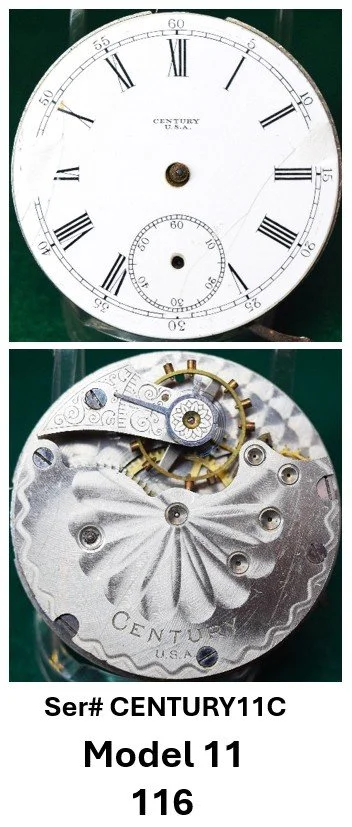
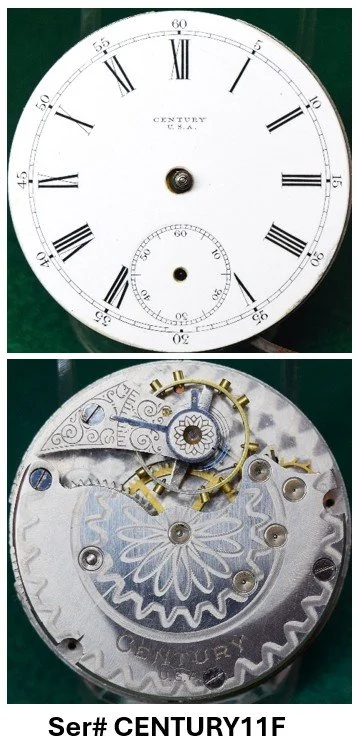
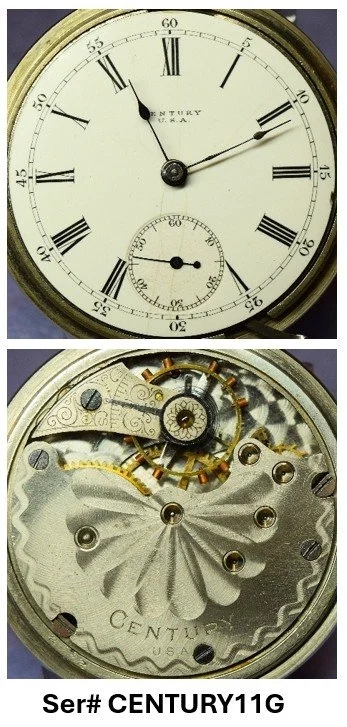
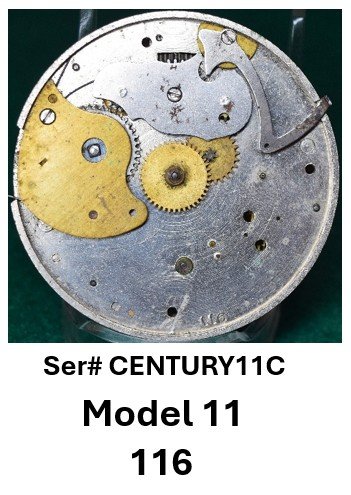
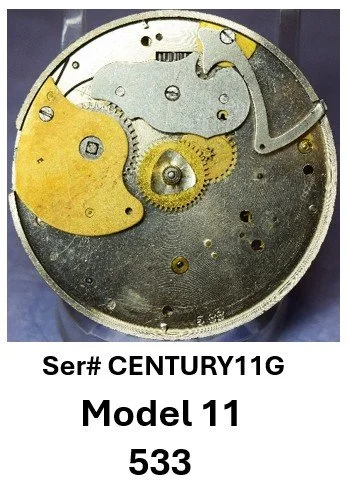
The “Ser#’s” displayed in this section’s images were assigned upon acquisition for internal collection tracking purposes and do not represent factory-applied serial numbers. They were also used when uploading the movements’ data to the Pocket Watch Database.
This study examines Factory Assigned Tracking Numbers (FAT#s) as internal identifiers used across non-numbered Century-grade movements. The complete research dataset and full analysis are documented here Factory Assigned Tracking Numbers for Non-Numbered Century-Grade Movements.
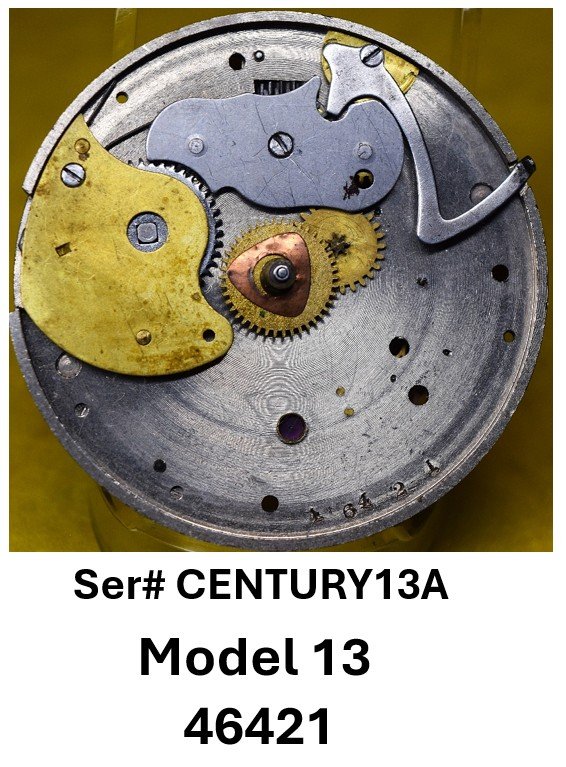
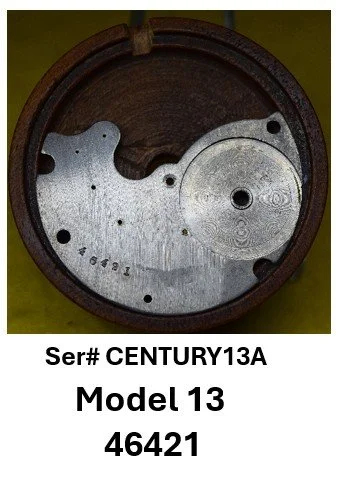
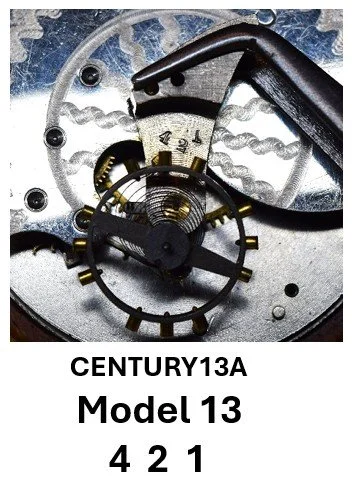
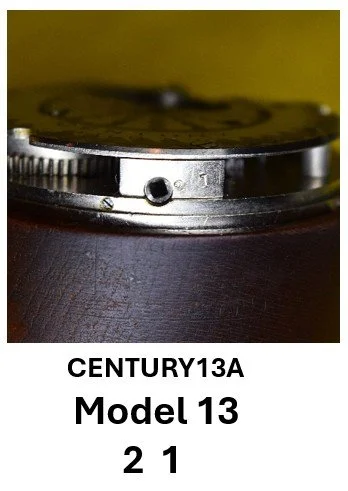

For the purpose of examining individual movement specimens, this reference illustrates the dial foot screw (DFS) location patterns used throughout the documentation images and provides a standardized reference for recording DFS count during specimen documentation. A dial foot screw (DFS) is located on outer perimeter of the pillar plate distal to the penetration for each dial foot.
No surviving factory documentation describing these markings has yet been identified; all conclusions presented here are based on physical examination and comparative analysis.
In the Seth Thomas Fan collection, FAT numbers observed on Model 10 movements range from 240 to 922. FAT numbers observed on Model 11 movements range from 116 to 34,301. FAT numbers observed on Model 12 movements range from 340 to 67,010. FAT numbers observed on Model 13 movements range from 182 to 324,601. Current evidence suggests FAT numbers may be unique within a model, but the factory’s full assignment logic is not yet known. These stamped numbers are illustrated and cataloged in the sections below.
The Complete Dataset - Private Label Progression, The Complete Dataset - Standard Sort and The Complete Dataset - Manufacturing Practices Sort can each be viewed in a separate tab.
Practical Use of FAT# Derived Identifiers
Independent of any factory-intent interpretation, FAT# Derived Identifiers provide a reliable means of distinguishing otherwise indistinguishable non-numbered Century movements that are visually similar in engraving, dial, and private-label configuration, making positive re-identification difficult once movements are removed from cases or long-term storage. FAT# Derived Identifiers are not serial numbers; but in practice, they function as serial-number equivalents to facilitate collection management and documentation for collectors working with these non-serialized movements. Naming is what turns objects into data points. The FAT# Derived Identifier is comprised of a two-digit model number, the private label name, and the FAT Number found on the pillar plate of the physical movement.
FAT Numbers possibly hold potential to assist horologists in the development of a deeper understanding of the production process and chronology that took place at the Seth Thomas factory while non-numbered Century grade movements were being produced.
The first test of the usefulness of FAT Numbers will be the development of a FAT# Derived Identifier for each non-numbered Century grade movement in the Seth Thomas Fan Collection. This part of the project holds the potential to create viable identifiers tied to physical non-numbered movements. If successful; this means that FAT Numbers will be proven able to play a role in assigning persistent identifiers to otherwise undistinguishable horological artifacts in a large collection.
Early Observations and Initial Inferences
A possible structural transition in top-plate marking and dial-foot configuration is observable within the dataset and is discussed in detail in the Evidence Summary section at the end of the Model 13 FAT Numbers page.
The presence of lower FAT numbers on movements exhibiting later configuration traits (three dial foot screws and/or absence of a FAT number on the back of the top plate) suggests that FAT numbers should not presently be interpreted as strictly chronological indicators.
A possible structural transition is suggested in Model 12 and Model 13 movements: examples exhibiting earlier configuration traits (FAT number on the back of the top plate and/or two dial feet screws) when contrasted with examples exhibiting later configuration traits (three dial foot screws and no rear top-plate FAT stamping). The later configuration aligns with the mechanical and marking practices seen in early numbered production, where the serial number appears on the front of the top plate.
Current evidence raises the possibility that elimination of rear-top-plate FAT stamping coincided with the factory’s reorganization of marking practices during the transition to numbered movements, though the precise sequencing of these changes (whether simultaneous or staged) remains under investigation.
Present data do not support interpreting FAT numbers as a simple ordinal production sequence across all Century-grade models. Whether FAT numbers correlate to production sequencing within specific models or configuration phases remains an open question pending additional documentation.
The omission of outward-facing identifiers in documented factory shipping materials suggests that Century-grade movements were distributed within a standardized, size-and-grade-based framework that did not require individual serial numbering. The presence of FAT# markings on such movements may indicate one possible internal method of differentiation operating independently of external identification.
Seth Thomas Watch Factory Tins & Cardboard Movement Holders


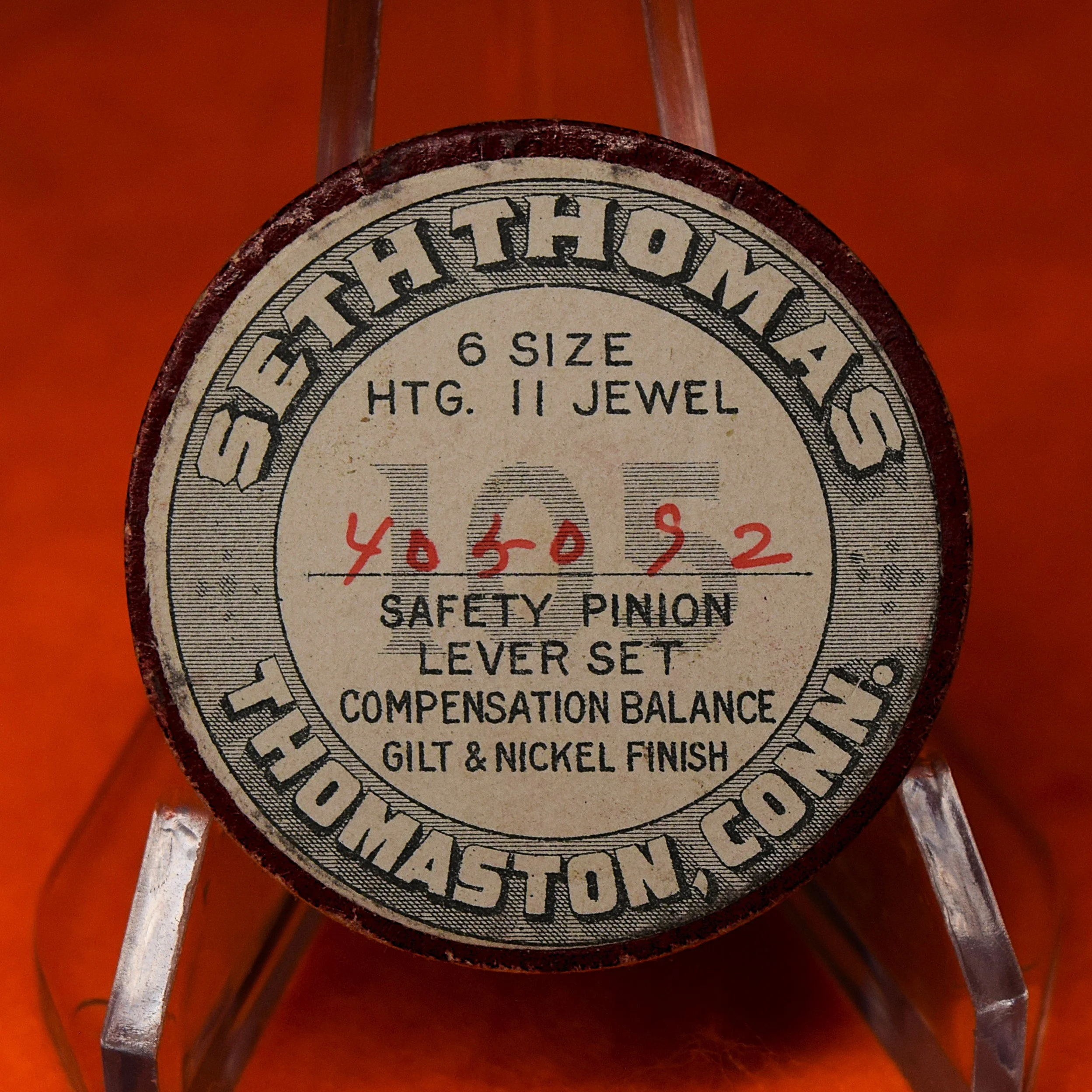
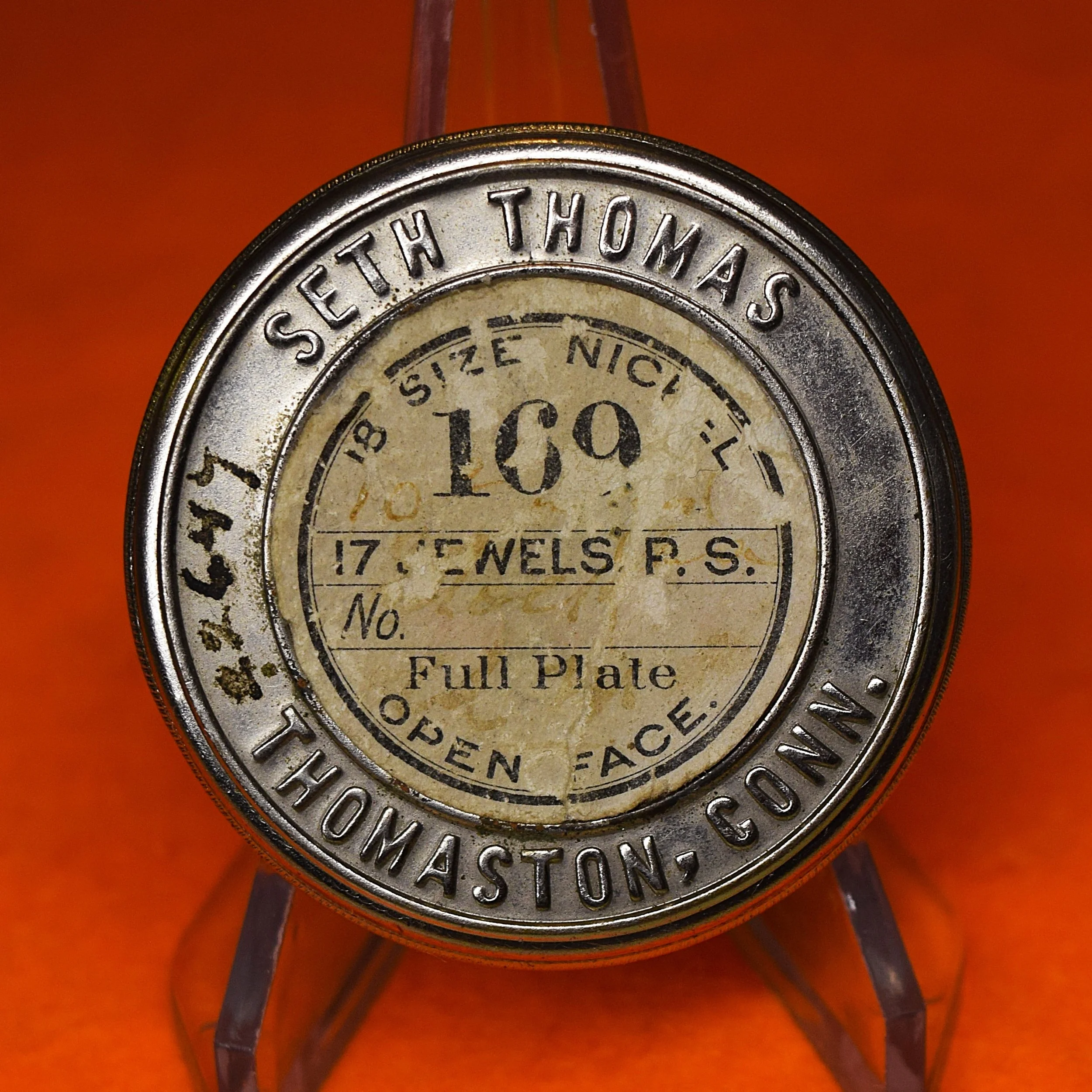
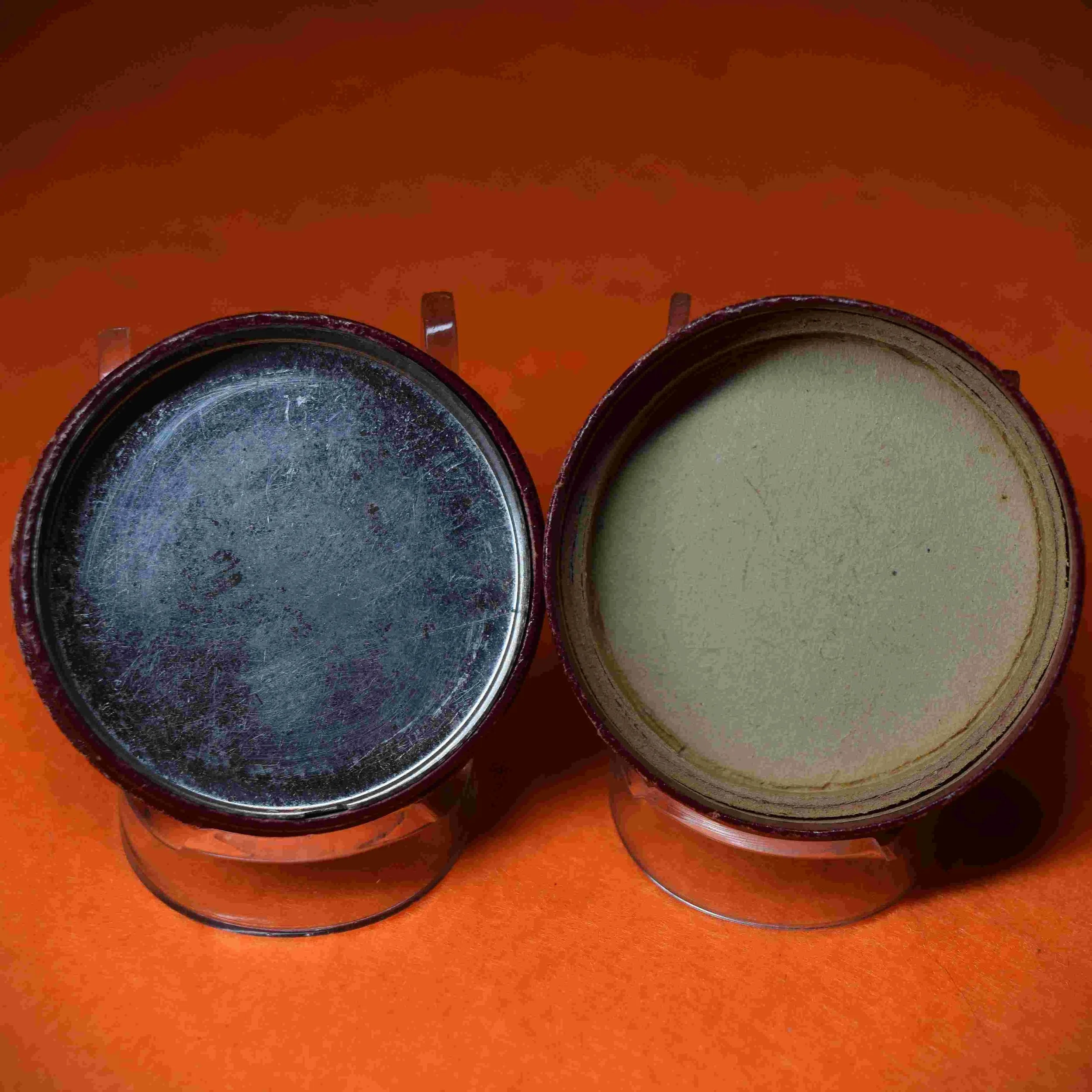
Factory Packaging and Distribution Context
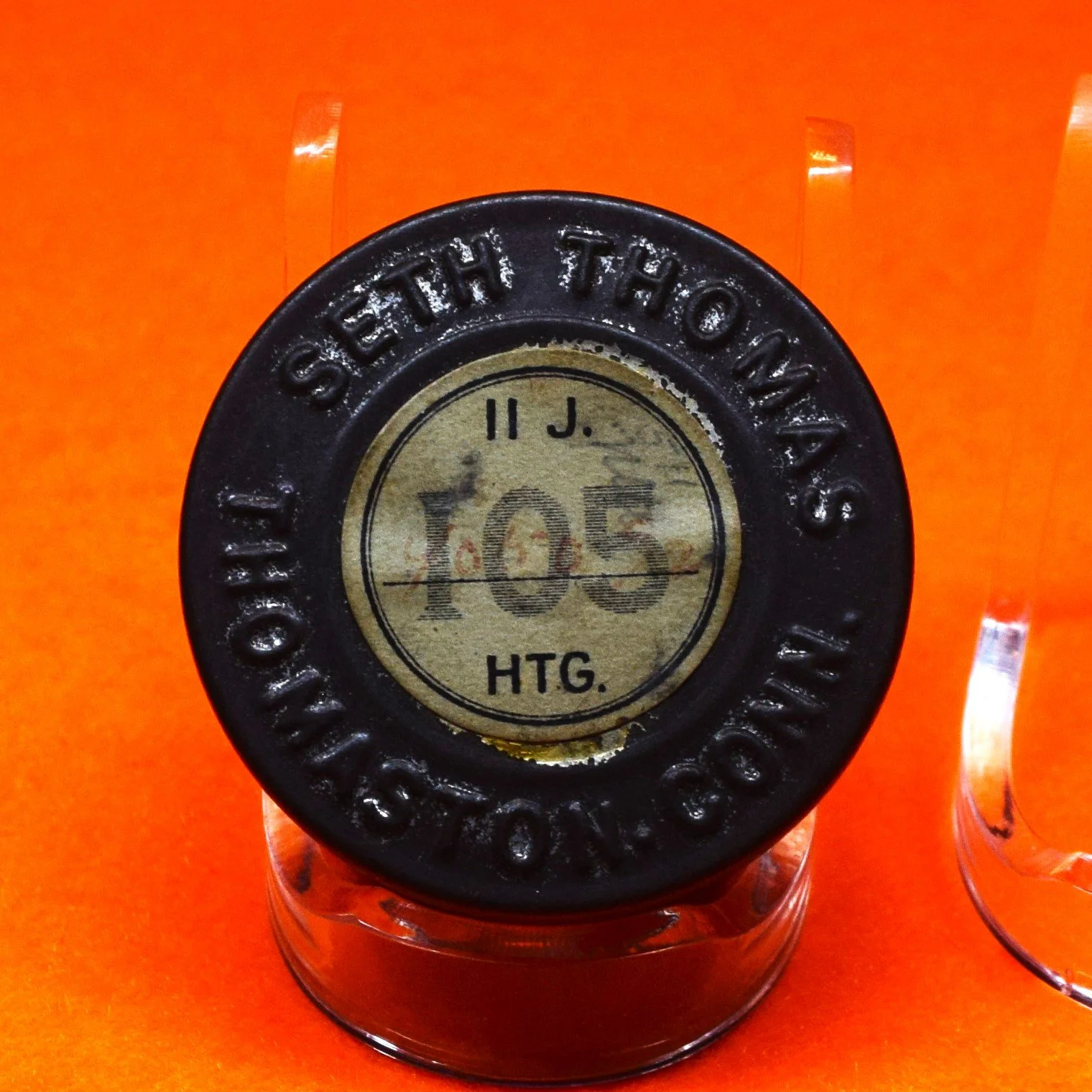
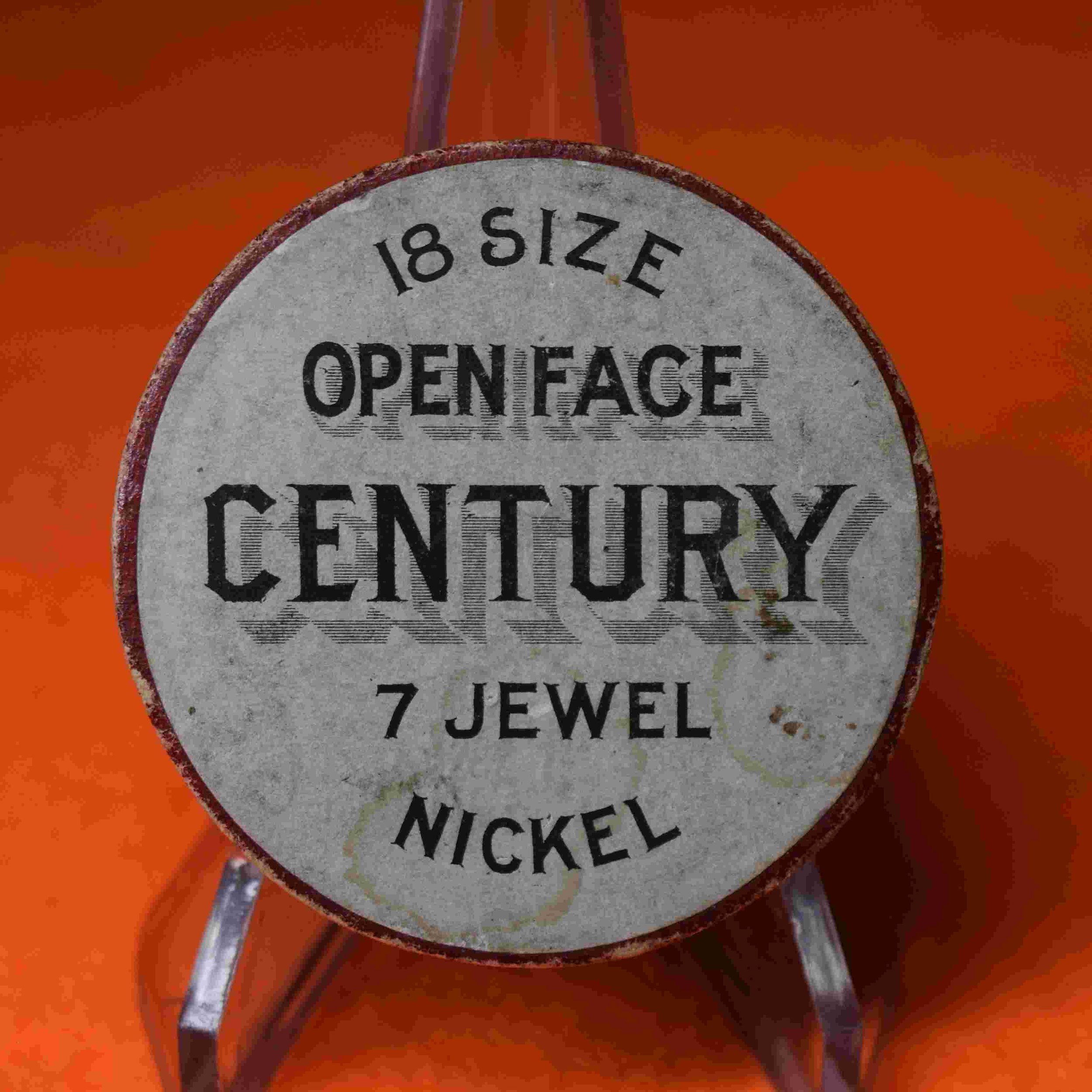
Finished Seth Thomas movements were placed into soft cardboard movement holders immediately after production to protect their finish, and these holders were then nested within hard metal tins to prevent crushing during storage and transport. The information applied to these holders typically included size, jewel count, grade, and—in many documented cases—a serial number or production identifier written or stamped in a designated field.
The open-face Century example illustrated above differs in a notable way. While it clearly identifies size (“18 Size”), configuration (“Open Face”), grade (“Century”), and jewel count (“7 Jewel”), it provides no designated space for a serial number or other unique identifier. This omission is consistent with observed examples of non-numbered Century-grade movements.
Additional factory material supports the conclusion that this omission was intentional rather than accidental. Contemporary Seth Thomas mainspring packaging and parts charts show a highly standardized system of size-based classification and distribution. Where tracking or identification was required, space was explicitly provided for it. Where it was not required, it was omitted.
While packaging materials do not directly document factory tracking systems, they provide consistent contextual support, particularly when considered alongside non-numbered movements lacking serial identifiers.
The absence of both a factory signature on the cardboard holder and a serial number on associated Century-grade movements appears to reflect an intentional distribution practice rather than an omission or oversight. By the time of Model 10–13 production, Seth Thomas had already established mature private label and identification systems. The consistent omission of outward-facing identifiers in this context suggests that Century-grade movements were distributed within a standardized, size-and-grade-based framework that did not require individual serial numbering. The presence of FAT# markings on such movements may indicate an internal method of differentiation operating independently of external identification.
This more robust holder appears to represent a variation in packaging format rather than a departure from the standardized size- and grade-based distribution system observed across other examples.
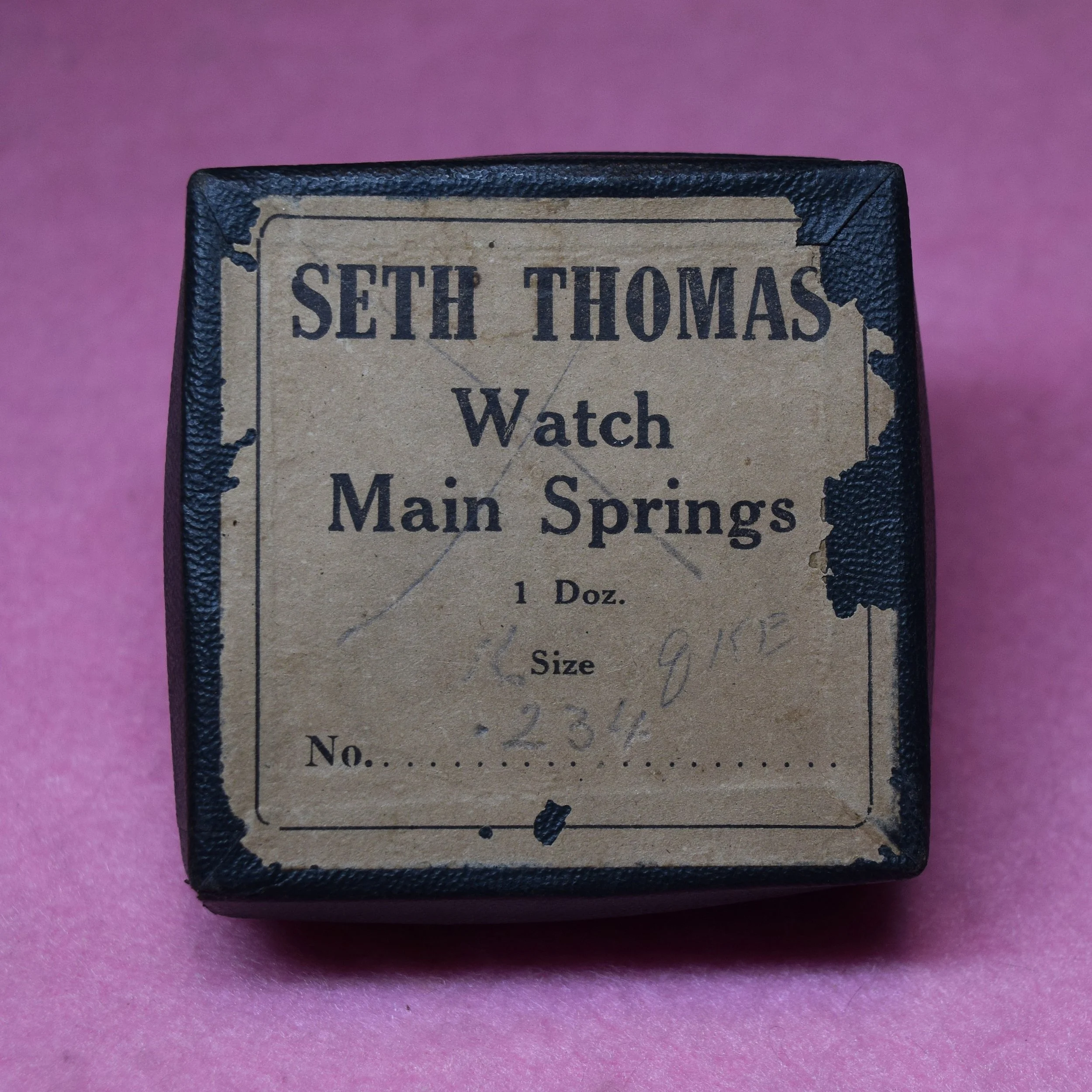
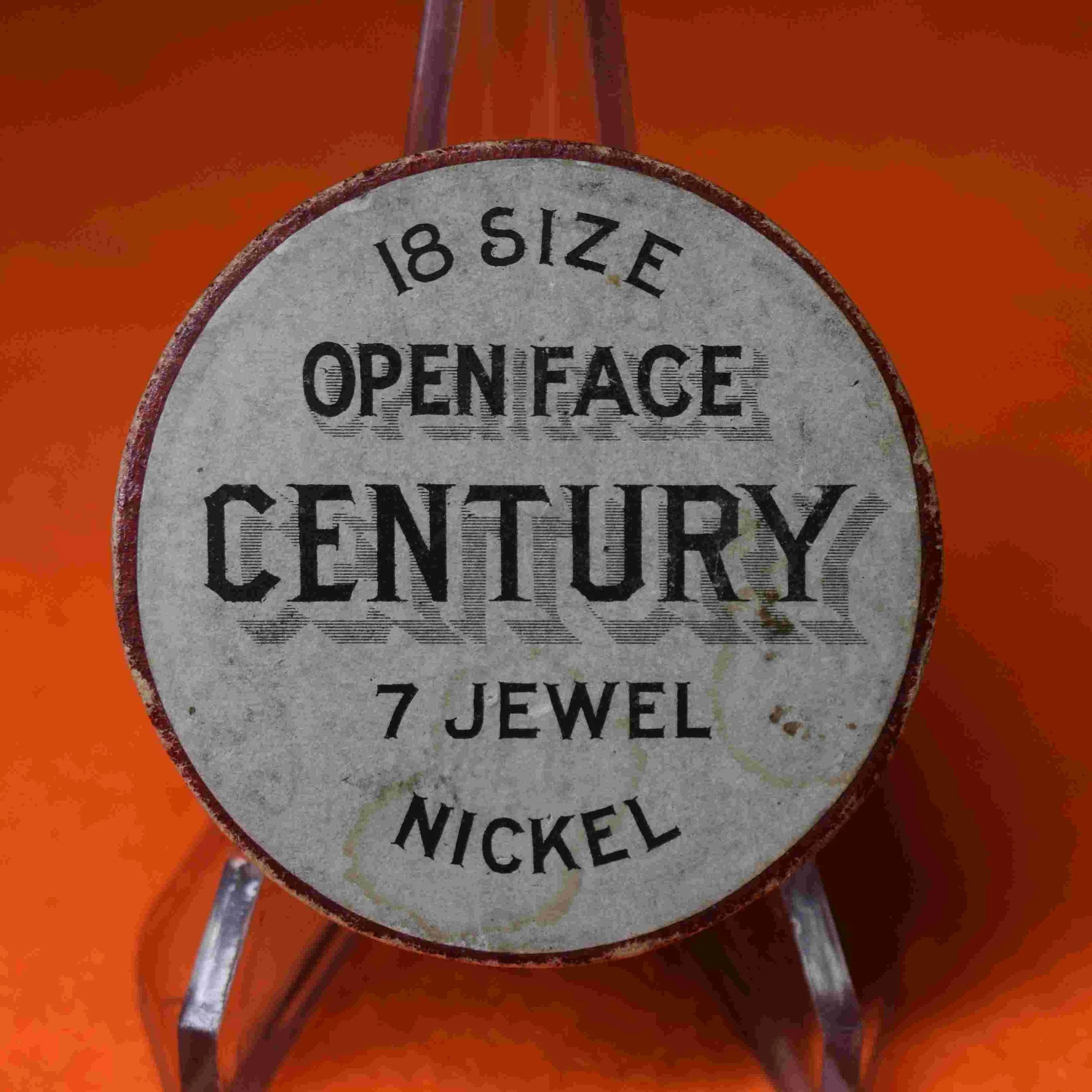
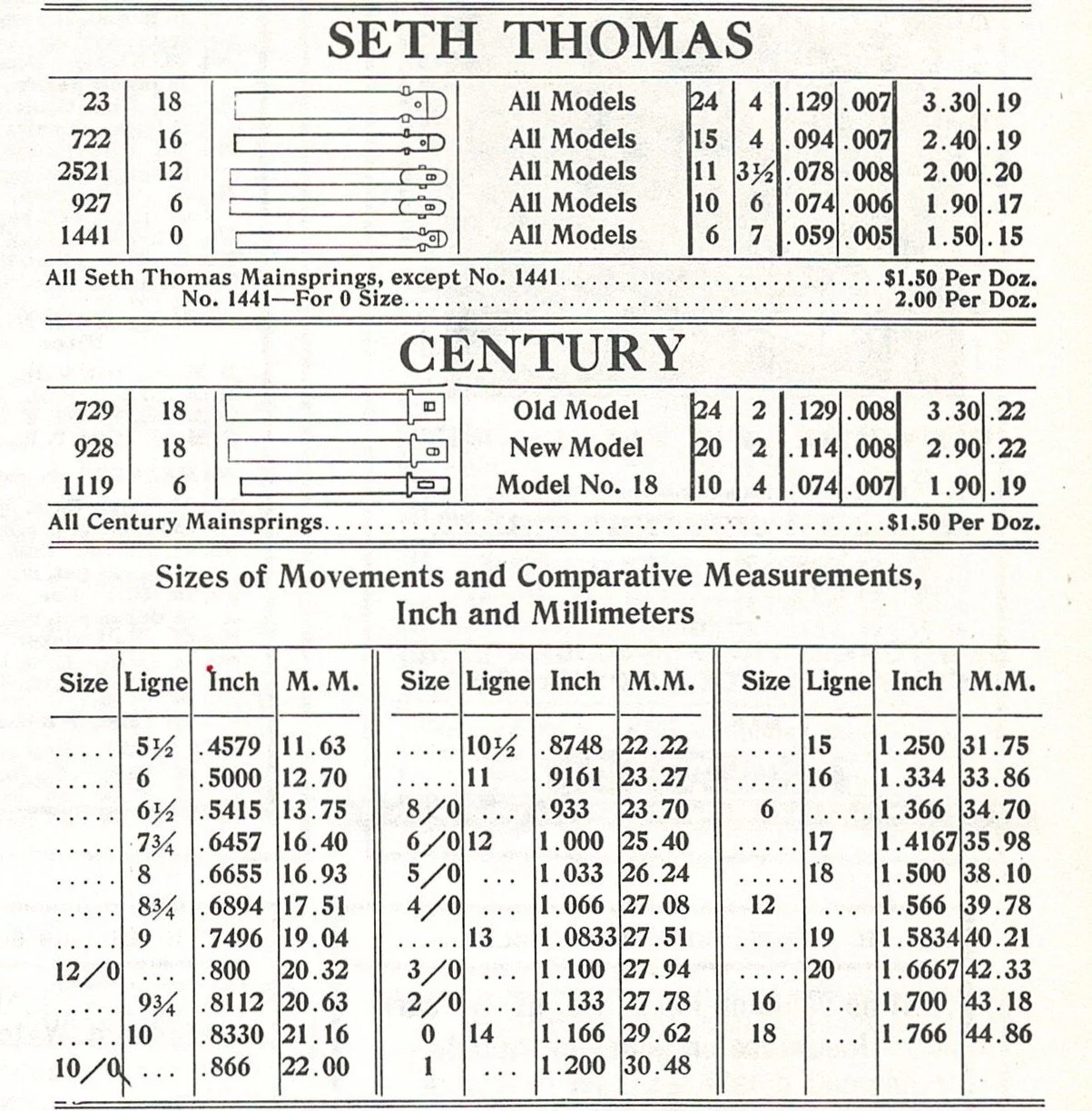
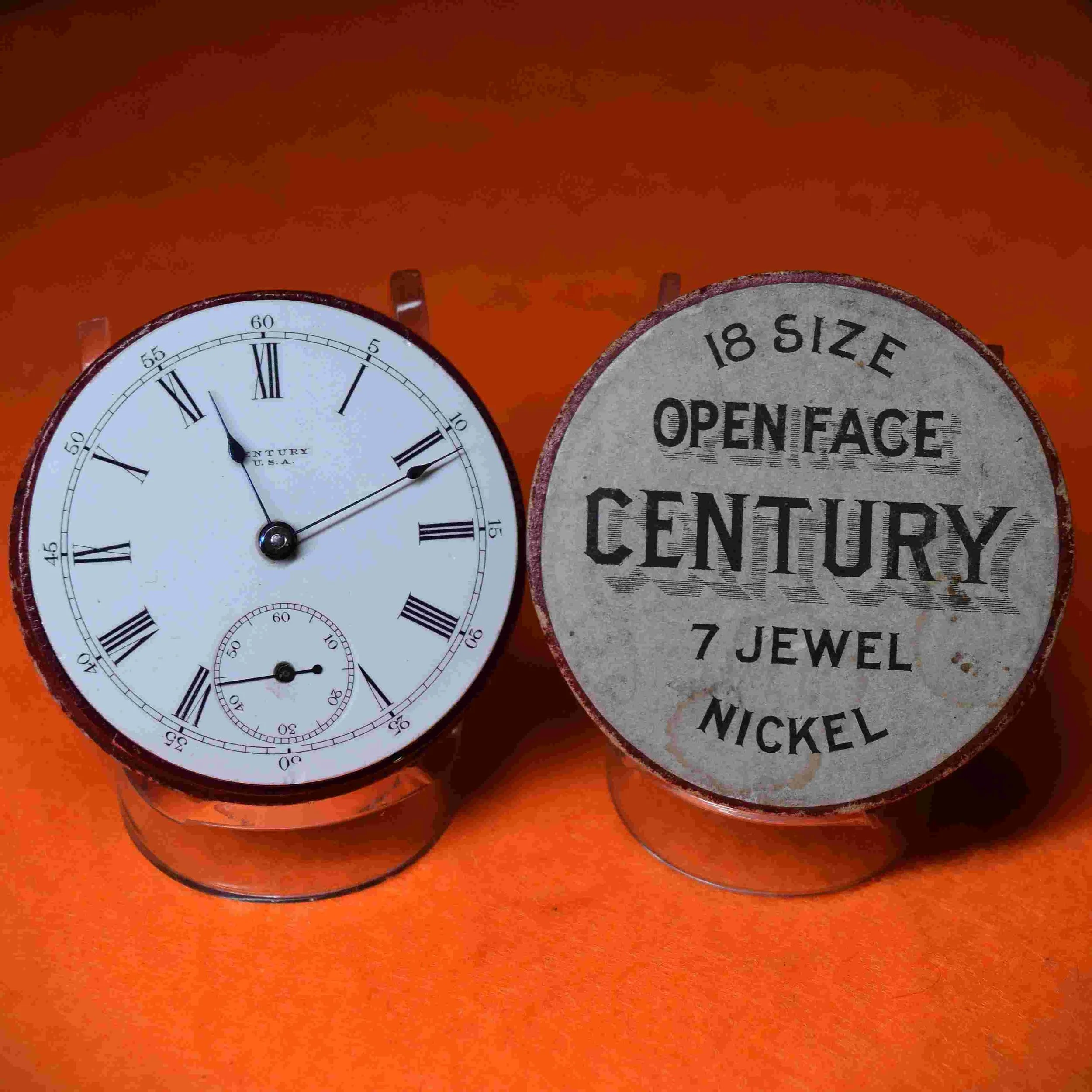
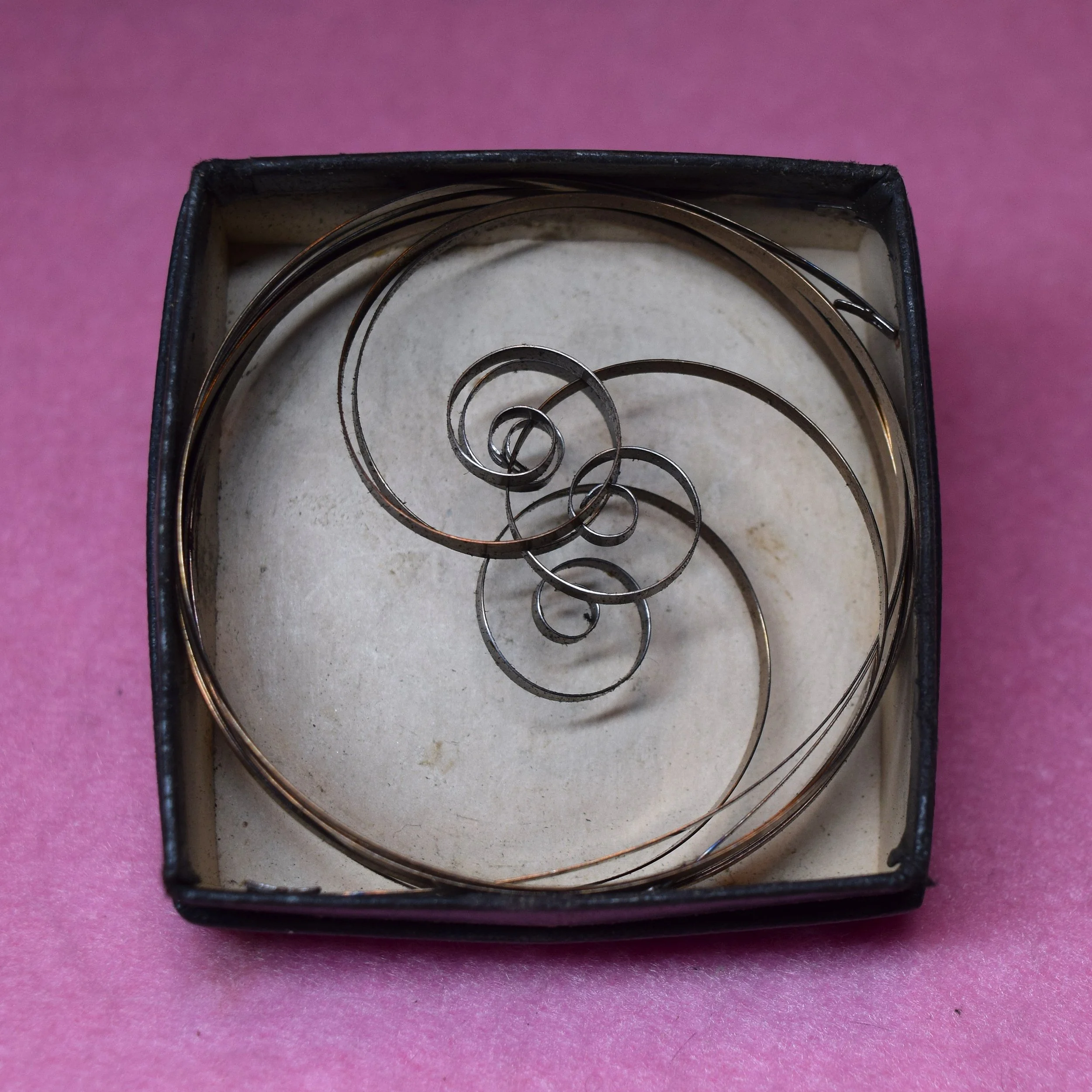
Factory mainspring packaging demonstrating standardized size-based distribution with designated fields for required information. The original “Seth Thomas Watch Main Springs” label has been crossed out and replaced with handwritten size and number information, indicating that the box was repurposed to hold mainsprings of a different specification than originally supplied.
Additional data from other collections may clarify whether FAT numbers reflect batch assignment, model-scoped numbering, tooling sequences, or other internal factory processes.
Image Contribution Form
If you have previously documented a non-numbered Century-grade Model 10–13 movement and would like to contribute photographs for research purposes, this Image Contribution Form may be used.
NOTE: This page is under active development. It will continue to be updated as photographic documentation becomes available and as additional movements are added to the collection and documented. The research and classifications on this page follow the methods described in the Research Methodology.
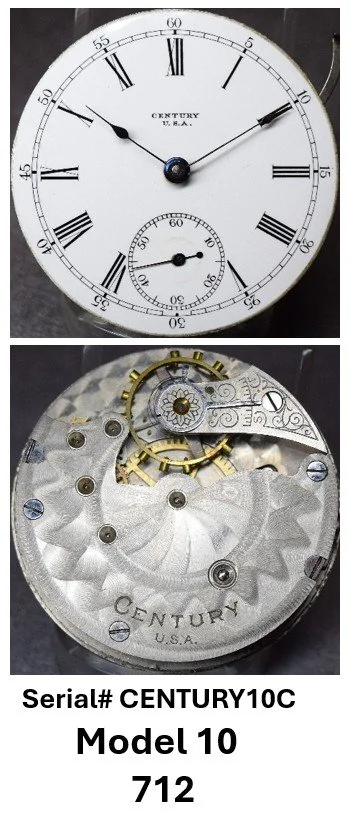
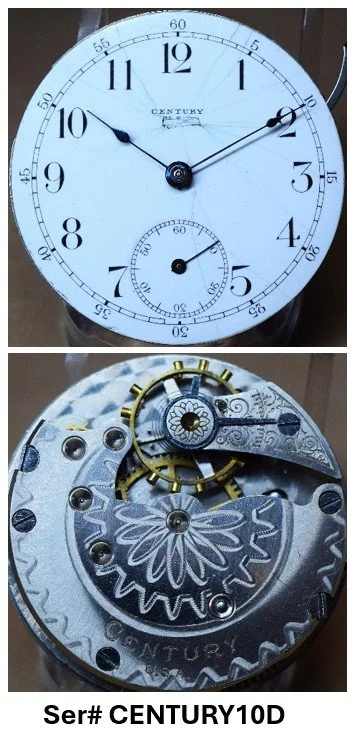
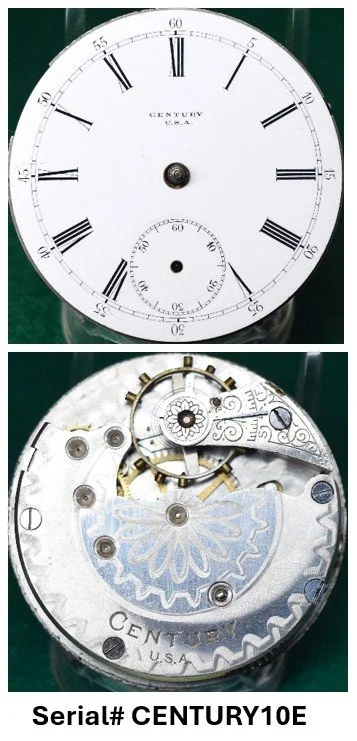
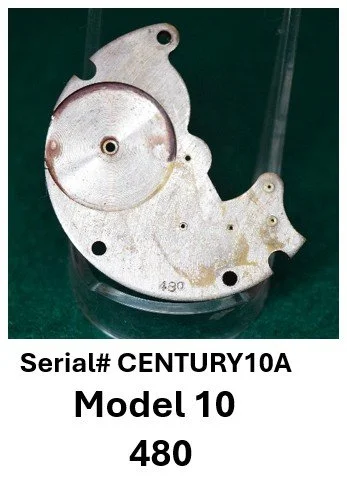
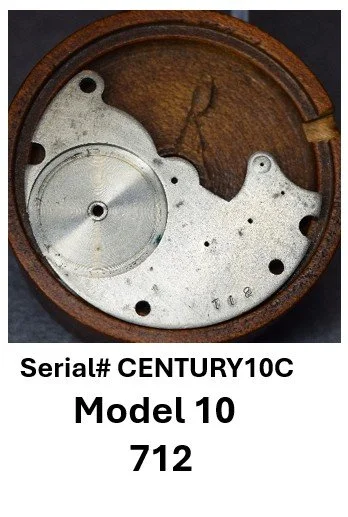
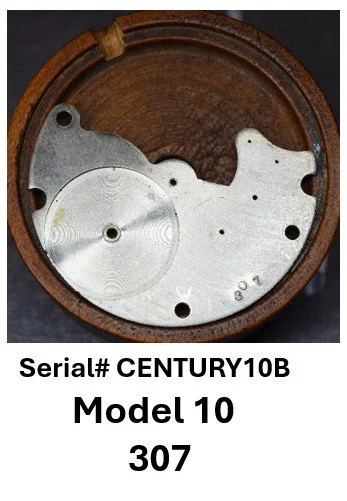
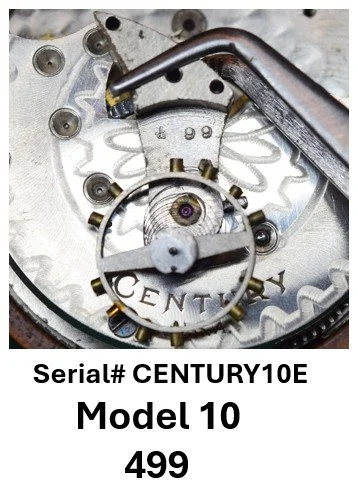
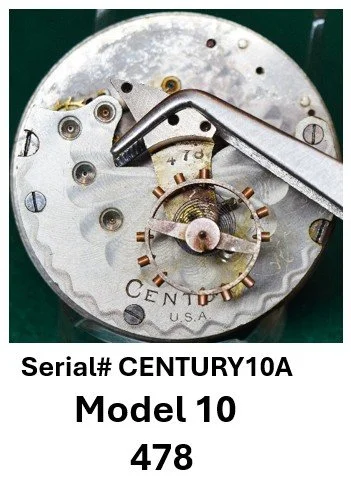
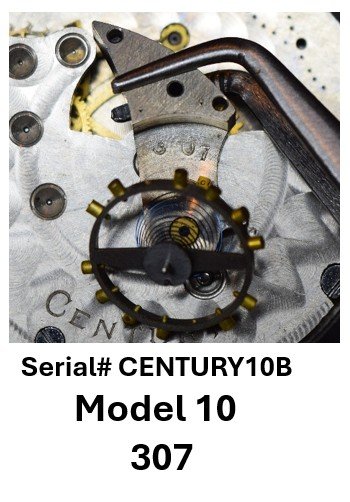
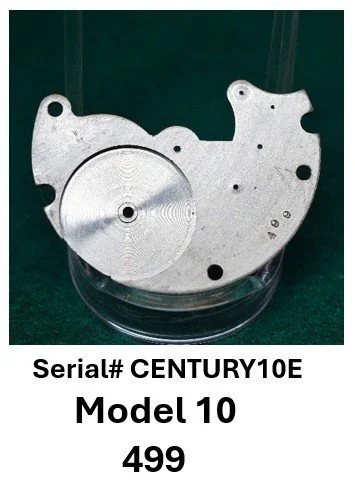
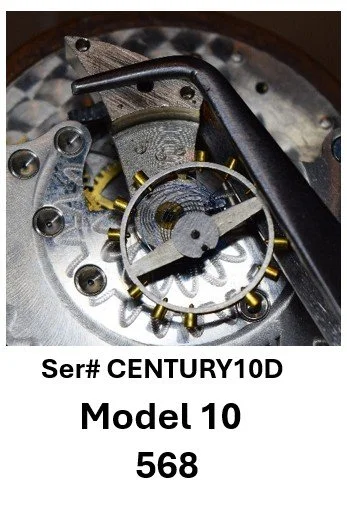
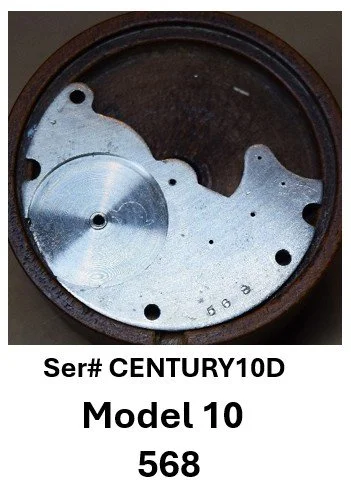
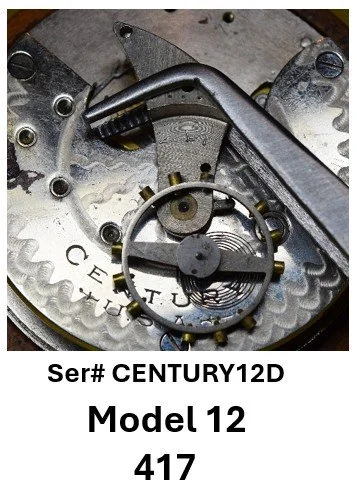
In the illustrations below, the original Seth Thomas Fan Collection serial identifier is retained. Where present, a green alphanumeric label indicates a FAT Number–Derived Identifier used for internal cataloging and analysis. It is comprised of a two-digit model number, the private label name, and the FAT Number found on the pillar plate of the physical movement.
The following terms used within the illustrations below to qualify each FAT Number datapoint are defined, based on physical examination and comparative analysis, as follows: Original = No evidence of transplant observed. Transplant = Evidence strongly supports component transplant.
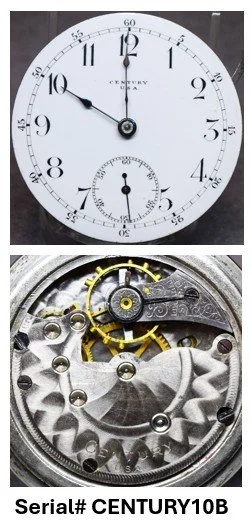
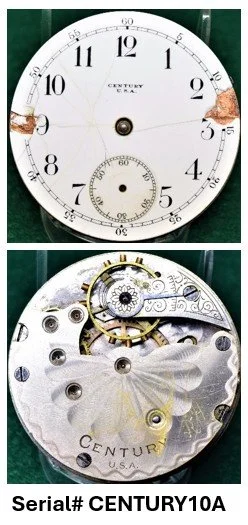
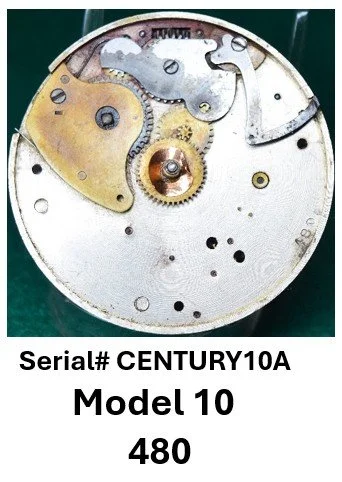
Pillar Plate: 480 Back of Top Plate: 480 Balance Bridge: 478 Winding Bridge: Blank 2 DFS
Original Original Transplant Original
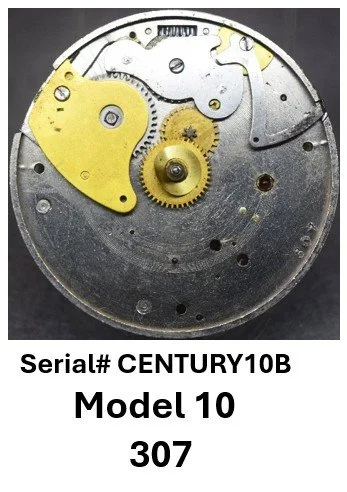
Pillar Plate: 307 Back of Top Plate: 307 Balance Bridge: 307 Winding Bridge: Blank 2 DFS
Original Original Original Original
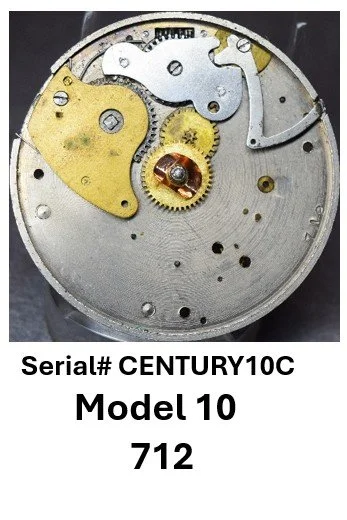
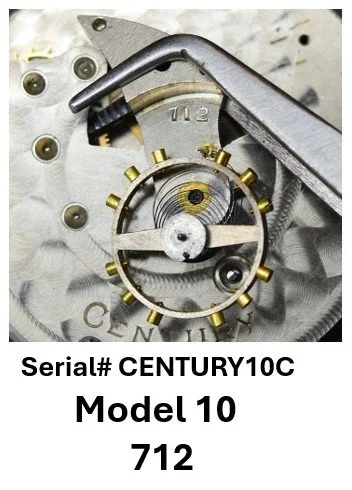
Pillar Plate: 712 Back of Top Plate: 712 Balance Bridge: 712 Winding Bridge: Blank 2 DFS
Original Original Original Original
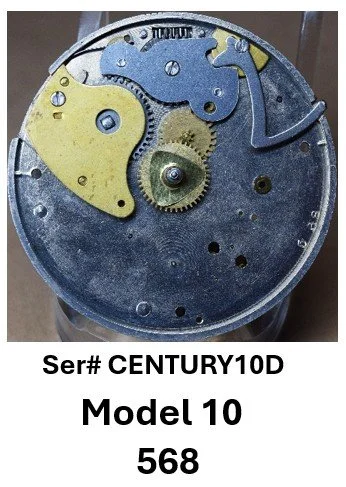
Pillar Plate: 568 Back of Top Plate: 568 Balance Bridge: 568 Winding Bridge: Blank 2 DFS
Original Original Original Original
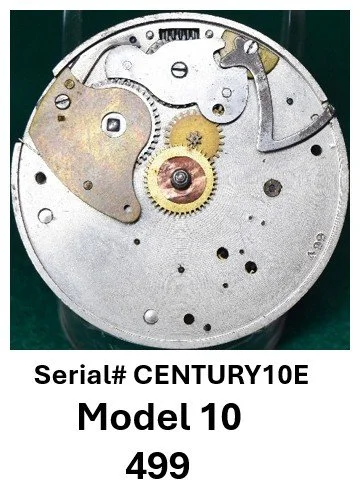
Pillar Plate: 499 Back of Top Plate: 499 Balance Bridge: 499 Winding Bridge: Blank 2 DFS
Original Original Original Original
FAT Numbers
Model 11
The Complete Dataset - Private Label Progression, The Complete Dataset - Standard Sort and The Complete Dataset - Manufacturing Practices Sort can each be viewed in a separate tab.
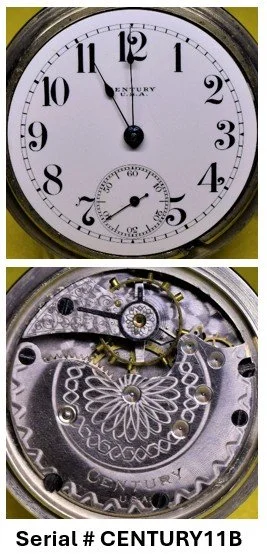
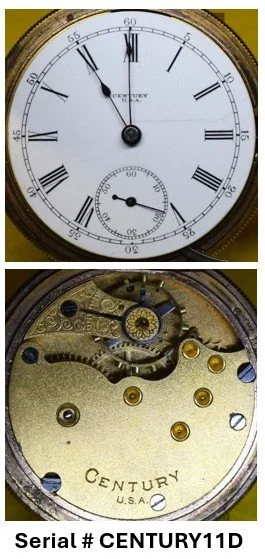
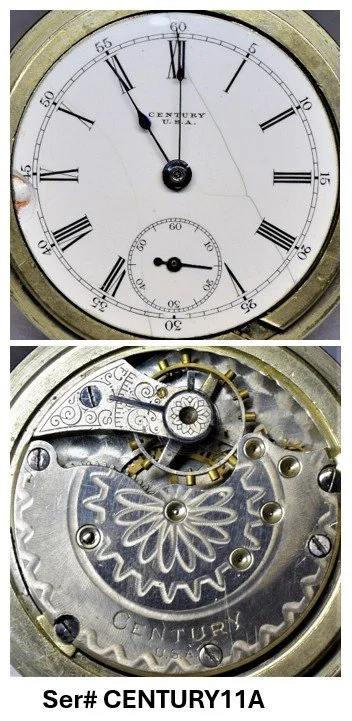
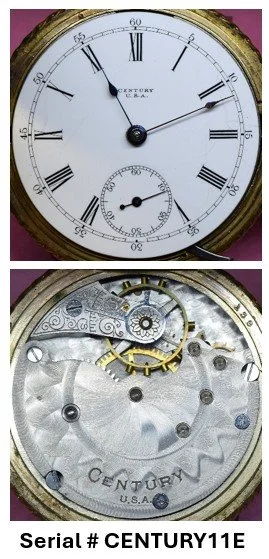
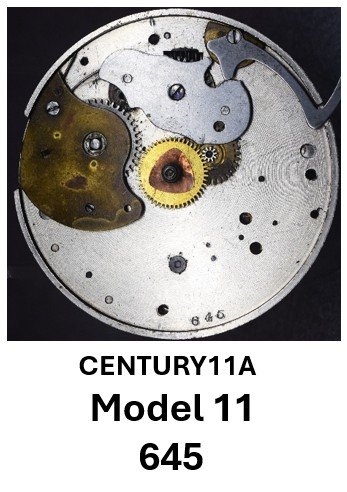
Pillar Plate: 645 Back of Top Plate: 645 Balance Bridge: 645 Winding Bridge: 45 2 Dial Feet Screws
Original Original Original Original


Pillar Plate: 182 Back of Top Plate: 182 Balance Bridge: 182 Winding Bridge: 82 2 Dial Feet Screws
Original Original Original Original

Pillar Plate: 934 Back of Top Plate: 934 Balance Bridge: 934 Winding Bridge: 34 2 Dial Feet Screws
Original Original Original Original
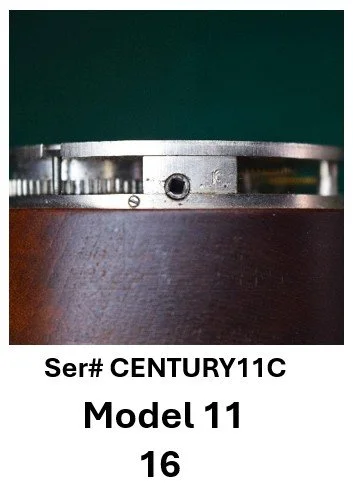
Pillar Plate: 116 Back of Top Plate: 116 Balance Bridge: 116 Winding Bridge: 16 2 Dial Feet Screws
Original Original Original Original
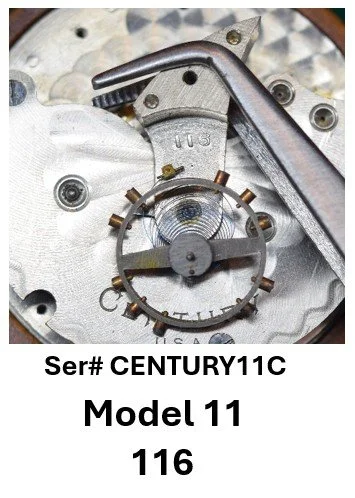
Pillar Plate: 34301 Back of Top Plate: 34301 Balance Bridge: 34301 Winding Bridge: 1 2 Dial Feet Screws
Original Original Original Original
Pillar Plate: 558 Back of Top Plate: 558 Balance Bridge: 558 Winding Bridge: 58 2 Dial Feet Screws
Original Original Original Original
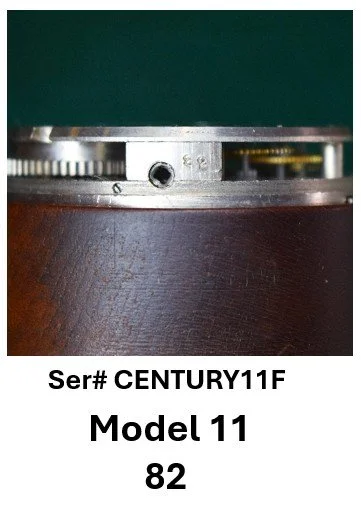
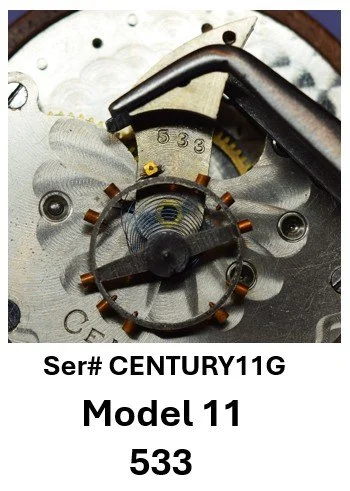
Pillar Plate: 533 Back of Top Plate: 533 Balance Bridge: 533 Winding Bridge: 33 2 Dial Feet Screws
Original Original Original Original
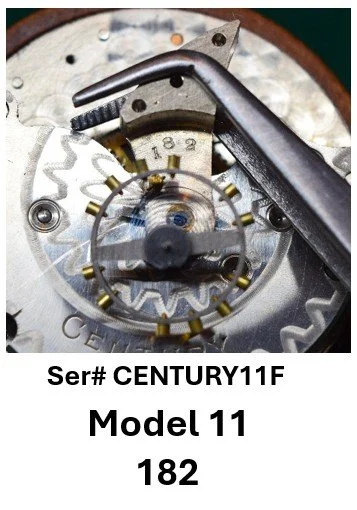
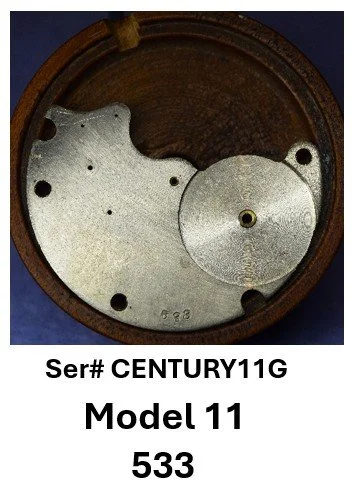
FAT Numbers
Model 12
The Complete Dataset - Standard Sort and The Complete Dataset - Manufacturing Practices Sort can each be viewed in a separate tab.
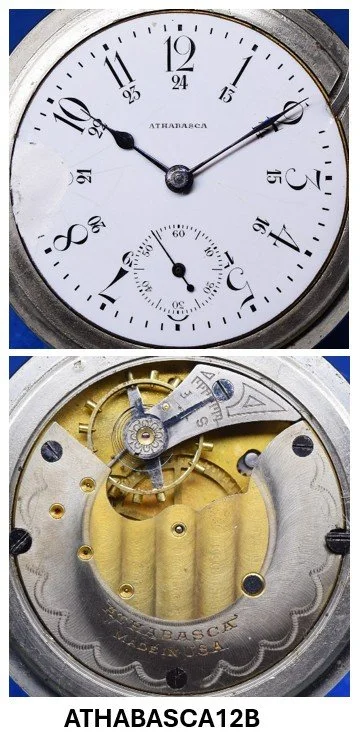
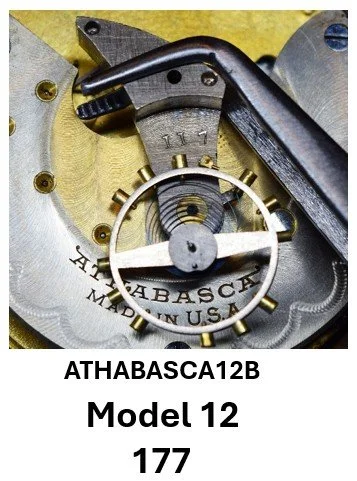
12ATHABASCA8117
12ATHABASCA9368
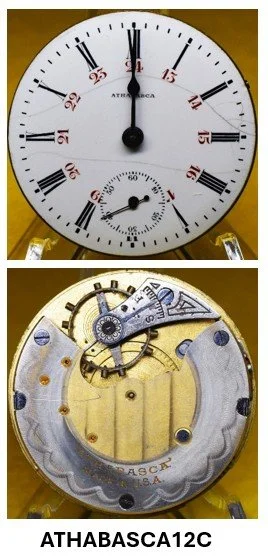
12CENTURY16855
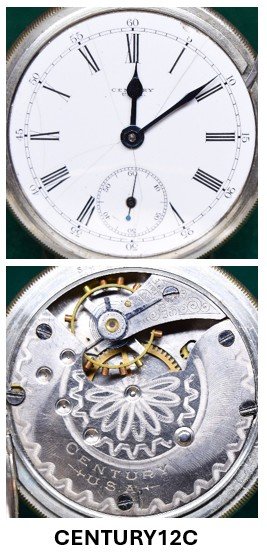
12CENTURY866
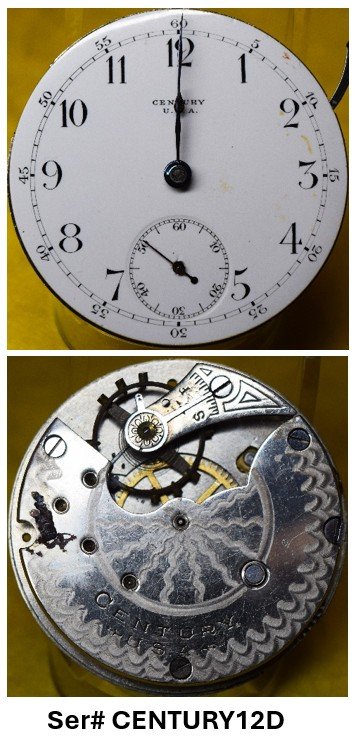
12CENTURY417

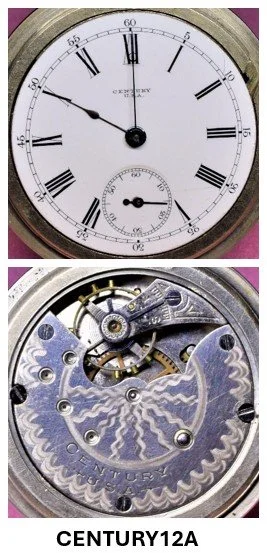
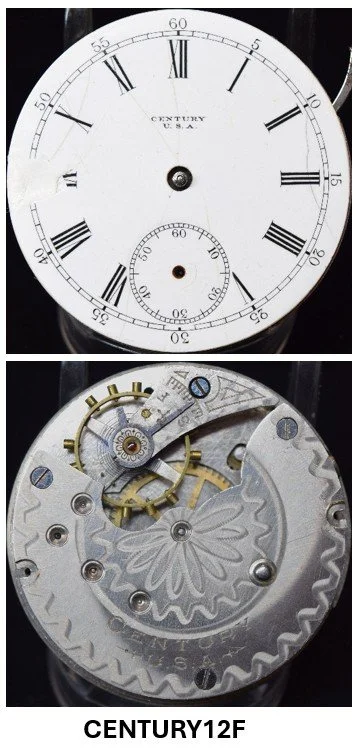
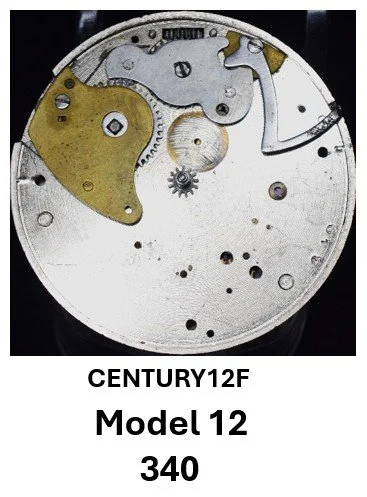
12CENTURY340
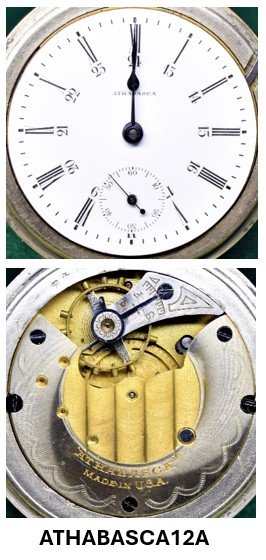
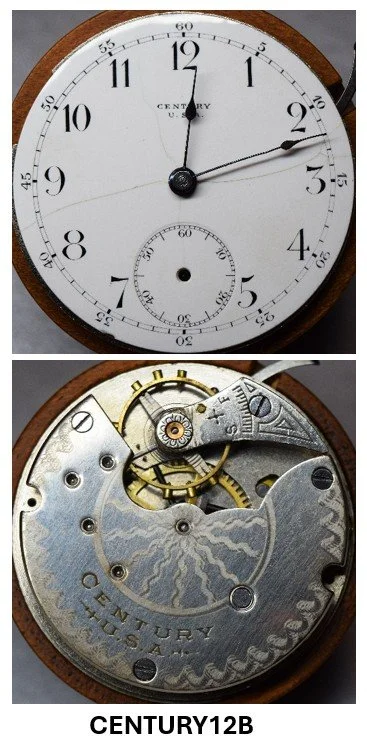
12CENTURY8265
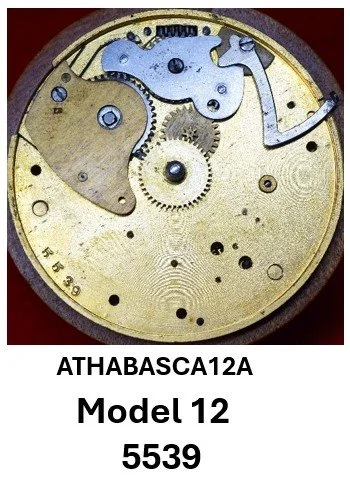
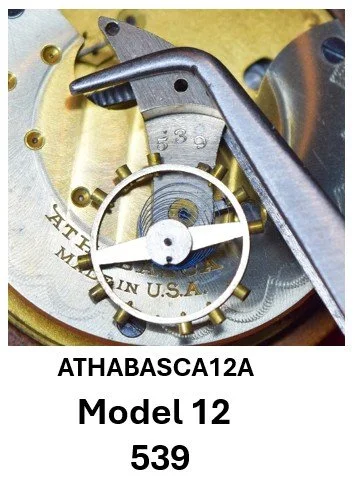
Pillar Plate: 5539 Back of Top Plate: Blank Balance Bridge: 539 Winding Bridge: None 3 Dial Feet Screws
Original Original Original Original
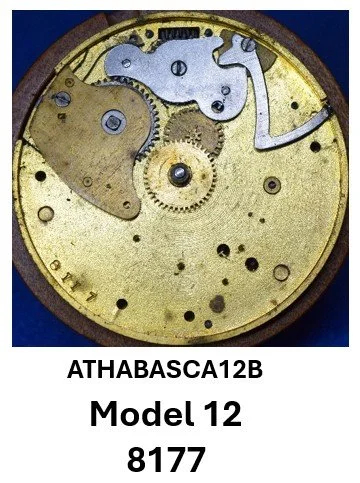
Pillar Plate: 8117 Back of Top Plate: Blank Balance Bridge: 117 Winding Bridge: None 3 Dial Feet Screws
Original Original Original Original

Pillar Plate: 9368 Back of Top Plate: Blank Balance Bridge: 760 Winding Bridge: None 3 Dial Feet Screws
Original Original Transplant Original

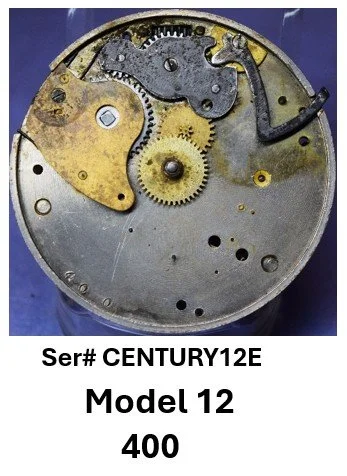
Pillar Plate: 16855 Back of Top Plate: 16855 Balance Bridge: 855 Winding Bridge: None 2 Dial Feet Screws
Original Original Original Original
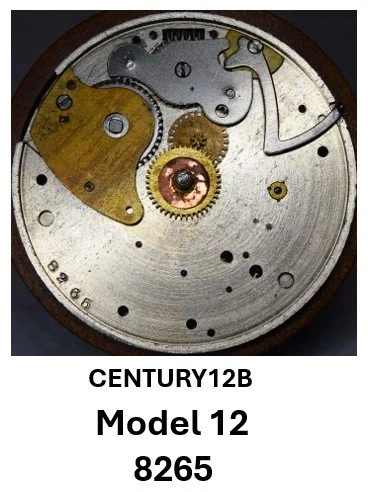
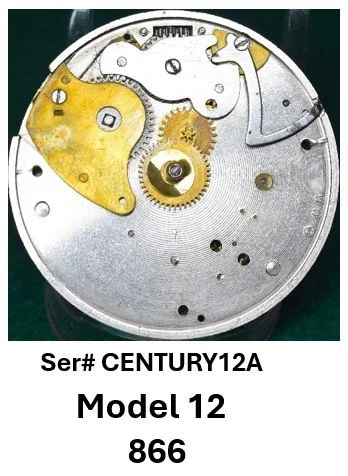
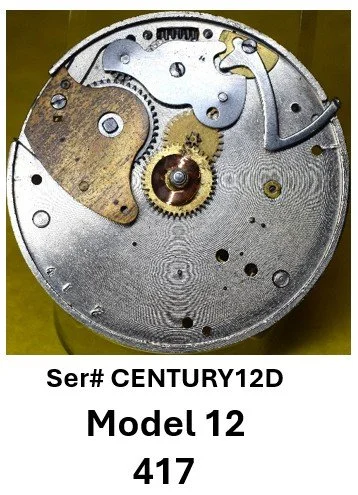
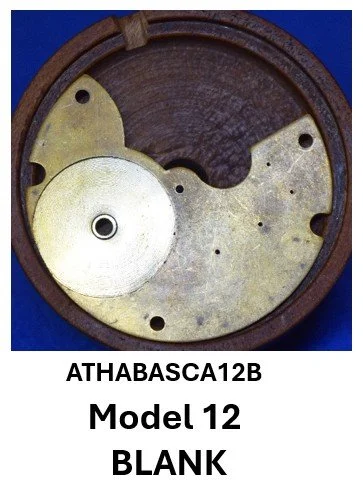
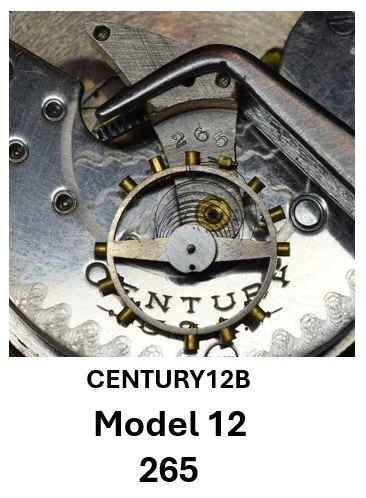
Pillar Plate: 8265 Back of Top Plate: Blank Balance Bridge: 265 Winding Bridge: None 3 Dial Feet Screws
Original Original Original Original
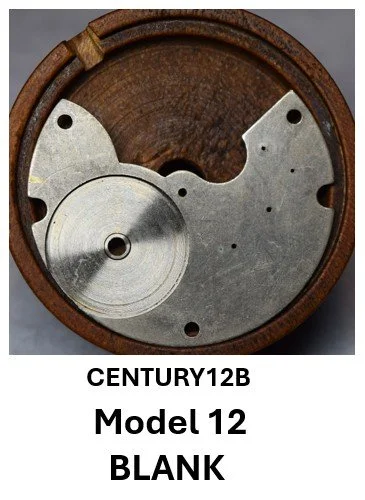
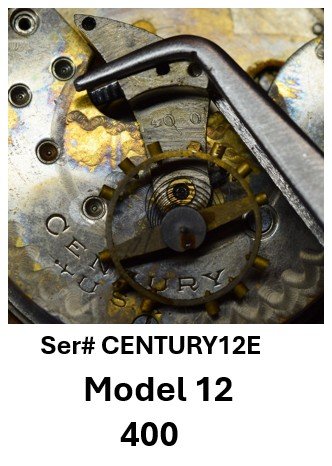
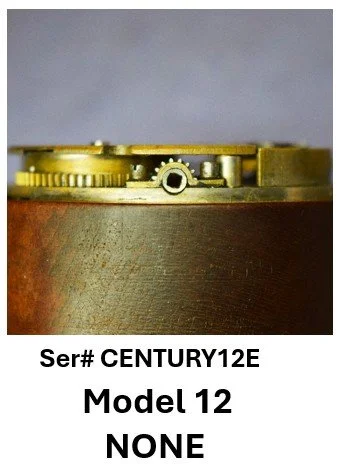
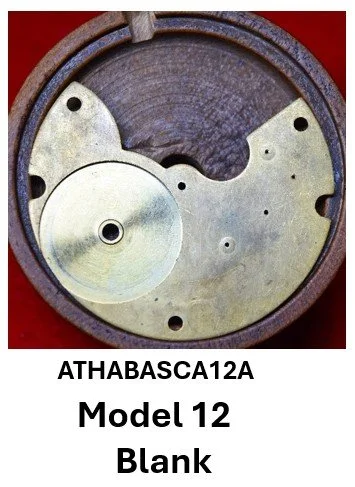
Pillar Plate: 400 Back of Top Plate: Blank Balance Bridge: 400 Winding Bridge: None 2 Dial Feet Screws
Original Original Original Original
Pillar Plate: 866 Back of Top Plate: 866 Balance Bridge: 866 Winding Bridge: None 2 Dial Feet Screws
Original Original Original Original
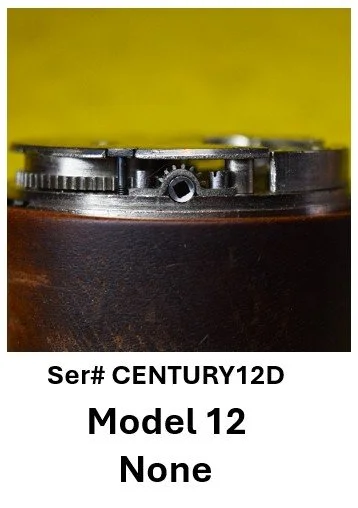
Pillar Plate: 417 Back of Top Plate: Blank Balance Bridge: 471 Winding Bridge: None 2 Dial Feet Screws
Original Original Original Original
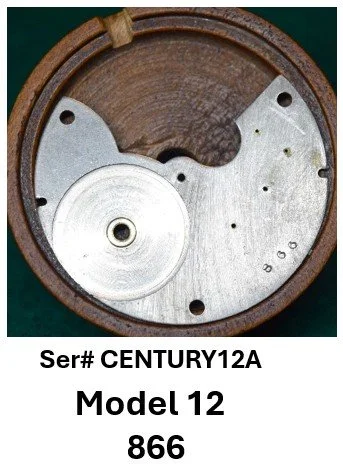
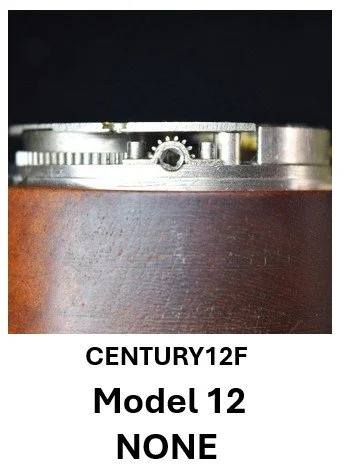
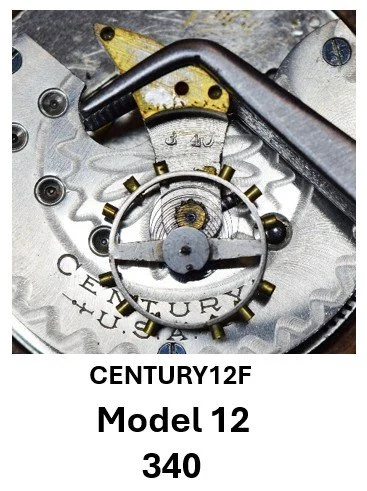
Pillar Plate: 340 Back of Top Plate: Blank Balance Bridge: 340 Winding Bridge: None 2 Dial Feet Screws
Original Original Original Original
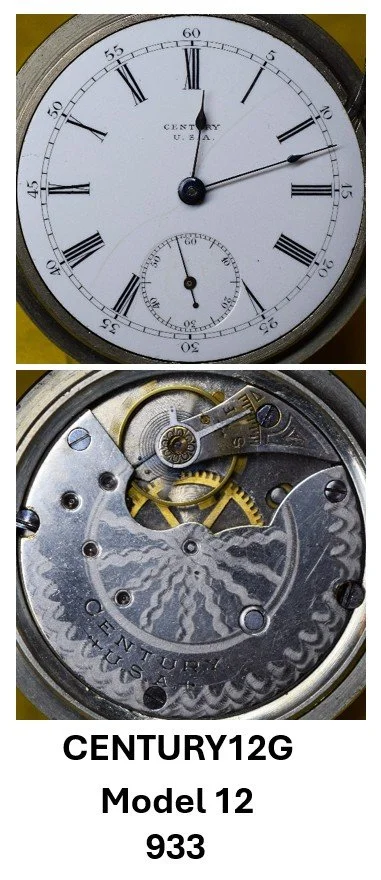
12CENTURY933
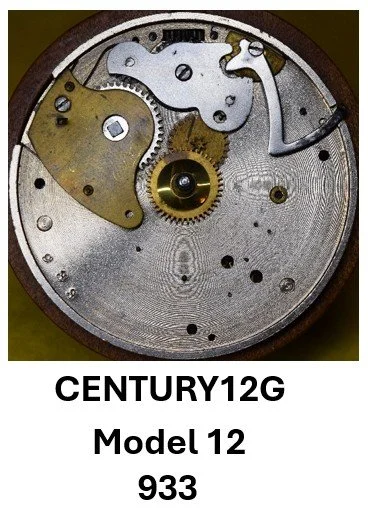
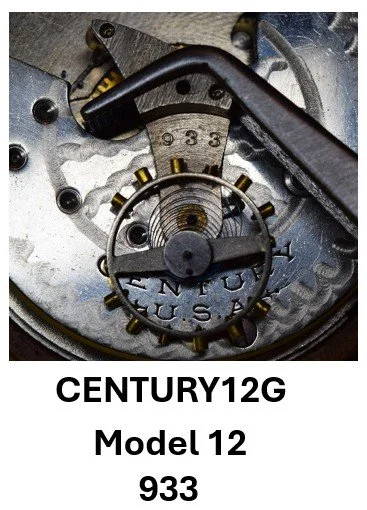
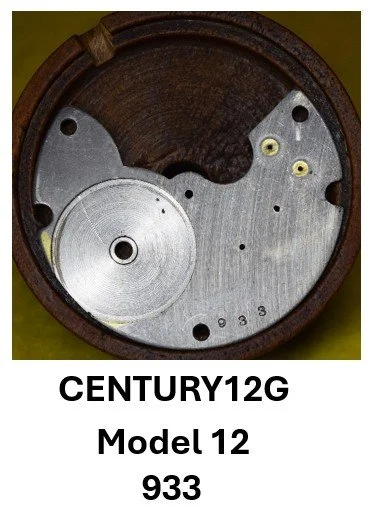
Pillar Plate: 933 Back of Top Plate: 933 Balance Bridge: 933 Winding Bridge: None 2 Dial Feet Screws
Original Original Original Original
12ATHABASCA5539
12CENTURY400
FAT Numbers
Model 13
The Complete Dataset - Private Label Progression, The Complete Dataset - Standard Sort and The Complete Dataset - Manufacturing Practices Sort can each be viewed in a separate tab.
Observed patterns in Model 13 are consistent with broader trends seen across Models 10–13, supporting a unified internal tracking system. The complete dataset, full analysis, and all documented FAT Number examples across Models 10–13 are presented here Factory Assigned Tracking Numbers for Non-Numbered Century-Grade Movements.
These non-numbered 18-size Century pocket watch movements carry a factory-assigned tracking number (FAT). In the Seth Thomas Fan collection, FAT numbers observed on Model 13 range from 182 to 324601. Current evidence suggests FAT numbers may be unique within a model, but the factory’s full assignment logic is not yet known. Evidence also suggests a correlation between the FAT number being absent from the back of the top plate and the presence of a third dial foot screw on the perimeter of the later non-numbered Model 13 movements.
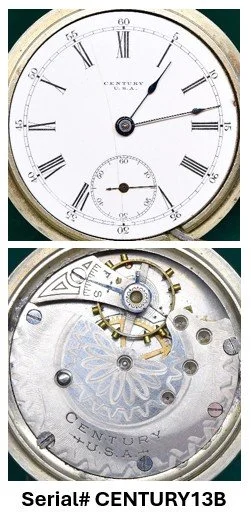
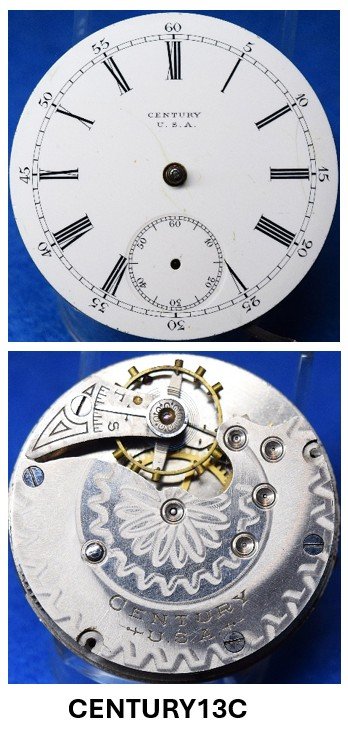
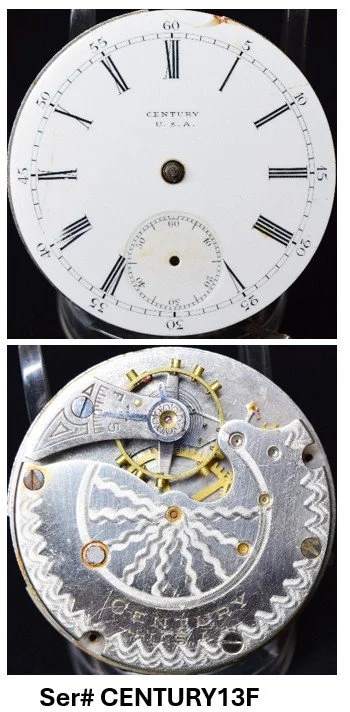
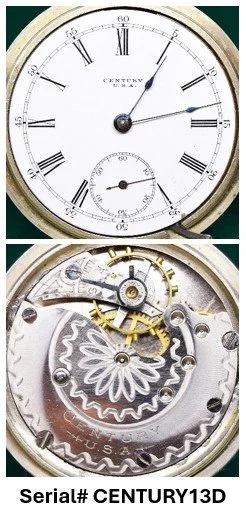
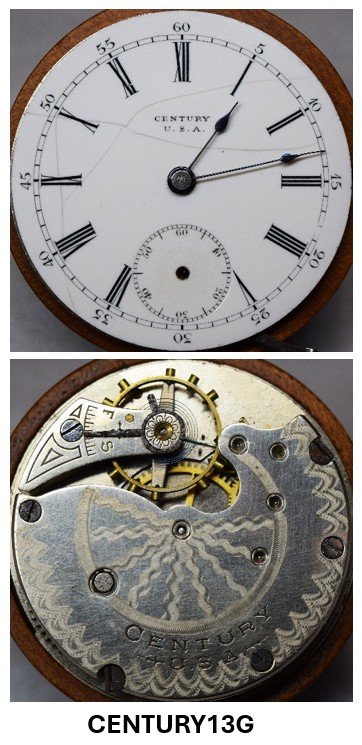
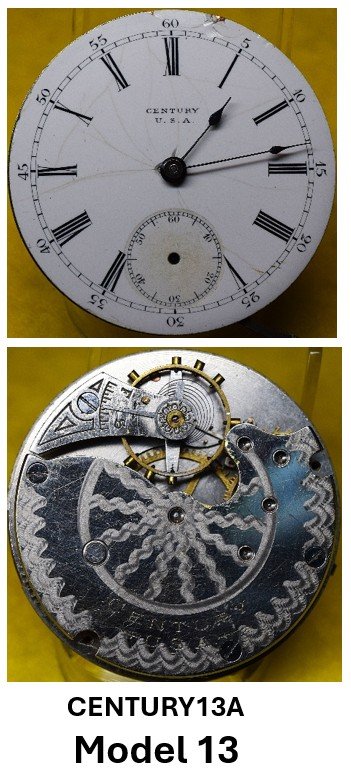

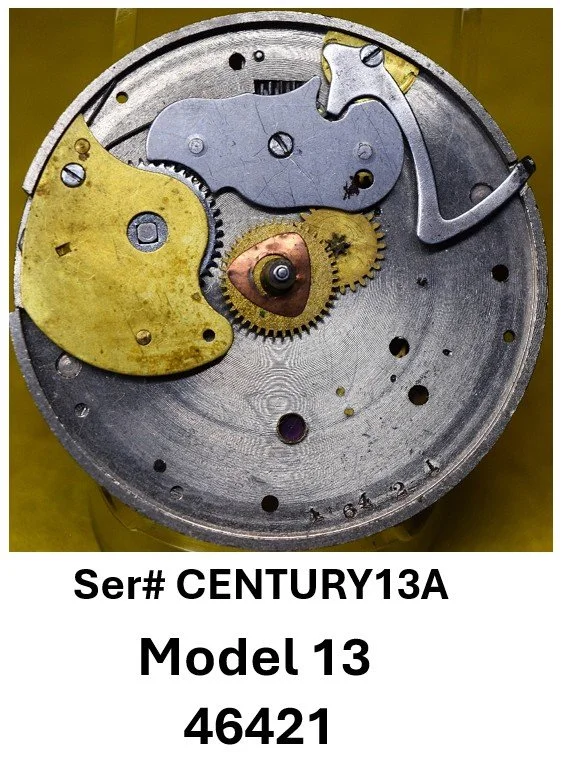
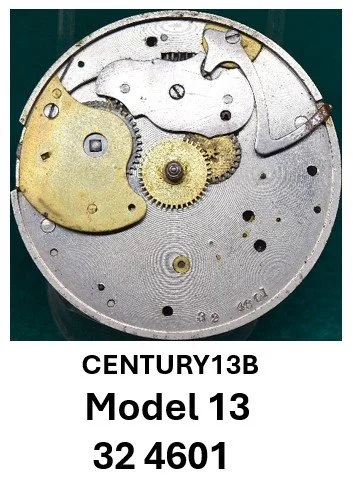
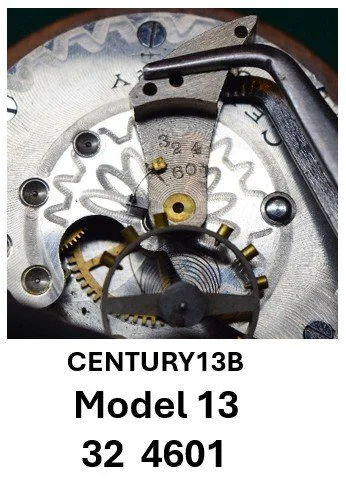
Pillar Plate: 324601 Back of Top Plate: 696 Balance Bridge: 324601 Winding Bridge: 324601 2 Dial Feet Screws
Original Transplant Original Original
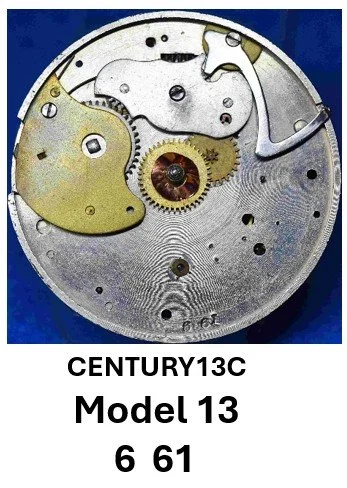
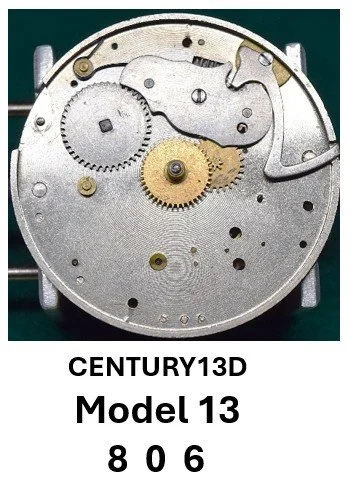
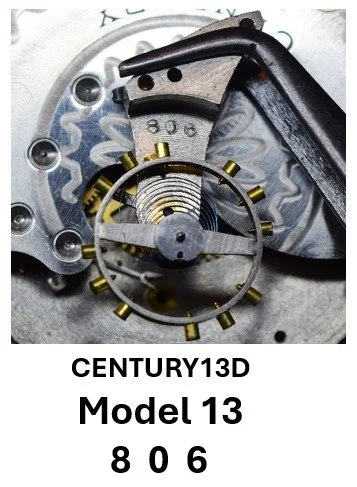
Pillar Plate: 806 Back of Top Plate: Blank Balance Bridge: 806 Winding Bridge: 6 2 Dial Feet Screws
Original Original Original Original
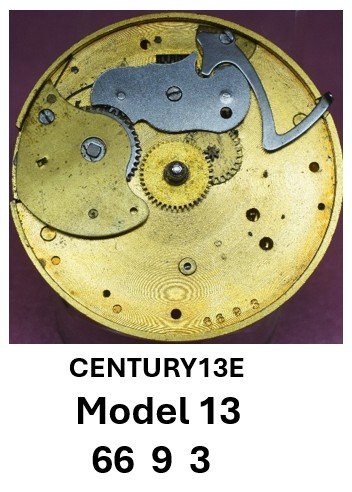
Pillar Plate: 6693 Back of Top Plate: 6693 Balance Bridge: 693 Winding Bridge: 93 2 Dial Feet Screws
Original Original Original Original
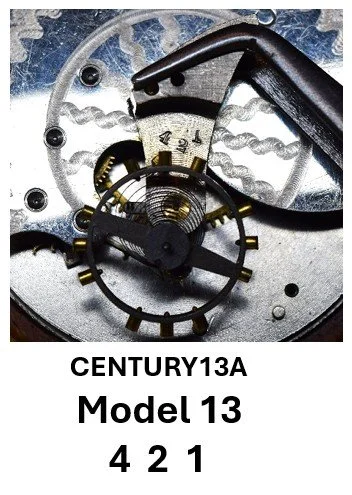
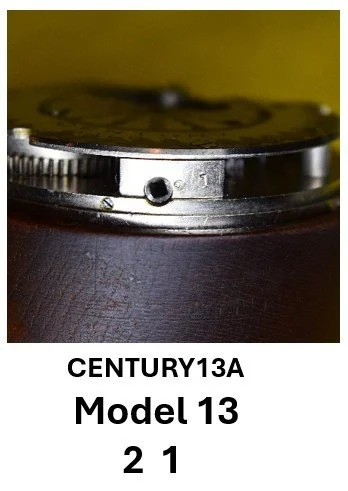
Pillar Plate: 46421 Back of Top Plate: 46421 Balance Bridge: 421 Winding Bridge: 21 2 Dial Feet Screws
Original Original Original Original
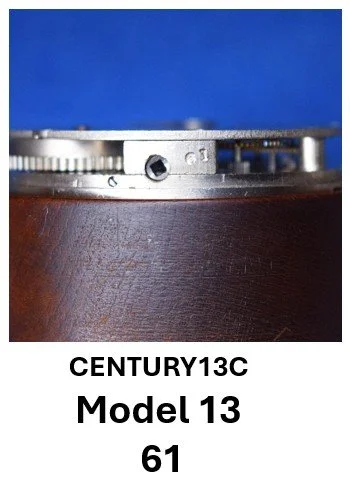
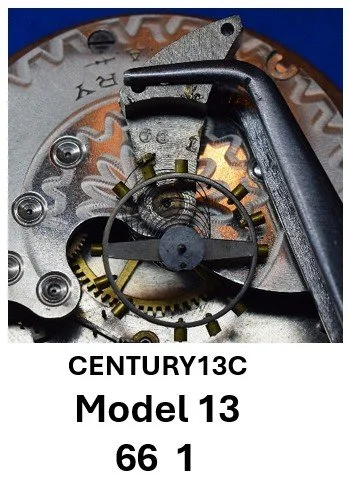
Pillar Plate: 661 Back of Top Plate: Blank Balance Bridge: 661 Winding Bridge: 61 2 Dial Feet Screws
Original Original Original Original
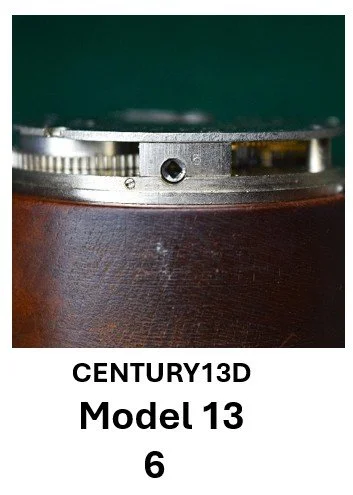
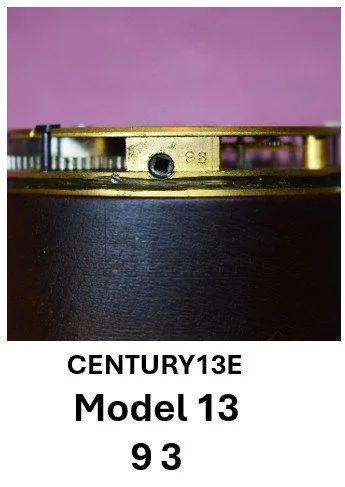
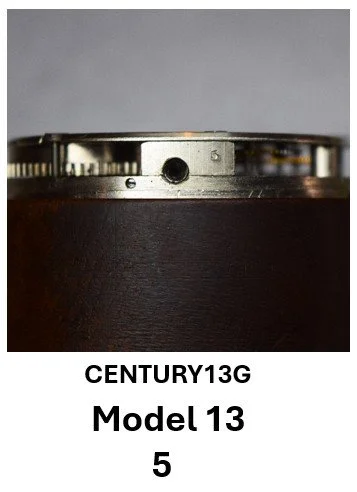
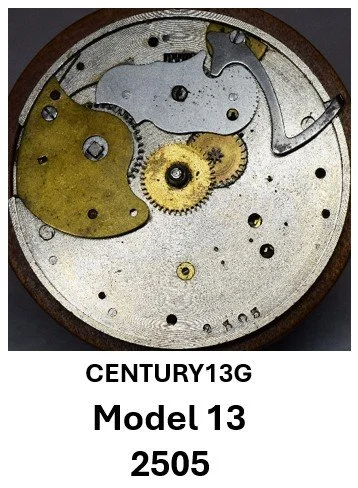
Pillar Plate: 2505 Back of Top Plate: 2505 Balance Bridge: 505 Winding Bridge: 5 2 Dial Feet Screws
Original Original Original Original
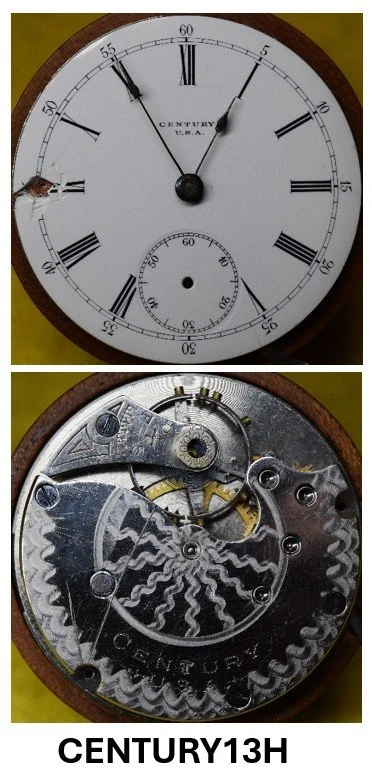
13CENTURY3283
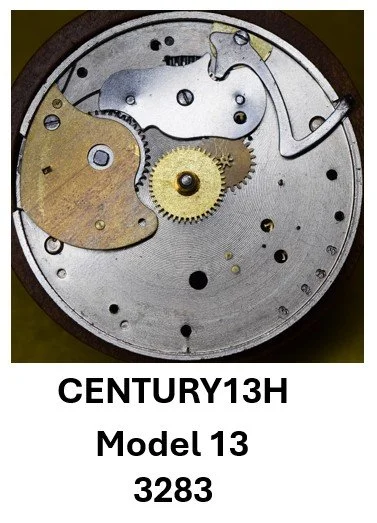
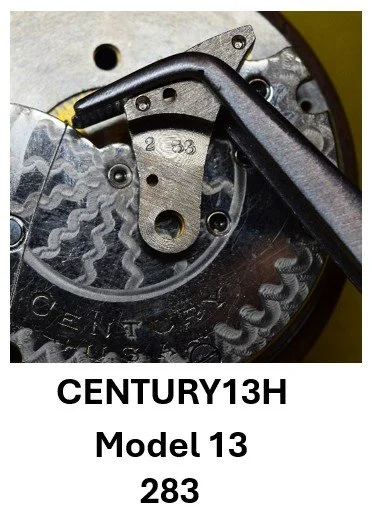
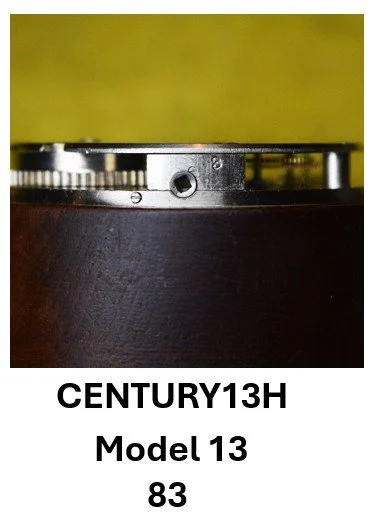
Pillar Plate: 3283 Back of Top Plate: 3283 Balance Bridge: 283 Winding Bridge: 83 2 Dial Feet Screws
Original Original Original Original
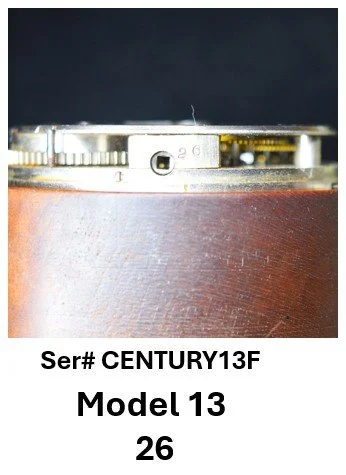
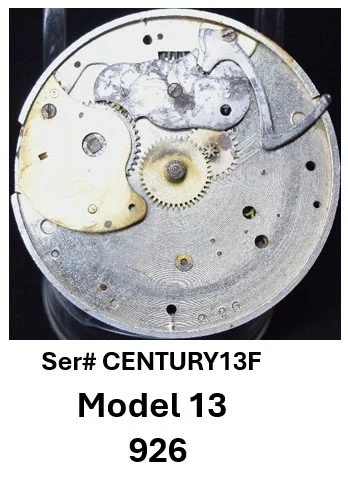
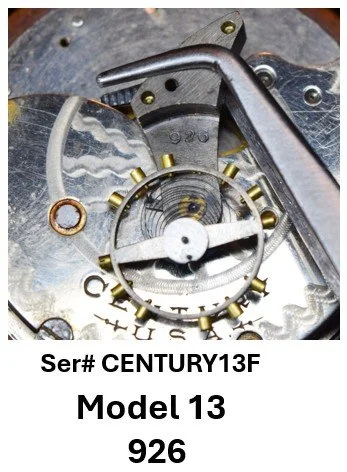
Pillar Plate: 926 Back of Top Plate: 926 Balance Bridge: 926 Winding Bridge: 26 2 Dial Feet Screws
Original Original Original Original
The full structured dataset, comparative analysis, and complete set of documented FAT Number examples are available in the primary research archive presented here Factory Assigned Tracking Numbers for Non-Numbered Century-Grade Movements.
Evidence Summary
FAT Number Uniqueness Within the Dataset
Within the current dataset, duplication of pillar plate FAT numbers is observed across models (e.g., 11CENTURY182 and 13CORONA182). No duplication has yet been observed within a single model grouping.
These observations indicate that FAT numbers are not universally unique across all non-numbered Century-grade movements, while leaving open the possibility that they may be unique within individual models pending further data.
Configuration-Based Distinctions Observed Within the Dataset
Observed specimens group into distinct configuration patterns:
Model 10 and Model 11 (Century Old Model):
Two dial foot screws
FAT numbers stamped on pillar plate, balance bridge, and back of top plate
No serial number
Model 12 and Model 13 (Century New Model):
Three dial foot screws
No rear top-plate FAT stamping
Configuration consistent with early numbered production
Private labels such as Pan-American appear only within Model 10 and Model 11 in the current dataset and are therefore representative of Century Old Model production.
Transitional Configurations
Certain private labels (Century U.S.A., Colonial U.S.A., and Corona Watch Co.) appear in both Old Model (10–11) and New Model (12–13) groupings and exhibit transitional characteristics, including:
Presence and subsequent absence of rear top-plate FAT stamping
Coexistence of two- and three-dial-foot configurations
Within the current sample of early private-label specimens originally produced with two dial foot screws, the absence of rear top-plate stamping is already common, while the adoption of three dial foot screws remains comparatively rare.
This distribution suggests that the elimination of rear top-plate FAT stamping preceded the widespread adoption of the three dial foot screw configuration, though the precise sequencing of these changes remains unresolved.
Numerical Relationships Across Models
Numerically close pillar plate FAT numbers are observed across model pairs sharing the same movement orientation (e.g., open-face Models 10 and 12; hunting-case Models 11 and 13), rather than strictly within Old Model or New Model groupings.
This pattern suggests that internal numbering practices may have continued across the transition between Old and New Century models within orientation-based production streams.
These observations are based solely on the current dataset and should not be interpreted as definitive production sequencing.
Packaging and Distribution Context
Documented factory packaging and distribution materials show a consistent omission of outward-facing identifiers in examples of Century-grade movements.
These materials indicate that such movements were handled within a standardized, size- and grade-based distribution system that did not require individual serial numbering at the packaging stage.
Within this context, FAT markings may represent an internal method of differentiation operating independently of external identification systems.
Exploration / Examination of Numbered Century New Model Movements
Inspection of 41 numbered Model 12 movements (serial range 1001754–1300196, plus one higher example at 4068501) and 12 numbered Model 13 movements (serial range 1705002–1776870) shows:
All exhibit three dial foot screws
None retain rear top-plate FAT stamping
Inspection of non-numbered Model 12 and Model 13 movements shows a corresponding structural shift from:
Two dial foot screws with rear top-plate FAT stamping
toThree dial foot screws without rear top-plate FAT stamping
This establishes a clear structural transition within Model 12 and Model 13 production. The weaker transitional signal in Model 12 may reflect the substantially larger apparent surviving population of non-numbered Model 12 movements, within which late transitional configurations represent only a small proportion. By contrast, Model 13 may preserve a higher relative concentration of such late non-numbered examples.
Interpretation Limits
Present data do not support interpreting FAT numbers as a simple ordinal production sequence across all Century-grade models.
Whether FAT numbers correlate to production sequencing within specific models, configuration phases, or internal factory processes remains an open question pending additional documentation.